

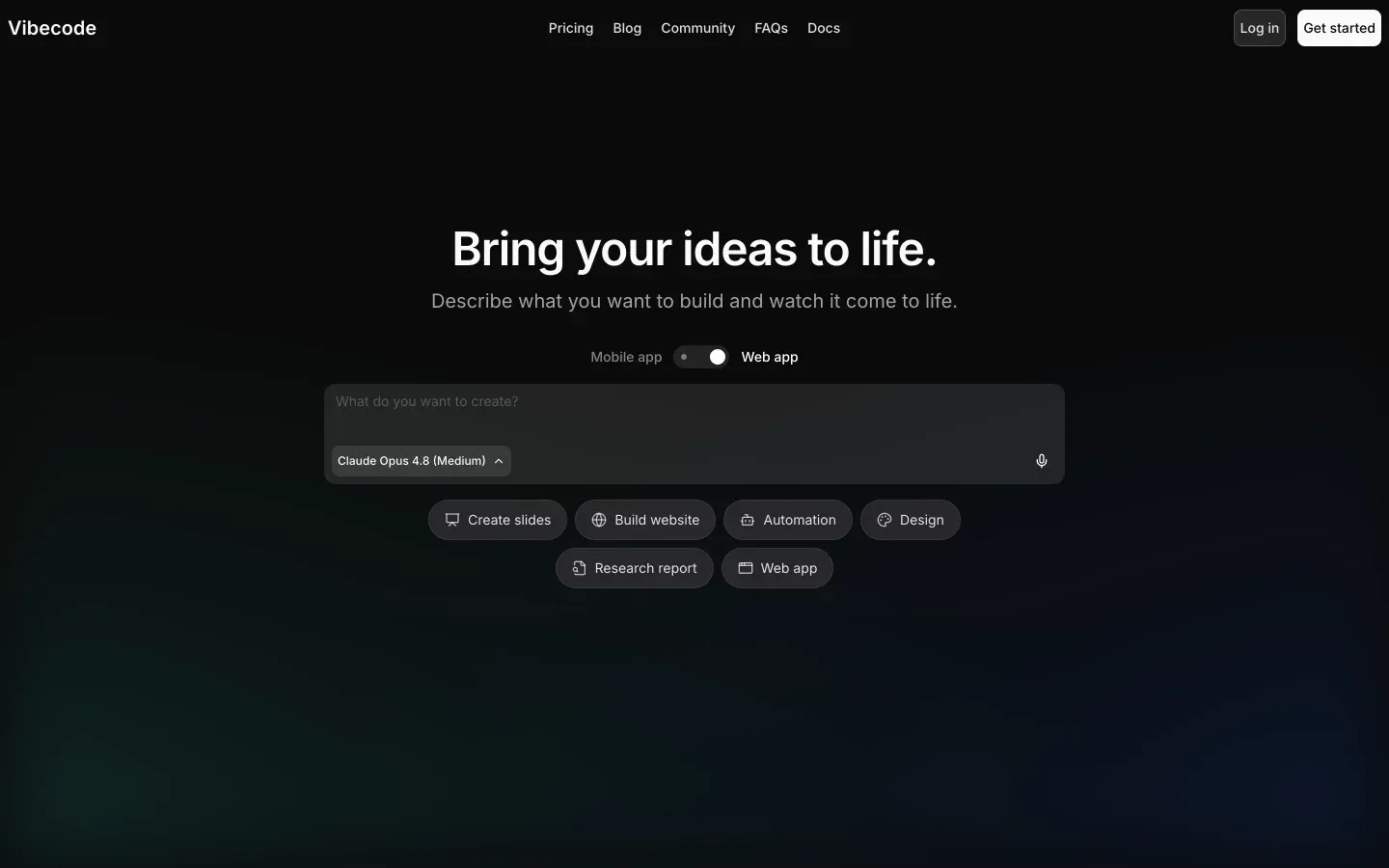
Procuring the right development platform requires isolating the form factor your users demand from the environment they will operate in. VibeCode represents a smartphone-focused approach to natural language generation, acting as a native mobile app builder in the mobile-first space.
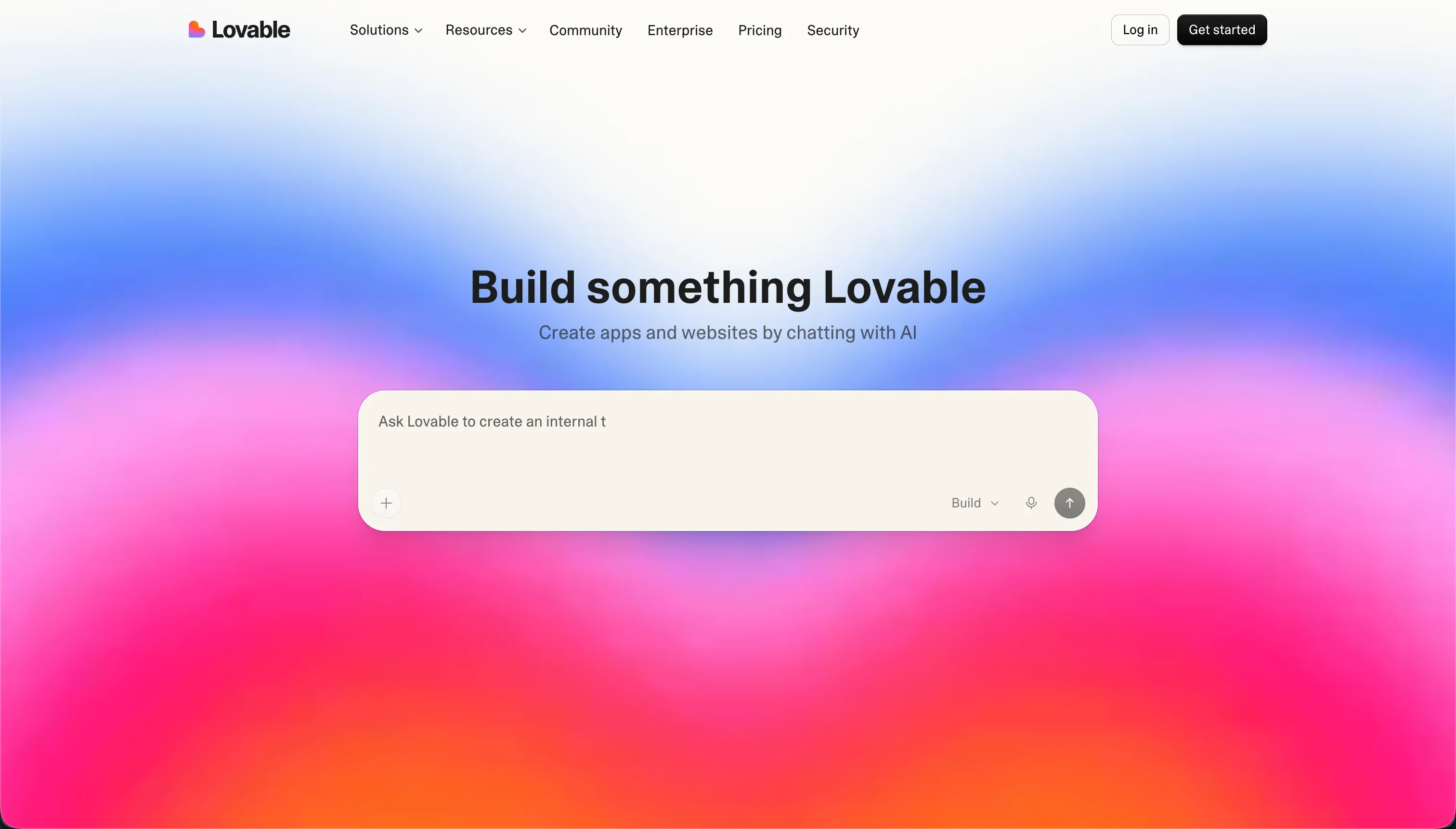
Conversely, Lovable operates as a web-first application platform that translates prompts into full-stack web software.
VibeCode wins this direct head-to-head comparison on aggregate, scoring 6.1/10 against Lovable’s 5.5/10. Because VibeCode includes Pro and Max escape hatches like direct SSH access and standard code export, it manages the inevitable maintenance wall with far lower risk than Lovable’s prompt-locked visual ecosystem.
Lovable remains the correct purchase only if your target form factor is strictly web-based and your deployment pipeline terminates in a developer handoff.
The decision in 30 seconds
| If your priority is… | Pick | Why |
|---|---|---|
| Native iOS & Android app store deployment | VibeCode | Built explicitly to compile native mobile layouts and submit directly to official stores |
| Evolving web application in production (Month 9+) | Neither | Both platform models struggle with regression loops and severe maintenance overhead in the long haul |
| Figma design token synchronization | Lovable | Includes native Figma import features to scaffolding clean React frontends from designs |
| Clean developer exit path via SSH and Code Export | VibeCode | Offers SSH connection to Cursor and raw code export on Pro packages |
| Turnkey database with visual security and no prompt lock | Neither | Both tools lock security configuration behind complex backend schemas or raw generated code |
What each platform is
What is VibeCode?
VibeCode is an AI-powered, mobile-first development environment engineered to build, test, and publish native mobile applications via plain-English prompts. Operating on a credit-based resource tier, the system is engineered to simplify mobile engineering by automated compiling of setups for iOS and Android.
VibeCode automatically provisions a backend database, user authentication, and cloud storage inside its VibeCode Cloud environment. It is designed specifically for mobile app prototypers and non-technical builders who require native smartphone layout previews, instant on-device testing, and direct packaging support for the Google Play and Apple App Stores.
What is Lovable?
Lovable is an autonomous web application builder designed to compile full-stack web software from natural language descriptions. The platform operates as an orchestration engine that constructs React frontends, Node.js backends, and handles automated migrations to Supabase PostgreSQL databases.
Key features include Figma imports, automated staging URLs on Lovable Cloud, and bidirectional sync to GitHub repositories to bridge the gap with custom codebases. It is built primarily for non-technical founders, marketing operators, and startup builders seeking rapid prototype validation on standard browser layouts.
The core difference
The core operational divergence centers on target form-factor compiling and the integration layer.
- VibeCode targets native mobile compilers to output actual on-device smartphone binaries.
- Lovable deploys a standard React and Supabase system suited for web browsers.
Where the scores diverge
Maintainability: VibeCode 5.5, Lovable 3.5. VibeCode maintains a 5.5 score, while Lovable registers a low 3.5. Lovable’s developer exit path is compromised by what long-term builders describe as severe schema debt; permitting the AI to architect the database on day one leads to broken workflows by month six that often demand a complete system rebuild.
VibeCode prevents complete vendor lookup by opening up SSH access and raw code downloads on Pro and Max tiers, giving professional teams a viable path to take the compiled mobile code into local environments like Cursor.
Production readiness: VibeCode 5.5, Lovable 4.0. VibeCode scores 5.5, outperforming Lovable at 4.0. While VibeCode exposes risks of edge-case crashes if code is unverified before store submission, it integrates backend utilities out of the box.
Lovable’s 4.0 score reflects severe long-term real-world friction where platform-level updates routinely break existing client applications. Builders on Lovable find the final 30% of business logic acts as a wall, requiring them to manually eject or struggle with regression bugs in live environments.
Security & access control: VibeCode 5.0, Lovable 3.5. VibeCode scores 5.0, surpassing Lovable’s 3.5. VibeCode manages built-in user authentication natively but depends on manually audited generated code to secure per-app endpoints.
Lovable fails to inherit any pre-built security configurations; database safety depends entirely on Supabase Row-Level Security (RLS) rules that the non-technical builder must manually write, verify, and monitor. This architecture places high data leak risks on the builder, who has no structural interface to verify what the generated API exposes.
Design flexibility: VibeCode 7.0, Lovable 8.0. Lovable scores 8.0, ahead of VibeCode’s 7.0. Lovable constructs any responsive React interface you can describe visually and benefits immensely from converting mockups into functional screens.
VibeCode’s 7.0 reflects its optimized layouts for native dimensions, which are convenient for mobile platforms but inherently display less direct visual control when compared to structured element editors.
Ease of build: VibeCode 7.0, Lovable 7.5. Lovable scores 7.5 on ease of build, representing a slight edge over VibeCode’s 7.0 score. Lovable builds exceptionally fast first versions of web layouts due to its direct Figma token imports and direct natural language interpreter.
VibeCode provides a fast smartphone workspace with real mobile preview, but both tools hit a wall during iteration where the builder must manage prompt fatigue. Lovable secures the lead here because the initial scaffolding of a web app is less layout-constrained than formatting precise mobile-first smartphone orientations.
Data & integrations: VibeCode 6.5, Lovable 6.5. This criterion is a direct tie, with both systems scoring 6.5. VibeCode utilizes its native VibeCode Cloud storage and built-in database tables while enabling API requests to standard endpoints, all metered through the plan’s credit pools.
Lovable anchors to Supabase for PostgreSQL datastores and connects natively to standard GitHub pipelines. The final breadth of external integrations on both systems is highly dependent on the prompt engineer’s ability to direct the AI to wire up REST API calls.
Cost comparison
VibeCode runs a transparent, cost-no-markup credit system starting with a $20/month Plus plan, scaling up to Pro ($50/mo) and Max ($200/mo). The price of subscription translates directly into LLM compute tokens used during build prompts.
Lovable begins at a base Pro subscription of 25 euros/mo for 100 credits, but its credit scaling pricing acts as a double-edged sword; on the Business tier, credit consumption increases cost-per-token by nearly 2x compared to Pro, with the maximum 10,000-credit tier climbing to 4,300 euros/mo.
Buyers must forecast significant maintenance and overage costs. Lovable users report severe credit inflation, with debugging and edit loops consuming up to 10x more tokens than in prior versions due to regression loops.
VibeCode avoids absolute pricing traps on basic projects, but complex integrations will rapidly deplete its native allowance, demanding that builders budget for raw credit top-offs to avoid project stalls.
Lock-in and the exit path
VibeCode offers Pro and Max subscribers direct code export and SSH access, creating a reliable developer path to local IDEs like VS Code or Cursor when projects hit the AI complexity wall.
Lovable synchronizes React and TypeScript code directly to GitHub, but builders report the output is highly unoptimized and requires massive manual refactoring to port cleanly. If you host on Lovable’s infrastructure, removing your backend is complex because the system autonomously manages Supabase schema migrations, leading to database lock-in.
- Direct code export on Pro and Max
- SSH access for developers
- Ports to VS Code or Cursor
- Built for the AI complexity wall
- Syncs React and TypeScript to GitHub
- Output is highly unoptimized
- Needs massive manual refactoring
- Supabase migrations run autonomously
- Backend removal is complex
Who should pick VibeCode
Pick VibeCode if:
- Creators deploying native iOS and Android applications to public App Stores from conversational workflows.
- Mobile developers who need rapid smartphone on-device testing environment models before standard programming blocks.
- Teams demanding clean, standard code-export options and direct SSH developer overrides when the AI hits a logical wall.
Do not pick VibeCode your focus is high-performance web applications that demand pixel-perfect web-responsive viewports on desktop screens.
Who should pick Lovable
Pick Lovable if:
- Startup founders scaffolding transient visual prototypes or early marketing landing pages.
- Teams looking to convert structured Figma designs directly into React frontends using native design tokens.
- Developers looking to quickly bootstrap SQL relational tables and PostgreSQL APIs on a Supabase backend.
Do not pick Lovable your application needs to live and evolve in a safe, production environment past 18 months without platform updates breaking client features.
What neither platform answers
If you are attempting to build functional business software such as a client portal, internal tool, customer directory, or customized CRM, both platforms fail to deliver the required operational foundation. Instead of handing you secure infrastructure, both VibeCode and Lovable require you to trust a black box of generated code.
If you cannot read the code, you cannot verify if your database columns, user authentication, or data permissions are secure.
For standard business operations, a visual-first business builder like Softr delivers secure, enterprise-grade infrastructure out of the box, scoring a high 8.5 on production readiness, 9.0 on maintainability, and 8.5 on security & access control.
Rather than relying on AI to write fragile security scripts from scratch, Softr compiles native, secure components like User Groups and visual Data Restrictions. If you genuinely require custom development, look instead to platforms like Cursor or v0 inside a standard, developer-led toolchain.
Analyst verdict
VibeCode wins on aggregate, scoring 6.1/10 compared to Lovable’s 5.5/10. Lovable captures ease of build (7.5) and design flexibility (8.0), displaying superior capacity to convert Figma formats and generic strings into clean web frontends. However, VibeCode claims the critical operational categories: winning in maintainability (5.5 vs 3.5), security (5.0 vs 3.5), and production readiness (5.5 vs 4.0).
This decision is conditional, not absolute. If you are preparing a rapid mobile prototype and demand direct packaging capabilities to test native iOS and Android tools, VibeCode is the mathematically correct selection. Lovable should only be selected if your goal is limited to compiling web-based frontends that will be immediately handed off to an in-house development team to rebuild.
Related reading: the VibeCode scorecard, the Lovable scorecard, and our scoring methodology.