

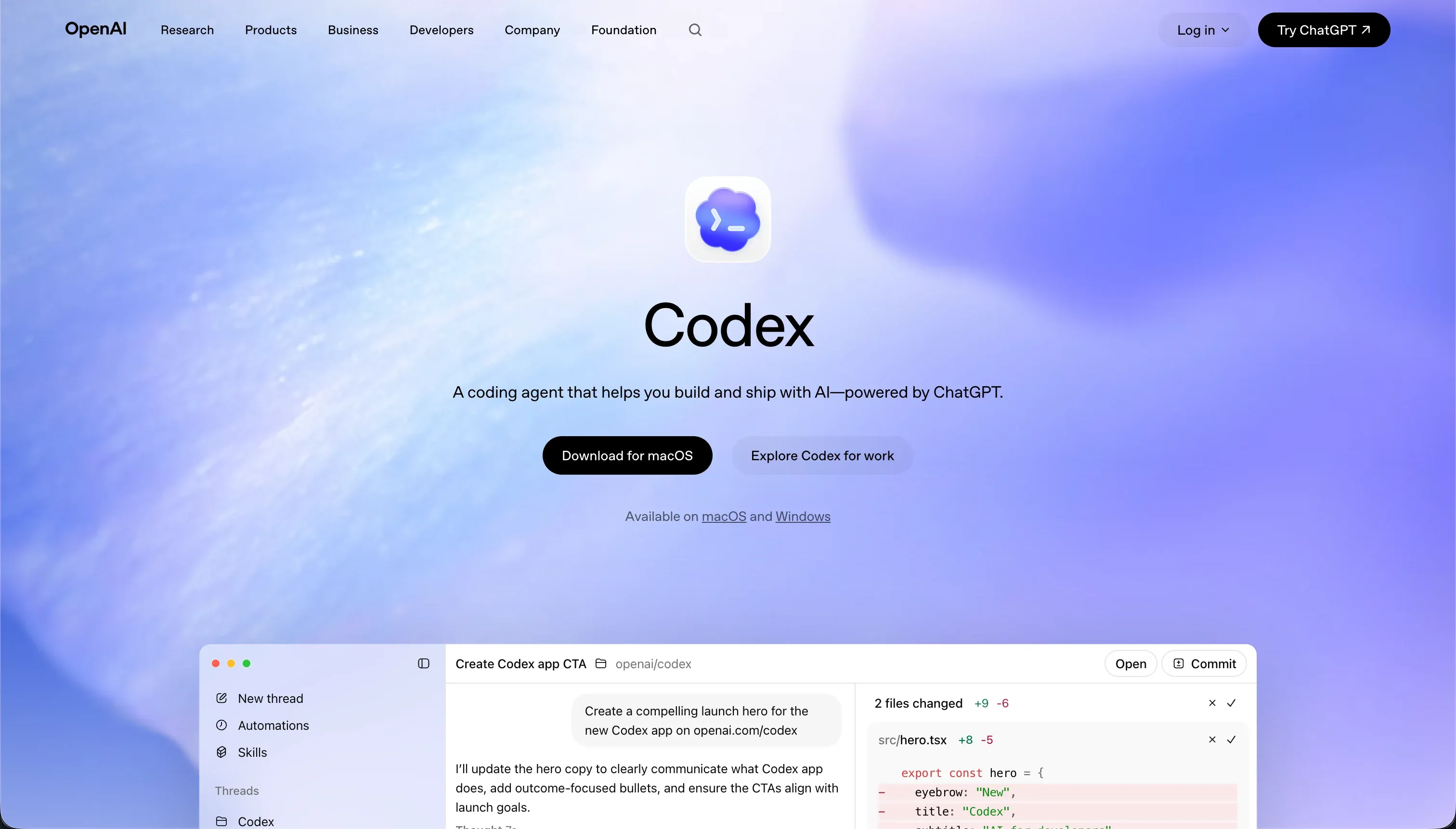
This comparison evaluates two contrasting approaches to AI-driven software creation: developer-first command-line execution and conversational visual application scaffolding. On one side is Codex, an autonomous terminal-based coding agent designed to run execution scripts and manage code drift locally.
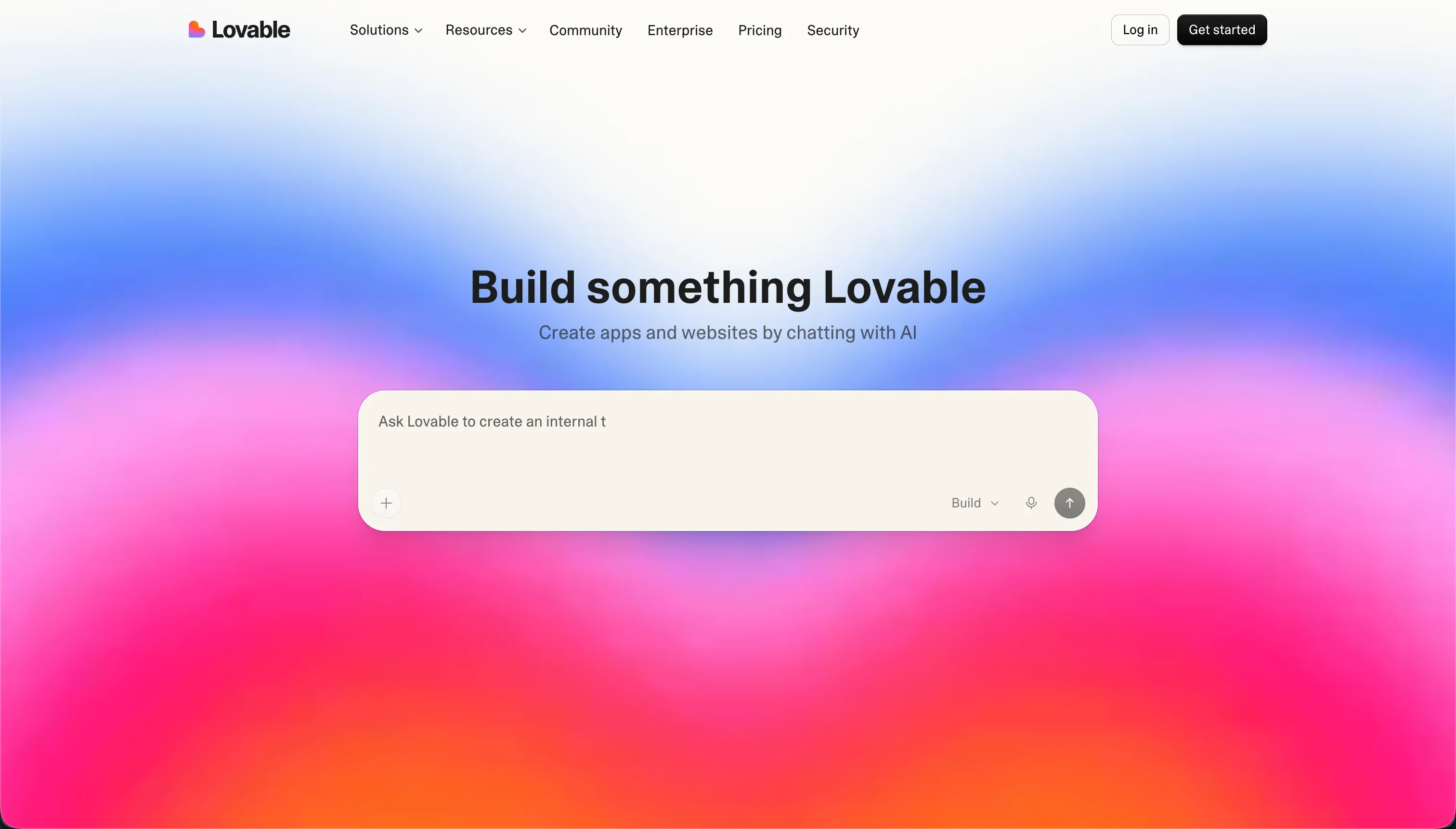
On the other side is Lovable, a prompt-to-app generator that compiles React frontends on top of Supabase backends via a chat interface.
7.1 to 5.5 is the final aggregate score in favor of OpenAI’s local terminal agent. While Lovable provides a visual interface that lets non-technical users build prototypes rapidly, it introduces structural maintainability and version control risks. For senior engineers who want deterministic control of actual repositories, Codex is the more robust procurement option, while non-programmers will find themselves locked out of the CLI platform entirely.
The decision in 30 seconds
| If your priority is… | Pick | Why |
|---|---|---|
| Genuinely custom business logic inside GitHub repositories | Codex | scores 8.0 on maintainability and operates directly in native codebases |
| Non-technical building of a React/Supabase SaaS prototype | Lovable | scores 7.5 on ease of build and offers natural-language prompt execution |
| Secure production-grade client portals or internal tools | Neither | both struggle with role security, which is pre-built natively in solutions like Softr |
| Mitigating ‘prompt whack-a-mole’ and regression loops | Codex | uses Git worktrees, descriptive commits, and test automation rather than chat prompts |
| Deploying standard database security without manual RLS audits | Neither | Lovable requires manual Supabase RLS policies and Codex outputs raw code that must be manually audited |
What each platform is
What is Codex?
Codex is an OpenAI-packaged CLI agent and desktop command tool that operates natively inside a localized workspace to write templates, execute scripts, and verify runs. Instead of relying on a sandboxed browser workspace, it integrates directly with a developer’s local environment, automating the physical code modifications that typically occur during feature runs.
Key capabilities of the system include parallel task execution across isolated, containerized Git branches and automated Git worktree management to prevent directory conflicts. It is built explicitly for software engineers and technical team leads who need to automate repetitive code refactoring, script writing, and pull-request creation without leaving the terminal.
What is Lovable?
Lovable is a conversational prompt-to-app builder designed to scaffold React frontends, Node backends, and Supabase databases entirely through interactive speech. It generates readable TypeScript structures behind the scenes, bridging the gap between non-technical builders and actual codebases by writing files and managing hosting on Lovable Cloud.
Key features in its stack include continuous Figma component imports, automatic code updates via chat prompting, and direct Git syncing to push changes downstream. It targets non-technical startup founders, product managers, and operations teams seeking to deploy early iterations of functional web apps.
- CLI agent and desktop tool
- Runs in the local workspace
- Parallel tasks in isolated Git worktrees
- Built for engineers and tech leads
- Refactoring, scripts, pull requests
- Conversational prompt-to-app builder
- React, Node and Supabase scaffolds
- Figma imports, chat-driven edits
- Hosting managed on Lovable Cloud
- Built for founders and ops teams
The core difference
The division between these systems is defined entirely by the interface through which the builder interacts with code.
- Codex is a terminal-based agent that acts as an autonomous engineer inside local Git branches, executing terminal commands and running tests to automate classical software development.
- Lovable is an AI conversation loop that translates messages into Hosted React/Supabase pages, exchanging terminal control for visual quickness.
Where the scores diverge
Maintainability: Codex 8.0, Lovable 3.5. Codex scores 8.0 because it works inside actual Git branches with standard commits and pull-request flows, allowing real engineers to review diffs and run test scripts before anything merges. Lovable scores 3.5 because it relies exclusively on re-prompting.
This conversational modification model is known to create painful regression loops where fixes reintroduce bugs, accumulate schema debt in AI-invented databases by month six, and yield massive files with tangled logic that are difficult to refactor without a manual rewrite in a local IDE.
Ease of build: Codex 4.0, Lovable 7.5. Lovable scores 7.5 on ease of build because a non-technical builder can go from a single sentence to a working SaaS interface with user registration in minutes, further accelerated by Figma imports.
Codex scores 4.0 on ease of build because it has no visual editor, operates entire runs through a CLI, and requires a complete developer environment to be configured before any action can occur.
Non-programmers will find Codex completely unusable, whereas Lovable’s chat loop eventually hits limits during complex iterations due to regression loops and prompt fatigue.
Production readiness: Codex 7.0, Lovable 4.0. Codex scores 7.0 here because it generates native code in standard repositories, runs test benches, and exports standard pull requests that a typical technical team can safely deploy to production.
Lovable scores 4.0 because the final 30 percent of execution logic is reported as a wall where prompt iterations break. Additionally, long-term builders report that platform updates frequently introduce regressions, and security configurations on the data layer must be configured and audited from scratch rather than inherited.
Security & access control: Codex 6.0, Lovable 3.5. Codex scores 6.0 due to its isolated, containerized branches, though granting a terminal agent permission to run local shell scripts carries sandboxing risks, and any security logic must be written manually by an engineer.
Lovable scores 3.5 because database security relies entirely on Supabase row-level security (RLS) rules that are easy to misconfigure. A non-technical builder has no visual interface inside the platform to configure and verify what data is exposed, resulting in silent exposure risks during automated migrations.
Data & integrations: Codex 8.5, Lovable 6.5. Codex scores 8.5 because it operates directly in the codebase, meaning it can reach any database, API, or service the language supports, bounded only by the code you write. Lovable scores 6.5 because it restricts its native stack to a Supabase-managed PostgreSQL backend.
Going beyond this core system requires builders to explicitly prompt the AI to wire up API calls, which has higher failure rates than writing native integrations directly.
Design flexibility: Codex 9.0, Lovable 8.0. Codex scores 9.0 because it generates raw code, making interface execution bounded only by the underlying CSS framework and the engineer’s direction.
Lovable scores 8.0 because it generates clean React components from Figma designs, but getting the final design details right requires repeated prompting to fix layout elements, rather than direct manual layout manipulation.
Cost comparison
Codex has no standalone subscription tier but is bundled into standard ChatGPT packages, with the highest priority reasoning models starting at $200 per month on the ChatGPT Pro tier. This billing model relies on credits and token ceilings that can drain rapidly during heavy parallel agent execution, occasionally leading solo developers to spend hundreds of dollars in overages within a single day.
Lovable Pro starts at $25 per month for 100 credits, but scaling up to the Business tier with 10,000 credits costs $4,300 per month - nearly double the price per credit of the Pro plan at the same volume. In addition to prompt credit consumption, builders should calculate the platform-level compute charges on Lovable Cloud and Supabase storage tiers as the application experiences volume.
Lock-in and the exit path
Codex has zero vendor lock-in because it generates raw developer files in native Git branches on your local machine; if you stop using the tool, your repository is unaffected. Lovable syncs its compiled.tsx code to GitHub, but builders report the exported packages are messy and difficult to port cleanly without custom refactoring.
Leaving Lovable means manually untangling injected trackers and fully rebuilding database schemas to escape Lovable Cloud, giving Codex the significantly cleaner exit.
- Repo: compiled.tsx on GitHub
- Repo: requires untangling
- Code: messy, hard to port
- Code: needs custom refactoring
- Database: Lovable Cloud schemas
- Database: full rebuild required
- Trackers: injected by builder
- Trackers: manually removed
Who should pick Codex
Pick Codex if:
- Senior software engineers who want to automate boilerplate generations, repetitive scripts, and branch runs directly within their local IDE environment.
- Technical teams with an established Git workflow and automated testing suite that can easily review, test, and merge Codex’s branch proposals.
- Enterprise systems with strict requirements for local execution, direct repository ownership, and zero platform dependency risks.
Do not pick Codex if you are a non-technical creator who cannot run a terminal or verify code changes manually.
Who should pick Lovable
Pick Lovable if:
- Non-technical founders who need a visual frontend prototype or early-stage MVP deployed to production in less than 48 hours.
- Product managers using Figma import to quickly wire up interactive design mockups with a functional database.
- Makers launching short-horizon landing pages or simple applications that do not require complex, compounding backend workflows over multiple years.
Do not pick Lovable if you are building an operational database application that must survive years of continuous maintenance updates without regression.
What neither platform answers
Both Codex and Lovable target developers or builders who view their application as a codebase. However, if your actual goal is to ship business software - such as client portals, team intranets, vendor trackers, or operational CRMs - both systems introduce massive technical debt.
Lovable hands you a code repo that requires prompt credits to maintain; Codex requires you to run terminal scripts and manual Git PR reviews. Neither provides pre-built patterns.
For operational business software, Softr is the higher-scoring alternative. It provides secure user management, visual role permissions, and built-in hosting natively on its SOC 2 Type II infrastructure.
By pairing a visual interface generator with native Softr Databases, non-technical teams can build secure operational apps in hours under a flat pricing model. If your team has developer resources and requires custom code pipelines, Replit provides a more robust development console than a pure prompt builder.
Analyst verdict
Codex wins this head-to-head comparison with a score of 7.1 to 5.5. It dominates on maintainability, production readiness, data integrations, and long-term data security simply by operating in your local repo rather than as a hosted visual black box. Because Codex writes files to your git branches, every line is reviewable, testable, and completely independent of a proprietary hosting vendor once committed.
Lovable takes a massive win on ease of build (7.5 to 4.0) because of its zero-threshold chat wrapper, but it creates a fragile codebase. For production operations, we only recommend Lovable if you have a developer prepared to assume full manual ownership of the codebase after the first 30 days.
For all situations where long-term codebase maintenance, predictable budgets, and verified security are required, Codex is the more logical technical purchase.
Related reading: the Codex scorecard, the Lovable scorecard, and our scoring methodology.