

Lovable and Same.new solve 2 different buying problems. Lovable is a generative full-stack app builder, while Same.new is a frontend cloning and scaffolding tool. The real decision is whether you need an AI to assemble an app skeleton with backend pieces or a fast way to copy a UI and rebuild the rest elsewhere.
On aggregate, Lovable scores 5.5 versus Same.new at 4.1, mainly because it can stand up data and auth instead of just visuals. That makes Lovable the stronger feature match in this narrow head-to-head. The decision flips only if your priority is cloning an existing website layout cheaply and handing static React work to engineers afterward.
The decision in 30 seconds
| If your priority is… | Pick | Why |
|---|---|---|
| Clone a live website layout into React fast | Same.new | URL-based cloning is its clearest advantage |
| Spin up a prototype with database tables and auth | Lovable | it connects to Supabase for real data and login flows |
| Ownable production codebase with clean exit | Neither | both rely on prompt-led generation and need cleanup before scale |
| Cheap visual scaffolding for a frontend team | Same.new | $10 Pro is simpler for static UI drafting |
| Business app security with predictable permissions | Neither | Lovable needs manual RLS review and Same.new has no native access control |
| Prompt-built MVP with backend included | Lovable | it covers more of the stack despite its lower production ceiling |
What each platform is
What is Lovable?
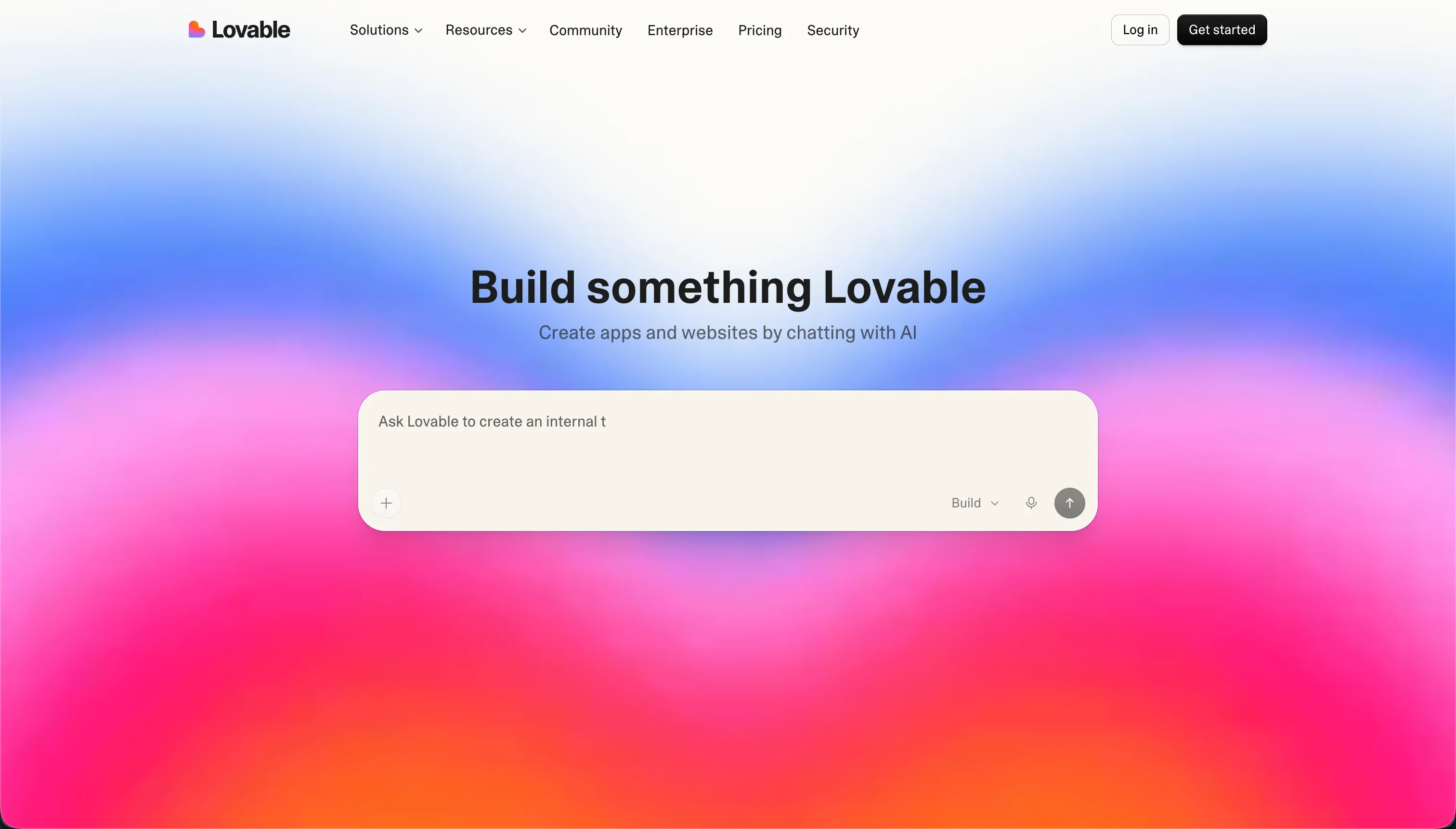
Lovable is an AI full-stack web app builder that turns prompts into working application scaffolds. Its build model is conversational: you describe features, screens, and changes in plain language, and the platform generates and updates the frontend and backend setup for you.
In the research, Lovable is anchored by Supabase integration for PostgreSQL data and authentication, plus GitHub sync for exporting work into a normal development workflow. It also supports design import workflows such as Figma handoff. That makes it genuinely built for founders, product teams, and developers who want to get to a functional MVP quickly, then harden or refactor later.
What is Same.new?
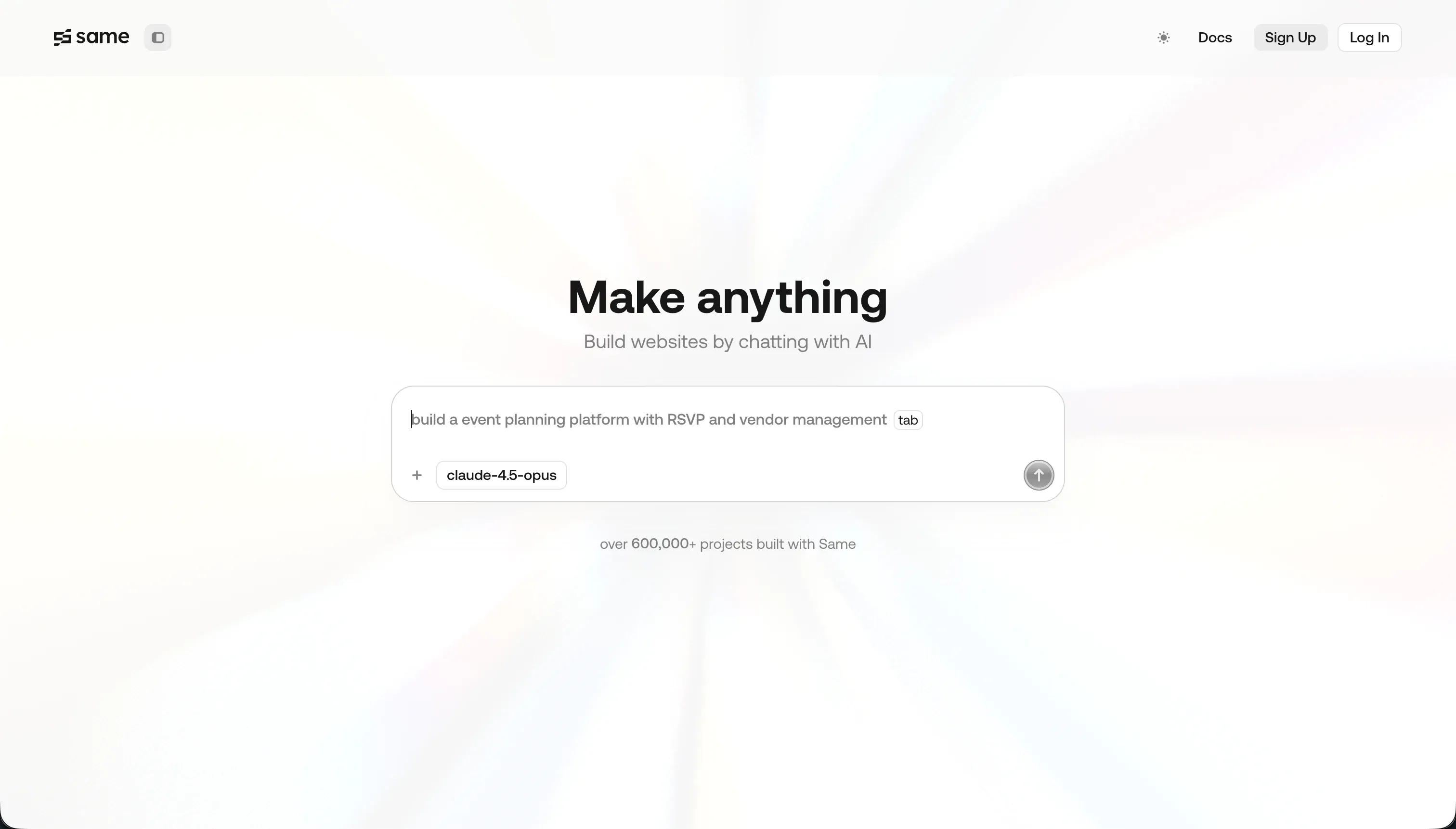
Same.new is an AI frontend cloning tool that recreates the look and structure of existing websites in React and Tailwind. Its build model starts from a URL or visual reference, then lets you iterate on the generated interface with prompts rather than building the layout from scratch.
In the research, Same.new is defined by fast visual cloning, exported React code, and low-cost access for design scaffolding. It does not provide a native database, authentication layer, or application backend. It is genuinely built for designers, agencies, and frontend teams that want a styled starting point they can rebuild into a real product elsewhere.
The core difference
These tools diverge most on stack depth: one tries to assemble an app, while the other mainly reproduces a frontend shell. That difference drives almost every score gap in the matchup.
- Lovable is a prompt-driven full-stack generator that tries to bundle UI, data, and auth into one managed build flow.
- Same.new is a prompt-edited frontend copier that helps you recreate interfaces, not run the application behind them.
Where the scores diverge
Ease of build: Lovable 7.5, Same.new 5.0. Lovable gets further from a blank page because it can scaffold screens, data models, and authentication in one pass. That saves setup time for MVP work, but the convenience drops once you hit bug-fixing or iterative edits, where prompt loops can introduce regressions.
Same.new is easy only within its lane: cloning a layout is fast, but anything beyond the initial visual shell still requires manual engineering or repeated prompt correction.
Data & integrations: Lovable 6.5, Same.new 4.0. This is one of the clearest gaps because Lovable can provision structured data and connect it to application flows through Supabase. It still gives up points because custom integrations beyond the core setup depend on generated code and prompt reliability rather than a broad native integration catalog.
Same.new remains a presentation-layer tool, so live data, storage, and backend integrations all have to be added after export.
Design flexibility: Lovable 8.0, Same.new 6.5. Lovable wins because it can generate original interfaces from prompts and imported design direction instead of only imitating existing pages. The tradeoff is that precise polishing can become tedious when you need exact spacing, states, or repeated refinements through chat.
Same.new is strong when the goal is to mimic an existing layout, but it is less reliable for novel, highly customized, or complex responsive interface systems.
Production readiness: Lovable 4.0, Same.new 3.0. Lovable is closer to shippable because it includes real backend primitives through Supabase, but it still loses points because generated business logic and security configuration need human review before launch.
The research also points to breakage and a late-stage complexity wall when apps become more involved. Same.new does not really contest this category because it stops at the frontend and leaves core application behavior to another stack.
Maintainability: Lovable 3.5, Same.new 3.0. Neither tool truly wins this category, because both depend on AI-generated output that can become harder to reason about over time. Lovable scores slightly better only because its stack is more complete and export paths exist, but prompt-led changes can still create schema debt and messy code.
Same.new falls behind because even simple visual edits can destabilize generated projects, forcing developers to repair or rewrite sections by hand.
Security & access control: Lovable 3.5, Same.new 3.0. Lovable finishes ahead because it at least sits on top of a real auth and database layer, but that advantage is qualified by the need to configure and audit Supabase Row Level Security manually. That means non-technical teams can think they have protection when they still need expert review.
Same.new scores poorly because it has no native user system, permissions model, or secure data layer to evaluate in the first place.
Cost comparison
Lovable uses a credit-based pricing model. The research cites Pro starting at $25 per month for 100 monthly credits and scaling up to $2,250 per month for 10,000 monthly credits, so the bill moves with prompt volume and debugging churn. Same.new uses a flatter subscription model, with a $10 per month Pro plan that includes 2 million tokens, making the spend easier to predict when your work is mostly frontend cloning.
For total cost of ownership, buyers should forecast more than the sticker price. Lovable can burn credits during iteration loops, then still require developer time to clean up generated code, review security, and stabilize maintenance.
Same.new looks cheap upfront, but you still need engineering time for backend wiring, hosting, authentication, and any rebuild work after export, plus migration cost if the cloned prototype becomes a real product.
- Pro starts at $25/month for 100 credits
- Scales to $2,250/month for 10,000 credits
- Bill moves with prompt volume and debugging churn
- Credits burn during iteration loops
- Developer time needed for cleanup and security review
- Flat $10/month Pro plan
- Includes 2 million tokens
- Spend is predictable for frontend cloning
- Engineering time needed for backend, hosting, auth
- Rebuild and migration cost if the prototype becomes a product
Lock-in and the exit path
Lovable offers the cleaner app-level exit of the two only because it can sync generated code to GitHub and sits on standard Supabase data underneath, so source files and database rows are not trapped in a proprietary runtime. Even then, leaving means cleaning up generated code and rebuilding any brittle prompt-produced logic.
Same.new also exports React and Tailwind code, which is a straightforward frontend exit, but because it has no native backend there is less to migrate and more to build from scratch elsewhere. Overall, Same.new has the cleaner technical export for a UI shell, while Lovable has the more useful but messier exit for an actual app prototype.
Who should pick Lovable
Pick Lovable if:
- Founders who need a fast MVP with real data tables and authentication, not just mock screens
- Teams willing to use GitHub export and have developers clean up a prompt-generated codebase later
- Builders who want Supabase-backed prototypes without hand-configuring the initial stack
- Product teams testing workflow software concepts before committing to a full engineering build
Do not pick Lovable if you need long-horizon maintainability, secure-by-default permissions, or a codebase that can scale without a developer cleaning up AI output
Who should pick Same.new
Pick Same.new if:
- Designers or agencies that want to clone an existing website UI into React quickly
- Frontend teams that need a cheap visual starting point and already plan to build the backend elsewhere
- Makers comparing layout directions before investing in full product engineering
- Teams whose main need is CSS and component scaffolding rather than application logic
Do not pick Same.new if your project needs native data, authentication, permissions, or dependable app behavior beyond the interface layer
What neither platform answers
Many buyers reading this comparison do not actually need an AI code generator at all. They need a business app: a client portal, internal tool, CRM, or operations dashboard defined by logins, permissions, workflows, and low maintenance after launch.
That is exactly the lane where Softr is the better fit, because it is built around controlled access and durable business app patterns rather than prompt-generated code.
Softr is the better answer when the core requirement is secure user access with less upkeep, especially given its stronger Production readiness, Maintainability, and Security & access control scores in the research. If your need is a business app that non-developers can keep running, shortlist Softr.
If your need is a more custom visual web app with heavier logic and you still want a visual builder, pair that evaluation with Bubble instead of treating Lovable or Same.new as the only choices.
Analyst verdict
On raw aggregate, Lovable leads Same.new 5.5 to 4.1. It takes Ease of build, Production readiness, Maintainability, Security & access control, Data & integrations, and Design flexibility because it covers more of the application stack, while Same.new’s best argument is its speed and price for frontend cloning.
That still does not make Lovable the default recommendation. If you need a production-worthy, ownable codebase, the better buy is Replit, because this matchup tops out in prototype territory and Lovable cannot be the final crown here.
The one case that flips the decision toward Same.new is when your job is simply to reproduce a UI quickly for a frontend team, not to ship the full product on the platform.
So the practical read is simple: Lovable wins the narrow scorecard, but Replit is the safer recommendation for serious code ownership, and Same.new only wins for cheap visual cloning.
Related reading: the Lovable scorecard, the Same.new scorecard, and our scoring methodology.