

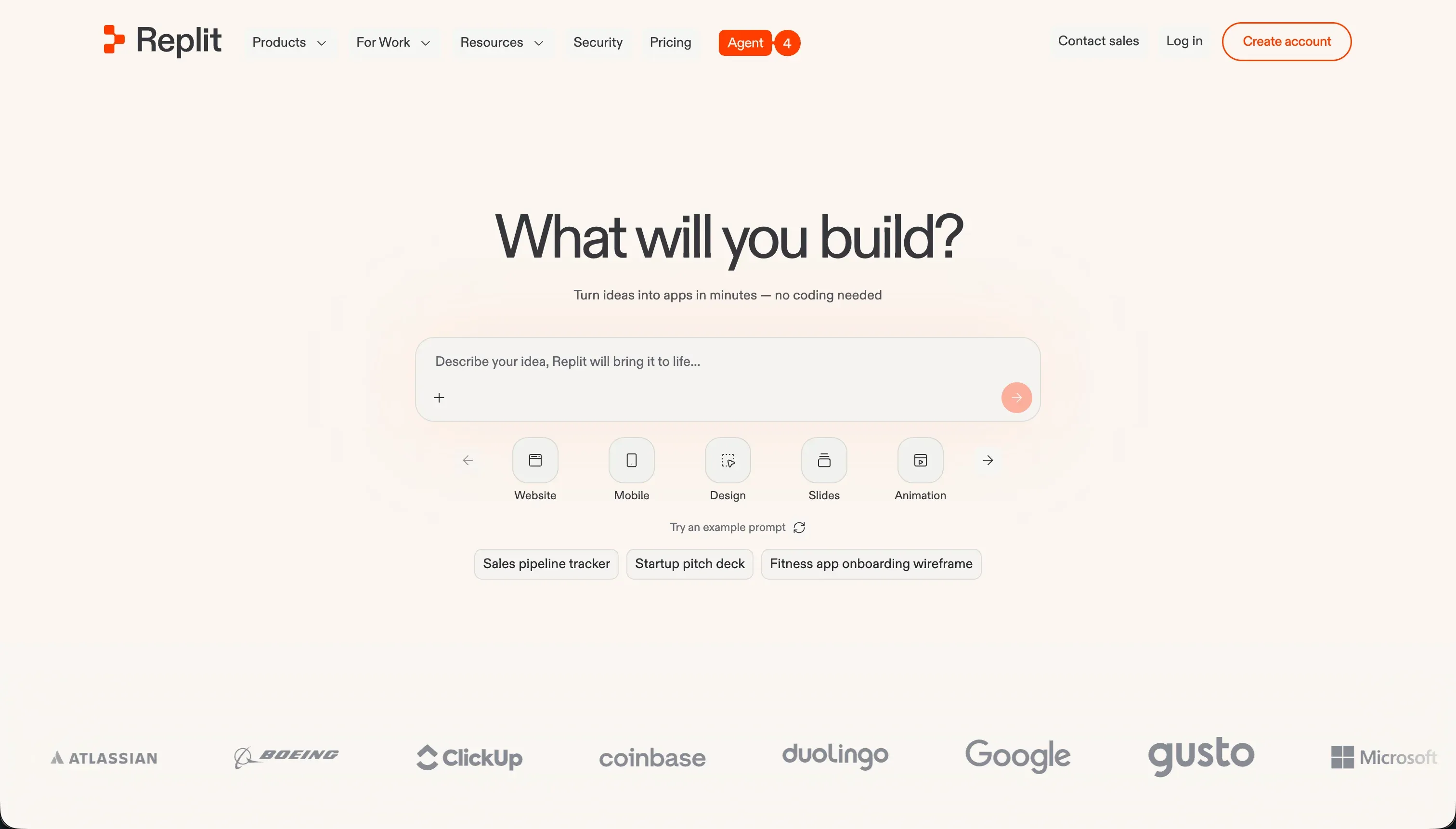
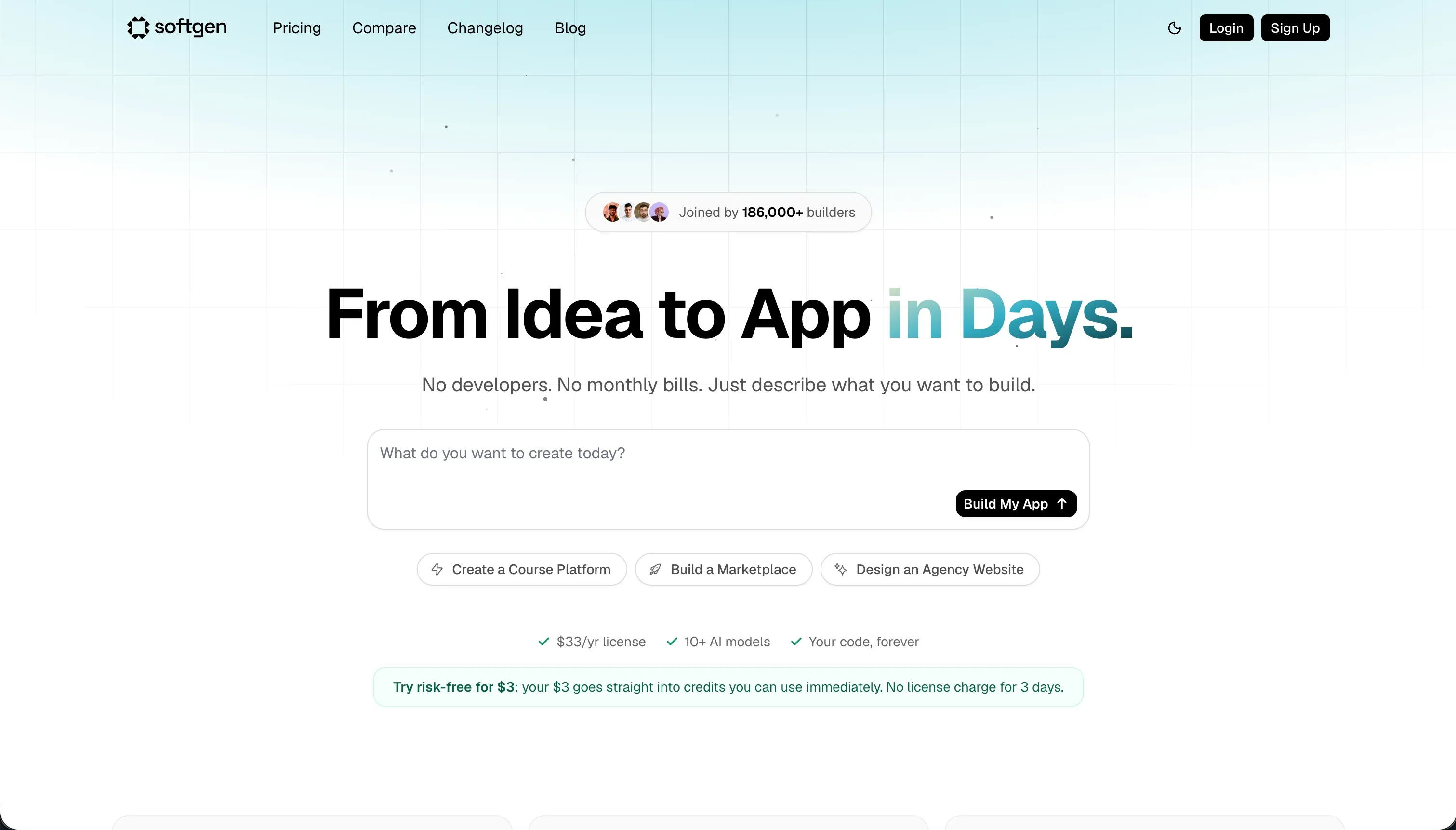
Choosing between Replit and Softgen is really choosing between 2 procurement problems. Replit is an AI-assisted cloud development environment, while Softgen is a chat-first app builder for fast web MVPs.
Replit wins the general decision, 7.4/10 to Softgen’s 5.1/10. It takes the matchup on production readiness, maintainability, security & access control, data & integrations, and design flexibility. Softgen only flips the decision if your main goal is the quickest non-technical first draft and you value its easier 7.0 build experience over long-term control.
The decision in 30 seconds
| If your priority is… | Pick | Why |
|---|---|---|
| Clean, exportable code in standard languages | Replit | GitHub-syncable codebase and broader language support make exit and handoff easier |
| Fastest non-technical MVP draft | Softgen | Its 7.0 ease-of-build edge comes from a more guided chat-first flow |
| Production hosting with stronger infrastructure | Replit | Higher production-readiness score and managed deployment features |
| Complex data models and custom integrations | Replit | Its 8.0 data & integrations score reflects code-level flexibility |
| Low-maintenance client portal or internal tool | Neither | Both leave too much app behavior to prompting rather than stable business-app primitives |
What each platform is
What is Replit?
Replit is a browser-based cloud development environment with AI assistance layered onto a real coding workspace. The build model is code-first: its agent scaffolds apps, writes files, configures services, and deploys them, but the result is still an editable repository rather than a sealed visual runtime.
It includes concrete developer surfaces like a terminal, package management, hosting, database support, and GitHub sync. Research also points to managed PostgreSQL and deployment tooling with rollback support. That makes it genuinely suited to technical founders, developers, and teams that want AI speed without giving up direct control of the codebase.
What is Softgen?
Softgen is a chat-based app generator aimed at getting a web app draft live from plain-English prompts. The build model is conversation-first: you describe the product, the system proposes schema and layout decisions, and the platform assembles the app inside its own managed environment.
Research highlights guided schema generation, basic authentication flows, and native Stripe-oriented starting points for common SaaS patterns. It also notes that many edits still route back through prompting rather than direct visual control. That makes Softgen genuinely best for non-technical founders and indie makers validating a simple idea fast, not teams planning a long-lived production system.
The core difference
These tools diverge most on generated output. Replit generates and runs a conventional codebase you can keep shaping yourself, while Softgen generates an app experience that remains much more dependent on its own runtime and prompt loop.
- Replit turns AI prompts into a standard, editable software project that a developer can inspect, refactor, and move elsewhere.
- Softgen turns AI prompts into a managed app draft where iteration stays tied more tightly to the platform’s own generation workflow.
- Standard, editable software project
- Developers can inspect and refactor
- Portable, can move elsewhere
- Managed app draft
- Iteration tied to its generation workflow
- Stays dependent on its own runtime
Where the scores diverge
Production readiness: Replit 8.0, Softgen 4.5. Replit separates itself with stronger evidence of deployable infrastructure, managed services, and a clearer path from prototype to operating app. Features like managed PostgreSQL, hosting, and rollback support matter once traffic, failures, and data durability become real concerns.
Softgen can publish working apps, but the research frames it as better suited to early validation than mature operational use. Replit still takes a deduction because AI-generated projects can need human cleanup before they are truly dependable.
Maintainability: Replit 7.5, Softgen 4.0. Replit wins because the project remains real code that another developer can read, edit, and version outside the agent loop. If the AI stalls or makes poor changes, the team can step in directly and continue work with normal engineering practices.
Softgen loses ground because important changes often push users back into prompting, which can create repetitive iteration and less predictable edits. Replit is not perfect here either, since generated code still needs review, but it offers a much more durable maintenance model.
Design flexibility: Replit 8.5, Softgen 5.0. Replit takes this criterion because there is no real template ceiling when the underlying output is code. Teams can change frontend frameworks, component structure, and detailed UI behavior without waiting on a platform’s predefined blocks.
Softgen is faster when the desired layout stays near its defaults, but custom visual refinement tends to send users back into prompt iteration. Replit still is not frictionless here, since better design freedom also means more implementation work.
Data & integrations: Replit 8.0, Softgen 5.5. Replit wins on breadth because code-level freedom opens the full ecosystem of APIs, databases, and backend patterns. The tradeoff is that teams must understand more about schema design, integration setup, and failure handling than they would in a narrower builder.
Softgen covers simpler use cases with generated schemas and some starter integrations, which is enough for lightweight validation. It falls behind when the app needs custom backend behavior, richer data models, or broader third-party connectivity.
Security & access control: Replit 6.0, Softgen 4.5. Replit scores higher because it can use standard authentication patterns, secrets management, and code-level access rules, giving teams room to implement stronger controls.
That advantage is conditional, though, because the platform does not on its own guarantee good security; the generated logic still needs inspection and testing. Softgen helps with basic sign-in flows, which is useful for simple apps, but the research notes weaker granularity for complex permissions.
Once you need nuanced roles or deeper control, Softgen runs out of runway faster.
Ease of build: Replit 6.5, Softgen 7.0. Softgen has the edge because it is more opinionated about the path from idea to first draft. Its chat flow guides users through schema and app structure decisions in a way that reduces early setup friction for non-technical builders.
Replit is still fast, but it exposes more of the real development surface, including secrets, runtime behavior, and debugging steps. That openness is powerful, yet it means beginners hit more decisions sooner.
Cost comparison
Replit uses a subscription-plus-usage model. Its Core plan is $20/month and its Pro plan is $100/month, with premium models, parallel agents, and 28-day database rollbacks called out in the research; extra agent credits are bought separately, so the bill moves with both tier choice and how heavily you use AI generation and debugging.
Softgen uses a lighter fixed-plus-credit structure. The research cites a $33/year membership fee for hosting, then pay-as-you-go spending for AI actions and iteration, so buyers should forecast not just sticker price but builder time, prompt retries, maintenance cleanup, overage-like credit burn, and any later migration work if the app outgrows the platform.
Lock-in and the exit path
Replit has the cleaner exit. Research says it syncs to GitHub and gives you a standard codebase you can move to other hosts, so leaving mainly means re-creating infrastructure choices and deployment setup elsewhere, not rewriting the whole product.
Softgen does offer code export, but the output is more entangled with its generation patterns and typically needs developer cleanup before independent hosting. Neither tool exports a finished business system with zero work, but Replit leaves you with a more portable asset.
Who should pick Replit
Pick Replit if:
- Technical founders who want AI speed but still need an exportable, developer-readable codebase
- Teams building apps with custom backends, richer integrations, or non-trivial data models, matching Replit’s 8.0 data & integrations score
- Buyers who expect a project to move beyond MVP and value stronger production-readiness and maintainability scores
- Organizations that may later self-host or hand the project to engineers through GitHub-based workflows
Do not pick Replit if your team cannot review code and you need the most guided non-technical first-build experience above all else.
Who should pick Softgen
Pick Softgen if:
- Non-technical founders who want the quickest path to a functional web MVP through chat-driven generation
- Indie makers validating a simple SaaS concept where basic auth and starter payment flows are enough
- Buyers optimizing for lower upfront recurring cost and willing to buy credits only during active building
- Teams that care more about first-day momentum than long-term maintainability or infrastructure depth
Do not pick Softgen if the app needs long-term maintainability, granular permissions, advanced integrations, or refined custom UI beyond standard generated patterns.
What neither platform answers
Many buyers reading this matchup do not actually need an AI code workspace or a chat-led MVP generator. They need a business app: a client portal, internal tool, CRM, or partner workspace defined by logins, permissions, records, and low maintenance after launch. In that lane, Softr is often the better answer because its strengths are stable app operations rather than generated code experiments.
On our scorecard, Softr posts 8.0 for production readiness, 7.5 for maintainability, and 6.0 for security & access control, which is exactly why it fits recurring business software better than either Replit or Softgen. Pick Softr when predictable admin surfaces, user groups, and ongoing upkeep matter most.
If your priority is instead broader custom workflow logic and a more programmable visual environment, Bubble is the more sensible alternative to consider.
Analyst verdict
Replit wins 7.4 to 5.1. It takes production readiness, maintainability, security & access control, data & integrations, and design flexibility, while Softgen keeps only ease of build.
That makes Replit the better default recommendation for most serious software purchases, because the stronger scores map to the problems that show up after launch: operating the app, changing it safely, integrating it, and eventually moving it. Its lead is not absolute, since AI-generated code still needs review and infrastructure still needs oversight.
The decision flips only when your buying goal is a fast, non-technical MVP draft and Softgen’s 7.0 ease-of-build advantage matters more than long-term control. If that is the job, Softgen is the simpler short-run buy; otherwise Replit is the stronger platform on the numbers and on exit path.
Related reading: the Replit scorecard, the Softgen scorecard, and our scoring methodology.