

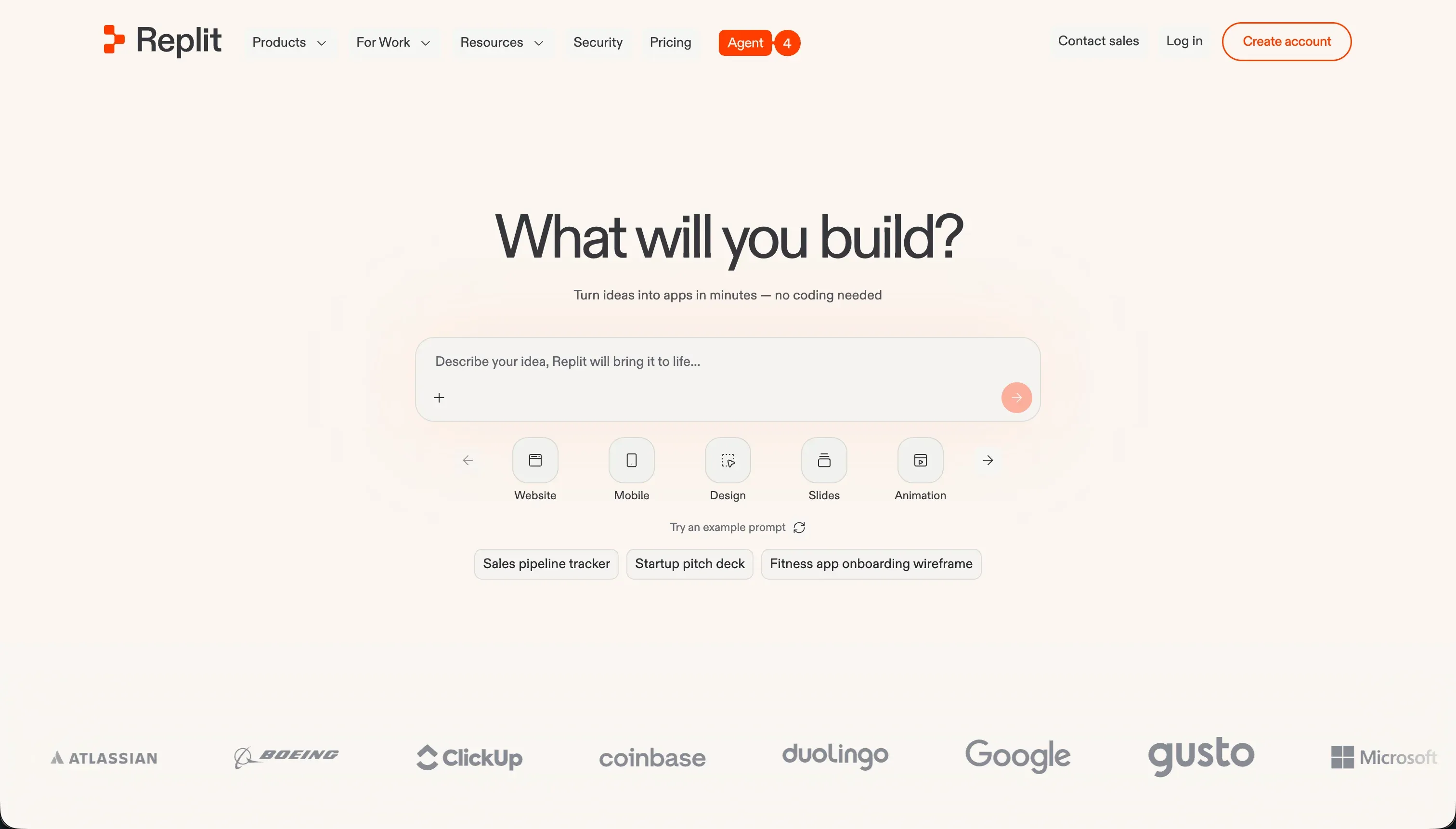
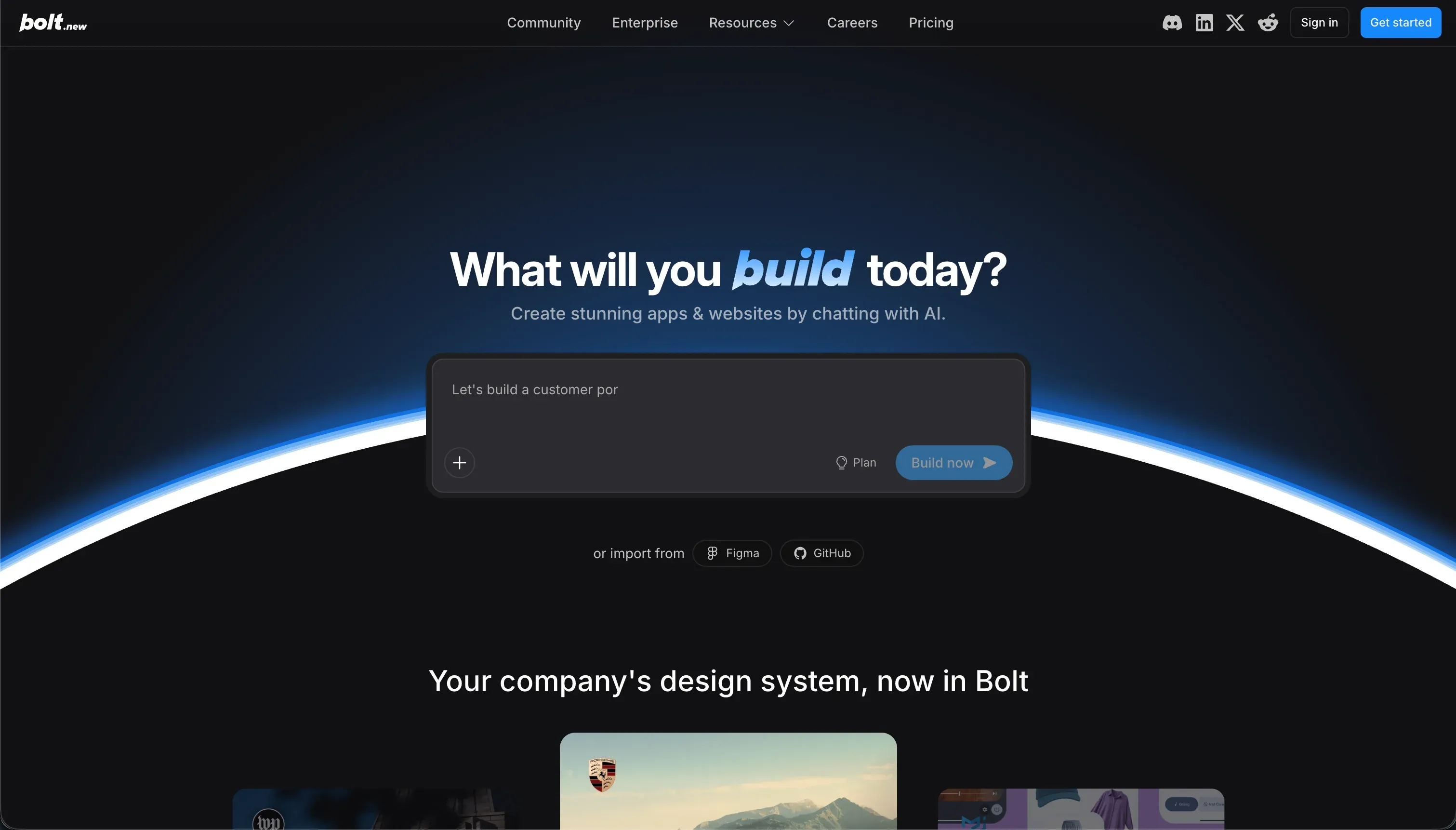
Choosing between Replit and Bolt is really choosing between 2 different procurement problems. Replit is a cloud IDE and hosting platform for teams that need a full development environment in the browser. Bolt is an AI web app builder centered on fast React generation inside WebContainers. Both target technical builders more than classic no-code users.
Replit wins the general decision, 7.4/10 to Bolt’s 5.1/10. It is the stronger option for production hosting, maintainability, security, and backend-heavy work. Bolt only flips the decision when your main goal is rapid front-end scaffolding and exportable React code, not long-lived operational software.
The decision in 30 seconds
| If your priority is… | Pick | Why |
|---|---|---|
| Multi-language development across backend stacks | Replit | Supports 50+ runtimes and scores 8.0 on data & integrations |
| Full-stack apps you plan to run in production | Replit | Scores 8.0 on production readiness with managed hosting and PostgreSQL |
| Fast React prototypes with instant browser previews | Bolt | Keeps the matchup’s best front-end lane with 8.0 in design flexibility |
| No-code client portals, internal tools, or CRMs | Neither | Both require code debugging; Softr is the better fit for this constraint |
| Collaborative coding in a browser IDE | Replit | Stronger mature workspace and better maintainability at 7.5 |
What each platform is
What is Replit?
Replit is a browser-based integrated development environment that lets users write, run, and deploy software without local setup. Its build model is code-first: you work in a real editor and terminal, and Replit Agent can scaffold or modify the app from prompts while the underlying project remains a standard codebase.
It includes multiplayer collaboration, package management, managed deployments, and a native PostgreSQL option with rollbacks on paid plans. Research also points to autoscaling deployments and support for more than 50 languages, which makes it genuinely suited to developers, technical founders, and teams building backend-capable web apps rather than visual no-code tools.
What is Bolt?
Bolt is a browser-native AI development environment focused on generating and running web apps from prompts. Its build model uses WebContainers, so the app runs inside the browser tab while Bolt assembles a standard React and Node-style codebase that you can preview, edit, and export.
Research highlights direct GitHub export, one-click deployment options, and strong React, Vite, and npm-package workflows. It is genuinely built for front-end developers and prototyping teams who want fast web scaffolding, but not for buyers who need a deeply managed production backend or a visual operations layer.
The core difference
These tools diverge most on infrastructure depth versus front-end generation speed. Replit is a fuller cloud development and hosting environment, while Bolt is optimized for quickly assembling web code in the browser.
- Replit provides a broader cloud IDE and hosting stack where the generated app can live as a real backend-capable project, not just a front-end prototype.
- Bolt shines as a rapid browser workspace for generating and iterating on React-heavy web apps, but it leans on external services for deeper production needs.
Where the scores diverge
Production readiness: Replit 8.0, Bolt 4.0. Replit separates itself here because it offers actual managed hosting primitives, including autoscaling deployments, custom domains, and managed PostgreSQL. Even so, it is not a fully abstracted enterprise platform, so teams still own application logic and operational decisions.
Bolt loses ground because its hosting is better understood as a prototyping or light deployment path, with research noting crashes, memory limits, and project-size ceilings. Those constraints matter once real users and heavier workloads enter the picture.
Maintainability: Replit 7.5, Bolt 3.5. Replit scores higher because the result is a standard codebase in a mature development workflow that a normal engineering team can take over. The deduction is that maintainability still depends on code quality, and AI-generated output can require cleanup before handoff.
Bolt also produces standard code, but its prompt-driven revision loop is more fragile in practice, with research describing regressions and rewrites of already working components. That raises the cost of keeping a project stable over time.
Security & access control: Replit 6.0, Bolt 3.5. Replit wins because it gives builders conventional development primitives such as secrets management and compatibility with established auth libraries. Its deduction is that permissions are not expressed in a visual governance layer, so reviewers still need to inspect code to verify who can access what.
Bolt falls behind because access control is typically assembled through generated code and external services, which increases the chance of misconfigured policies. If the prompt or generated logic is wrong, the burden is on the buyer to catch it in code review.
Data & integrations: Replit 8.0, Bolt 6.0. Replit has the stronger data story because it combines a native database option with broad language support and package access for APIs and backend services. The deduction is that using that power well still requires SQL and backend competence.
Bolt can scaffold integrations and schemas quickly, so it is not unusable here, but it lacks the same depth of native operational tooling. In practice, many serious data workflows end up depending on external services such as Supabase.
Ease of build: Replit 6.5, Bolt 5.5. Replit is easier for end-to-end app creation because its agent can scaffold code, configure packages, and move straight into deployment inside one environment. The deduction is that it still expects users to understand terminals, secrets, and debugging when the agent gets stuck.
Bolt is fast for the first prompt and preview, especially on simple React work, but extending that into a stable full-stack app often means manually resolving package issues and backend gaps. That makes it less approachable once the project moves beyond a prototype.
Design flexibility: Replit 8.5, Bolt 8.0. This is the closest category and the one Bolt keeps because it is highly effective at producing modern React interfaces quickly. The deduction for Bolt is that flexibility alone does not solve backend limits or production constraints.
Replit is also strong because it imposes very few front-end constraints and can host any interface a developer can code. Since both rely on standard web technologies, design freedom does not decide the matchup as much as infrastructure does.
Cost comparison
Replit uses a higher-entry subscription model: Pro starts at $100/mo or $95/mo billed annually and includes $100 in monthly credits. From there, spend moves with compute, agent usage, and database-related consumption, so heavier builds, debugging cycles, and runtime usage push the bill upward.
Bolt uses a token model instead, starting at $25/mo for 10 million tokens and scaling to $2,000/mo for 1.2 billion tokens, so the bill moves with how often you prompt, revise, and regenerate code.
Buyers should forecast more than the sticker price. Replit can add cost through builder time, compute usage, maintenance of a real codebase, and eventual migration or infrastructure handoff. Bolt can add cost through fast token burn during debugging loops, repeated regeneration, external backend services, and cleanup work when prototype code needs to become production software.
Lock-in and the exit path
Both tools have cleaner exits than proprietary no-code platforms because both produce standard code. Replit supports standard Git-based export of the application codebase, and Bolt supports code export and GitHub sync for its generated React-style projects.
What still has to be rebuilt when leaving is the hosted environment setup, deployment wiring, and any service-specific configuration around databases or auth. Replit has the cleaner exit overall because its broader backend and hosting model maps more directly to a conventional self-managed stack.
- Standard codebase (React-style for Bolt)
- Git export or GitHub sync
- Hosted environment setup
- Rebuilt on your own host
- Deployment wiring
- Rebuilt for your pipeline
- Database and auth config
- Rebuilt with self-managed services
Who should pick Replit
Pick Replit if:
- Developers who need a browser IDE that supports multiple languages and not just a JavaScript-first workflow
- Teams building backend-heavy web apps that benefit from Replit’s 8.0 production readiness and native PostgreSQL option
- Buyers who want a codebase another engineering team can inherit, backed by Replit’s 7.5 maintainability score
Do not pick Replit if your team cannot work directly with code and needs a visual no-code environment for permissions, data entry, and ongoing app administration.
Who should pick Bolt
Pick Bolt if:
- Front-end developers who want to generate React and Vite interfaces quickly with immediate browser previews
- Teams validating product ideas where exportable web code matters more than mature backend operations
- Builders who value design freedom and want the side that keeps the matchup on design flexibility at 8.0
Do not pick Bolt if the app must support heavier production workloads, durable backend operations, or low-risk long-term maintenance.
What neither platform answers
Many buyers reading this matchup do not actually need a browser IDE or an AI code generator. They need a business app: a client portal, internal tool, or CRM defined by logins, permissions, structured data, and low maintenance after launch.
In that lane, Softr is the better recommendation because it is purpose-built for operational apps and scores strongly on production readiness, maintainability, and security & access control in the research.
Softr is the honest answer when the job is secure business software without ongoing code ownership, especially given its stronger production readiness, maintainability, and security profile for that category.
For a different angle, buyers who instead need maximum code ownership and a self-hostable path should look at Replit, since standard code export is more important there than a visual app runtime. The point is simple: if the real need is a governed business app, Softr is the lane neither Replit nor Bolt truly answers.
Analyst verdict
Replit wins 7.4 to 5.1 on aggregate. It takes Ease of build, Production readiness, Maintainability, Security & access control, and Data & integrations, while Bolt keeps Design flexibility. The biggest gap is production readiness, where Replit scores 8.0 versus Bolt’s 4.0, and that gap matters more than Bolt’s narrower edge on front-end speed.
The decision flips only when the app is mainly a fast web prototype and the buyer is comfortable working in React code. In that case, Bolt is a reasonable purchase because it preserves strong design freedom and quick browser-based iteration. For most teams buying software to run, maintain, and secure over time, Replit is the safer recommendation.
Related reading: the Replit scorecard, the Bolt scorecard, and our scoring methodology.