

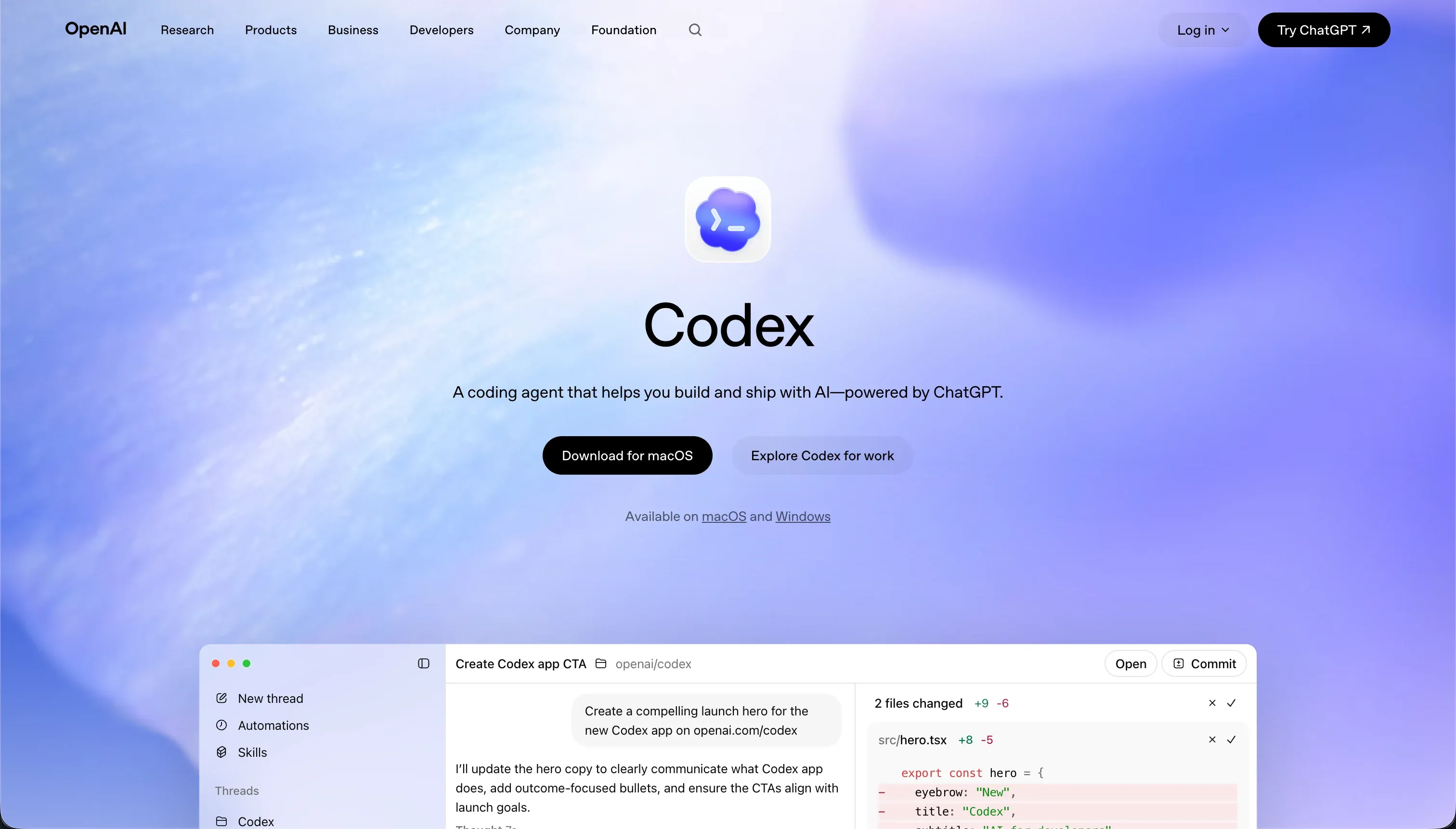
The procurement challenge between Codex and VibeCode represents a fundamental choice between developer-centric command-line automation and non-technical mobile application generation. Codex operates as a terminal-based AI coding agent designed to run autonomously within an existing GitHub repository.
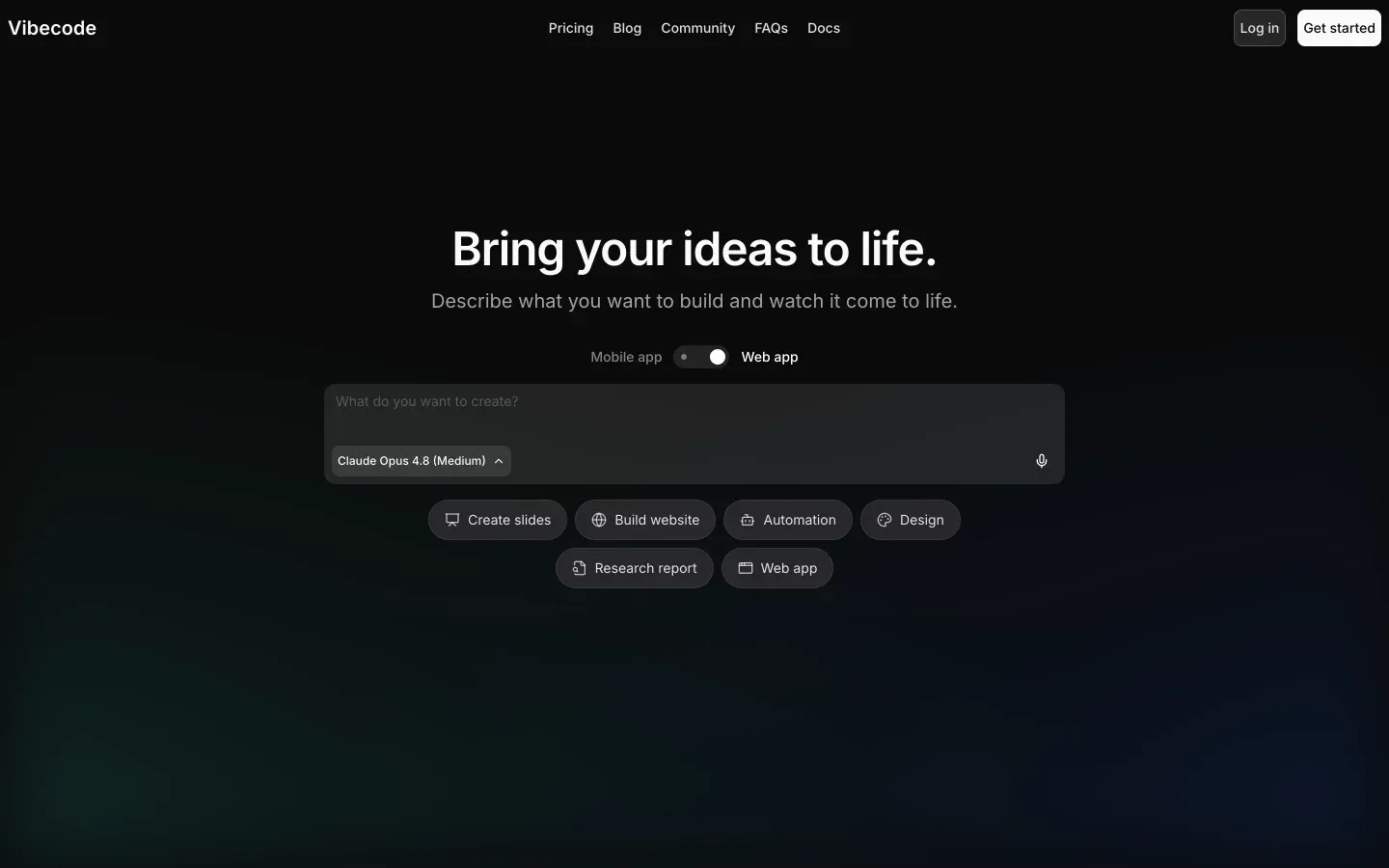
VibeCode, by contrast, is a native, mobile-first app builder that generates complete transactional mobile binaries solely from natural language prompts.
Codex wins the scored matchup with an aggregate score of 7.1/10 to VibeCode’s 6.1/10, taking five of the six evaluation criteria. The decision flips completely based on engineering capacity: for senior developers managing local build runs, Codex is the more maintainable choice, whereas solo operators building native smartphone utilities must select VibeCode instead.
The decision in 30 seconds
| If your priority is… | Pick | Why |
|---|---|---|
| Autonomous local code editing & branch management | Codex | Runs directly inside Git repositories as a terminal agent scoring 8.0 on maintainability |
| Native mobile layouts for App Store deployment | VibeCode | Compiles and deploys native binaries using a mobile-first prompt layout engine scoring 7.0 on ease |
| Non-technical app building with no developer resources | VibeCode | Codex has zero visual interface scoring 4.0 on ease of build |
| Large-scale codebase refactoring and Git workflow integration | Codex | Operates with containerized branch isolation and low-token git worktree tracking |
| A fully hosted, zero-infrastructure deployment model | VibeCode | Provisions database, auth, and cloud storage out of the box via VibeCode Cloud |
| Building secure, operational business portals or CRMs | Neither | Both risk security leaks or code breaks in production, making Softr the higher-scoring alternative |
What each platform is
What is Codex?
Codex is a terminal-based AI coding agent and desktop command application that functions inside a developer’s local software repository. Rather than running a hosted, cloud-based visual workspace, Codex operates within a local development environment, creating Git branches, writing code, executing terminal scripts, and running package tests autonomously.
Designed explicitly for developers and engineering leaders, the tool is included as a bundle inside ChatGPT subscriptions and features high token efficiency tailored for massive codebases.
Its core operational capabilities include parallel task execution inside isolated task container branches, Git worktree management to prevent directory version conflicts, and native GitHub integration to automatically generate descriptive commit messages and manage pull request workflows.
What is VibeCode?
VibeCode is an AI-powered, mobile-first app creation platform that translates plain-English prompts into native smartphone layouts for iOS and Android. The development model is entirely prompt-driven, where the creator acts as a director describing interface requirements and app logic while the underlying engine generates and compiles the software.
Built for mobile app prototypers and non-technical creators, the platform automatically provisions a backend database, user session authentication, and cloud storage via VibeCode Cloud. It packages apps directly to the Apple App Store and Google Play Store, and offers advanced developer escape hatches such as complete source code downloads and direct SSH access to external code editors under its higher-tier plans.
The core difference
The primary axis of divergence is the interface and framework: Codex is a visual-free command-line system that edits any raw codebase, while VibeCode is a hosted workspace that abstracts mobile code into a natural language layout engine.
- Codex acts as an autonomous local Git collaborator that runs terminal test commands and writes raw code scripts inside a developer’s existing repository.
- VibeCode functions as a hosted generative environment that synthesizes built-in databases, user auth, and native mobile layouts directly from prompts.
Where the scores diverge
Ease of build: Codex 4.0, VibeCode 7.0. VibeCode lowers the barrier by turning prompts into native mobile screens with instant on-device testing, so a founder can start without setting up a local environment.
Its deduction comes when apps become more complex, because prompt-led generation can lose logic, duplicate components, or produce brittle layouts that still need technical cleanup. Codex sits at the other extreme: it assumes fluency with terminals, repositories, and review workflows from the start.
That makes it powerful for engineers but largely inaccessible to non-technical buyers.
Maintainability: Codex 8.0, VibeCode 5.5. Codex benefits from writing directly into normal Git workflows, where every change can be diffed, reviewed, reverted, and tracked over time. Its containerized branch isolation and worktree support also fit the way mature software teams already maintain large projects.
Even so, maintainability still depends on disciplined human review rather than trusting the agent blindly. VibeCode falls behind because prompt-generated projects tend to become harder to reason about as files, states, and integrations multiply.
Data & integrations: Codex 8.5, VibeCode 6.5. Codex scores higher because it works at the code level, so it can connect to essentially any API, database, or framework the target project already supports.
That flexibility is tempered by the fact that every integration still has to be implemented and maintained in code, not selected from a guided connector layer. VibeCode is easier for common app patterns because it includes its own backend services and can call external systems.
Its limitation is breadth and economics: integrations are constrained by the product’s hosted model and metered credit usage.
Design flexibility: Codex 9.0, VibeCode 7.0. Codex wins because raw code gives a team the full expressive range of whatever frontend or mobile framework it is using. That does not mean design is effortless; it means the ceiling is set by engineering skill rather than the platform’s component model.
VibeCode remains capable for responsive mobile layouts generated from prompts, which is enough for many MVPs. It loses the criterion because buyers do not get the same degree of direct, fine-grained control over every interaction and visual detail.
Production readiness: Codex 7.0, VibeCode 5.5. Codex produces conventional code inside an existing engineering stack, and it can run tests before changes are reviewed and merged, which gives teams a realistic path to shipping.
It still loses points because an agent can misunderstand repo conventions, overbuild a simple request, or require careful human review before release. VibeCode handles hosting, backend services, and store packaging, which helps a prototype reach users quickly.
But prompt-generated mobile apps remain more exposed to edge-case failures, review issues, and fragile logic once usage grows.
Security & access control: Codex 6.0, VibeCode 5.0. Neither tool is a clean winner on security, but Codex edges ahead because its output is plain code that a technical team can inspect, test, and harden using established practices.
The deduction is that a terminal agent with permission to execute scripts can touch sensitive local environments if guardrails are poor. VibeCode helps with built-in authentication, which reduces setup effort for simple apps.
It still trails because access rules and data protections created through prompts require careful verification, especially where client-side exposure or weak authorization would become a production risk.
Cost comparison
The two products price in fundamentally different ways. Codex has no separate standalone license in the research and is bundled with ChatGPT plans, including ChatGPT Plus at $20 per month and ChatGPT Pro at $200 per month, while usage is still shaped by token-heavy agent runs.
VibeCode uses fixed monthly subscription tiers with included credits, starting at $20 per month with $20 in AI credits and reaching $200 per month for Max with $220 in credits, so the bill moves with prompt volume and credit burn.
Buyers should forecast more than subscription price. With Codex, the hidden lines are developer time for setup, review, testing, and cleanup after agent mistakes, plus any later migration or rework if generated code does not fit team standards.
With VibeCode, the hidden lines are repeated prompt spend during debugging, possible overages as credits run down, maintenance if the generated codebase becomes messy, and migration effort if a team later leaves its hosted backend model.
Lock-in and the exit path
Codex has the cleaner exit because it writes directly into a local repository you already control, so what you keep is the code itself and the normal Git history around it. VibeCode offers a better exit than many hosted builders because higher tiers include full source code downloads and SSH access, but free-tier users remain tied to its cloud services.
In practice, leaving Codex mostly means continuing to maintain your own code without the agent, while leaving VibeCode can also mean rebuilding or replacing hosted backend pieces tied to its database, auth, and deployment model.
- Writes into a local repo you control
- Keep the code and normal Git history
- Continue maintaining code without the agent
- Higher tiers: full source downloads and SSH access
- Free tier stays tied to its cloud services
- Rebuild hosted database, auth and deployment pieces
Who should pick Codex
Pick Codex if:
- Senior developers who want to offload boilerplate, automate test runs, and review changes through standard Git workflows anchored by its 8.0 maintainability score
- Engineering leads managing large existing repositories where direct code access and broad integration reach matter more than a visual builder, reflected in its 8.5 data and integrations score
- Product teams with mature review and deployment processes that can safely use an AI agent inside a local environment while preserving code ownership
- Buyers who need maximum frontend or application freedom and are willing to realize it in code, matching Codex’s 9.0 design flexibility
Do not pick Codex if your team lacks developer workflow expertise and needs a visual builder, managed backend, or direct mobile store packaging instead of terminal-driven code generation
Who should pick VibeCode
Pick VibeCode if:
- Non-technical founders who need to turn prompts into a native mobile MVP quickly and value its 7.0 ease of build over long-term code cleanliness
- Teams prioritizing app store deployment and hosted backend setup, since VibeCode provisions database, auth, storage, and packaging in one flow
- Creators testing consumer mobile concepts where speed to a working prototype matters more than deep repository control or enterprise governance
- Developers who want a prompt-first mobile environment with an export path available on higher plans if the concept proves worth extending
Do not pick VibeCode if you are building a large, logic-heavy product that demands durable architecture, strict reviewability, or highly granular access control from day one
What neither platform answers
Many buyers reading this matchup are not really choosing between a terminal coding agent and a prompt-led mobile builder. They actually need a business app such as a client portal, internal tool, or CRM, where the hard requirement is reliable logins, permissions, records, and low maintenance rather than custom local code workflows or mobile-first layout generation.
That is the lane where Softr is the better answer, because its research scores are stronger for production readiness (7.0), maintainability (8.0), and security & access control (6.0), all of which matter more for business software than raw flexibility.
Codex leaves those basics to engineers to build, and VibeCode still relies on prompt-generated behavior that must be checked carefully.
If your real need is a polished internal app or portal, Softr is the honest shortlist tool; if your real need is a deeper engineering workbench for custom internal systems, Retool is the more sensible alternative from a different angle.
Analyst verdict
Codex wins 7.1 to 6.1 overall. It takes five of the six criteria, with its clearest advantages in maintainability, data & integrations, and design flexibility, while VibeCode keeps the decision-relevant edge on ease of build.
That does not make Codex the automatic buy for every team. If you already have developers, repositories, and review discipline, its 8.0 maintainability and 8.5 data score make it the safer long-term platform.
If the job is to get a non-technical founder from idea to a native mobile app quickly, VibeCode is the better fit even though it loses the aggregate, because its prompt-first workflow changes who can ship at all.
Related reading: the Codex scorecard, the VibeCode scorecard, and our scoring methodology.