

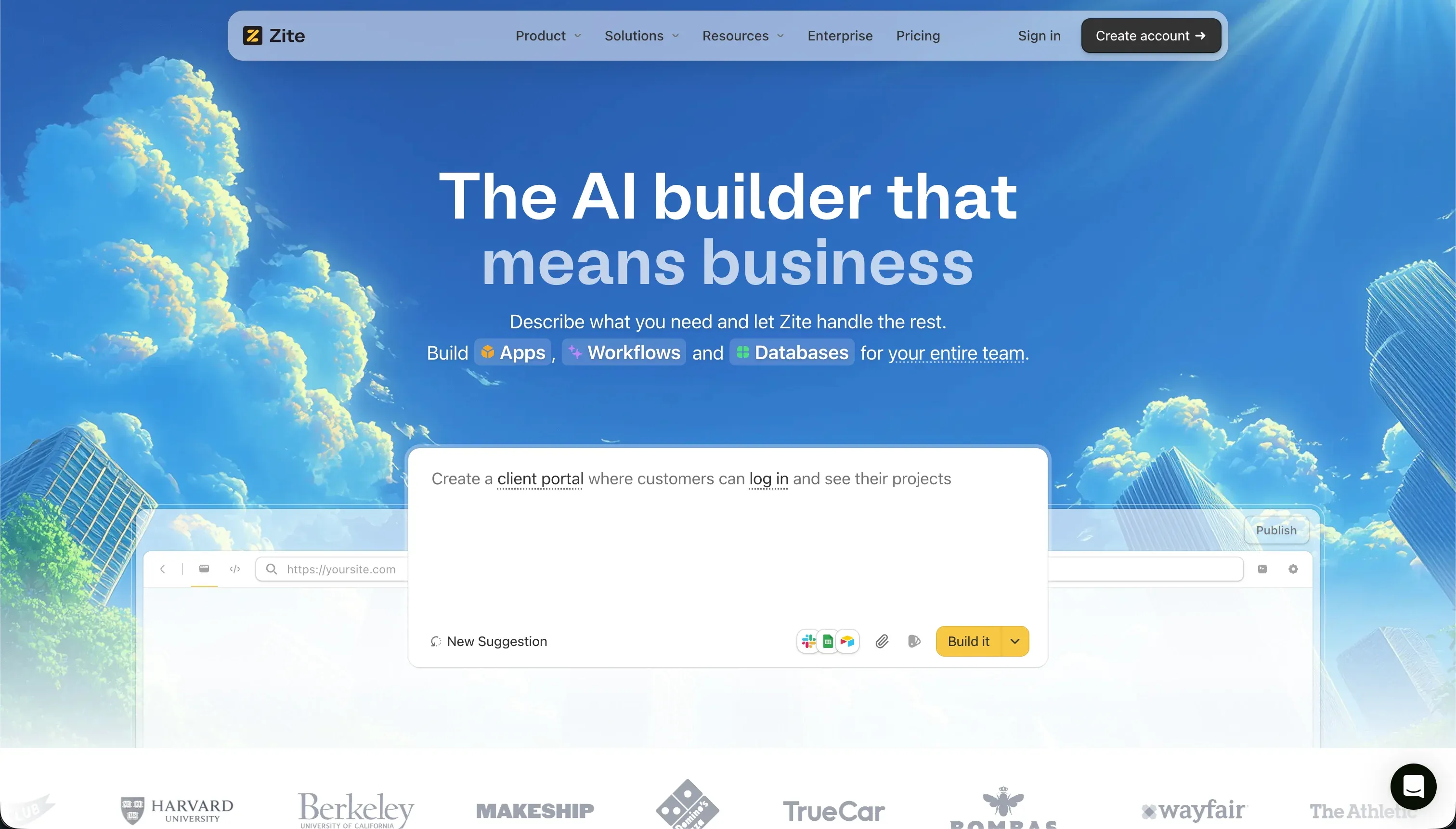
Evaluating Zite (formerly Fillout) and Bolt represents a choice between two distinct generative AI paradigms. Zite operates as an AI-first no-code application builder that combines prompt-driven interface generation with a spreadsheet-like SQL backend, supporting unlimited users.
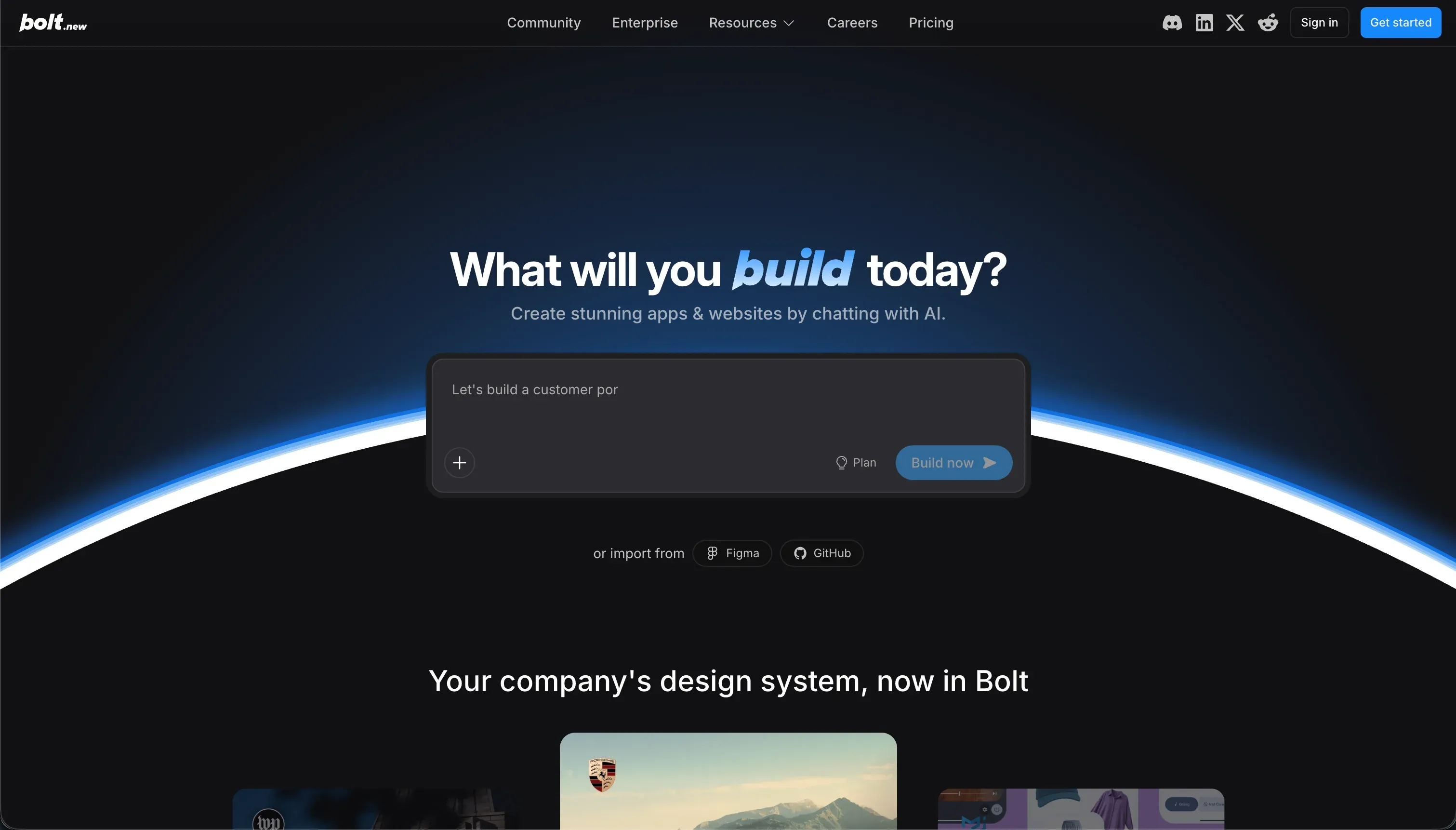
Bolt acts as a browser-native IDE running inside lightweight WebContainers, allowing builders to prompt React, Node, and Postgres files directly with full code ownership.
While Zite holds a narrow score advantage with an aggregate card of 5.2/10 over Bolt’s 5.1/10, neither platform offers an easy path to a scaled production environment. Zite is structurally rigid but faster for narrow, form-heavy MVPs, whereas Bolt is highly flexible but assumes substantial web development and debugging knowledge to handle build failures.
The choice depends on whether your team can manage a real code repository or if you require a visual, hosted builder.
The decision in 30 seconds
| If your priority is… | Pick | Why |
|---|---|---|
| Speeding to an MVP without developer skills | Zite | Ease of build scores 7.5 with Plan Mode and Fillout form roots |
| Pixel-level UI and frontend customizability | Bolt | Design flexibility scores 8.0 with React code and Figma integration |
| Complete code export and GitHub version control | Bolt | Generates a standard React/Vite codebase with zero vendor lock-in |
| Granular user groups and secure row-level rules | Neither | Zite depends on basic prompted flows, and Bolt has no visual security layer |
| Cost predictability for growing active users | Neither | Zite bills page reloads as workflows, and Bolt burns tokens on code-edit loops |
What each platform is
What is Zite?
Zite is an AI-first, no-code application builder that generates user interfaces, relational databases, and multi-step workflows from conversational natural-language inputs.
Built on the mature product architecture of Fillout, it targets operations managers and department heads who need to collect data and spin up regional database portals without writing code. The builder leverages “Plan Mode” to let teams review markdown plans of the AI’s intended layouts before spending credits to erect them.
The platform’s backend is a native, spreadsheet-like SQL database that supports relational linking, bulk data actions, and raw REST API webhooks. Because it charges no per-seat licensing fees and provides built-in staging environments, it functions effectively for rapid internal tools.
However, design changes are locked tightly to the generated structural containers, requiring builders to go back through the prompting chat interface to make modifications.
What is Bolt?
Bolt is a browser-native development environment that targets developers, technical founders, and operations teams who want maximum architectural control over their software.
Utilizing StackBlitz WebContainers technology, Bolt executes a real Node.js server inside the browser, allowing builders to run terminal commands, install npm packages, and deploy directories to Netlify. It is not a no-code visual tool but rather an AI-powered IDE that generates full-stack codebases of React components and PostgreSQL schemas.
All build iterations occur via conversational prompts, where the system renders live live previews that update instantly as the code changes. For teams seeking a launching pad, Bolt offers direct codebase exports and automatic GitHub synchronization, ensuring there is no proprietary engine locking you down.
The primary hurdle is that Bolt expects the builder to understand web-development patterns, meaning database configurations and build errors must be troublesated like traditional code.
- Targets ops managers and department heads
- Generates UI, relational database and workflows
- Edits only through the prompting chat
- No per-seat fees, built-in staging
- Targets developers and technical founders
- Generates full-stack React and PostgreSQL code
- Debugs like traditional code
- GitHub sync and codebase export
The core difference
The core divergence between these two platforms is the final output of the generative AI engine.
- Zite orchestrates pre-built, non-customizable database schemas and UI blocks to deliver a hosted, no-code runtime.
- Bolt compiles an entire React and Node.js codebase, forcing the builder to act as a code maintainer.
Where the scores diverge
Design flexibility: Zite 4.5, Bolt 8.0. Bolt holds a massive lead here because it generates a raw React and Vite frontend with zero template restrictions. It supports npm packages, Storybook assets, and Figma imports, enabling developers to build consumer-ready layouts.
Zite is structurally rigid; visual changes must fit standard generated grids, and users report the AI’s structural outputs skew corporate and uniform, rendering them poorly suited for unique brand styling or bespoke consumer designs.
Ease of build: Zite 7.5, Bolt 5.5. Zite wins this criterion because it does not require technical literacy. A single prompt constructs user folders, tables, and pages, and mature Fillout form integrations make high-fidelity data entry active within minutes of creation. Bolt, although fast at producing a visual mockup, is an IDE.
If a backend fails to connect, or if the container throws a Node version mismatch error, the builder must read the logs and debug the environment manually, assuming the technical burdens of a software engineer.
Security & access control: Zite 5.0, Bolt 3.5. Zite provides built-in SSO roots and handles simple user groups and read-write roles visually, despite relying heavily on prompted workflows to establish access gates. Bolt has no visual permissions manager.
Authentication, row-level rules, and Postgres credentials must be configured by prompting the AI to draft the code directly, meaning audit checks cannot happen visually and require manual inspection of the generated files.
Production readiness: Zite 4.5, Bolt 4.0. Both options score poorly here, but Zite edges ahead. Zite offers unlimited app users on a hosted platform with staging environments, though it lacks advanced SQL views, custom roll-ups, and formula math in its native DB. Bolt projects frequently hit OOM (Out of Memory) browser errors.
Users document severe container crashes, build failures on larger directories, and a hard account limit on file size that blocks prompts altogether, making it a fragile host for live business software.
Maintainability: Zite 4.0, Bolt 3.5. Zite takes a narrow win because manual, visual adjustments are possible inside its editor, although deep design changes must crawl back through credit-burning prompting loops. The lack of standard code export or GitHub synchronization makes future handoff difficult.
Bolt generates a standard codebase but introduces aggressive edit regression loops. Without a developer, iterative prompt changes often revert previously working components or overhaul visual layouts entirely, consuming tokens on repetitive, unproductive cycles.
Data & integrations: Zite 5.5, Bolt 6.0. Bolt scores higher here because its generated code can integrate with any database, API, or service reachable by JavaScript, creating PostgreSQL schemas natively, though it lacks a visual DB editor and forces teams to manage tables via external systems like Supabase.
Zite includes an easy, spreadsheet-style SQL database with linked records and webhooks, but it remains heavily dependent on its own data store and offers only basic, shallow connections to Airtable and Sheets.
Cost comparison
The billing structures of both platforms are usage-based systems wearing subscription packages, causing total monthly spend to be highly unpredictable. Zite plans scale from Free to Pro ($19/mo) and Business ($69/mo), with total pricing increasing as you purchase larger credit packages (scaling up to $3,799/mo on Business).
Zite enforces major undisclosed constraints, such as gating custom logins and recurring triggers behind the Business tier, and billing every database read or page load as a workflow execution, which can exhaust limits in active apps within days.
Bolt starts at $25/mo on its Pro plan for 10 million tokens, scaling up to $2,000/mo for 1.2 billion tokens. The key pricing risk is that iterative error correction loops consume tokens aggressively, and Bolt requires an active monthly subscription in order to retain rolled-over tokens.
Procurement divisions must account for high token burn rates during debugging phases and budget for developer oversight hours to resolve build failures when the AI loops on errors.
Lock-in and the exit path
Bolt is the clear winner regarding platform exit paths because it provides complete codebase ownership with automated GitHub sync and React exports, presenting zero vendor lock-in.
Zite provides no code export, no GitHub repository storage, and no portable metadata, meaning any application architecture built inside Zite must be completely rebuilt from scratch if you choose to migrate off the host. Zite databases allow CSV exports, but you lose the relationships and automated workflows.
- React codebase comes with you
- Flat CSV data only
- GitHub sync stays intact
- Relationships are lost
- Exports mean zero lock-in
- Workflows must be rebuilt
Who should pick Zite
Pick Zite if:
- Operations teams requiring simple internal spreadsheets and basic web forms without writing backend schemas
- Solopreneurs launching lightweight, short-horizon directory sites and basic databases where custom branding is secondary
- Builders who want visual guardrails like Plan Mode to audit AI updates before executing them on a live hosted builder
Do not pick Zite if your application requires custom consumer layouts, advanced formula math, or code portability to self-host elsewhere.
Who should pick Bolt
Pick Bolt if:
- Developers using AI scaffolding to speed up the initial coding of private React, Node, and Tailwind web applications
- Founders who must show a customized browser-native frontend prototype cleanly within minutes
- Teams demanding absolute codebase ownership, direct GitHub sync, and Netlify hosting paths without vendor lock-in
Do not pick Bolt if you do not understand web development, as browser container crashes, database integrations, and code regressions will require software engineering knowledge to resolve.
What neither platform answers
Neither Zite nor Bolt answers the requirements of a production business application. Zite locks you into rigid, template-styled layouts with severe workflow-consumption traps, while Bolt hands you a raw React codebase that introduces high technical maintenance debt, browser memory crashes, and manual security auditing.
For directories, partner hubs, and operations software, a business app platform like Softr is the optimal choice. Softr scores 8.5 on production readiness and 9.0 on maintainability because database schemas, enterprise-grade SSO, and parent-child database relationships are native visual components rather than prompted variables.
Built on native Softr Databases and connecting with 17+ external sources, Softr lets you deploy secure, white-labeled client portals in a single afternoon. If your team demands custom developer control, write code with Replit to manage your staging environments deterministically.
Analyst verdict
Evaluating the scorecards shows Zite with a 5.2/10 aggregate card and Bolt with a 5.1/10. Zite secures its marginal lead on ease of build and basic hosted permissions, while Bolt dominates design flexibility by delivering unrestricted React files.
However, both tools are highly compromised solutions for business software: Zite lacks deep schema operations and scales poorly, while Bolt projects inevitably stall when context limits or browser out-of-memory walls are hit. For production-grade applications that must survive long-term maintenance cycles, bypass this head-to-head.
Pick Replit if you have developer resources and need complete environment controls, or choose Softr to deploy secure, role-restricted customer portals without touching code.
Related reading: the Zite scorecard, the Bolt scorecard, and our scoring methodology.