

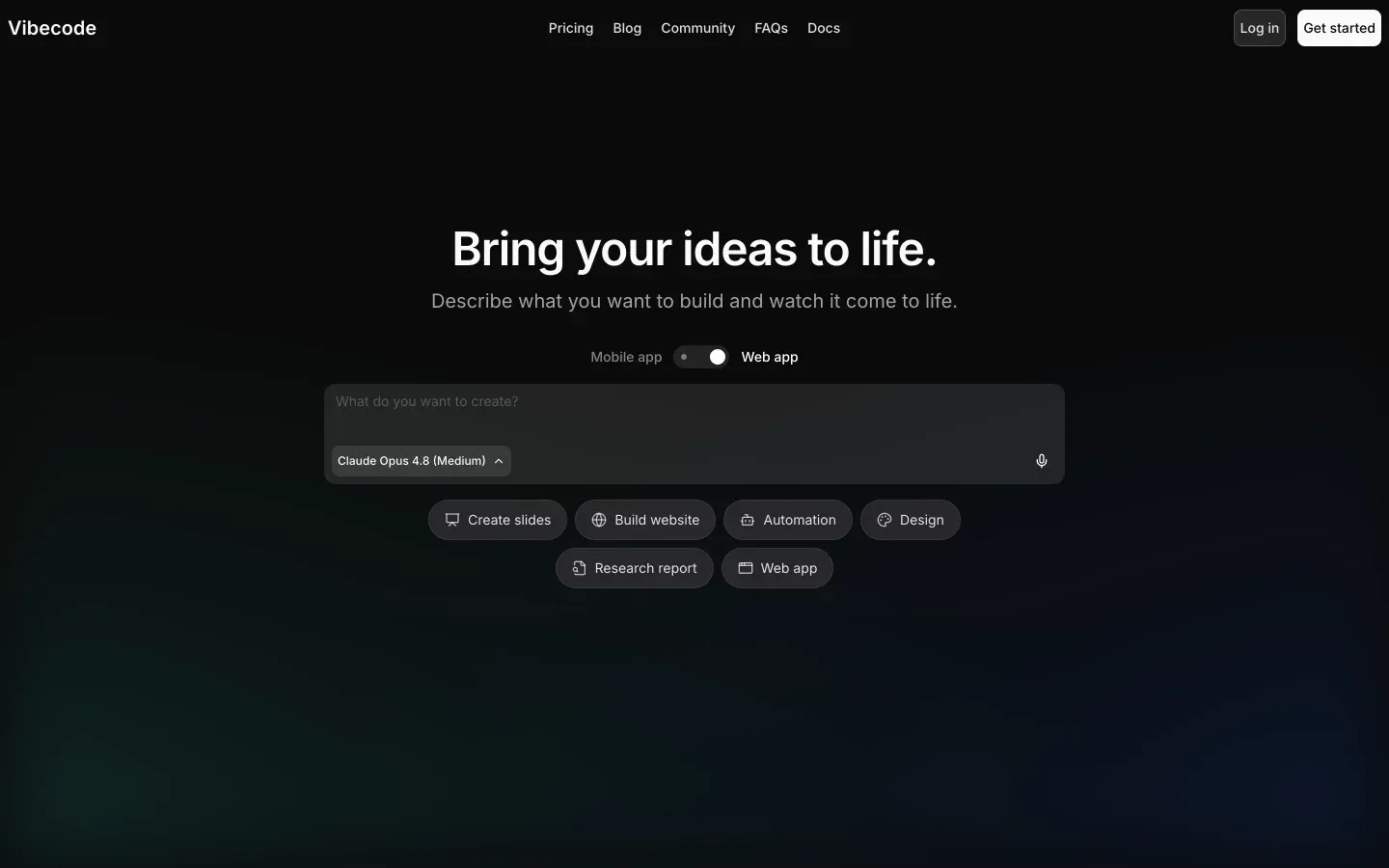
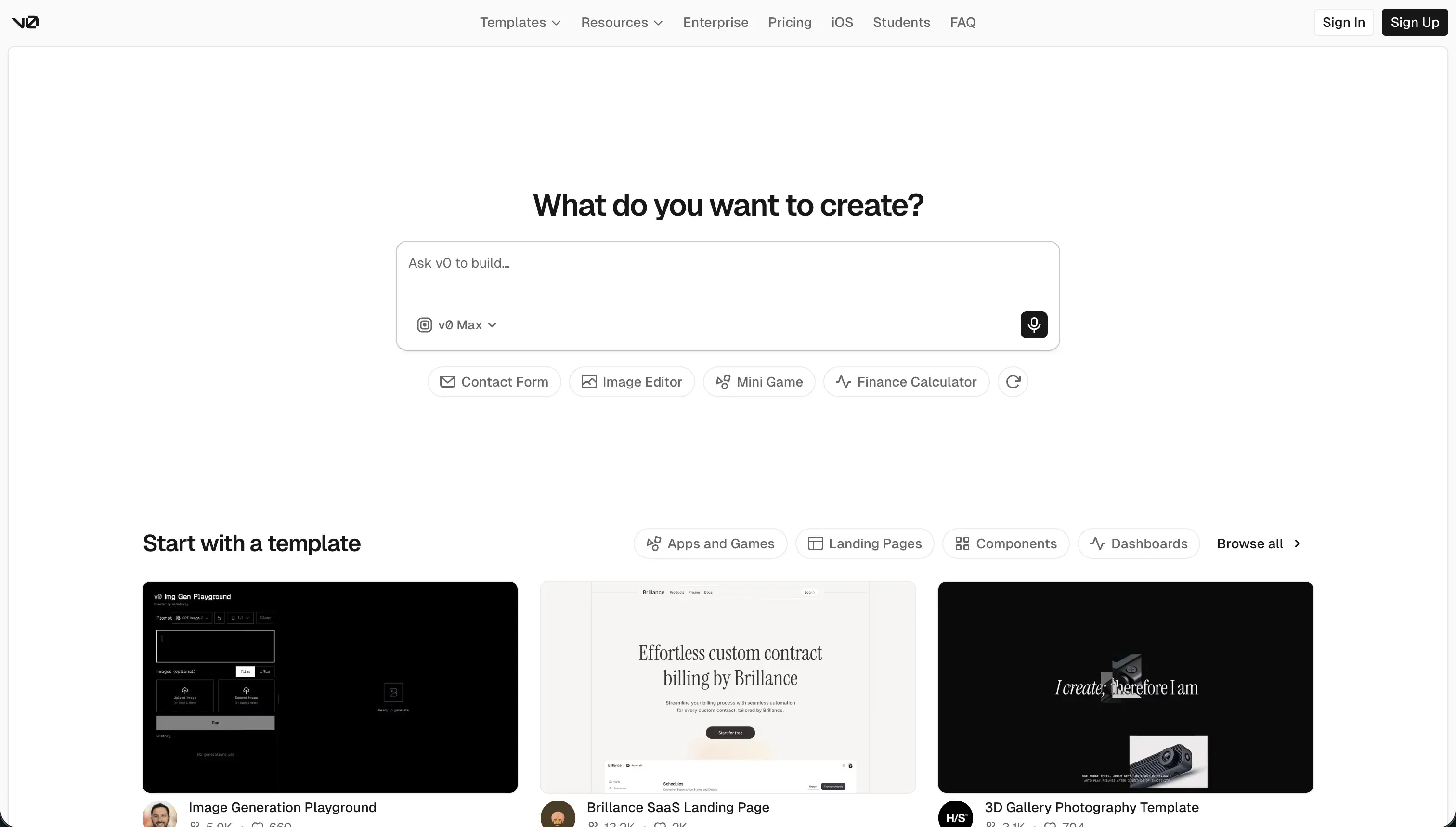
VibeCode and v0 solve 2 different procurement problems: VibeCode is an AI native app builder, while v0 is an AI frontend code generator. One is for buyers who want a mobile product with backend services included; the other is for teams that mainly need polished React UI output fast. That category split matters more here than any single feature.
VibeCode wins the general decision at 6.1/10 versus 5.8/10 because it delivers more of a complete application stack out of the box. It takes the matchup on production readiness, security & access control, and data & integrations, while v0 keeps design flexibility. The decision flips if you already have developers and backend infrastructure in place and only need 1 fast path to better frontend code.
The decision in 30 seconds
| If your priority is… | Pick | Why |
|---|---|---|
| Built-in auth, database, and backend services | VibeCode | it leads on production readiness and data by provisioning backend pieces natively |
| Polished React and Tailwind web UI | v0 | it scores 8.5 on design flexibility and generates cleaner web-facing UI output |
| Publishing native mobile apps to app stores | VibeCode | it is built around native mobile delivery rather than frontend-only code generation |
| Lowest lock-in and easiest code handoff to engineers | v0 | GitHub-syncable React output creates a cleaner exit path than a managed runtime |
| Secure internal tools or client portals with low maintenance | Neither | a constrained business-app platform like Softr is the safer fit for permissions and upkeep |
What each platform is
What is VibeCode?
VibeCode is an AI-powered mobile app builder that turns natural-language prompts into native iOS and Android applications. Its build model is full-stack by default: the prompt generates interface screens while the platform also provisions backend services needed to run the app.
The documented product behavior includes built-in authentication, database tables, cloud storage, and direct packaging for app-store distribution. It also supports on-device testing and bundles deployment through VibeCode Cloud rather than asking the user to assemble separate infrastructure.
That makes it genuinely suited to founders and makers who want a mobile MVP with working backend primitives, not just a UI mockup.
What is v0?
v0 is Vercel’s AI frontend generation tool for turning prompts, sketches, and screenshots into React interfaces. Its build model is code-first and frontend-only: it generates components and page structures, but leaves application infrastructure to the team using the output.
The researched behavior includes React generation with Tailwind styling, use of the shadcn/ui ecosystem, GitHub sync, and easy deployment previews through Vercel. Buyers use it to accelerate visual scaffolding and shorten the path from concept to inspectable web code. It is genuinely built for developers and design-minded teams that already know how they will handle data, auth, and hosting elsewhere.
- Native iOS and Android apps
- Backend provisioned by default
- Built-in auth, database, storage
- Packaging for app stores
- Deployment through VibeCode Cloud
- React components with Tailwind
- Frontend-only, code-first
- shadcn/ui ecosystem, GitHub sync
- Preview deploys via Vercel
- Data, auth and hosting handled elsewhere
The core difference
These tools differ most on one axis: complete app assembly versus frontend code generation. VibeCode tries to deliver a runnable mobile product stack, while v0 deliberately stops at the interface layer.
- VibeCode generates a managed mobile app stack with UI, backend services, and deployment workflow bundled together.
- v0 generates flexible frontend React code that you can own directly, but you must wire the product logic and infrastructure yourself.
Where the scores diverge
Data & integrations: VibeCode 6.5, v0 5.0. VibeCode has the clearer advantage because it includes native database support, cloud storage, and prepackaged integration paths that are part of the product experience. v0 integrates well with GitHub and Vercel for code workflow, but that is not the same as shipping a data layer or business logic model.
The deduction on VibeCode is that managed integrations still depend on the boundaries of the platform and its credit model. The deduction on v0 is simpler: teams must build or connect the whole data stack themselves.
Design flexibility: VibeCode 7.0, v0 8.5. v0 wins decisively because it is optimized to produce polished, highly editable React and Tailwind interfaces from loose creative input. Its output benefits from modern UI conventions and fits naturally into teams that want control over layout, styling, and component refinement.
VibeCode can generate mobile screens quickly, but it is not the stronger tool for pixel-level web presentation or broad frontend experimentation. Even v0 is not perfect here, since generated code can still need cleanup, but design freedom is the main reason to buy it.
Production readiness: VibeCode 5.5, v0 4.5. VibeCode pulls ahead because it aims at a runnable product, not just generated screens.
Built-in auth, database support, cloud services, and mobile packaging mean there is a clearer path from prompt to shipped app than there is in v0, which still requires a team to supply backend architecture, workflows, and operational checks.
VibeCode does not score near-perfectly because prompt-generated full-stack behavior still needs human review for reliability and store-readiness. v0 is capable in a production team, but only as a starting point rather than a complete delivery system.
Security & access control: VibeCode 5.0, v0 4.0. VibeCode wins because it at least includes authentication and a more complete app foundation, whereas v0 provides no native permission model and leaves all access control to whatever backend the team builds later.
That said, VibeCode still takes a deduction because AI-generated backend behavior is not the same as audited access architecture, especially once apps need precise rules and hardened endpoints. v0’s lower score is less about bad security features than the absence of security features in the product itself.
For buyers without engineering depth, that difference matters a lot.
Ease of build: VibeCode 7.0, v0 7.5. v0 has the lighter first-run experience because a prompt, screenshot, or sketch can become a polished React interface in seconds with very little setup. VibeCode is also prompt-driven, but asking for a whole mobile app with backend behavior introduces more chances for the model to drift as requirements compound.
The gap is not massive because both products are fast for early iteration. The deduction on v0 is that speed ends once you need real app logic, while VibeCode’s deduction is that complexity strains consistency faster.
Maintainability: VibeCode 5.5, v0 5.5. This is effectively a near-tie because each tool creates a different maintenance burden rather than eliminating it.
VibeCode can export code on higher tiers, but larger AI-generated projects can become harder to reason about as logic expands across prompts and managed services. v0 gives you inspectable React and Tailwind code from the start, yet users still report cleanup work from bloated styling, regenerated patterns, and framework friction over time.
Neither tool clearly decides the matchup here because both trade initial speed for later engineering discipline.
Cost comparison
VibeCode uses a subscription-plus-credit model where plan level determines how much generation capacity you start with, and more iteration means more credit consumption. v0 also uses a credit-style usage model tied to message and model usage rather than a simple flat unlimited seat, so the bill moves with prompt volume and output complexity more than with published app count.
The hidden cost forecast is different for each. With v0, buyers should budget developer time to add backend services, authentication, integrations, QA, and ongoing maintenance around the generated frontend.
With VibeCode, buyers should forecast extra generation spend from debugging loops, the maintenance cost of reviewing AI-produced app logic, and possible migration effort if they later want to move off the managed stack or need export access from a higher tier.
Lock-in and the exit path
v0 has the cleaner exit because it produces standard React code that can sync to GitHub and continue outside the product with normal hosting choices. VibeCode’s exit is narrower: higher tiers may offer code export or SSH access, but lower-tier users are more dependent on the platform’s managed backend and deployment workflow.
In practice, leaving v0 mostly means continuing to build on the exported codebase, while leaving VibeCode can mean rebuilding parts of the backend and deployment setup even if you can extract code or data.
Who should pick VibeCode
Pick VibeCode if:
- Founders who want a mobile MVP with backend pieces included, since VibeCode wins on production readiness and data & integrations
- Teams shipping native iOS or Android concepts that need auth and database support without assembling separate services first
- Makers who value a single managed workflow for building, testing, and packaging a mobile app more than maximum code portability
Do not pick VibeCode if your project lives or dies on frontend polish, export freedom, or a developer-owned web stack rather than a managed mobile runtime
Who should pick v0
Pick v0 if:
- Frontend teams that want the strongest design flexibility score and fast React/Tailwind scaffolding
- Developers who already have a backend and only need UI generation that can move straight into Git-based workflows
- Buyers who care most about a cleaner exit path because the generated code can live outside the platform from the start
Do not pick v0 if you expect a complete application with built-in authentication, database behavior, and production infrastructure from the first prompt
What neither platform answers
Many buyers reading this matchup do not actually need code generation first; they need a business app with logins, permissions, and low ongoing maintenance for a client portal, internal tool, or CRM.
In that lane, Softr is the better answer because its model starts from secure business-app structure rather than asking AI to invent it each time, and its researched scores are stronger where these buyers care most: production readiness, maintainability, and security & access control.
Choose Softr when the job is a governed business application with stable roles and low upkeep, and choose FlutterFlow when the real need is deeper visual control for a custom app experience.
That pairing is the honest exclusion here: Softr for operational business software, FlutterFlow for buyers who still need a stronger visual app builder than either VibeCode or v0 provides.
Analyst verdict
VibeCode wins 6.1 to 5.8 overall. It takes production readiness, security & access control, and data & integrations because it includes more of the actual application stack, while v0 keeps design flexibility and remains slightly easier for pure frontend generation.
That does not make VibeCode the automatic choice for every buyer. If you need a native mobile MVP with auth, data, and a managed path to shipping, it is the stronger purchase. If the real brief is a highly flexible React interface and your team can own the backend, v0 is the right buy despite losing the aggregate.
Related reading: the VibeCode scorecard, the v0 scorecard, and our scoring methodology.