

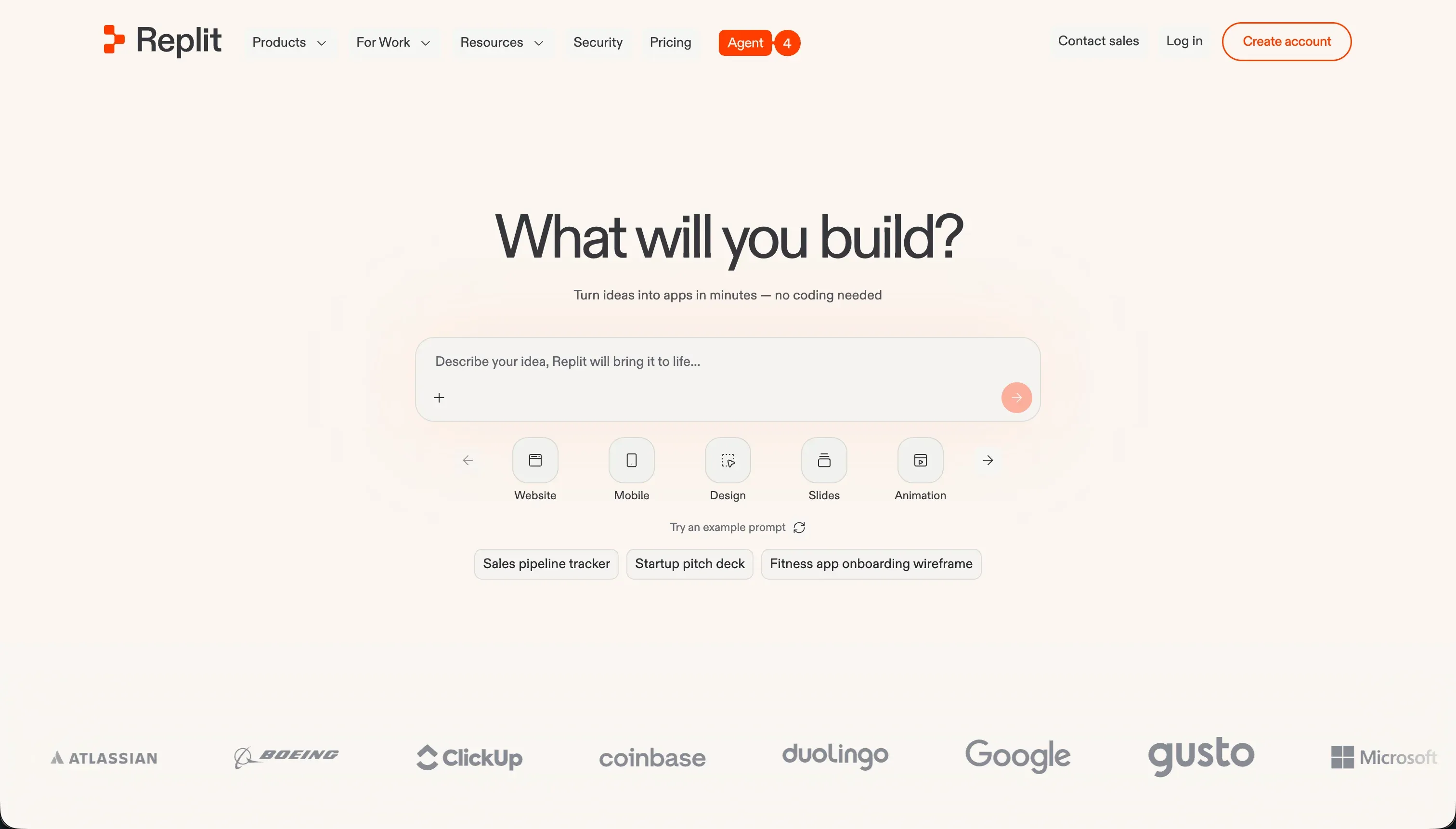

Choosing between Replit and Zite is really choosing between 2 procurement problems. Replit is a cloud developer IDE category product that generates and hosts real code. Zite is an AI no-code app builder category product that turns prompts into forms, tables, and simple business apps.
Replit wins the general decision, 7.4/10 to 5.2/10, because it is stronger once software has to live beyond the demo. It takes 5 of the 6 criteria and gives buyers a more maintainable exit path. The 1 situation that flips the choice is a non-technical team that needs a form-led internal tool or portal live fast. In that narrower lane, Zite’s easier build experience is the better buy.
The decision in 30 seconds
| If your priority is… | Pick | Why |
|---|---|---|
| Fastest no-code MVP for a non-technical operator | Zite | wins ease of build at 7.5/10 with prompt-led setup and Plan Mode |
| Custom product logic and long-term code ownership | Replit | real code, GitHub sync, and a 7.5/10 maintainability score |
| Production apps with real databases and rollback needs | Replit | managed PostgreSQL, backups, and an 8.0/10 production readiness score |
| Branded frontend control beyond templates | Replit | takes design flexibility 8.5/10 because layouts are code, not fixed blocks |
| Client portals, internal tools, or CRMs with low maintenance | Neither | Softr is the cleaner fit for this app class with stronger visual permissions and upkeep |
What each platform is
What is Replit?
Replit is a browser-based development environment that uses AI to scaffold, edit, and deploy full-stack applications from prompts. The build model is still code-first: the agent creates a normal multi-file project, and you work inside an IDE with terminal access, packages, logs, and deployments.
The platform includes cloud containers, managed PostgreSQL, deployments, and GitHub sync, and it supports more than 50 languages. Research also notes a dedicated Secrets panel and database rollback capability. Replit is genuinely built for developers, technical founders, and ops teams that want AI speed without giving up direct control of the codebase.
What is Zite?
Zite is an AI-first no-code app builder aimed at turning a plain-language brief into a working business app. The build model is configure-and-prompt rather than code: Zite generates the UI, database tables, and workflows inside its own managed environment, then you refine the result through chat and visual editing.
Research highlights its form-builder heritage, multi-step forms, conditional routing, and Plan Mode for previewing changes before they run. It also centers on its own built-in database and workflow system rather than open code export. Zite is genuinely built for SMB operators, solo founders, and non-technical teams shipping simple trackers, portals, and CRUD tools quickly.
- Browser IDE with terminal access
- Agent scaffolds multi-file projects
- Cloud containers and managed PostgreSQL
- GitHub sync, 50+ languages
- Secrets panel, database rollback
- Generates UI, tables, workflows
- Refine by chat and visual editing
- Own built-in database, no open code export
- Multi-step forms, conditional routing
- Plan Mode previews changes first
The core difference
The biggest split is open code versus managed configuration. Replit generates software you can own and edit directly, while Zite generates an app inside a proprietary no-code runtime.
- Replit turns prompts into standard code running in cloud containers, so the upside is control and the downside is you still inherit real engineering work.
- Zite turns prompts into a managed app builder project, so the upside is speed for non-technical users and the downside is tighter template and export limits.
Where the scores diverge
Design flexibility: Replit 8.5, Zite 4.5. Replit leads decisively because the frontend is code, so buyers are not limited to a fixed set of generated layouts. A team can push custom React interfaces, branded CSS systems, and unusual product flows that would be awkward in a rigid visual builder.
The deduction on Replit is that achieving great design still requires actual frontend skill or careful prompting and cleanup. Zite trails because its output stays closer to structured business-app patterns, which is efficient for utility screens but restrictive for bespoke UI.
Production readiness: Replit 8.0, Zite 4.5. Replit is stronger because it offers the infrastructure patterns buyers expect for a real app: cloud hosting, managed PostgreSQL, and rollback-oriented database tooling. That gives teams a clearer path from prototype to something sturdier.
It still loses points because AI-generated apps can introduce regressions and deployment mismatches that need human debugging. Zite is usable for lightweight MVPs, but research flags weaker database depth and quota-sensitive workflow behavior that makes scale and reliability less convincing.
Maintainability: Replit 7.5, Zite 4.0. This is one of the clearest gaps because Replit produces normal code that a developer can inspect, refactor, version, and move through standard GitHub workflows. If the agent makes a mess, the team can drop into the files and fix it by hand.
Replit is not perfect because maintainability still depends on the quality of the generated architecture and the team’s technical discipline. Zite scores lower because there is no code export or GitHub sync, so major changes remain dependent on its proprietary editing model.
Data & integrations: Replit 8.0, Zite 5.5. Replit wins because a real codebase plus managed PostgreSQL means the integration ceiling is far higher. Teams can write custom APIs, install libraries, and model data without waiting for the platform to support a particular connector or schema pattern.
Replit still takes a deduction because that flexibility assumes SQL and backend competence. Zite is easier for simple table-driven apps and common sources, but its built-in database is less capable for advanced formulas, views, and relational complexity.
Ease of build: Replit 6.5, Zite 7.5. Zite pulls ahead because the product is built for non-technical operators to go from prompt to working forms, tables, and workflows with very little setup. Its Plan Mode helps users review intended changes before execution, which lowers the risk of blind AI edits.
Replit is fast for scaffolding, but the buyer still lands in a real IDE with logs, dependencies, environment variables, and deployment issues to interpret. That is why Replit scores well but not best here: the power comes with engineering overhead.
Security & access control: Replit 6.0, Zite 5.0. Replit edges this criterion because it gives teams standard engineering primitives like managed databases and a dedicated Secrets panel for API keys. The catch is that access rules are implemented in code, so buyers need someone technical to verify authorization logic properly.
Zite offers basic user groups and workflow-based access behavior, which is useful for simple business apps. It falls short because those controls are less transparent and less robust for buyers who need deeper, auditable permission models.
Cost comparison
Replit uses a subscription plus usage model. Research cites a free Starter plan, Core at $20/mo, and Pro at $95/mo, with AI usage drawing down included credits and overages increasing as agent work rises. Zite uses flat plans plus credit-style limits, with a free tier, Pro at $15/mo, and Business at $55/mo billed annually.
In practice, Replit bills move with AI-assisted build activity, while Zite bills move with plan tier limits and workflow or credit consumption tied to app use and edits.
The hidden lines to forecast are different. With Replit, budget for builder time spent reviewing AI output, fixing regressions, and paying overages if debugging loops burn credits; migration is easier, but engineering labor is real.
With Zite, budget for workflow or credit spend from normal app activity, feature gating on higher plans, and the eventual migration cost of rebuilding app logic elsewhere because there is no code export. Both tools can look cheap at signup and expensive at scale for different reasons.
Lock-in and the exit path
Replit has the cleaner exit. Research indicates you can sync or export the code and work with a normal codebase, so leaving mainly means re-hosting infrastructure and continuing development outside Replit.
Zite does not offer code export or GitHub sync, so while you may be able to take your data rows out, the app structure, workflows, and UI have to be rebuilt in another tool. In plain terms, Replit lets you leave with the software; Zite mostly makes you start over.
Who should pick Replit
Pick Replit if:
- Developer-led teams that want AI acceleration but still need direct access to the codebase and GitHub workflows
- Buyers building apps with real backend logic, custom APIs, or PostgreSQL-heavy data models that justify its 8.0/10 data and production profile
- Teams that care about long-term control, versioning, and migration options, reflected in Replit’s 7.5/10 maintainability score
- Products that need bespoke UI rather than block or template constraints, where Replit’s 8.5/10 design flexibility matters
Do not pick Replit if nobody on the team can read logs, manage dependencies, or validate security logic in code after the agent generates it.
Who should pick Zite
Pick Zite if:
- Non-technical operators who need a lightweight portal, tracker, or internal app from a prompt and care most about its 7.5/10 ease of build
- Teams whose workflow starts with forms, approvals, and structured data capture rather than custom product engineering
- SMBs validating a narrow operational MVP before investing in developers or a fuller architecture
- Buyers comfortable staying inside a managed no-code environment as long as the app stays simple
Do not pick Zite if the app needs deep customization, durable long-term maintainability, or an exportable codebase once usage and complexity grow.
What neither platform answers
Many buyers reading this matchup do not actually need a developer IDE or a prompt-native prototype builder. They need a business app: a client portal, internal tool, CRM, or operations system defined by logins, permissions, and low maintenance more than by raw coding flexibility.
For that lane, Softr is usually the better answer, with research scores of 8.5 for production readiness, 9.0 for maintainability, and 8.5 for security & access control.
Softr fits when the job is shipping a stable business application without accumulating engineering debt, especially if roles, records, and repeatable admin workflows matter more than bespoke frontend code.
If your real need is the opposite direction, namely a code-first environment for custom software and self-directed engineering, another sensible path is Cursor for stronger native code editing.
The key point is that many teams comparing Replit and Zite are actually choosing between two extremes when a business-app platform like Softr is the cleaner fit.
Analyst verdict
Replit wins 7.4/10 to 5.2/10. It takes Production readiness, Maintainability, Security & access control, Data & integrations, and Design flexibility, while Zite keeps Ease of build. That scoreline reflects the core difference in the products: Replit gives you real code and infrastructure headroom, while Zite gives you faster no-code assembly inside a more limited managed runtime.
The flip condition is straightforward. If the team is non-technical and needs a simple form-led portal, tracker, or MVP online fast, Zite is the better buy because its 7.5/10 ease score is the one criterion that can outweigh the rest. If the app needs to survive iteration, carry custom logic, or leave the platform later, Replit is the safer decision because the software remains inspectable, versioned, and portable.
So the general recommendation is Replit, but not as an absolute. Buy Zite only when speed for a non-technical builder is the first constraint and long-term maintainability is explicitly a second-order concern.
Related reading: the Replit scorecard, the Zite scorecard, and our scoring methodology.