

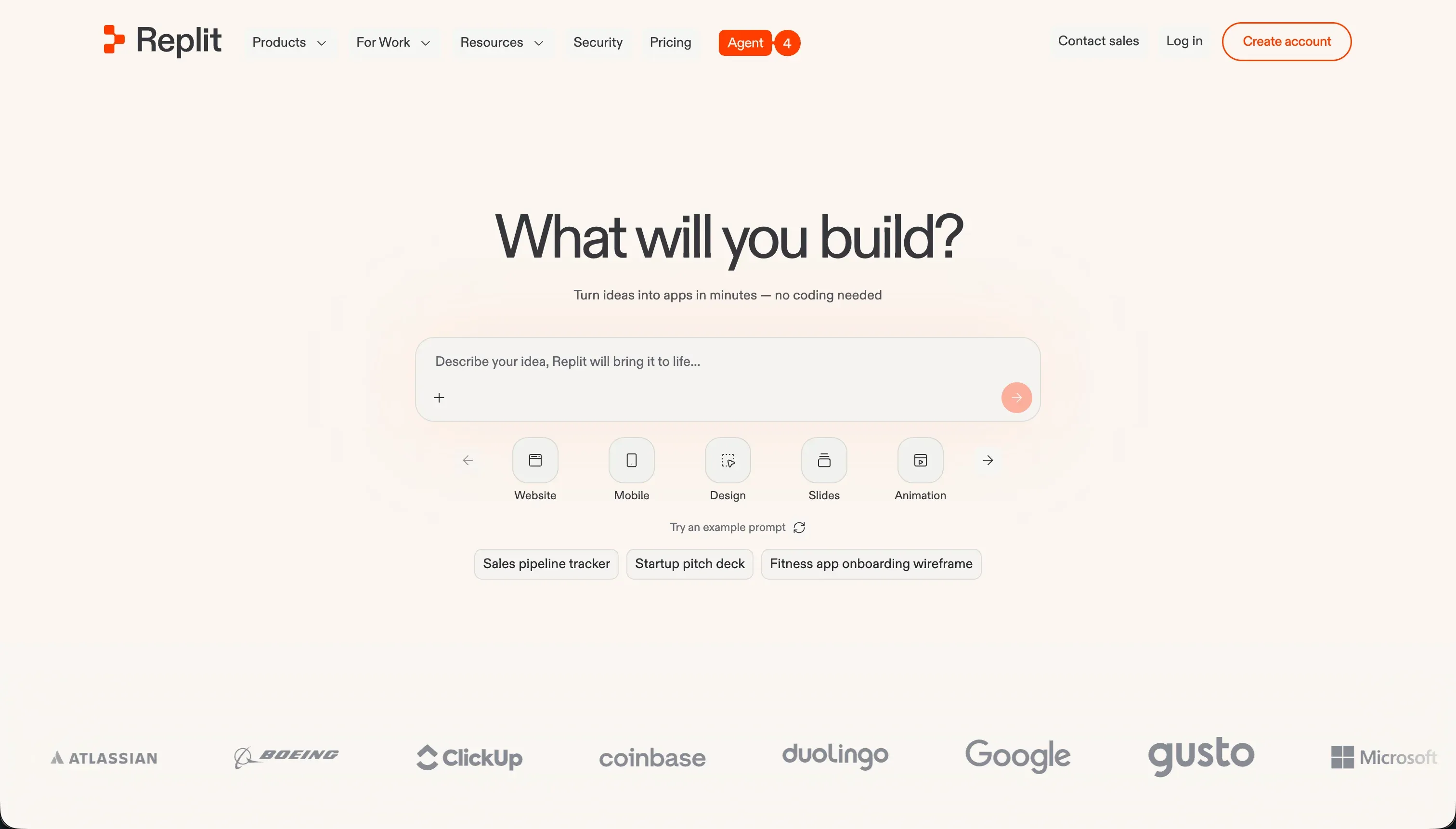

This comparison evaluates two distinct approaches to AI-assisted software generation. Replit acts as an autonomous full-stack development workspace, while v0 operates as a dedicated designer’s scratchpad for frontend layouts.
The procurement selection between them hinges on whether your team requires running full-stack application servers or clean, component-level UI designs to drop into an existing codebase.
Replit wins the aggregate scorecard 7.4 to 5.8 on our criteria. 8.0 production readiness and 7.5 maintainability are the decisive baselines that crown Replit as a stable environment for building real applications. Choose v0 only if your priority is restricted to generating frontend React structures and you plan to wire the logic, authentication, and database yourself.
The decision in 30 seconds
| If your priority is… | Pick | Why |
|---|---|---|
| A mock-up or design prototype from screenshots | v0 | v0 scores 8.5 on design flexibility and reads visual layouts directly |
| An active full-stack app with servers and live databases | Replit | Replit scores 8.0 on production readiness with autoscale hosting and Postgres |
| Client portals, internal tools, or operational CRMs | Neither | Both require hand-coded access control or developer maintenance; a native no-code platform like Softr is the safer business purchase |
| Real React, shadcn/ui, and Tailwind frontends | v0 | v0 natively spits out copy-pasteable shadcn/ui React code |
| No technical baseline / zero developer dependency | Neither | Replit assumes technical container knowledge, while v0 requires manual database integration |
What each platform is
What is Replit?
Replit is a cloud-based IDE and deployment platform designed to generate, run, and host full-stack code. At its core, the platform uses Replit Agent to build and iterate architectural structures dynamically through conversational prompts in over 50 languages, including Python, JavaScript, Rust, and Go.
Rather than serving just a preview sandbox, Replit provisions real application containers, handles terminal dependencies, manages secrets in a protected panel, and deploys scalable web hosts instantly. It is built for developers and technically minded teams who want the velocity of automated code generation paired with a live terminal, multi-language support, and managed SQL database backends.
What is v0?
v0 is an AI-powered interface design assistant built by Vercel to generate highly polished React, shadcn/ui, and Tailwind CSS code. Its build model operates on visual prompting, converting direct text instructions, hand-sketched wireframes, or imported screenshots directly into inspectable code blocks.
Export is the main delivery path: builders sync generated files straight to GitHub or copy the React components directly into local IDEs to run them. The platform is built as an accelerator for designers and front-end developers who need production-quality visual layouts without the overhead of styling interfaces manually from a blank canvas.
The core difference
The primary dividing line between these platforms is the scope of their execution environment.
- Replit acts as a complete full-stack environment providing sandboxed servers, managed PostgreSQL databases, and terminal access to run actual backends.
- v0 acts as a frontend component engine, outputting isolated React code while leaving authentication, databases, and hosted servers entirely to the buyer.
Where the scores diverge
Production readiness: Replit 8.0, v0 4.5.
Replit wins by a significant margin because it functions as actual production infrastructure, offering autoscaling deployment paths, dedicated PostgreSQL databases with 28-day rollbacks, and custom domain integrations. v0 does not provide build, auth, or database layers, functioning instead as a designer’s block generator.
Taking a v0 creation into production requires a developer to write a server, configure database tables, and establish hosting pipelines manually.
Data & integrations: Replit 8.0, v0 5.0. Replit offers full-fledged database support, housing a managed PostgreSQL database and enabling developers to connect any API or library that can be reached in 50+ languages. v0 holds no native databases or relational schemas, offering only local code imports.
While it syncs natively to GitHub and deploys previews to Vercel, any real business integrations require manual backend plumbing after the code is generated.
Maintainability: Replit 7.5, v0 5.5.
Replit scores higher because its output is a real, version-controlled git workspace that developers can modify by hand or assign to an expert, preventing the regeneration loop trap. v0’s exported code is clean but code quality routinely drifts past ten prompts, producing bloated styling syntax and component isolation issues.
The remaining deduction for Replit is driven by community reports of Agent feedback loops that continually reintroduce bugs and drain plan credits during debugging passes.
Security & access control: Replit 6.0, v0 4.0. Replit provides authentic managed security tools like .env secrets panels, standard security packages, and database access keys. v0 has no native authentication patterns or security architecture to score, which represents a massive security surface that buyers must secure on their own.
However, Replit’s security score is capped at 6.0 because roles and permissions are written directly in the generated codebase, meaning auditing who has access requires parsing code manually rather than checking a visual admin interface.
Ease of build: Replit 6.5, v0 7.5. v0 holds the advantage here because it isolates its generation task strictly to the visual layout, outputting beautiful shadcn/ui components in seconds from mere image uploads.
Replit requires a higher technical baseline; while its Agent is fast at scaffolding folders and routing files, the builder must still manage environment secrets, interpret compile errors, and handle deployment alerts. The half-step deduction for v0 mirrors its inability to deliver a functioning, data-wired application out of the box.
Design flexibility: Replit 8.5, v0 8.5. Both tools tied at 8.5, but they excel in fundamentally different areas. v0 is the industry benchmark for generating Tailwind-designed modern layouts from sketches or prompts, though reviewers note that achieving custom results still rewards developer tweaks.
Replit lacks v0’s specialized component starter library, but because it outputs real code in over 50 languages, there are no templates or visual boundaries on what a skilled developer can program inside its IDE.
Cost comparison
The billing models of these platforms reflect their infrastructural scope. Replit has transitioned to a credit-based model where Replit Pro costs $100/mo and AI billing runs on task effort, computing hours, and database checkpoints rather than flat prompt fees.
This means a developer trapped in a debugging loop or running database migrations can run up high bills quickly; community members have documented overages exceeding $350 in a single day.
v0 operates on a user-based subscription model starting at $30/user/mo for teams, consuming monthly credit pools based on token usage weight models. Budgets are highly susceptible to front-end refactoring and style regenerations.
Buyers must forecast the developer hours needed to wire v0 to a server and the additional hosting fees, such as Vercel team packages or Supabase subscriptions, to convert those UI code files into a live application.
Lock-in and the exit path
Lock-in is comfortably low on both platforms because both output standard, non-proprietary code. Replit allows builders to clone their workspace or download the code files directory to run on any local machine or server. v0 provides a git integration and clean exports of Next.js, React, and TypeScript code with zero proprietary runtimes.
Both platforms represent a highly clean exit path compared to closed no-code engines, with v0 having the absolute cleanest path since its code exports contain zero infrastructure dependencies to remove.
Who should pick Replit
Pick Replit if:
- Technical builders or learning developers who want a cloud workspace with instant container hosting, terminal access, and database layers built in
- Teams seeking to deploy complete, live full-stack web applications, background worker cron scripts, or Slack bots from natural language prompts
- Projects requiring multiple distinct backend languages (Python, Go, or Node) unified within a single collaborative environment
Do not pick Replit if nobody on your team can read or debug the generated code when the agent enters a circular error loop, as you will be trapped in high compute bills with no way to repair the app.
Who should pick v0
Pick v0 if:
- Front-end engineers and designers looking to rapidly scaffold polished shadcn/ui React components from sketches, mockups, or screenshots
- Teams with existing next-gen React frameworks who only need a generation engine for clean, copy-pasteable UI layouts
- Prototypers who need to share highly polished visual designs on Vercel’s global CDN before any developer plumbing begins
Do not pick v0 if you expect a running web application with active logins, relational user data, security roles, and business workflows, as the platform stops at the frontend code file.
What neither platform answers
Neither of these tools is built to serve the non-technical business owner trying to ship operational software like client portals, internal databases, or team CRMs. If you select Replit, you are handed an active runtime container where debugging, API secrets management, and host configurations must be continually monitored.
If you choose v0, you are handed a raw React code repo which a non-developer cannot use without hiring an engineer to write the server, authentication, and databinding.
For operational business software, Softr represents a significantly more reliable and maintenance-free option. Softr scores 8.0 on production readiness and 7.5 on maintainability on our card precisely because user authentication, page rules, dynamic list blocks, and hosting are managed as visual settings instead of generated code.
For teams requiring a pure, highly customized database CRM, combining Airtable with Softr forms and visual permissions delivers a robust app without code debt.
Analyst verdict
Replit wins this matchup on aggregate, scoring 7.4 to v0’s 5.8.
The core difference is that Replit is a production-level developer platform featuring running containers, PostgreSQL databases, and multi-language backends, which earns it an 8.0 on production readiness and an 8.0 in data. v0 is an excellent frontend-only assistant (design flexibility 8.5), but its code is non-functional without a manual backend setup, explaining its 4.5 production readiness score.
The final procurement verdict is conditional. If your team consists of developers who want to accelerate UI interface design to match shadcn standards or export clean React files to local IDEs, v0 is the dominant utility. For any scenario where you want a complete, full-stack, live application running with actual databases from a prompt, Replit is the superior choice.
Related reading: the Replit scorecard, the v0 scorecard, and our scoring methodology.