

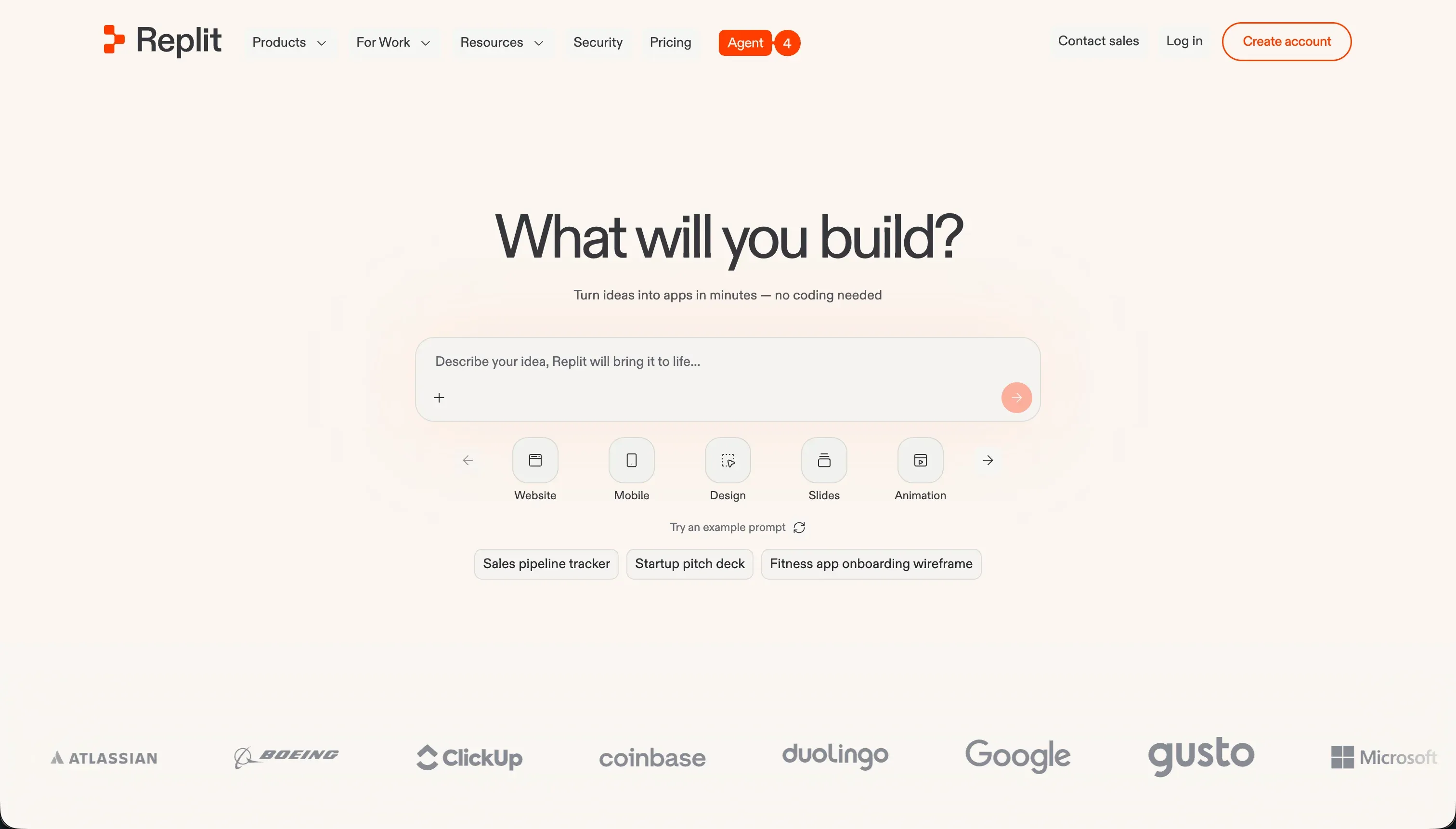
Choosing between Replit and Same.new means evaluating two completely different developer workflows. Replit is a complete, cloud-based Integrated Development Environment (IDE) built to scaffold, host, and maintain full-stack applications through natural language prompts.
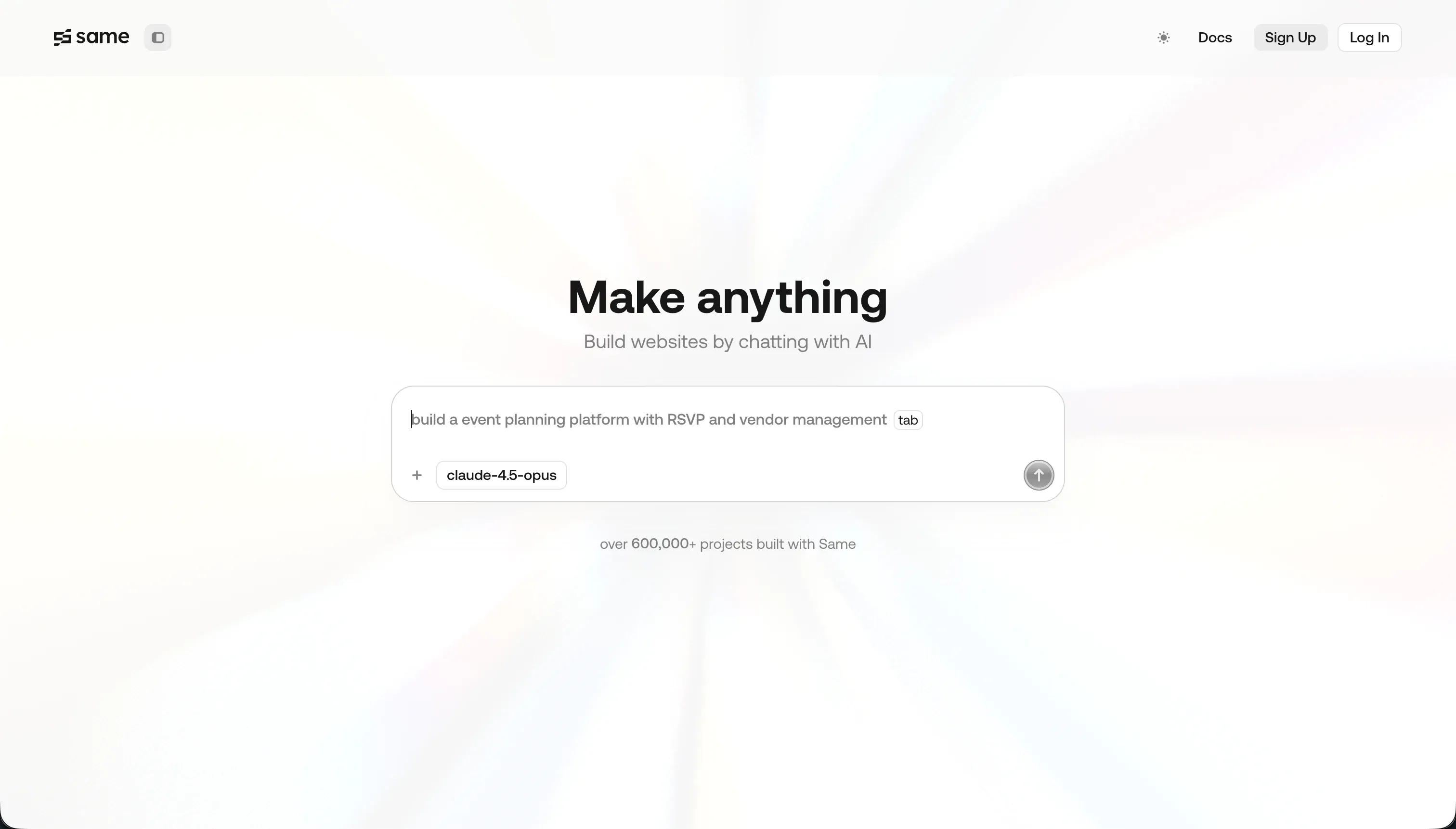
Same.new is a specialized frontend UI prototyping tool built exclusively for replicating visual templates from live web URLs and tweaking React code conversationally.
Replit wins this decision aggregate with a score of 7.4 to Same.new’s 4.1, representing the massive gap between a production-grade backend hosting infrastructure and a frontend sandbox. The choice only flips to Same.new if you are purely looking to copy the layout styling of an existing website and export the React framework files to host elsewhere.
The decision in 30 seconds
| If your priority is… | Pick | Why |
|---|---|---|
| A production-ready full-stack database & host | Replit | autoscaling, managed PostgreSQL, and scheduled agent backups |
| Visual layout replication from a URL | Same.new | instantly clones styling and typography from any live page |
| Collaborative, real-time developer environment | Replit | features multiplayer multiplayer environments with terminal access |
| Building client portals or secure business tools | Neither | both code-heavy paths lack visual user group role permission dashboards |
| Robust, non-destructive app updates | Replit | version-controlled code preserves progress where Same.new wipes layout logic |
What each platform is
What is Replit?
Replit is a collaborative development platform designed to take projects from natural language requirements to production hosting. It abstracts local machine configuration by housing a high-performance browser IDE, package managers, and virtual machine containers. By pairing code sandbox utilities with an autonomous agent, Replit translates user requests into modern application codebases.
Replit leverages its Agent along with Ghostwriter AI to write, test, and host software in over 50 programming languages. Backed by automated check-pointing and native PostgreSQL database migration tools, it serves non-technical operators trying to build functional applications as well as technical groups who want to prototype alongside a co-pilot.
What is Same.new?
Same.new is a design-focused workspace that turns website reference URLs directly into front-end code templates. Users paste a link, and the platform clones the page elements, layout structures, and Tailwind spacing rules, converting them into an editable React component structure.
Same.new is fundamentally designed for designers and front-end developers who need a head start on user interface composition. It bypasses backend design completely, allowing styling updates, grid alignments, and component changes to be requested through text prompts or exported for integration inside local development pipelines.
The core difference
The core divergence lies in full-stack execution capability versus single-tier layout prototyping.
- Replit coordinates databases, hosting infrastructure, and multi-language backends to maintain running application environments.
- Same.new operates exclusively as a frontend visual engine that translates styling elements into React and Tailwind templates.
Where the scores diverge
Production readiness: Replit 8.0, Same.new 3.0. Replit behaves as a genuine host, utilizing managed PostgreSQL databases with 28-day rollbacks, custom domains, and autoscaling. Same.new is not built to run live web operations, meaning any live implementation requires self-hosting or code export.
Compounding this, its rebrand from Same.dev left active paid-user setups broken or locked in read-only status, showing a platform stability trajectory that poses a significant risk to commercial ventures.
Maintainability: Replit 7.5, Same.new 3.0. Replit stores your applications as structured, version-controlled code that a real engineer can edit, branch, or take offline. While the platform’s autonomous agent is vulnerable to circular debugging loops that burn compute credits, the physical output remains clean code you can own.
Same.new faces deep maintenance limitations; users report small visual prompts deleting substantial blocks of functional code - including severe cases like 1500-line layout deletions - while its duplicator and fork triggers occasionally freeze when handling larger code assets.
Data & integrations: Replit 8.0, Same.new 4.0. Replit connects with any system, API, or package reachable through standard programming paradigms across dozens of language runtimes. It provides native database clusters out of the box, with the only friction being that schema optimization requires developer familiarity.
Same.new treats database integrations as entirely out of scope, leaving users to wire external endpoints or build custom data connections on their own infrastructure once they download the frontend files.
Security & access control: Replit 6.0, Same.new 3.0. Replit provides secrets management, environment isolation, and compatibility with robust authentication packages. However, it still requires that you write or prompt your own security rules, meaning you must audit raw code to ensure user groups are protected.
Same.new provides zero native authentication, user session checks, or database row security, requiring that any security layers be built completely from scratch inside another codebase after you export from the tool.
Design flexibility: Replit 8.5, Same.new 6.5. Replit offers unmatched styling freedom because it manages real full-stack UI directories, giving the agent full license to run custom frontends, clean dashboards, and multi-page APIs.
Same.new works well for cloning standard layouts into Tailwind code, but its visual parsing regularly struggles with nesting complex grid panels and managing interactive application state parameters, capping its visual accuracy on complex corporate structures.
Ease of build: Replit 6.5, Same.new 5.0. Replit scaffolds and deploys complete full-stack applications from prompts, which represents impressive execution for software that writes raw code. It still demands that the builder understand concepts like credentials, environment secrets, and build terminal logs to run smoothly.
Same.new generates simple clones quickly if you paste a direct landing page, but edits are brittle, and building multi-page applications, custom navigation routers, or backend state parameters often leaves non-technical users stranded without developer assistance.
Cost comparison
Replit utilizes an effort-based pricing structure where builders navigate dynamic credits. Premium packages start at $100 per month under Replit Pro, but because the autonomous agent consumes credits during logical testing, compilation runs, and database migrations, intensive debugging cycles can spark unexpected overage billing.
This is a model built for software compilation platforms where usage-based resources dictate the final cost.
Same.new transitioned from a pay-as-you-go credit structure to fixed tiers starting at $10/month and containing token quotas. Because there are no backend computing layers or hosted database schemas to maintain, Same.new’s cost remains low, but buyers must factored in the downstream hosting bills for platforms like Vercel, Supabase, or AWS required to actually run the exported code.
Lock-in and the exit path
Same.new provides high data portability, allowing you to easily download the compiled React and Tailwind code, making the transition to local machines clean and simple. Replit syncs natively with GitHub repositories, so you can host your app on other standard cloud options like Railway or fly.io with minor configurations.
Replit offers the cleaner, more survivable exit pathway because your database structure is a real PostgreSQL schema rather than a disconnected frontend mockup.
- Download compiled React and Tailwind code
- Clean transition to local machines
- Native GitHub repository sync
- Host on Railway or fly.io with minor configuration
- Real PostgreSQL schema survives the move
Who should pick Replit
Pick Replit if:
- Technical teams who want to build, host, and version-control applications under a single browser ide profile
- Builders looking for a conversational co-pilot that configures actual SQL databases and server configurations
- Teams planning structural projects that must grow continuously through developer collaboration and multiplayer workspaces
Do not pick Replit if you need to construct portals with granular user group access controls that must be audited visually without reading raw source code files.
Who should pick Same.new
Pick Same.new if:
- Designers who only require a quick Tailwind markup mockup of an existing webpage for aesthetic scaffolding
- Front-end engineers seeking to copy standard container formats without building database backends
- Prototypers who need an inexpensive generator to output clean React components to compile in a separate dev stack
Do not pick Same.new if you require user registration portals, interactive functional software interfaces, or stable commercial hosting.
What neither platform answers
While both platforms showcase impressive AI capabilities, they force builders through a code-first pipeline. If you are a business operator looking to deploy an internal database, a client tracking portal, or a secure vendor dashboard, both options introduce unnecessary complexity.
You will find yourself debugging container setups on Replit or wiring third-party APIs to exported React code from Same.new, translating to high maintenance overcharges and developer dependencies.
For operational applications where data privacy, client login verification, and direct business automation drive the requirements, a business platform like Softr represents the higher-scoring selection.
Softr bypasses code generation altogether, allowing builders to assemble secure interfaces visually using dynamic native database schemas. It scores 8.0 on production readiness and 8.0 on data integrations because authentication, server-driven row permissions, and visual layouts are platform features rather than something you must prompt or program.
If you need mobile apps with offline support, look to FlutterFlow instead.
Analyst verdict
Replit wins this matchup decisively on the scores, totaling 7.4/10 against Same.new’s 4.1/10. Replit achieves superior scores in production readiness (8.0), maintainability (7.5), and database integration (8.0) because it provides real development infrastructure with container management and PostgreSQL tooling.
Same.new maintains relevance only in its visual design cloning capability, but its lack of basic user architecture, backends, or reliable platform versioning rules makes it a poor contender for custom systems.
Choose Replit if you are looking to build and host functional applications while leveraging AI to automate devops engineering. Choose Same.new only if you need a quick visual React code snippet copied from a reference website to drop into a local environment.
Related reading: the Replit scorecard, the Same.new scorecard, and our scoring methodology.