

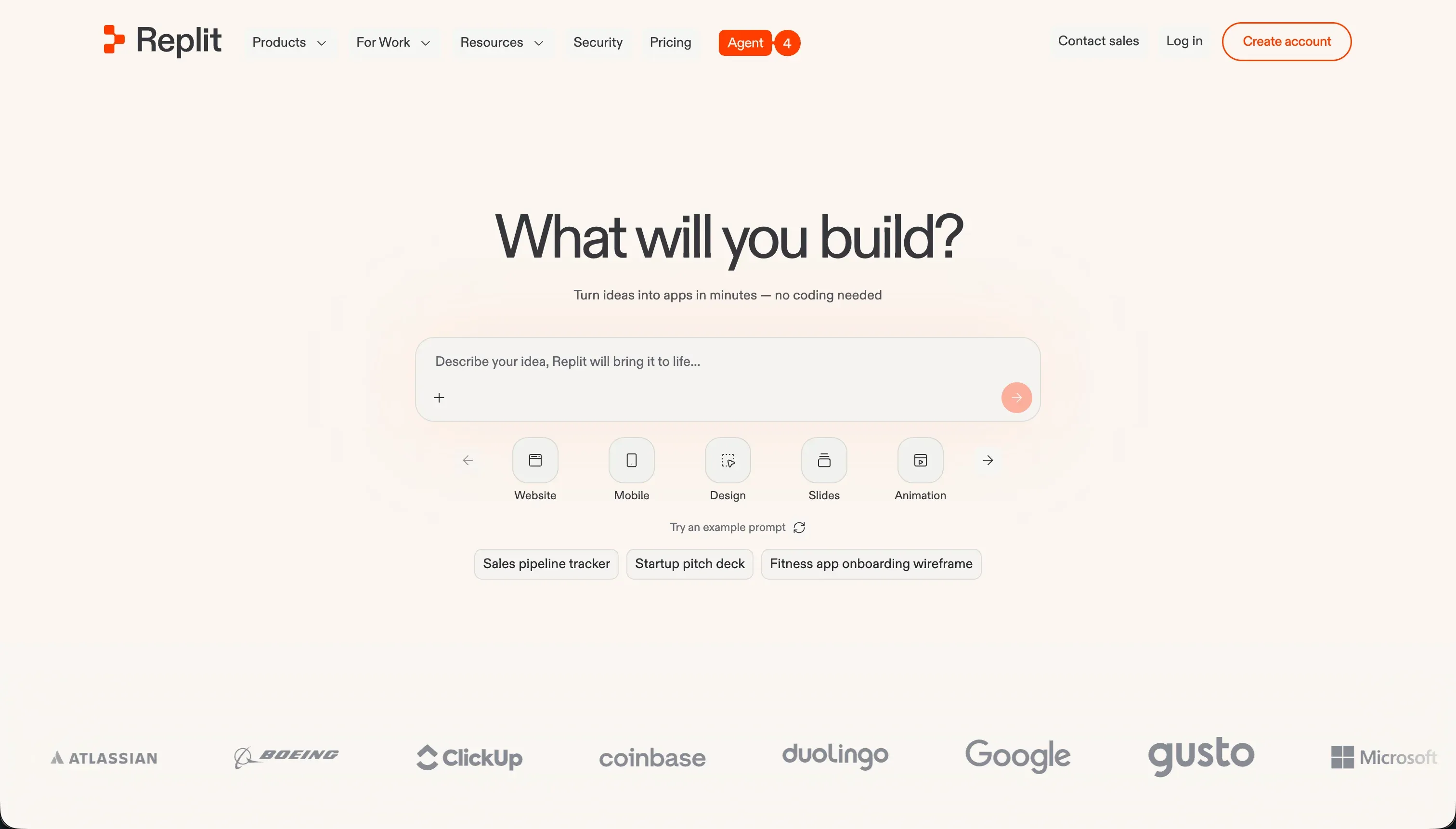
Choosing between Replit and Glide represents a fundamental choice between developer-centric code generation and template-driven no-code spreadsheet tooling. Replit targets builders and teams who want to generate, edit, and host a custom codebase of their own.
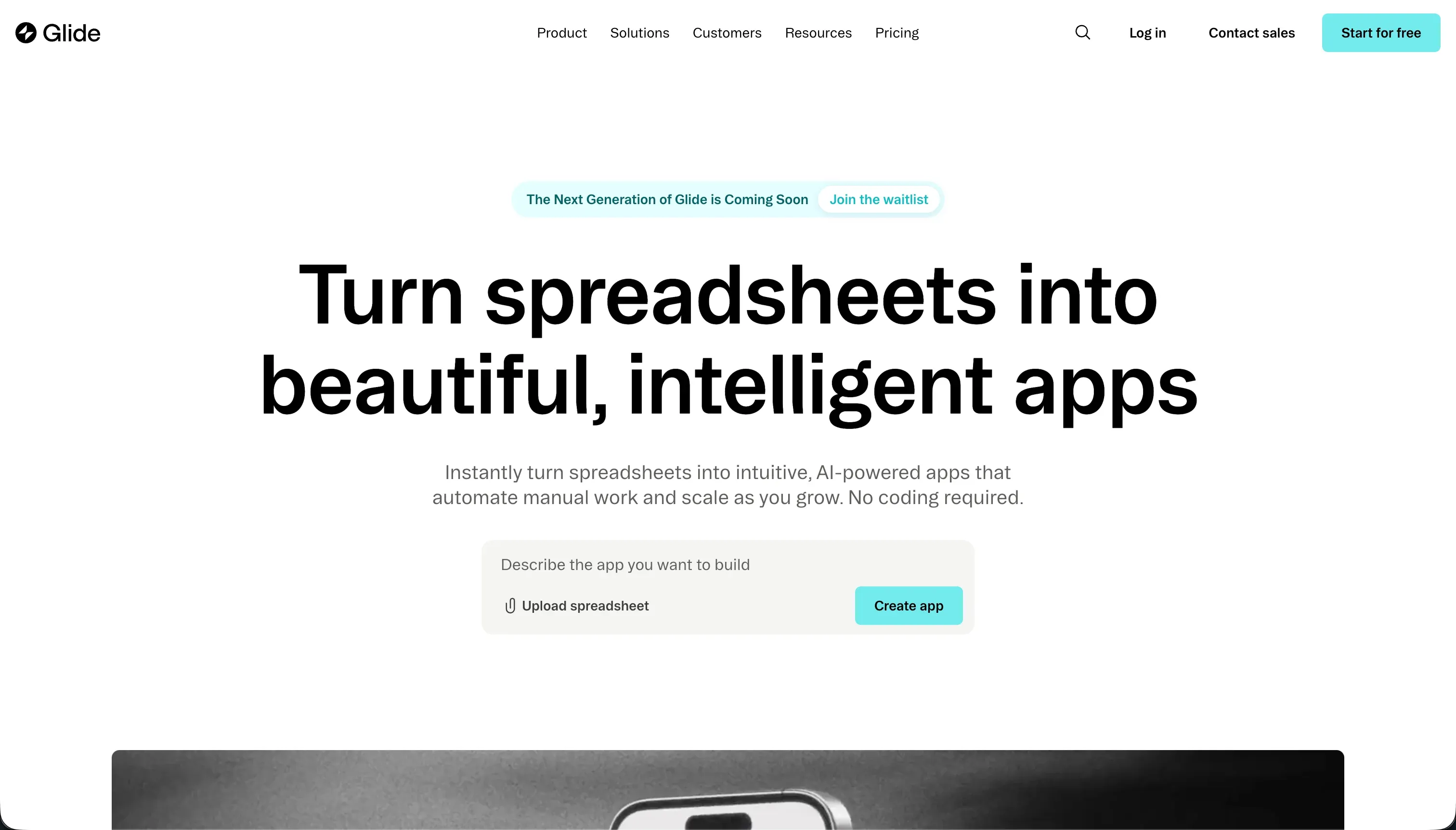
Greatly differing, Glide focuses on business operators who need to instantly wrapper existing data into functional, mobile-friendly web apps.
Replit wins the aggregate matchup scoring 7.4/10 compared to Glide’s 6.3/10. The decision flips to Glide if the team lacks technical supervision and must launch a structured, mobile-responsive operational interface in a single working day without managing servers or code repos.
The decision in 30 seconds
| If your priority is… | Pick | Why |
|---|---|---|
| Pixel-level canvas control and custom UI | Replit | Its 8.5 score on design flexibility means any design a developer can write, Replit can host |
| Speed from spreadsheet to functional layout | Glide | Its 8.5 score on ease of build allows you to scaffold interfaces directly from Airtable, Excel, or Sheets |
| A developer-grade, maintainable codebase | Replit | Outputs real version-controlled code that ages far better than prompt-only or restricted platforms |
| Client portals, secure CRM, or partner logins | Neither | Both struggle with granular external access rules; Softr scores higher here with dedicated user group portals |
| Complex calculations, relations, and robust logic | Replit | Integrates everything code can reach in 50+ languages with a fully managed PostgreSQL backend |
What each platform is
What is Replit?
Replit is a cloud-based development environment built around collaborative multiplayer coding and autonomous software generation. Using Replit Agent, builders create full-stack software from conversational prompts, making it one of the fastest code-based prototyping suites on the market.
It manages container environments, installations, and database provisioning in the background, keeping the path from prompt to deployed URL contained within a single browser tab.
Beneath the AI layer, Replit is a developer IDE supporting over 50 programming languages. Key features from the research include its managed PostgreSQL database layers with 28-day rollbacks on Pro, custom domain setups, autoscaling production hosting, and a terminal for manual package and library maintenance.
It is designed for founders, technical builders, and teams who want to hold real, deployable code without configuring local machines.
What is Glide?
Glide is a visual no-code platform engineered to turn business databases and spreadsheet rows into standard web and mobile applications. It functions on a strict component-to-layout structure, meaning the UI dynamically adapts to any screen size without direct drag-and-drop complexity.
Rather than generating separate repositories, Glide acts as a visual wrapper over structured columns, prioritizing instantaneous deployment over creative UI freedom.
Its feature set relies on pre-configured blocks including lists, maps, dynamic calendars, and detail views. Crucially, the platform includes Glide Tables - a high-speed internal database supporting relations and rollups - alongside native sync engines for Google Sheets, Airtable, and Excel. It is built for operations leaders, field staff, and logistics managers who need to digitize manual spreadsheet workflows.
The core difference
The primary tension in this matchup is the distinction between holding an independent, developer-maintained codebase and running within a highly structured visual layout engine.
- Replit generates, deploys, and hosts actual, raw open-source code in Python, JavaScript, and other languages, allowing complete engineering control.
- Glide wraps your existing rows in rigid, standardized user interfaces that can only be adjusted through Glide’s visual settings panel.
Where the scores diverge
Design flexibility: Replit 8.5, Glide 4.0. Replit scores 8.5, far ahead of Glide’s 4.0. Because Replit deploys real frontend code, it can host any custom CSS, JavaScript animation, or dashboard structure a developer can compile.
Glide restricts styling strictly to its proprietary templates, lacking a free drag-and-drop editor and gating custom CSS to top tiers, meaning your app will inevitably look identical to Glide’s standard templated interfaces.
Ease of build: Replit 6.5, Glide 8.5. Glide wins here with an 8.5 score against Replit’s 6.5. Glide scaffolds workable application components from Google Sheets or Airtable in minutes, requiring zero programming terminology.
Replit, although fast for a code-producing option, introduces substantial prompt fatigue; non-technical builders report hitting infinite debugging loops where the agent claims fixes it did not make, and managing secrets and containers assumes a technical baseline.
Production readiness: Replit 8.0, Glide 6.5. Replit scores 8.0 here, outclassing Glide’s 6.5. Replit provides professional dev infrastructure, utilizing managed PostgreSQL database tools with point-in-time rollbacks and autoscaling compute cores.
Glide, while highly reliable for internal tasks, faces significant criticism from users who report system lag occurrences 5 to 10 times a year during critical business hours, and free tier projects receive no human support when operations freeze.
Maintainability: Replit 7.5, Glide 6.5. Replit takes maintainability 7.5 to 6.5. Replit outputs standard, version-controlled code that teams can export, review, or hand off to an engineer. Glide, conversely, is governed by template changes and feature sets that users report being shifted behind higher pricing paywalls mid-project.
Furthermore, once an app’s logical needs deepen, there is no escape path to code, creating a hard ceiling where teams must eventually rebuild from scratch on alternative stacks.
Data & integrations: Replit 8.0, Glide 7.0. Replit scores 8.0 against Glide’s 7.0. Replit leverages managed SQL databases and handles any API connection your code can reach across 50+ languages, though modifying schema tables manually remains highly technical.
Glide offers useful native sync nodes for Sheets, Airtable, Excel, and rollup columns, but it runs into limitations once deep backend, headless, or complex external SQL connections are required.
Security & access control: Replit 6.0, Glide 5.5. Replit scores 6.0 while Glide scores 5.5, indicating a thin floor on both. On Replit, roles and permissions reside entirely in code generated by the agent; verifying those rules requires reading raw logic, which exposes non-technical operators to silent security flaws.
Glide manages internal team access reliably, but its permission structure is thinner than portal-focused platforms when you need granular visibility rules for external customer cohorts.
Cost comparison
Replit utilizes a usage-based credit model layered over subscription tiers. The Starter tier is free, while Replit Core costs $25 monthly. Replit Pro runs at $100 monthly (or $95 billed annually), introducing $100 of monthly credit allocation for parallel AI agents, with dynamic, effort-priced billing depending on task duration.
This means standard operations, debugging sessions, and backup migrations can consume your limits unexpectedly, with users reporting hundreds of dollars of billing overages in brief, intense periods.
Glide bills on a user-cap and record-count structure. The Free plan is limited to one app and 100 database rows. Paid options include Maker ($60/mo billed monthly or $49/mo billed annually), Team ($125/mo), and Business ($310/mo), where sharing an application with more than a limited set of users pushes you into high-tier subscriptions.
The critical differentiator is that Replit bills on compute complexity, while Glide bills heavy premiums on the number of people accessing the web interface.
Lock-in and the exit path
The exit path represents a major victory for Replit. Replit syncs directly with GitHub, allowing teams to export, self-host, or modify their databases and repos on alternative platforms like Vercel or Cloudflare with zero lock-in. Glide offers no code-export capabilities whatsoever.
If you decide to leave Glide as your business requirements expand, you are forced to manual-export your spreadsheet rows and rebuild the entire frontend application and business logic from scratch.
- Sync directly with GitHub
- Self-host or modify databases
- Redeploy on Vercel or Cloudflare
- Zero lock-in
- No code export at all
- Manual spreadsheet row export
- Rebuild entire frontend
- Rebuild business logic from scratch
Who should pick Replit
Pick Replit if:
- Technical teams or product managers who need real, exportable frontend and backend code synced to a GitHub repository.
- Applications that require custom layout structures, heavy math calculations, or complex API endpoints in React or Node.
- Operations with unpredictable user growth, where Glide’s per-user pricing model would prove budget-prohibitive compared to Replit’s flat compute packages.
Do not pick Replit if nobody on your team can interpret, audit, or manually fix the code that the Replit Agent writes; your application will eventually hit a debugging wall when updates break the build.
Who should pick Glide
Pick Glide if:
- Operators whose main objective is to visual-wrapper structured tables in Sheets or Airtable in an afternoon.
- Non-technical teams who prioritize immediate mobile-first layout rendering and offline-capable Progressive Web Apps over unique branding.
- Simple internal business workflows, such as field inventory tracking, dispatch schedules, or equipment check-sheets.
Do not pick Glide if you are launching a consumer-facing SaaS that requires pixel-perfect brand control, custom styling, or a predictable scaling plan for thousands of external users.
What neither platform answers
Both options are built on specific mechanical assumptions: Replit assumes you want to write and debug code, while Glide assumes you want to conform to automated spreadsheet layouts. However, a vast majority of businesses actually need to deploy robust operational utilities - such as secure client portals, partner CRMs, or supplier dashboards.
For these setups, Replit forces non-technical operators to babysit code, while Glide gates basic permissions and CSS styling, scaling user costs aggressively.
For standard business dashboards and portals, Softr represents a significantly more reliable lane.
Softr scores 8.0 on production readiness, 7.5 on maintainability, and 6.0 on security on our rating cards because the client-facing architecture, secure page gates, and standard user group structures are pre-built widgets rather than generated code blocks or rigid templates.
If your team requires native mobile app publishing directly to Apple or Google systems, FlutterFlow is the more complete shortlist pick.
Analyst verdict
Replit wins this technical comparison, taking four of six criteria and finishing with a 7.4/10 aggregate score over Glide’s 6.3/10. Replit’s core strengths - professional SQL data structures, the exit safety of raw code export, and infinite UI flexibility - make it the superior software investment for any team possessing basic programming oversight.
The final choice must be conditional rather than absolute: choose Glide if your target is an internal utility built directly by non-technical managers over Google Sheets in a couple of hours. But for long-horizon projects that need to be maintained securely without architectural brick walls, Replit provides a far safer foundation.
Related reading: the Replit scorecard, the Glide scorecard, and our scoring methodology.