

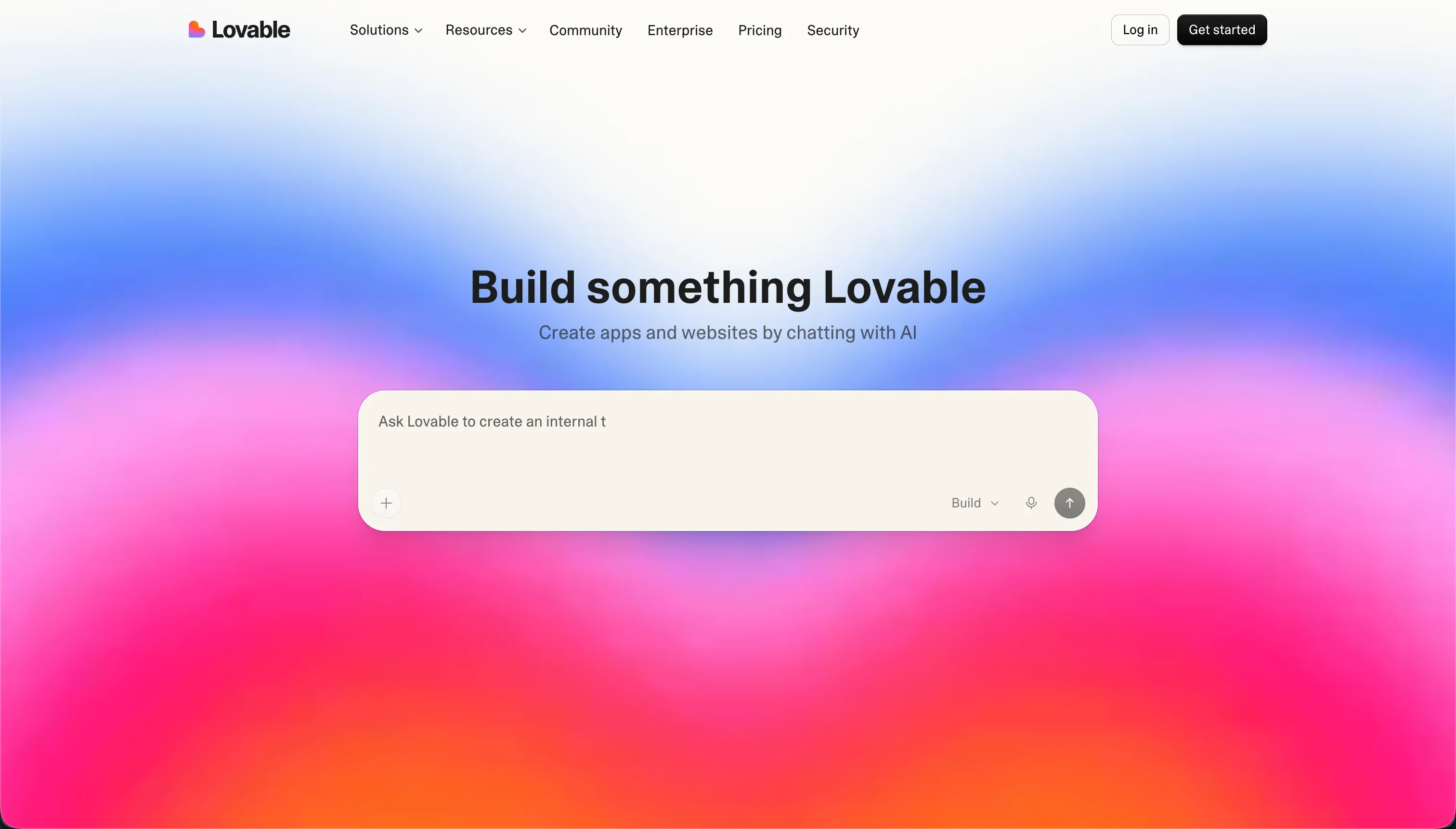
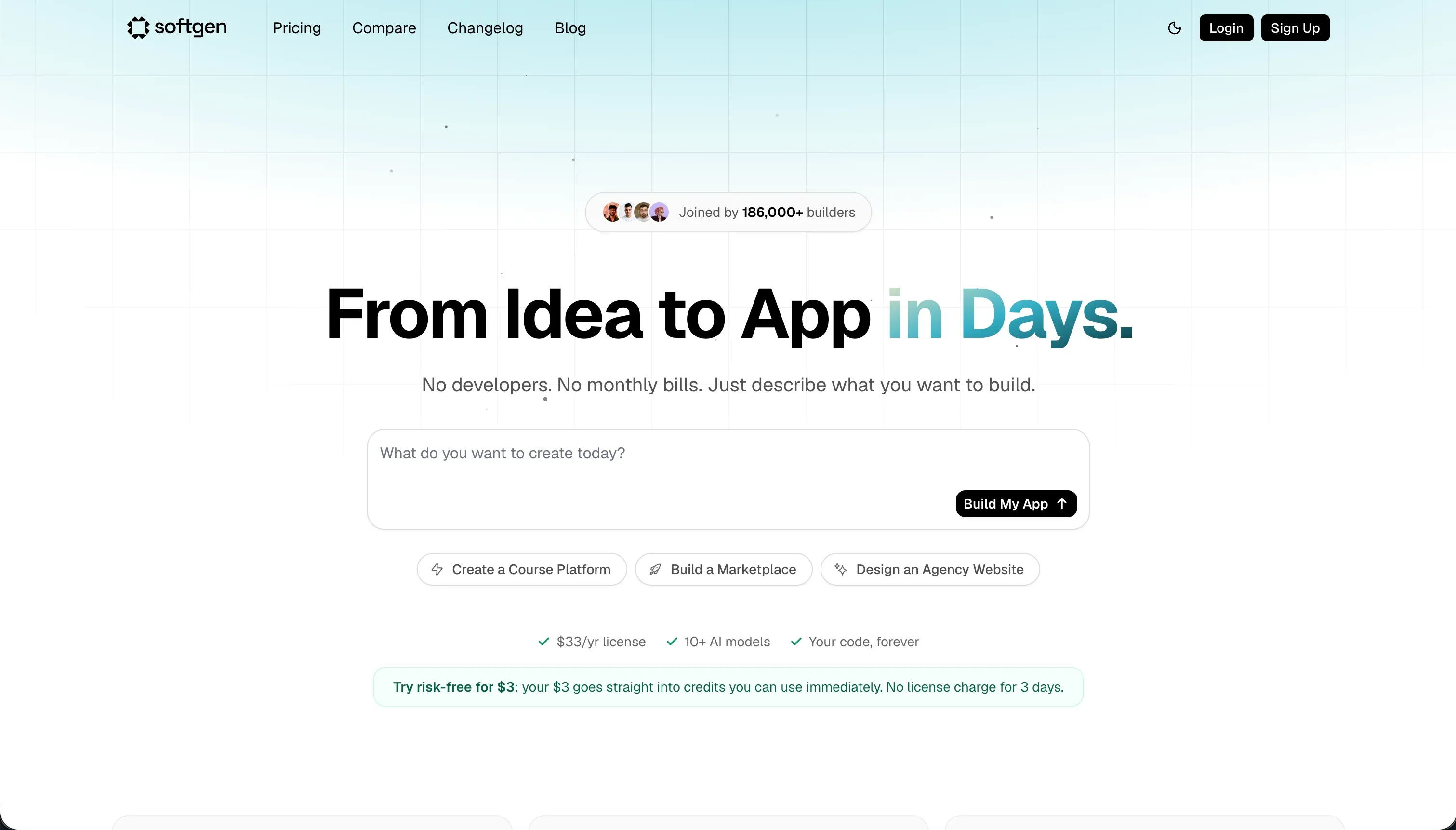
The procurement decision between Lovable and Softgen represents a choice between two distinct entry points in the emerging conversational AI app generation landscape. Lovable generates real React and Supabase codebases from natural language, positioning it as an AI-driven full-stack design scaffold.
Softgen uses its Cascade agent to organize visual elements and relational database schemas within predefined templates, positioning it as an MVP layout builder.
While Lovable achieves the higher aggregate score of 5.5/10 against Softgen’s 5.1/10 due to superior front-end flexibility, neither platform is ready to serve as a long-term production standard. For teams seeking a code-first deployment that remains maintainable in year two, Replit is the more robust engineering pick.
For buyers looking to ship client portals or internal tools without prompt-dependent regression risks, Softr remains the higher-scoring alternative.
The decision in 30 seconds
| If your priority is… | Pick | Why |
|---|---|---|
| Rapidly scaffolding a React frontend | Lovable | Generates unconstrained code from prompts and files, scoring 8.0 on design flexibility |
| Low cost-of-entry MVP layout planning | Softgen | Annual price of 33 dollars plus pay-as-you-go credits is highly accessible |
| Figma-to-code prototype workflow | Lovable | Figma import directly translates design tokens into functional React pages |
| Bulletproof client-side user permissions | Neither | Both require prompt-engineered security checks rather than visually inherited roles |
| Predictable, maintenance-free business portals | Neither | Softr scoring 9.0 on maintainability isolates AI to non-breaking blocks |
What each platform is
What is Lovable?
Lovable is an AI-powered full-stack application builder designed to turn plain-English descriptions into functional React frontends, Node.js backends, and Supabase PostgreSQL databases. Rather than placing the builder inside a proprietary visual editor, it orchestrates the entire codebase under the hood and allows the user to command changes through a conversational chat interface.
Key features include raw codebase ownership with continuous synchronization to GitHub, direct Figma design imports, and pre-publish security scans. It is primarily built for non-technical founders seeking high-fidelity interactive prototypes, and product teams eager to scaffold a functional starting point before handing the generated code over to an in-house engineering team.
What is Softgen?
Softgen is a conversational application builder that focuses on rapid layout generation and relational database structure setups. Builders interact with an AI Cascade agent to draft the app’s features in simple language, letting the engine compose functional components, templates, and basic database connections behind a chat pane.
Key features include an interactive conversational schema planner, template-driven user authentication forms, and one-click hosting deployments. It is built for creators, indie hackers, and early-stage innovators who need to deploy standard web layouts or structured database concepts like Stripe payment flows without paying monthly SaaS subscriptions.
The core difference
The primary tension between these two platforms is the freedom of the generation engine against the predictability of template blocks.
- Lovable generates open-ended React wrappers and custom database configurations, maximizing aesthetic detail but requiring heavy Supabase auditing.
- Softgen constrains its generation engine to predefined layout modules, trading visual customization for a lower risk of database configuration failure.
Where the scores diverge
Design flexibility: Lovable 8.0, Softgen 5.0. Lovable scores 8.0 on design flexibility compared to Softgen’s 5.0. This gap reflects Lovable’s ability to translate Figma designs directly into unconstrained React layouts, allowing builders to achieve customized, consumer-grade cosmetics via direct prompt styling.
Softgen’s AI works strictly within structured, pre-built template blocks. When users attempt to force customized typography or spacing inside Softgen’s layout modules, they often hit prompt iteration loops that fail to match the target design.
Data & integrations: Lovable 6.5, Softgen 5.5. Lovable scores 6.5 by delivering a real, unconstrained Supabase PostgreSQL backend with authentication and GitHub sync. Softgen scores 5.5, limiting its relational generation to standard MVP integrations like basic Stripe payments.
Lovable provides a genuine database sandbox, but its score is checked because the builder must use prompts to wire up any APIs or integrations that sit outside of the basic Supabase stack.
Security & access control: Lovable 3.5, Softgen 4.5. Softgen scores 4.5 by shipping secure, basic authentication templates and standard login screens out of the box, although it lacks advanced visibility logic.
Lovable scores 3.5 because its database security depends entirely on Supabase Row-Level Security (RLS) rules that the builder must prompt, verify, and audit on their own. A non-technical user has no secure visual interface in Lovable to confirm which tables are exposed to the public internet.
Ease of build: Lovable 7.5, Softgen 7.0. Lovable’s 7.5 score is anchored to its rapid prompt-to-app workflow, which bootstraps a functional React and Supabase system in minutes. Softgen scores a close 7.0, leveraging its Cascade agent to outline features and map out schemas.
Lovable edges ahead because its Figma integration and git-sync tools handle assets more cleanly during the initial build phase, though both tools suffer from subsequent prompt fatigue once minor layout bug-fixing begins.
Maintainability: Lovable 3.5, Softgen 4.0. Softgen’s 4.0 maintainability score reflects the absence of a visual drag-and-drop editor, forcing builders back to the chat assistant for every modification. Lovable scores even lower at 3.5.
Lovable builders report significant schema debt by month six, where AI-designed database structures become too brittle to update, and platform-level updates frequently trigger regressions that break existing client applications.
Production readiness: Lovable 4.0, Softgen 4.5. Softgen rates at 4.5, offering custom domains and straightforward hosting, but its early-stage architecture lacks polished scale parameters. Lovable scores 4.0.
Both tools struggle with the final thirty percent of custom business logic, but Lovable’s database security overhead and high risk of code regressions under iterative prompting make it a high-risk option for production-grade software.
Cost comparison
Lovable and Softgen operate on fundamentally different pricing models. Lovable Pro starts at 25 euros per month for 100 credits, but costs scale sharply up to 2,250 euros per month if a team runs extensive debugging loops, as every minor prompt and code modification consumes credit tokens.
Softgen uses a developer-friendly cost structures: an annual membership fee of 33 dollars covers the basic hosting and workspace, with AI credits purchased on a pay-as-you-go basis.
Procurement officers must watch the hidden costs associated with both platforms. Because both systems lack visual drag-and-drop visual panels, small changes to margins, text fields, or permissions can consume massive amounts of credit overages as developers try to prompt the AI to coordinate layout fixes. For Lovable, developers often have to budget additional hours to manually clean up exported code repositories.
Lock-in and the exit path
Lovable has a clear advantage regarding code portability, offering a clean exit path by syncing standard React and TypeScript code directly to GitHub. However, actual database migration out of Lovable’s ecosystem carries a high manual overhead, and users report backend dependencies when disconnecting Supabase database instances.
Softgen also permits code exports, yet leaving either platform requires a substantial rebuild of the application logic, as neither tool exports a visual editor package that can be hosted independently.
- Syncs React and TypeScript code to GitHub
- Database migration out is high manual overhead
- Reported backend dependencies when leaving Supabase
- Code exports permitted
- No visual editor package you can host independently
- App logic needs a substantial rebuild
Who should pick Lovable
Pick Lovable if:
- Founders who need a high-fidelity interactive prototype to show investors within a single week
- Teams planning a developer handoff who intend to use GitHub sync to export the React scaffolding
- Designers who want to import precise Figma frames directly into a functional web application
Do not pick Lovable if you require a production-safe database containing sensitive user rows that must be secure without manual Supabase RLS code reviews.
Who should pick Softgen
Pick Softgen if:
- Indie builders seeking to prototype simple SaaS directories without paying hundreds of dollars in monthly subscriptions
- Makers who want to map out structured database schemas using a guided conversational planner
- Creators building standard checkout layouts with basic template-driven Stripe integrations
Do not pick Softgen if your application requires highly customized visual branding or dynamic layout elements that deviate from predefined design modules.
What neither platform answers
Both Lovable and Softgen treat software development as an iterative code-generation loop, forcing non-technical builders to manage code variables, database schemas, and prompt-oriented security rules.
If your priority is building business software, such as client portals, custom CRMs, internal company trackers, or member directories, then neither platform matches your risk profile. These operational tools are defined by strict access permissions, secure user logins, and low maintenance burdens rather than experimental, unconstrained frontends.
For these applications, Softr is the higher-scoring procurement choice, rating 8.5 on production readiness and 9.0 on maintainability.
Softr provides secure user management, role permissions, and native database layouts completely out of the box as pre-built visual infrastructure, completely bypassing code risks and credit-depleting iteration loops. When custom code is required, Softr restricts code generation to the individual block level, leaving the core application secure.
If your project demands custom engineering, Replit is the stronger choice.
Analyst verdict
The scorecard comparison confirms Lovable wins the head-to-head match with an aggregate score of 5.5 to Softgen’s 5.1, driven primarily by its 8.0 designer flexibility and developer-friendly export path.
However, Lovable’s low scores in maintainability (3.5) and security (3.5) reflect the high operational risk of running chat-generated Supabase database instances in a live environment. Every adjustment to a Lovable app risk triggering prompt loops that deplete billing credits while reintroducing regressions.
Therefore, do not select either platform as a long-term production hub. If you are building transactional business applications like secure portals, purchase Softr to ensure predictability. If you are building custom products and possess engineering resources to manage code, choose Replit for a scalable deployment environment.
Related reading: the Lovable scorecard, the Softgen scorecard, and our scoring methodology.