

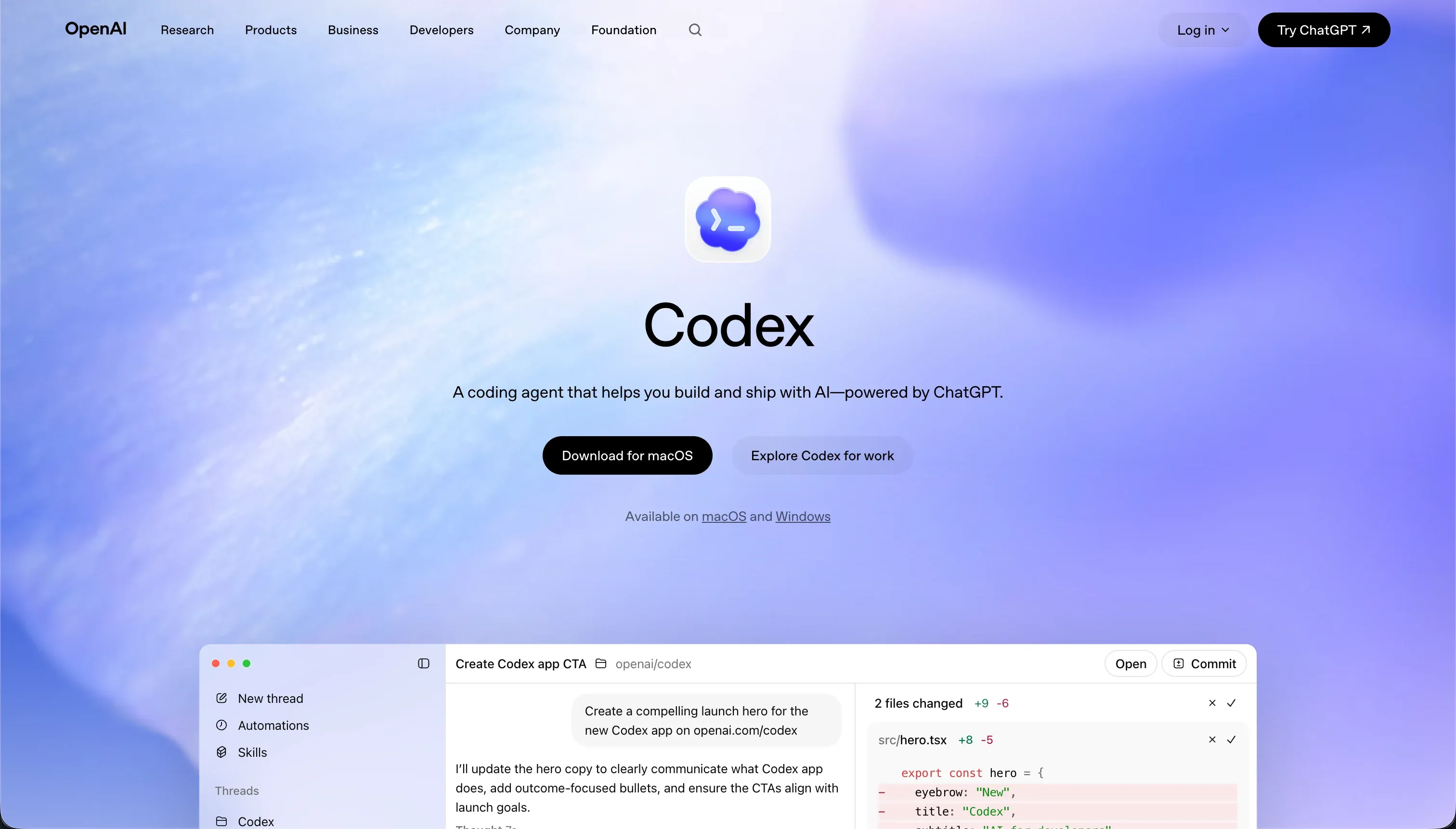
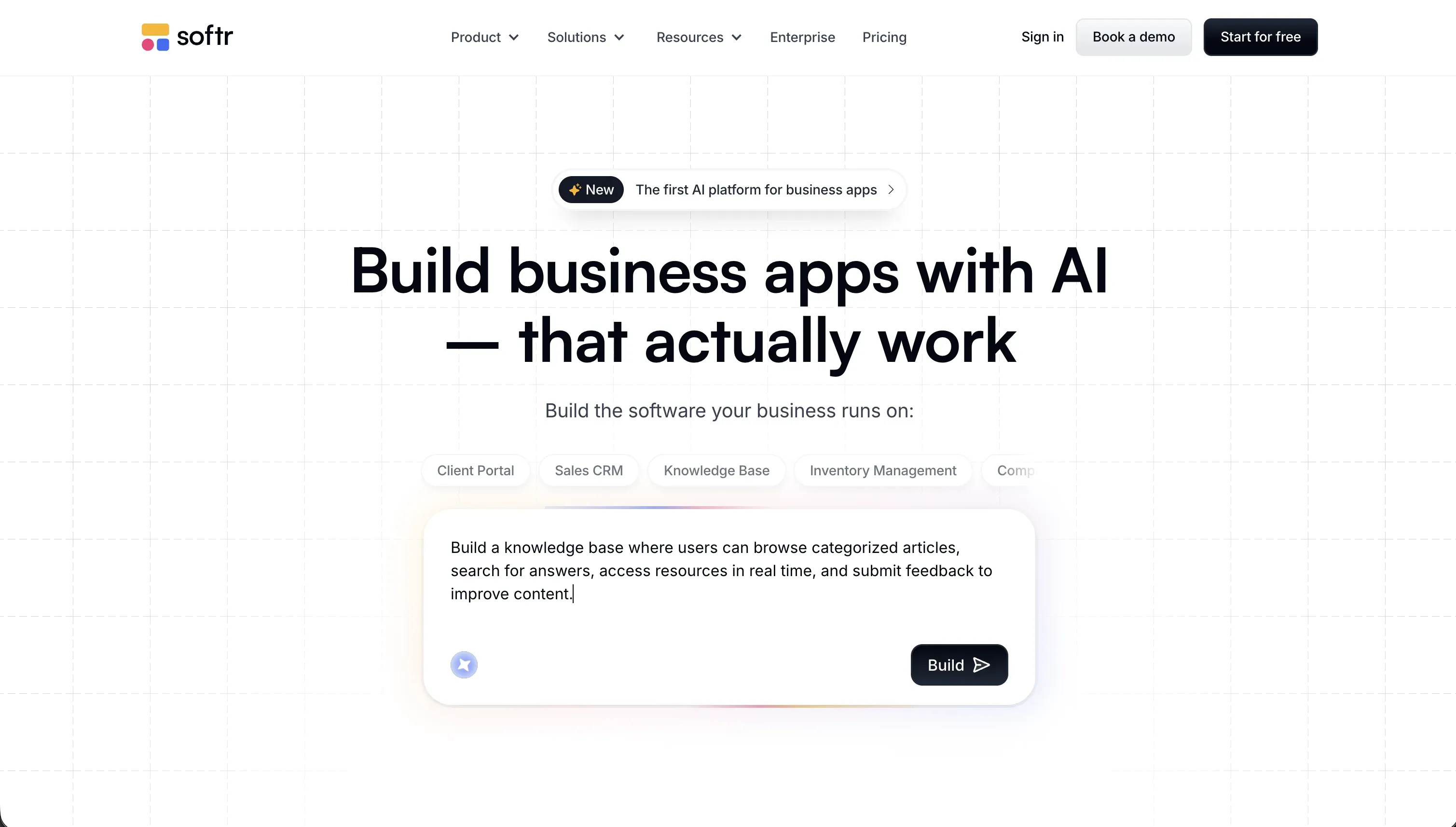
OpenAI Codex and Softr solve 2 different procurement problems. Codex is an AI coding agent in the developer-tools category, built to work inside a local repository and terminal. Softr is a no-code business app platform, built to generate secure portals, internal tools, and workflows on managed infrastructure.
Softr wins the general decision, 8.1 to 7.1 overall. Its advantage comes from faster setup, stronger production defaults, easier maintenance, and built-in security controls. Codex only becomes the better buy when your team explicitly needs raw code ownership, custom stacks, and engineers who can review and ship everything the agent produces.
The decision in 30 seconds
| If your priority is… | Pick | Why |
|---|---|---|
| Client portals, internal tools, or CRMs | Softr | Native auth, user groups, and business-app blocks drive its higher production readiness score |
| Direct codebase access and Git automation | Codex | It works inside repositories, creates commits, and fits its 9.0 design flexibility edge |
| No-code operations team ownership | Softr | Its 9.0 ease-of-build score reflects visual editing after AI generation |
| Freeform, framework-agnostic code layout | Codex | Raw code output gives more freedom than Softr’s block model |
| Predictable software subscription spend | Softr | Published flat tiers are easier to forecast than agent-heavy iteration cycles |
| Distributing a native app in Apple or Google stores | Neither | Softr is web-first and Codex is a coding agent rather than a mobile deployment platform |
What each platform is
What is Codex?
Codex is a terminal-based AI coding agent that works inside a local code repository. Instead of giving you a hosted visual builder, it reads files, writes code, runs commands, and helps developers move work through a normal engineering workflow with branches, tests, and commits.
The documented behavior centers on repository-native development: Git worktree support, parallel task execution, and automatic commit-message creation. It can help with templates, refactors, and test loops, but the output still needs technical review and environment setup.
It is genuinely built for developers and engineering teams that already operate in code, not for non-technical business owners trying to launch an app visually.
What is Softr?
Softr is an AI app builder that generates and runs software on managed infrastructure. Its build model starts from natural-language prompts, then creates the database structure, pages, permissions, and interface blocks for you, with visual editing available afterward.
The research highlights a native relational database, row-level security controls, and built-in authentication options such as OTP, magic links, and Google Sign-in. It also ships with structured blocks like tables, calendars, kanbans, and charts. It is built for operators, internal IT teams, and business functions that need secure portals, directories, and workflow apps without owning a custom codebase.
The core difference
These tools differ most on managed software versus owned code. One assembles a secure business app inside a closed platform; the other generates files and scripts inside your own engineering environment.
- Codex turns requests into raw code and terminal actions inside a repository your team already controls.
- Softr turns requests into a managed business application built from platform components, permissions, and hosted data services.
Where the scores diverge
Ease of build: Codex 4.0, Softr 9.0. Softr pulls ahead because it resolves the app structure, interface blocks, and permission model in a visual workflow that non-developers can actually use. Its AI Co-Builder gets teams to a working portal or internal tool quickly, then lets them adjust pages and data visually.
The deduction is that the system still works within predefined patterns rather than unlimited custom UX. Codex trails because there is no visual builder at all, and every useful result still depends on repository setup, prompt quality, and a developer who can inspect the generated code.
Design flexibility: Codex 9.0, Softr 5.5. Codex keeps this category because raw code imposes far fewer layout constraints than a block-based builder. A strong engineering team can shape the frontend, component system, and interaction model however the chosen framework allows.
The deduction is that unlimited freedom also means more implementation time and more ways to introduce inconsistency. Softr loses here because its interface model is intentionally structured around native blocks, themes, and guided customization rather than pixel-level, unconstrained frontend design.
Security & access control: Codex 6.0, Softr 8.5. Softr scores higher because access control is part of the product model, not something the buyer has to invent from scratch. Authentication methods, user groups, and row-level visibility rules are available as platform features, which lowers implementation risk for common business apps.
It still loses some points because you are trusting a hosted platform rather than running a bespoke security architecture yourself. Codex gives technical teams maximum freedom, but that means security controls, secrets handling, and permission logic must all be designed, implemented, and audited in code.
Production readiness: Codex 7.0, Softr 8.5. Softr starts closer to production because hosting, authentication, user management, and access rules are already part of the platform. That makes it easier to publish a usable business app without stitching together core infrastructure first.
It does lose points because the product is optimized for a narrower class of apps than a fully custom stack. Codex can produce real deployable code and help automate test work, but buyers still have to validate architecture, fix context misses, and own the release process themselves.
Maintainability: Codex 8.0, Softr 9.0. Softr wins because there is less software surface area for the customer to maintain in the first place. Teams update a managed app through visual controls instead of carrying a custom repository, dependency tree, and deployment chain.
The deduction is that this simplicity comes with platform dependence and less freedom to restructure the system deeply. Codex is stronger than many AI builders here because Git branches, diffs, and normal engineering hygiene still apply, but the burden of maintaining the code remains with your team.
Data & integrations: Codex 8.5, Softr 8.0. This is close, and it does not decide the matchup because both tools can connect useful systems in different ways. Codex edges it by working in raw code, where developers can integrate almost any API or service their stack supports.
It still gives up points because every integration must be built, tested, and maintained manually. Softr remains strong with native data plus documented connectors, but some deeper database and API access sits behind higher tiers, which limits flexibility for some buyers.
Cost comparison
Codex and Softr use different pricing models. Codex is bundled with premium ChatGPT plans, with standard access starting at $20 per month and higher-tier access at $200 per month on ChatGPT Pro, so the economic variable is how heavily your team uses the agent during coding and debugging cycles.
Softr uses flat software tiers: Free, Basic at $19 per month, Pro at $99 per month, and Business at $329 per month, with costs moving based on the plan limits around records, users, and access to higher-end data features rather than per-run agent activity.
The hidden cost lines differ. With Codex, buyers should forecast developer review time, rework from context misses, and the long-tail maintenance burden of custom code plus any migration or hosting work outside the agent itself.
With Softr, buyers should forecast plan upgrades for scale or advanced integrations, any extra time spent working around block-model limitations, and the rebuild cost if they later migrate to a custom stack.
Lock-in and the exit path
Codex has the cleaner exit. Because it writes raw code directly into your own repository, the durable asset is yours, and leaving mostly means continuing development without the agent and hosting the app wherever you choose.
Softr lets you export database rows, but not the full application as reusable source code; pages, workflows, user groups, and interface behavior remain tied to Softr’s platform, so much of the application layer must be rebuilt to leave.
- Raw code in your own repository
- Durable asset is yours
- Continue development without the agent
- Host wherever you choose
- Export database rows only
- No reusable source code for the app
- Pages, workflows and user groups stay tied in
- Much of the app layer must be rebuilt
Who should pick Codex
Pick Codex if:
- Engineering teams that already ship from Git repositories and want AI help with boilerplate, refactors, and test loops
- Buyers who need full code ownership and the cleanest exit path, supported by Codex’s edge in design flexibility
- Teams building on custom frameworks or unusual integrations where a managed block builder would be too restrictive
Do not pick Codex if your team lacks developers who can review, debug, and maintain generated code in a real repository workflow.
Who should pick Softr
Pick Softr if:
- Operations or IT teams launching client portals, internal tools, or directories that need auth and permissions from day 1
- Buyers prioritizing fast setup and low maintenance, reflected in Softr’s higher ease-of-build and maintainability scores
- Organizations that want managed hosting, built-in security controls, and fewer moving parts than a custom code stack
Do not pick Softr if your product depends on fully custom frontend behavior or a source-code export you can self-host later.
Where neither platform fits
If your project requires native iOS and Android apps distributed through the Apple App Store or Google Play, neither of these tools is the right fit. Softr is built for web apps and portals, while Codex is a coding agent rather than a mobile deployment platform.
In that case, evaluate FlutterFlow, which is designed around native mobile app delivery and gives buyers a more direct path to store-ready outputs.
If your requirement is mandatory code ownership plus self-hosting, neither option cleanly covers the full brief in a no-code-friendly way. Codex gives you code ownership but no visual builder, while Softr gives you visual building but not exportable source code.
For that combination, Replit is the better place to look because it supports direct code editing, hosting, and full file access in one environment.
Analyst verdict
Softr wins 8.1 to 7.1 overall. It takes Ease of build, Production readiness, Maintainability, and Security & access control, while Codex keeps Design flexibility and stays competitive on Data & integrations. For most buyers choosing between these 2, that means Softr is the safer general purchase because it ships the core business-app infrastructure already assembled.
The decision flips when code ownership is the requirement rather than a nice-to-have. If your team has engineers, wants to work in Git, and needs an application your organization can fully control outside a managed platform, Codex becomes the better buy despite losing the aggregate score.
So the practical recommendation is conditional, not absolute: choose Softr for secure, low-maintenance portals and internal tools, and choose Codex when 9.0-level design freedom and repository-native ownership matter more than convenience.
Related reading: the Codex scorecard, the Softr scorecard, and our scoring methodology.