

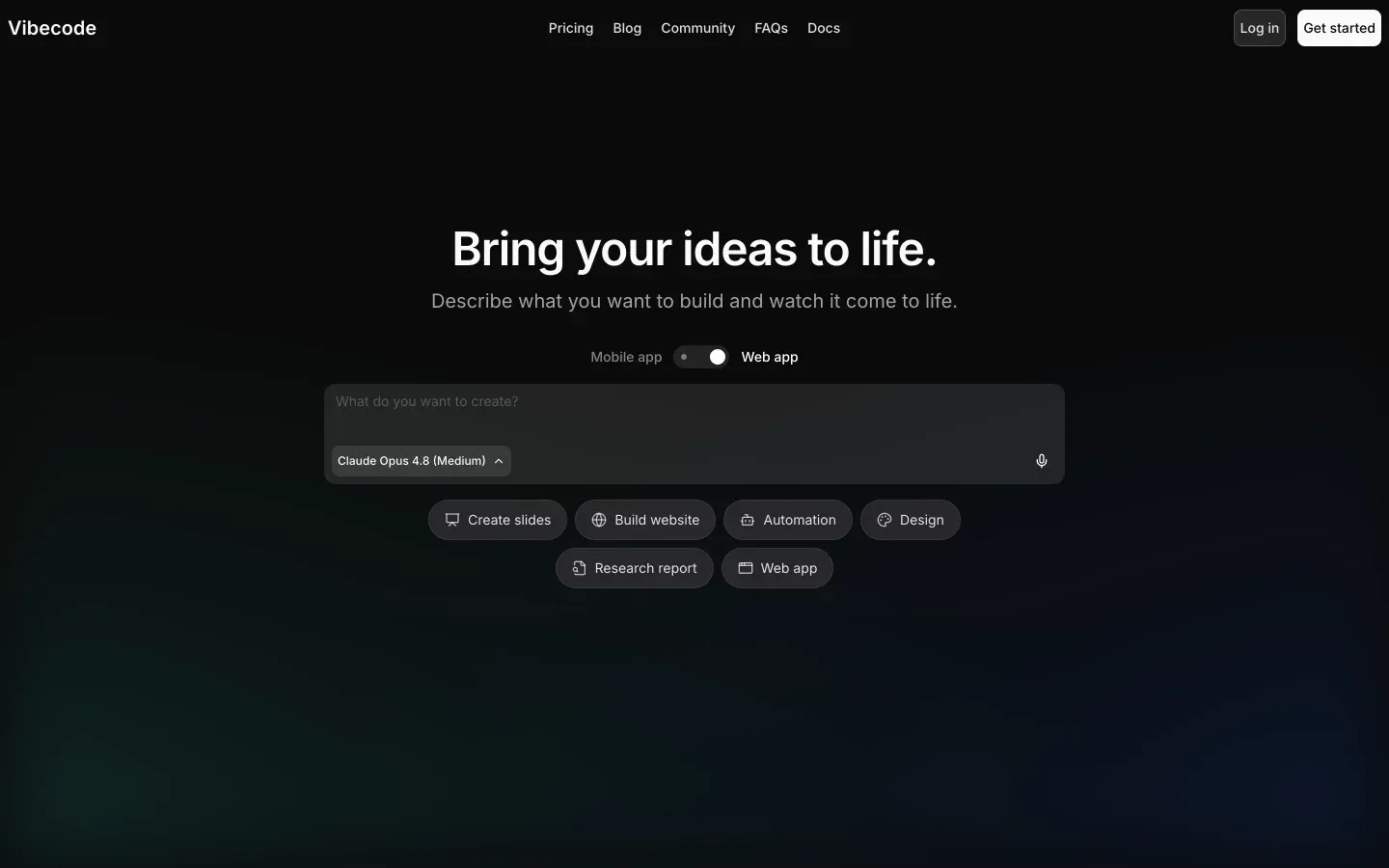
The procurement decision between VibeCode and Zite represents a choice between two distinct application delivery models. VibeCode is a mobile-first, native smartphone application developer that compiles native binaries for the iOS and Android app stores.
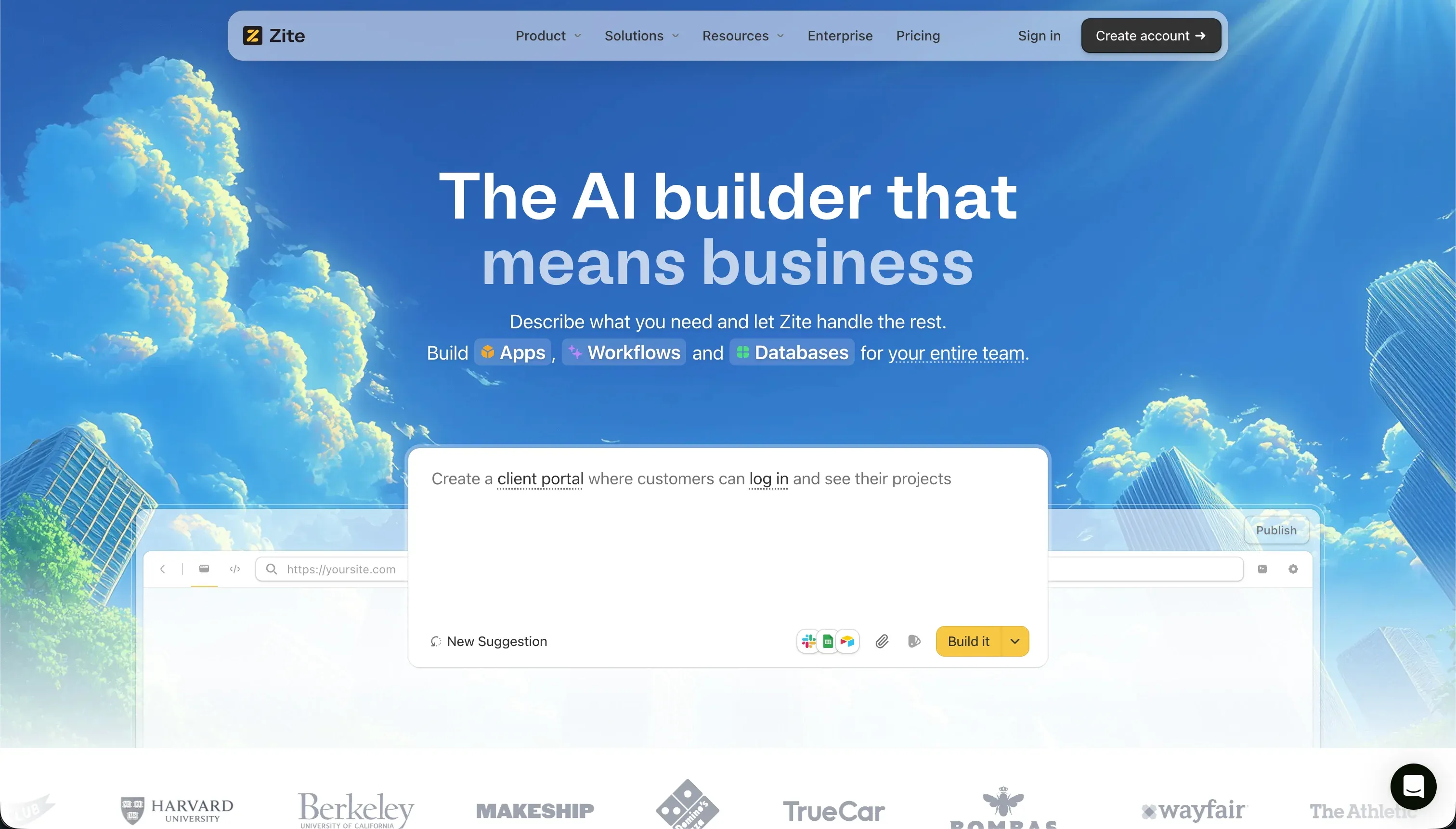
Zite is an AI-first web-based database and interface builder that structures relational schemas and data entry layouts around visual forms.
VibeCode wins this comparison on aggregate, scoring 6.1/10 against Zite’s 5.2/10 scorecard. While Zite scoring 7.5/10 delivers immediate utility for basic office data capture, its rigid visual templates and lack of code export limit long-term utility. The decision flips to Zite only when your team requires simple, seat-free administrative portals without any native smartphone deployment needs.
The decision in 30 seconds
| If your priority is… | Pick | Why |
|---|---|---|
| Native iOS or Android store distribution | VibeCode | vibe-codes native smartphone layouts and packages directly to store reviews |
| Rapid database generation with structured forms | Zite | ease of build scores 7.5 due to a single prompt database and form builder layout |
| Predictable software cost during iteration | Neither | both platforms meter design planning and modifications through volatile AI credits |
| Open exit path with raw code portability | VibeCode | maintainability scores 5.5 by offering code export and Cursor-ready SSH on paid plans |
| Complex calculations, rollups, and view queries | Neither | Zites relational backend lacks advanced calculation fields and raw code tools hit an AI logic wall |
What each platform is
What is VibeCode?
VibeCode is an AI-native smartphone application builder built to let creators write plain-English prompts that the system turns into native mobile interfaces. The build model operates entirely on conversational direction, immediately rendering mobile layouts onto an on-device emulator for swift iteration.
Rather than spitting out simple web page mirrors, VibeCode compiles authentic smartphone code structures on top of its own integrated database and user authentication system.
The platform includes direct packaging pipelines for the Apple App Store and Google Play Store beside code export capabilities and SSH access on higher pricing tiers. VibeCode is explicitly built for designers, prototype builders, and technical creators who want to bypass Xcode, Swift, or React Native tooling to deploy native mobile utilities directly to stores.
What is Zite?
Zite, formerly known as Fillout, is conversational software designed to generate visual web portals on top of a customized relational backend. The build engine maps out your visual interfaces, database constraints, and background logical scripts from a single text description.
It includes a dedicated Plan Mode where users can review a markdown draft of the AI’s intended code adjustments before approving them to save operational credit limits.
The database inherits Zite’s form builder origins, implementing quick multi-language data translation, automated field verification, and simple SSO authentication. Zite is genuinely built for operations managers, business coordinators, and small teams seeking to automate spreadsheets into visual portals without managing server engines or visual column alignments.
- Prompts compile to native mobile code
- Builds on its own database and auth
- Direct App Store and Play Store pipelines
- Code export and SSH on higher tiers
- For designers and technical creators
- One description maps UI, database and logic
- Plan Mode approves AI changes before credits run
- Form-builder data with translation and SSO
- Web portals, no server management
- For operations managers and small teams
The core difference
The primary operational difference between these two platforms is the targeting shape of their compilers.
- VibeCode targets native mobile compilers (iOS & Android) with SSH loops, providing custom codebase portability.
- Zite targets a rigid, form-driven web interface layer mapped to its own proprietary SQL data container.
Where the scores diverge
Design flexibility: VibeCode 7.0, Zite 4.5. VibeCode scores 7.0/10 against Zite at 4.5/10. VibeCode delivers native responsive layout structures built specifically for smartphone viewports with instant mobile-viewer testing, though it lacks direct canvas block manipulation.
Zite’s layouts are highly rigid and closely tied to its form patterns, leading to design constraints that are hard to override. Users also report that Zite’s prompts generate clinical, corporate visual grids that feel off for custom-branded web portals.
Maintainability: VibeCode 5.5, Zite 4.0. VibeCode scores 5.5/10, maintaining a clear advantage over Zite at 4.0/10. VibeCode secures this lead by offering complete code export and direct SSH loop connectivity to Cursor on its Pro and Max plans, keeping an active exit path open.
Zite locking you into its runtime with zero GitHub sync or code download means all maintenance must stay in prompt cycles. Users find Zite modifications rigid once you step outside the AI’s generated grids, forcing builders into repetitive prompt correction loops when editing.
Production readiness: VibeCode 5.5, Zite 4.5. VibeCode scores 5.5/10 while Zite struggles at 4.5/10. VibeCode provisions authentic authentication blocks, native cloud storage, and packages directly into real mobile store builds, though any non-reviewed code risks rejection at app review.
Zite is praised for rapid MVP prototyping but lacks enterprise scaling capabilities. Zite’s database has severe functional gaps, lacking advanced formula fields, database rollups, and custom SQL views, which forces builders to run complex logic inside fragile, prompted workflows.
Data & integrations: VibeCode 6.5, Zite 5.5. VibeCode scores 6.5/10 over Zite at 5.5/10. VibeCode integrates directly to VibeCode Cloud storage and leverages pre-built APIs for maps, OpenAI, Gemini, and location tooling. Zite operates its own SQL data structures but limits external options to basic Airtable and Google Sheets pipes.
Zite’s major data limitation is that every single data read or page load counts as a workflow execution, which can consume a team’s monthly transactional quota within days of active testing.
Ease of build: VibeCode 7.0, Zite 7.5. Zite wins this category with a score of 7.5/10 compared to VibeCode’s 7.0/10. Zite’s form-heritage foundation allows non-technical operators to construct data tables, conditional layouts, and multi-step data flows instantly with high accuracy.
Additionally, Zite’s Plan Mode lets builders parse markdown blueprints before spending credits. VibeCode builds native smartphone templates from plain text well, but its generation lacks the localized form constraints of Zite, causing logic execution to break as soon as your app requires deeply relational data flows.
Security & access control: VibeCode 5.0, Zite 5.0. This criterion is a 5.0/10 tie. VibeCode delivers out-of-the-box user logins, but its row-level security relies completely on custom AI code that requires manual expert audits to verify. Zite brings over mature SSO settings from its form builder foundation and handles user groups natively.
However, Zite’s actual security rules are comparative and simple, forcing operators to configure operational permissions around prompted logic templates rather than concrete, visual policy controls.
Cost comparison
VibeCode operates a four-tier pricing hierarchy starting with a Free plan containing $2.50 in free credits, leading to its Plus ($20/mo), Pro ($50/mo), and Max ($200/mo) packages. Credits on VibeCode serve as raw, un-marked-up API limits to call foundational LLMs like Anthropic and OpenAI.
Zite begins with a Free tier (50 credits), rising to Pro ($19/mo for 100 credits) and Business ($69/mo for 200 credits). Zite also scales with credit top-ups; for example, the Zite Pro plan can scale up to 19,200 credits for $3,769/mo, matching its Business model pricing at high consumption volumes.
Buyers must calculate the hidden cost of credit consumption on both tools. In Zite, credit usage spans building, chatting, and planning, and every data read or database reload during standard usage counts as a workflow run. Active user counts on Zite will exhaust monthly workflow limits quickly, requiring custom enterprise packages.
On VibeCode, your primary hidden cost is manual maintenance time; the AI limits its own context on large codebases, requiring developers to fix structural logic debt on the Pro tier via SSH.
Lock-in and the exit path
The exit path difference between these tools is absolute. VibeCode prevents ultimate lock-in on its Pro ($50/mo) and Max ($200/mo) tiers by offering deep codebase downloads alongside Cursor SSH workspace access. If you decide to migrate from VibeCode, your developers can claim the raw mobile app files and self-host them on external platforms.
Zite offers no codebase export, custom export pipelines, or active GitHub synchronization. Leaving Zite requires manual migration of your SQL data records and a total visual rebuild of your portal sheets in a different interface engine.
- Full codebase download on Pro or Max
- Raw app files self-hosted externally
- Cursor SSH workspace access
- SSH continuity for your developers
- Your SQL data records
- SQL data records, exported by hand
Who should pick VibeCode
Pick VibeCode if:
- Creators deploying native smartphone apps directly to the Apple App Store or Google Play Store.
- Makers requiring code export and SSH terminal access to continue engineering in external IDEs like Cursor.
- Prototypers needing rapid visual smartphone emulations without hand-coding Swift or React Native interfaces.
Do not pick VibeCode if you are building responsive desktop control dashboards, portal sites, or internal team tools that live inside web browsers.
Who should pick Zite
Pick Zite if:
- Operators seeking seat-free web tools to transform raw checklists and rows into simple, form-driven dashboards.
- Teams needing mature SSO user portal entries that match Zite’s form builder validation rules.
- Small companies looking to run staging environments and basic database entries without paying per-user licensing fees.
Do not pick Zite if your business application requires heavy database formulas, custom database rollups, native smartphone layouts, or code ownership.
What neither platform answers
Both VibeCode and Zite require you to build applications through conversational instruction. While this is rapid for initial prototypes, it introduces severe operational maintenance risks to production workflows. VibeCode’s generated mobile screens and Zite’s form layouts easily hit visual roadblocks where adjustments require endless, credit-consuming prompt chains that risk breaking pre-existing business logic.
If you are aiming to construct serious business systems like custom client portals, vendor trackers, or internal operations hubs, you require visual control paired with hosting reliability. Softr solves this lane by providing a proven visual layout engine.
Softr scores 500,000 database record limits and is highly scalable on its Pro tier. It secures your data on the server side out of the box, linking natively to its own integrated database or 17+ external sources. For native mobile control instead, look at FlutterFlow.
Analyst verdict
VibeCode wins this head-to-head comparison on scored criteria, securing an aggregate score of 6.1/10 to Zite’s 5.2/10. VibeCode claims the lead in production readiness (5.5 vs 4.5), maintainability (5.5 vs 4.0), data integration (6.5 vs 5.5), and design flexibility (7.0 vs 4.5) because it compiles native binaries and provides clean code export options on its Pro plan.
Zite keeps the lead on ease of build (7.5 vs 7.0) due to its mature database and single-prompt form structures. The purchasing choice relies on your distribution channel: allocate budget to VibeCode if you are shipping mobile native products to app stores. Choose Zite if you are staging basic, form-driven desktop databases for internal administrative teams.
Related reading: the VibeCode scorecard, the Zite scorecard, and our scoring methodology.