

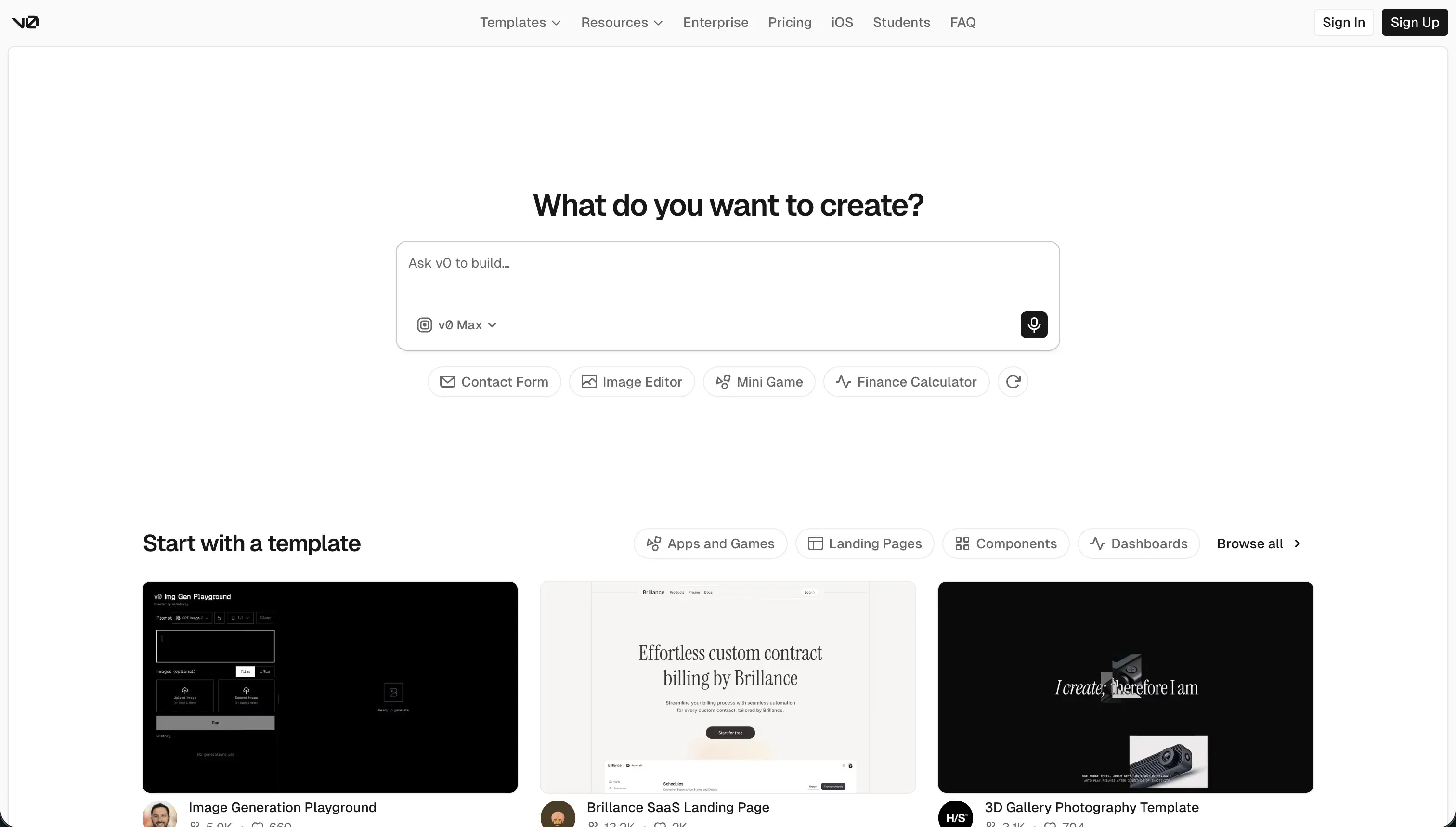
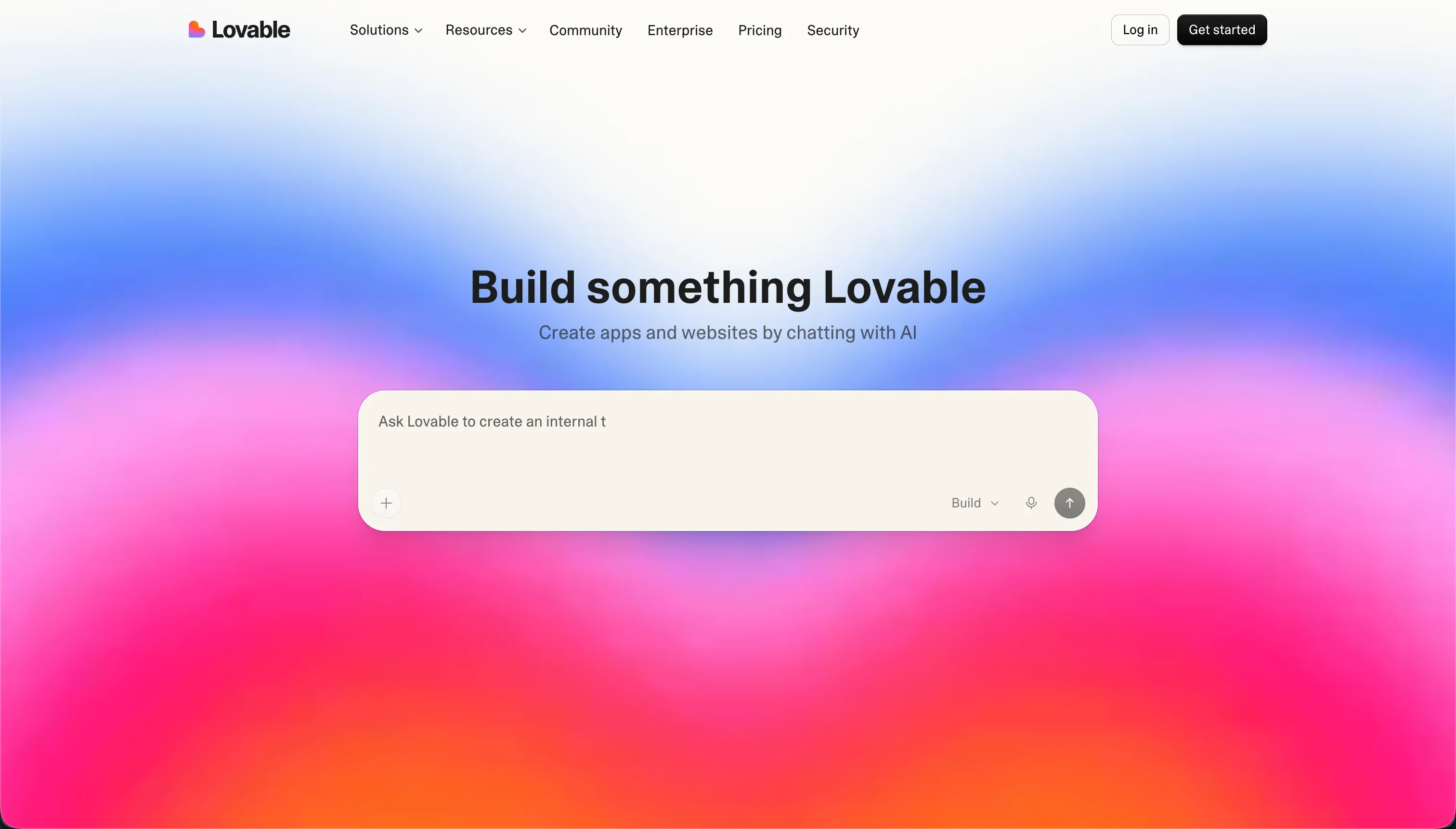
This comparison evaluates two prominent platforms in the frontend-generation and AI application space. v0 operates as a highly polished frontend design assistant from Vercel, designed to output clean interface code from natural-language prompts.
Lovable functions as an AI-powered full-stack builder that creates React frontends and attempts to orchestrate Node.js backends and Supabase database schemas simultaneously.
Evaluating these tools requires looking past the initial prototype stage to analyze how they perform in actual production settings. The composite scorecard places v0 ahead with an aggregate score of 5.8/10, while Lovable scores 5.5/10. While v0 wins on code quality and design refinement, Lovable is the more complete tool of the two if you require an instant, AI-generated database backend out of the box.
The decision in 30 seconds
| If your priority is… | Pick | Why |
|---|---|---|
| Polished frontend scaffolding | v0 | Generates clean shadcn/ui layouts with an 8.5/10 design score |
| Instant PostgreSQL database setup | Lovable | Bootstraps a Supabase backend dynamically with a 6.5/10 data integration score |
| Code modifications without regression loops | v0 | Clean GitHub sync and inspectable output avoid the 3.5/10 maintainability trap |
| Production-ready security permissions | Neither | Both score under 4.5; v0 provides no backend auth and Lovable relies on unverified RLS policies |
| Client portals or internal business apps | Neither | A dedicated no-code business platform like Softr provides robust security and flat pricing |
What each platform is
What is v0?
v0 is Vercel’s AI-powered user interface companion. It acts as an advanced design scratchpad that generates responsive React and Tailwind CSS components from plain-text prompts, hand-drawn sketches, or screenshots.
Rather than deploying complete software systems, v0 concentrates entirely on standard-compliant React front-end code that developers can inspect, tweak, and incorporate into their existing technical stacks.
Key capabilities of the platform include conversational theme controls, Vercel edge deployment previews, and deep integration with git workflows. It is explicitly engineered for software engineer teams, front-end developers, and UI designers who need a fast, aesthetic starting point for visual components.
It lets you skip the tedious manual labor of CSS formatting while preserving complete authorship over the source files.
What is Lovable?
Lovable is an autonomous full-stack development tool that aims to generate complete web platforms from text prompts. Unlike tools that halt at the visual presentation layer, Lovable writes React components for the browser, manages API service routing, and sets up table schemas inside a linked Supabase PostgreSQL database.
Key features include design token imports from Figma files, collaborative credit rollover pools, and automatic pre-publish scans for system dependencies. It is geared towards startup founders, product managers, and operations teams who want to build a functional SaaS MVP quickly. It lets builders prompt their way to a multi-tiered workspace without writing backend queries manually.
- Generates React and Tailwind components
- Prompts, sketches or screenshots as input
- Vercel edge deployment previews
- Deep git workflow integration
- For engineers, front-end devs and UI designers
- Writes React components, routes APIs
- Sets up Supabase PostgreSQL schemas
- Figma design token imports
- Pre-publish dependency scans
- For founders, PMs and ops teams
The core difference
The division between these two assistants lies in the scope of their generative boundaries and how they handle backend persistence layers.
- v0 isolates its generation strictly to clean frontend code components, leaving the database, server infrastructure, and routing logic entirely to your own developer setup.
- Lovable acts as an end-to-end full-stack orchestrator, attempting to auto-generate the database, user logins, and backend scripts along with the frontend design.
Where the scores diverge
Maintainability: v0 5.5, Lovable 3.5. This is a decisive divergence. v0 scores 5.5/10, suffering from prompt drift after several messages and a tendency to rebuild React code from scratch instead of reusing libraries. However, because it outputs standard files, you can move the codebase to an IDE cleanly.
Lovable scores 3.5/10 because it locks you into conversational updates; builders face severe technical debt by month nine, as letting AI design database schemas creates messy table relationships that are hard to correct.
Data & integrations: v0 5.0, Lovable 6.5. Lovable leads with a 6.5/10 score here because it establishes a live, functional PostgreSQL database environment through Supabase, managing authentication and data storage out of the box. v0 scores 5.0/10 on this front; it links to GitHub repositories for code syncing, but has no relational model or database connectors, requiring manual API wiring.
Production readiness: v0 4.5, Lovable 4.0. The failure modes of both platforms are exposed when moving past simple demos. v0 scores 4.5/10 because it leaves all production steps to your team; it does not ship with database adapters, logic controllers, or user portals.
Lovable scores a similar 4.0/10 because, while it tries to compile these components, long-term builders note that platform upgrades break live apps and the platform struggles once you hit the final 30 percent of custom business logic.
Security & access control: v0 4.0, Lovable 3.5. Security is a major vulnerability for both platforms. v0 scores 4.0/10 as it provides zero security layers; any permission boundaries must be built by your own engineering team. Lovable scores 3.5/10 because its PostgreSQL security relies on Row-Level Security rules.
Since non-technical operators cannot read the generated backend files, they have no reliable mechanism to verify what data is exposed, leading to silent security gaps.
Design flexibility: v0 8.5, Lovable 8.0. v0 secures an 8.5/10 score in this category due to its exceptional front-end polish, generating highly modern shadcn/ui styles that are cleanly structured.
Lovable scores an 8.0/10, which remains competitive thanks to its Figma importing feature, but getting minor padding and typography details right requires repetitive text prompting rather than direct visual modification.
Ease of build: v0 7.5, Lovable 7.5. Both tools tie with a 7.5/10, though their barriers to completion are very different. v0 makes first-version prototyping frictionless because it finishes clean React layouts in seconds, but you must have a developer on standby to deploy a real database.
Lovable builds the database automatically, yet its conversational iteration path often stalls; users report getting trapped in debugging loops where fixing a bug on page three breaks a button on page one, draining their prompt credit allocations in the process.
Cost comparison
v0 uses a token-based credit structure where free accounts receive five dollars in monthly credits, with paid seats running thirty dollars on the Team plan or one hundred dollars per month on the Business tier. Each code edit uses credits depending on the complexity of the AI model selected, which can lead to unpredictable pricing spikes during intense coding sessions.
Lovable Pro begins at twenty-five dollars per month for one hundred monthly credits, rising to two thousand two hundred and fifty dollars per month if you require ten thousand credits. It is critical to note that on Lovable’s Business plan, individual credit prices are almost double the rate of the Pro tier.
Additionally, builders must account for separate hosting bills through Supabase, plus extra credit overage charges if you fall into long troubleshooting prompt loops.
Lock-in and the exit path
v0 has a very comfortable exit path because it exports clean, standard React and TypeScript files that can be imported straight into local editors like Cursor or VS Code with no platform ties.
Lovable has significant lock-in: although it links to GitHub, developers report that the underlying code can be highly unstructured and difficult to maintain outside of Lovable.
Moreover, the database backend is tightly bound to Lovable Cloud’s managed environments; developers warn that Lovable has been known to trigger database migrations without explicit builder consent, making it a difficult ecosystem to leave cleanly.
Who should pick v0
Pick v0 if:
- Front-end engineers who want to generate polished shadcn/ui layout code to build upon locally.
- Designers wanting a fast way to turn sketches or screenshots into real Tailwind CSS frontends.
- Founders with existing developers ready to build out real, custom backend logic.
Do not pick v0 if you are a non-technical builder hoping to deploy a complete, functional software app with working users, logins, and databases without writing code.
Who should pick Lovable
Pick Lovable if:
- Solo founders who need to launch a basic SaaS prototype with working Supabase auth within a single week.
- Product managers wanting to import Figma designs straight into a functional database-linked mockup.
- Makers planning a short-lived mini-app where long-term code maintainability is not a priority.
Do not pick Lovable if you are building an application with an operational timeline longer than 18 months, as the system debt from AI-designed structures makes it highly fragile.
What neither platform answers
Both assistants are optimized for the SaaS prototyping paradigm where the codebase itself is seen as the asset. However, if your actual goal is to launch a secure, working business system - such as a client portal, worker directory, partner tracker, or team intranet - these developer builders introduce massive, unnecessary maintainability costs and security risks.
For functional operational tools, Softr represents a much safer fit. Softr scores 8.5 on production readiness, 9.0 on maintainability, and 8.5 on security & access control because it uses pre-built, secure blocks that do not rely on variable code compilation.
You manage users, visibility states, and automated workflows visually while connecting to databases you own, such as Softr Databases or Airtable, avoiding the runtime fragility of pure code-generation engines.
Analyst verdict
The scorecard gives v0 the aggregate victory with a 5.8/10 over Lovable’s 5.5/10. v0 wins four out of the six core criteria: maintainability, security, ease of build, and design flexibility. It avoids the severe maintainability trap of Lovable because it limits its scope to front-end components, outputting cleaner React and Tailwind CSS that you can easily maintain in a local code environment.
Lovable, however, wins the data integration category with a 6.5 score. It is the only sensible choice if you are a raw prototyping builder who wants a full-stack mockup with a running database live online this afternoon, provided you have a developer set to rebuild it when you scale.
For any long-standing operational business software, you should skip code generators altogether and pick a visual-secure platform like Softr.
Related reading: the v0 scorecard, the Lovable scorecard, and our scoring methodology.