



What learning management apps actually need
A learning management application operates on a defined set of functional rails. Students must log in, access authorized course modules, view lesson materials, complete assessments, and submit progress records. Instructors need dashboards to track class metrics, upload resources, and grade assignments.
These tasks cannot rely on basic static pages; they require dynamic database operations and strict access separation.
Our evaluation framework maps this use case across six logical categories. Production readiness and security & access control hold the highest weight because an educational portal fails if students access private grades or view course content that sits behind a paywall. The data layer must comfortably organize relational tables where lessons link to specific courses, and student profiles map to enrollment dates.
Maintainability dictates the physical workload required when adding new modules or setting up quarterly directories. Lastly, ease of build determines whether non-technical administrators can manage course updates on their own, while design flexibility settles the visual brand polish.
While custom enterprises seek vast custom LMS applications with infinite SCORM compliant structures, most business teams, agencies, and professional services companies require lightweight training hubs. They need a system that registers users, locks content securely, and preserves data integrity without ongoing engineering overhead.
The following ranked platforms represent different paths across these criteria, demonstrating how balanced security and data portability compare to bespoke custom layouts.
The use-case comparison
| Platform | Overall | Advantage | Main reason to exclude it |
|---|---|---|---|
| Softr | 8.1 | Natively visual user groups, secure server-side visibility, and clean theme syncing. | No local developer code export and relies strictly on pre-configured block layouts. |
| Glide | 6.3 | Scaffolds polished phone-first training dashboards in minutes directly from Excel or Airtable columns. | Scale limits on external shared users and thin security models for external crowds. |
| Bubble | 6.8 | Bespoke database structures, visually mapped logic trees, and endless custom workflows. | Steep functional mastery curve and volatile system billing built on variable workload units. |
| Replit | 7.4 | Produces raw version-controlled files that can be exported or deployed to custom systems. | Authentication and secure access must be constructed manually in code by a developer. |
| WeWeb | 6.2 | Pixel-perfect CSS positioning over external databases with Vue.js code export options on top tiers. | Demands setting up a separate paid relational database to store user files. |
| Airtable | 6.3 | Highly intuitive relational grid mechanics for non-technical administrators to manage catalogs. | Rigid desktop layouts, base-level permissions, and expensive external seat pricing. |
1. Softr - best for lightweight training portals and learning hubs
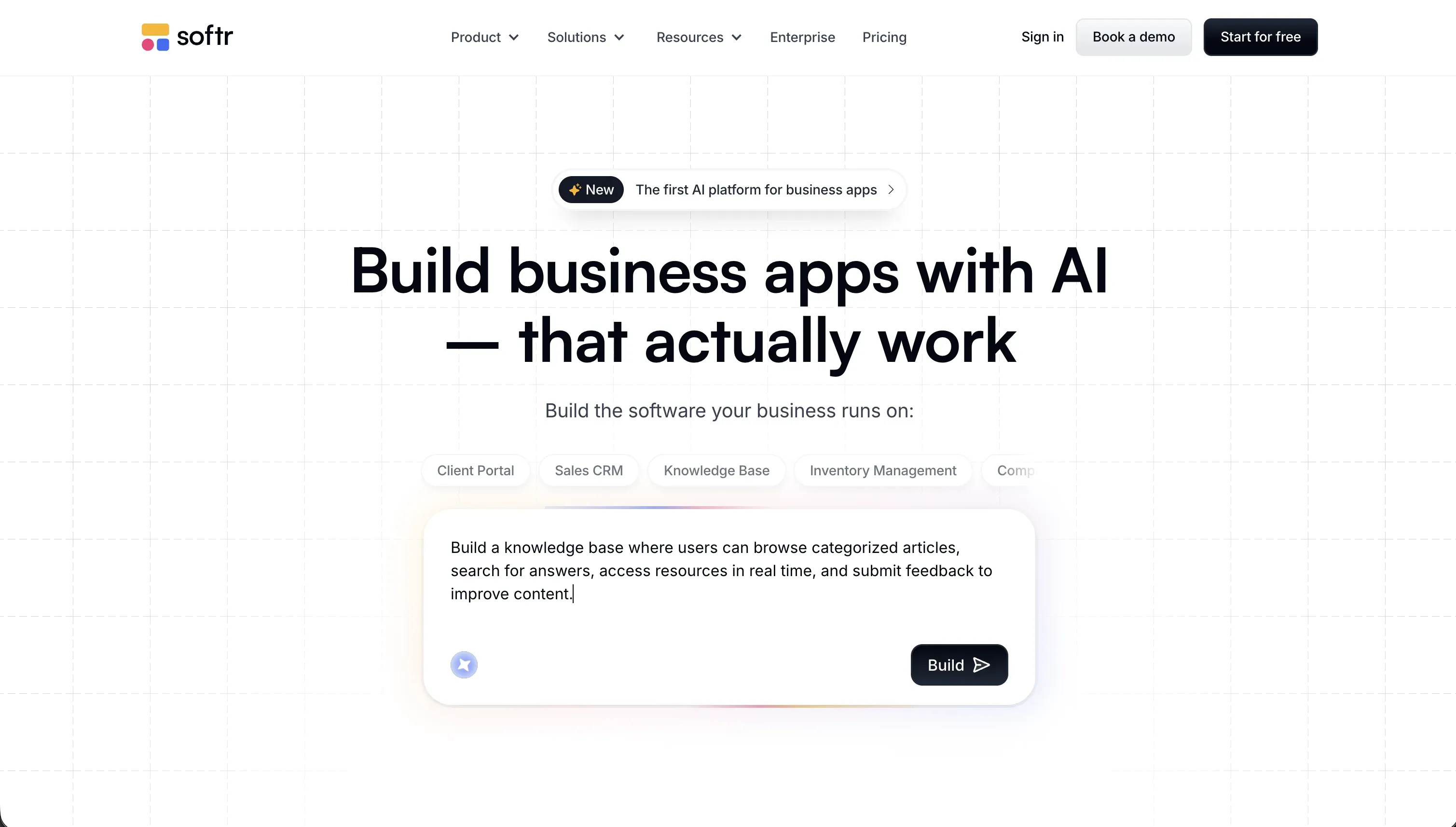 Softr homepage snapshot
Softr ranks top for businesses and departments building operations-driven learning portals. The checklist of standard training requirements matches the platform’s core architecture. Security & access control scores 8.5 because student login, magic links, Google authentication, and visual user groups run natively out of the box.
Instructors can see the system through student perspectives before publishing changes via the visual preview impersonation engine.
Adding a lesson layout or changing an assignment form is a visual edit with no credit-burning generation loop, which justifies a maintainability score of 9.0. It integrates cleanly with custom data pipelines via Softr Databases or connections to external systems, making it highly secure for internal deployment.
However, design flexibility scores 5.5, which represents a real block-based ceiling. Do not build with Softr if the application requires a completely unique visual setup that departs from clean templates.
2. Glide - best for fast spreadsheet-backed mobile tracking platforms
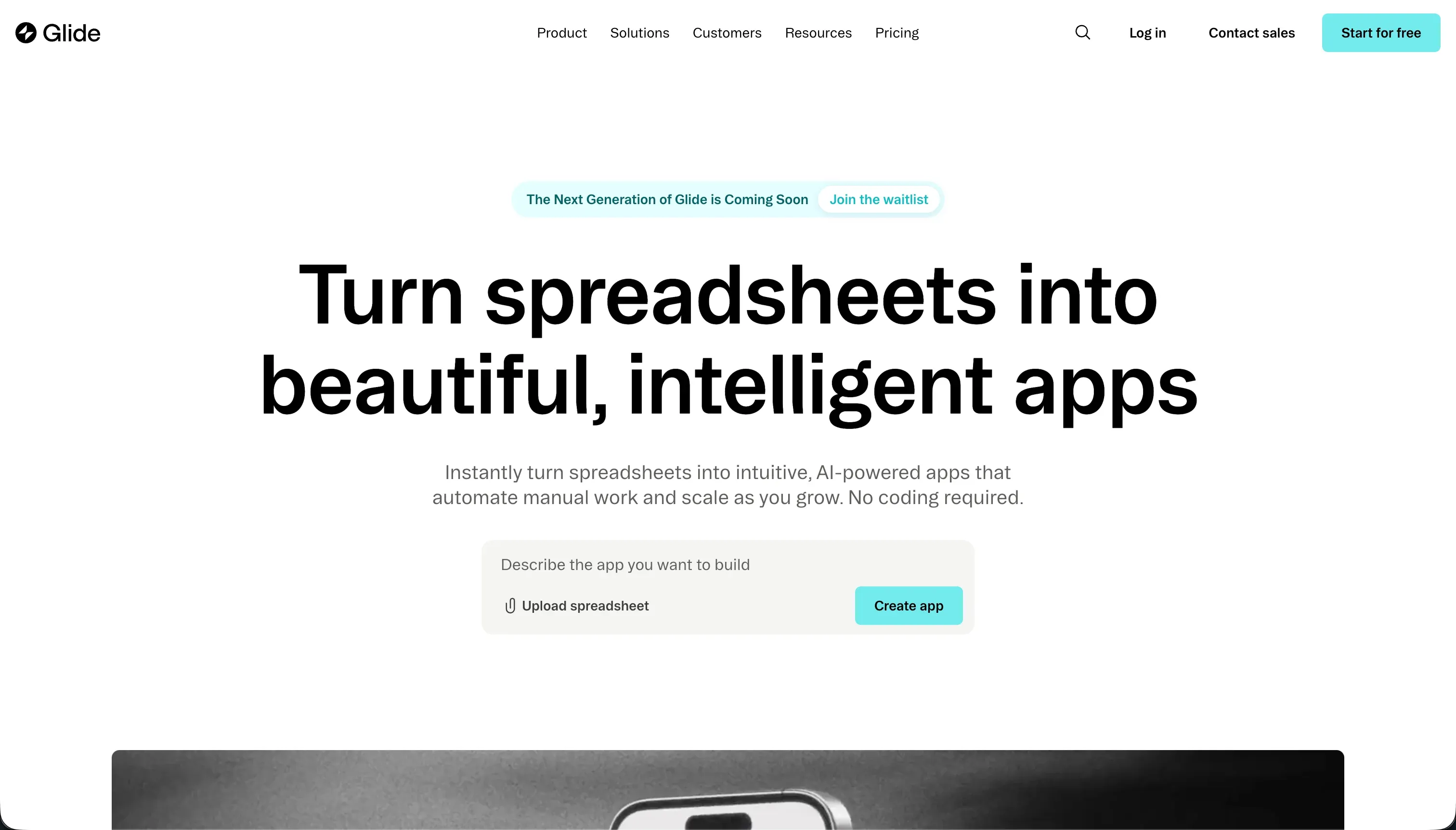 Glide homepage snapshot
Glide excels for mobile-focused teams who want to transition training guides from paper spreadsheets into dynamic dashboards. Ease of build scores 8.5 because the runtime instantly turns spreadsheet columns into responsive cards, map pins, and lists that function smoothly on mobile browsers.
Yet the production limitations are severe. Glide’s production readiness scores 6.5, and security & access control is rated at 5.5. This reduction happens because managing multi-tenant security across hundreds of student accounts is thin. The seat pricing also scales poorly, charging high fees per external user.
Do not select Glide if you are deploying a public learning framework with hundreds of self-registering students on a budget.
3. Bubble - best for complex, multi-sided custom portals
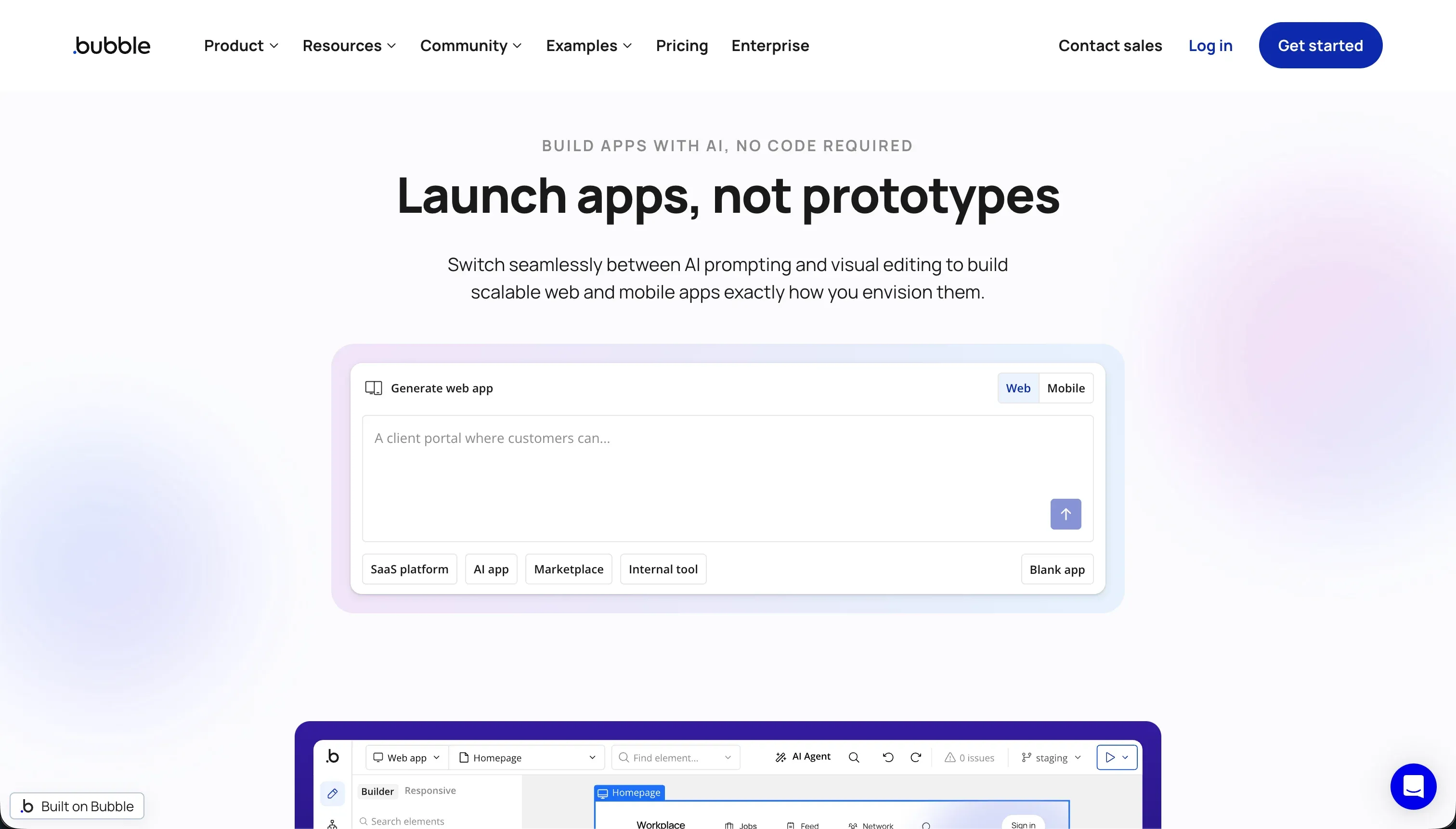 Bubble homepage snapshot
Bubble is the leading option when an LMS needs custom matching systems, conditional logical workflows, or heavy relational data structures. With a design flexibility score of 8.5, creators can build exactly to their strict styles, backed by a relational engine scoring 8.0 on data & integrations.
These capabilities bring substantial development overhead. Ease of build scores 5.0 because structuring secure data privacy rules demands engineer-level conceptual design. Security is robust but configuration is completely manual: a missed browser-side selector can fail silently.
Maintainability scores 6.0 due to visual workflows multiplying into complex structures that bog down editor RAM. Do not select Bubble unless you have several weeks to master relational database design and can support unpredictable monthly workload invoices.
- Design flexibility: 8.5
- Data & integrations: 8.0
- Custom matching and conditional workflows
- Heavy relational data structures
- Ease of build: 5.0
- Manual security config, silent failure risk
- Maintainability: 6.0, editor RAM bogs down
- Weeks to learn relational design
- Unpredictable monthly workload invoices
4. Replit - best for technical teams requiring code ownership
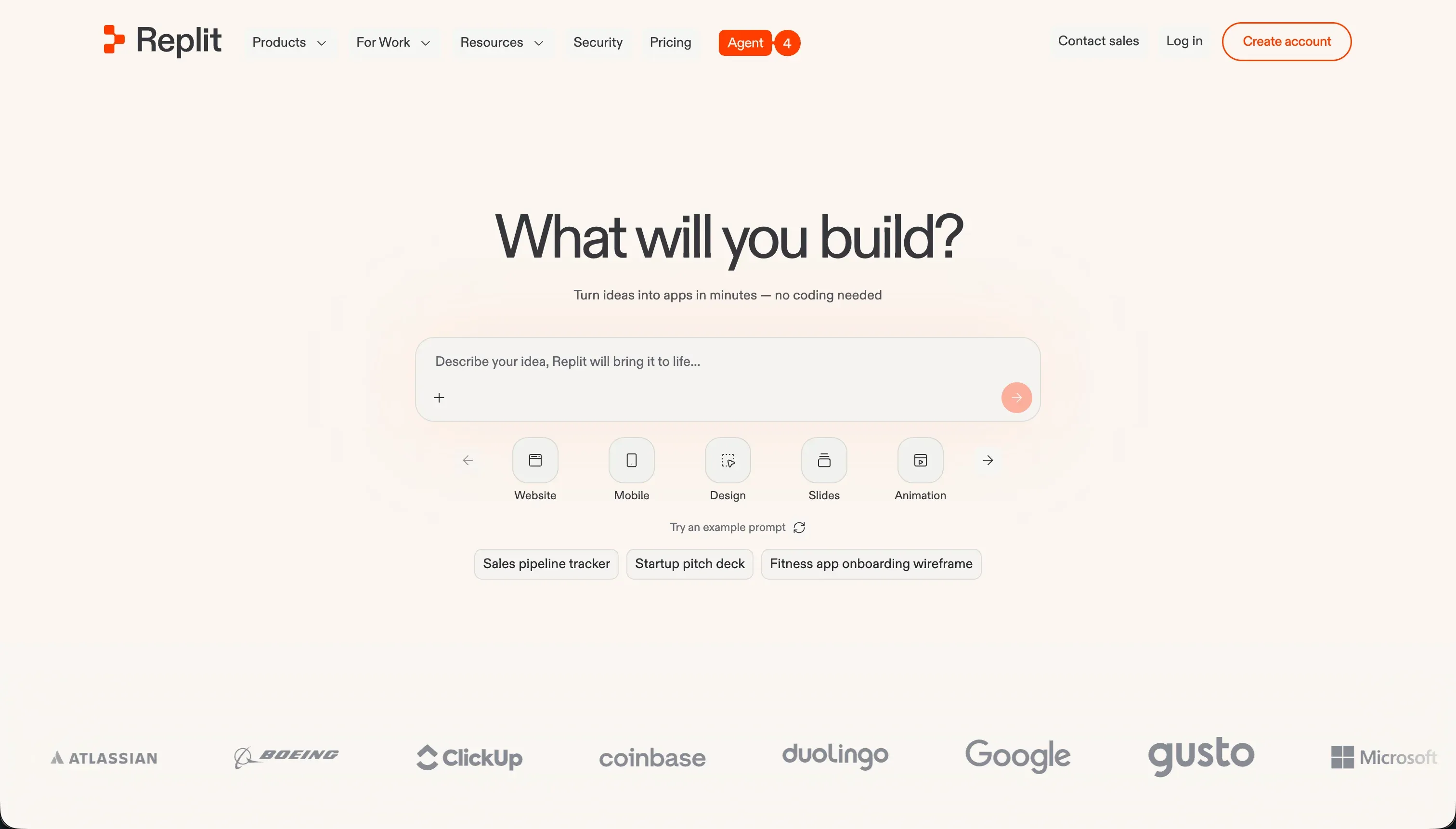 Replit homepage snapshot
Replit is designed for product engineering teams who seek to bypass no-code limitations by using an autonomous agent to build on concrete cloud servers. The agent generates responsive frontends, databases, and cron schedules directly from textual instructions, yielding a design flexibility rating of 8.5.
Production readiness scores 8.0, but security & access control scores 6.0. Because authentication rules are written in raw code files, audit work falls entirely on your internal developers rather than a visual console.
Maintainability scores 7.5; although version-controlled files age beautifully, the agent can enter circular debugging loops that quickly deplete credit reserves. Do not use Replit if your operational staff must update menus and page filters visually.
5. WeWeb - best for visual developer teams with pre-existing backends
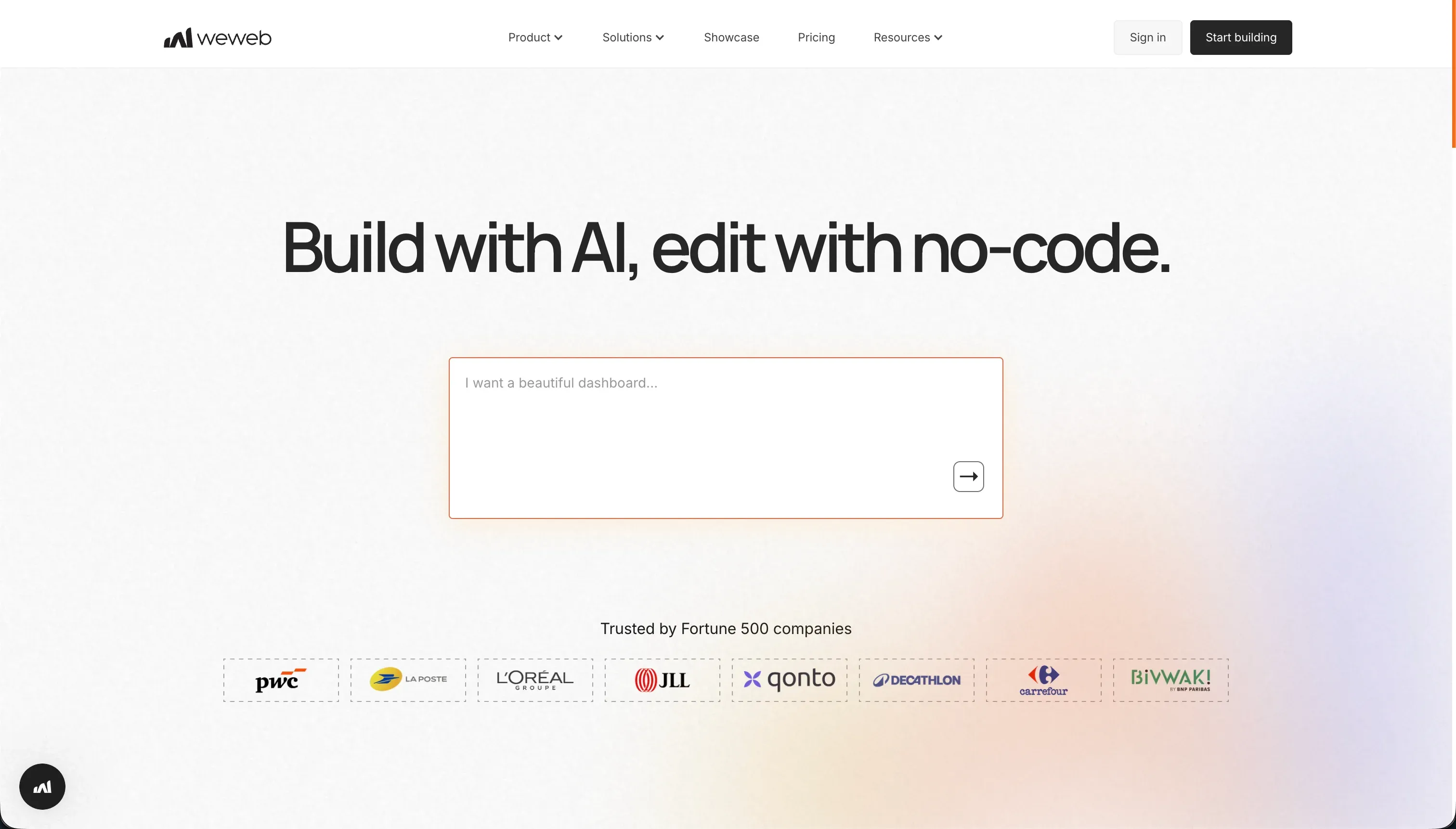 WeWeb homepage snapshot
WeWeb is a visual designer built around a decoupled frontend model. Designers gain master control over layouts with CSS flexbox and absolute grids to create stunning workspaces. It scores 8.5 on design flexibility and 7.0 on data & integrations because it links with standard SQL backends.
Because the tool is just a frontend, ease of build scores 4.0. You must design, pay for, and configure a separate server or database like Supabase before elements can load. Security scores 5.5 as token pass-throughs can expose key endpoints in the browser if misconfigured. Do not choose WeWeb if your goal is an all-in-one launcher where databases, logic, forms, and workflows exist on a single monthly billing plan.
6. Airtable - best for internal class organization databases
Airtable remains the most intuitive relational visual editor for organizing courses, student records, and class calendars, scoring 8.5 on ease of build and 8.0 on data & integrations. Non-technical administrators can adjust schemas using standard spreadsheets, while Interface Designer adds a basic visual layout surface on top.
For actual client portals, the system is constrained. Security & access control scores 5.0 because interface layouts rely on base roles; you cannot restrict specific records to selective logged-in students cleanly.
Additionally, production readiness is rated 5.5 because interfaces do not scale to phone layouts, and external portal scaling is gated by expensive seat pricing. Do not use Airtable to launch private learning modules for external users who need custom profiles.
How to structure your LMS pilot
Bypassing long development timelines starts by running practical pilots with real operational data. We recommend narrowing your platform selections to just two choices, evaluating each with our objective evaluation methodology.
If you are designing internal training hubs or managing departmental workspaces, use cases like onboarding portals or searchable knowledge base apps fit Softr and Airtable. You can link Airtable as an intuitive system backend, while Softr administers client-facing authentication, page design templates, and role visibility rules.
If you need bespoke layout custom tools, focus on Bubble or WeWeb and prepare to manage database rules manually. If your curriculum requires specialized education tools built by software engineers, Replit matches code-first developers.
To run a successful pilot test, populate sample tables with five courses, three user groups, and several lesson items. Verify records lock down securely when students cross-check rosters, then try making a visual menu alteration. The platform that allows your team to securely modify pages on day two is the correct procurement choice.