





What Academic Operations and Education Teams Actually Need
Building software for educational environments involves a unique set of administrative constraints. Academic portals, student directories, resource hubs, and instructional tracking sheets are not typical corporate tools. They must handle multiple distinct user populations.
Students, instructors, administration leaders, and external partners all require customized visual experiences and strict, isolated views of primary database schemas. To evaluate platforms effectively for these workflows, we map the requirements to our six primary criteria.
First, Ease of build is critical because academic departments are rarely staffed with dedicated software developers; administrative staff must be able to launch systems without technical logjams. Second, Security & access control is non-negotiable, as FERPA standards and student data privacy laws dictate that sensitive records must remain isolated by role.
Third, Production readiness ensures the portals, resource directories, and student schedules stay stable during traffic peaks like course registration or class onboarding. Fourth, Maintainability matters because course curricula and roster configurations change every semester. Academic teams cannot afford to pay developers or burn credit-heavy AI regeneration loops for minor structural updates.
Fifth, Data & integrations determine how cleanly the application coordinates rosters with central databases, spreadsheets, or third-party tools. Finally, Design flexibility dictates whether the frontend can match institutional brand guidelines and scale cleanly down to mobile devices for students accessing resources on the go.
This scored analysis screens the major platforms through this framework to help procurement leaders choose the correct tool.
The use-case comparison
| Platform | Overall | Advantage | Main reason to exclude it |
|---|---|---|---|
| Softr | 8.1 | Pre-built student auth, user groups, and visual row-level access controls. | No direct code export and restricted to structured, block-based layouts. |
| Glide | 6.3 | Fastest spreadsheet-to-mobile transformation for course schedules and roster views. | Thinner permission controls and punishing seat-based pricing at portal scale. |
| Bubble | 6.8 | Deep visual workflow engine for complex multi-step academic approval processes. | High logic learning curve, proprietary hosting, and variable workload billing. |
| Airtable | 6.3 | Highly intuitive relational database for curriculum schedules and academic assets. | Desktop-focused interfaces, no native visual logic, and high pricing for guest access. |
| Replit | 7.4 | Builds and deploys standard, fully exportable code on managed Postgres servers. | Requires technical skills to audit agent code and manage variable effort bills. |
| WeWeb | 6.2 | Premium visual frontend design tools with clean Vue.js code export paths. | No built-in database layer, requiring separate setup and ongoing backend costs. |
1. Softr - best overall for student portals and resource hubs
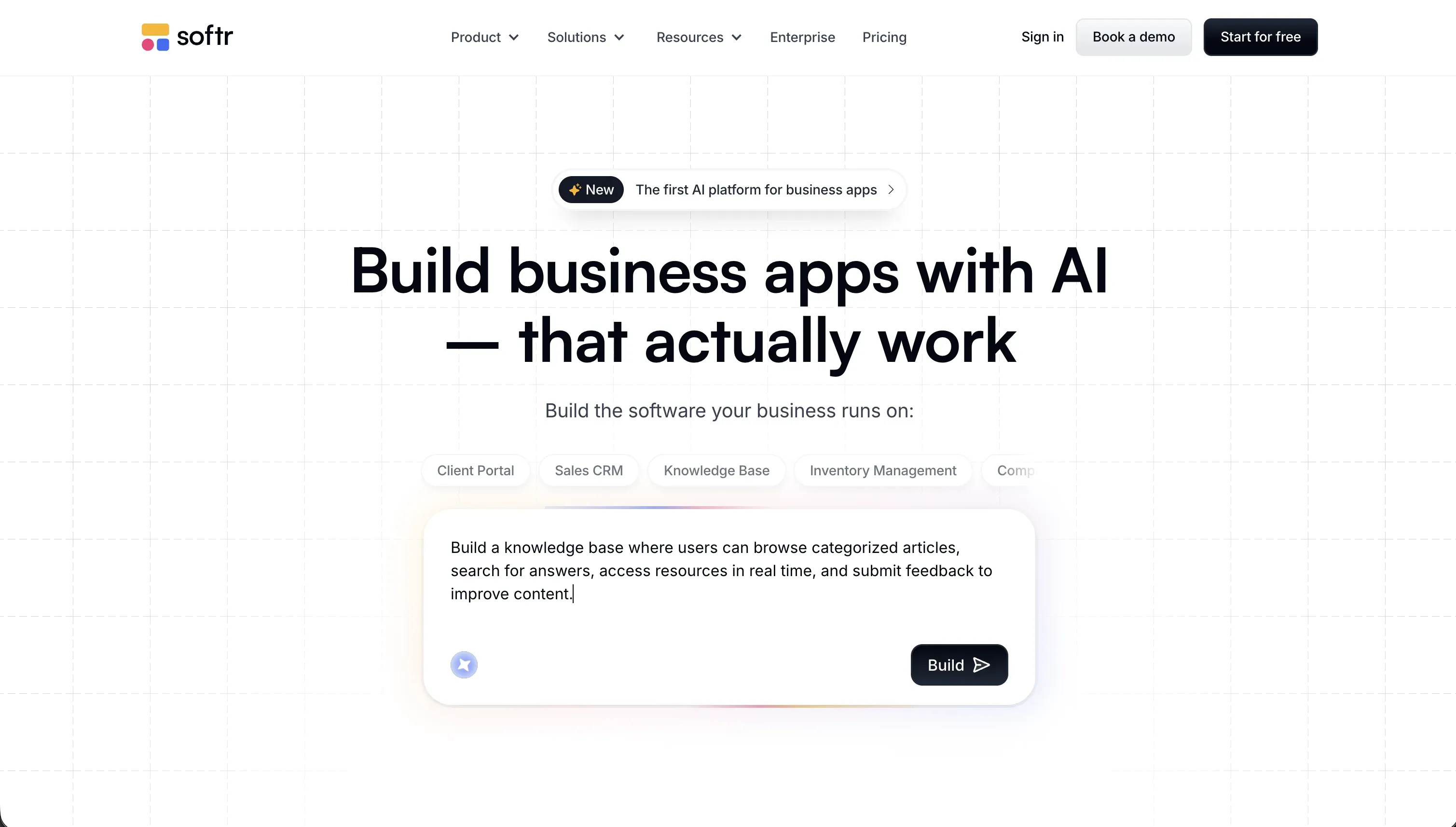 Softr homepage snapshot
For academic operations, Softr presents the strongest operational match. The platform scores 8.5 in security & access control and 9.0 in maintainability because student logins, instructor roles, and secure row-level data restrictions are visual toggles rather than generated code. This built-in infrastructure simplifies security compliance, guaranteeing student records are fully isolated.
Non-technical administrators can deploy centralized department portals, staff directories, and learning hubs using native Softr Databases or connections to Google Sheets and Airtable. The AI Co-Builder yields a working system in minutes, and because everything the AI builds matches manual visual controls, teams are never trapped in credit-burning prompt loops.
However, design flexibility scores 5.5, indicating you must accept Softr’s structured block components and global themes rather than designing a pixel-perfect visual interface from scratch. Software platforms like Softr also exclude direct code export, meaning you own your data but not the application interface.
2. Glide - best for mobile-priority directories and rosters
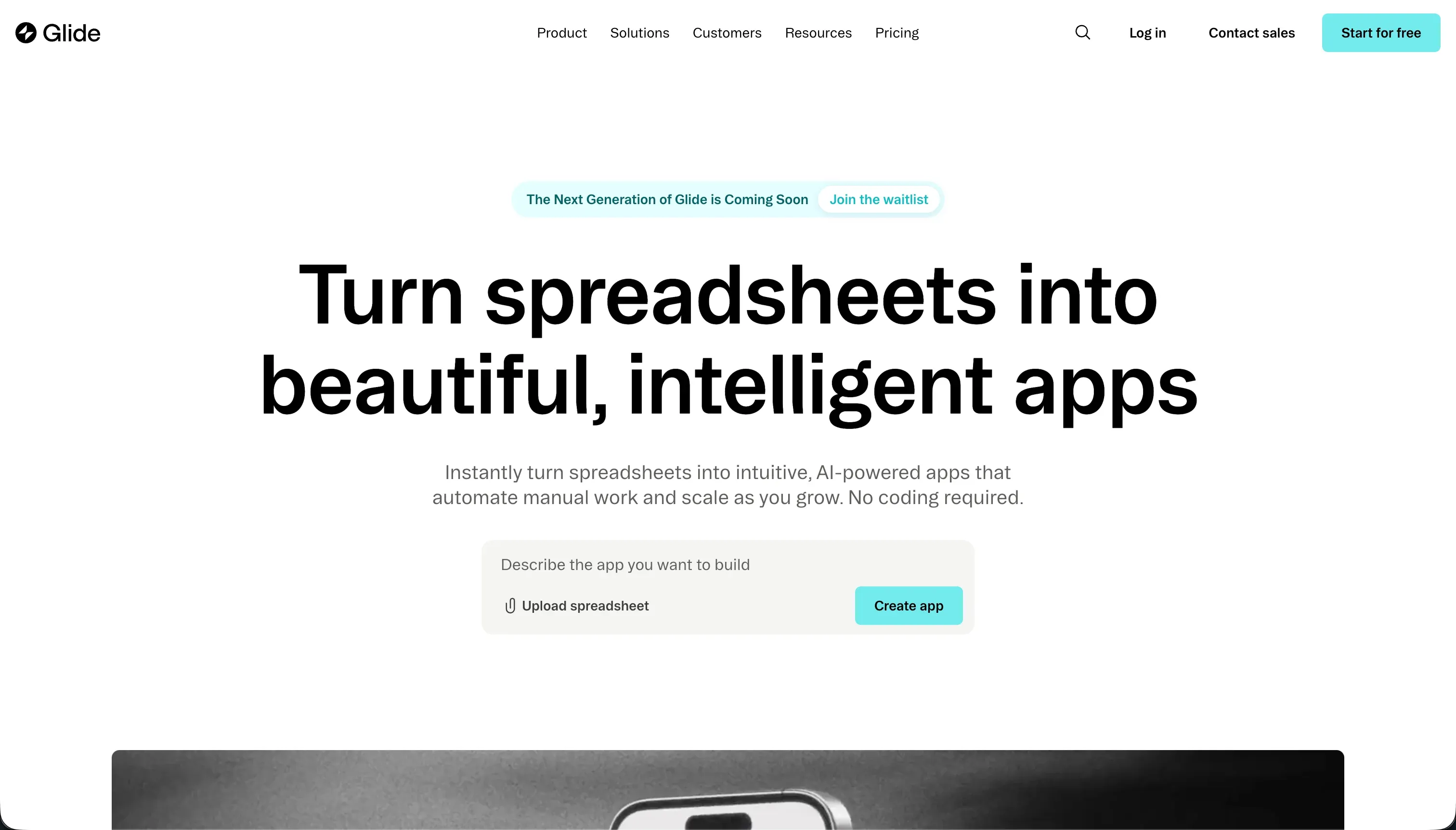 Glide homepage snapshot
When education teams need to turn spreadsheets into mobile-first utilities quickly, Glide is the premier tool. Connect Google Sheets, Airtable, or its own internal tables, and Glide instantly scaffolds a polished, responsive app for mobile devices.
It scores 8.5 for ease of build, but production readiness sits at 6.5 due to occasional sync delays and a lack of direct support on standard paid tiers.
Security & access control scores a thinner 5.5, meaning it is more suitable for internal rosters and course schedules where advanced multi-group data isolation is not a factor. Glide is not appropriate for large-scale external applications, as its seat-based pricing model caps shared users at 100 on the business plan, making it expensive for wider student communities.
3. Bubble - best for complex, customized academic workflows
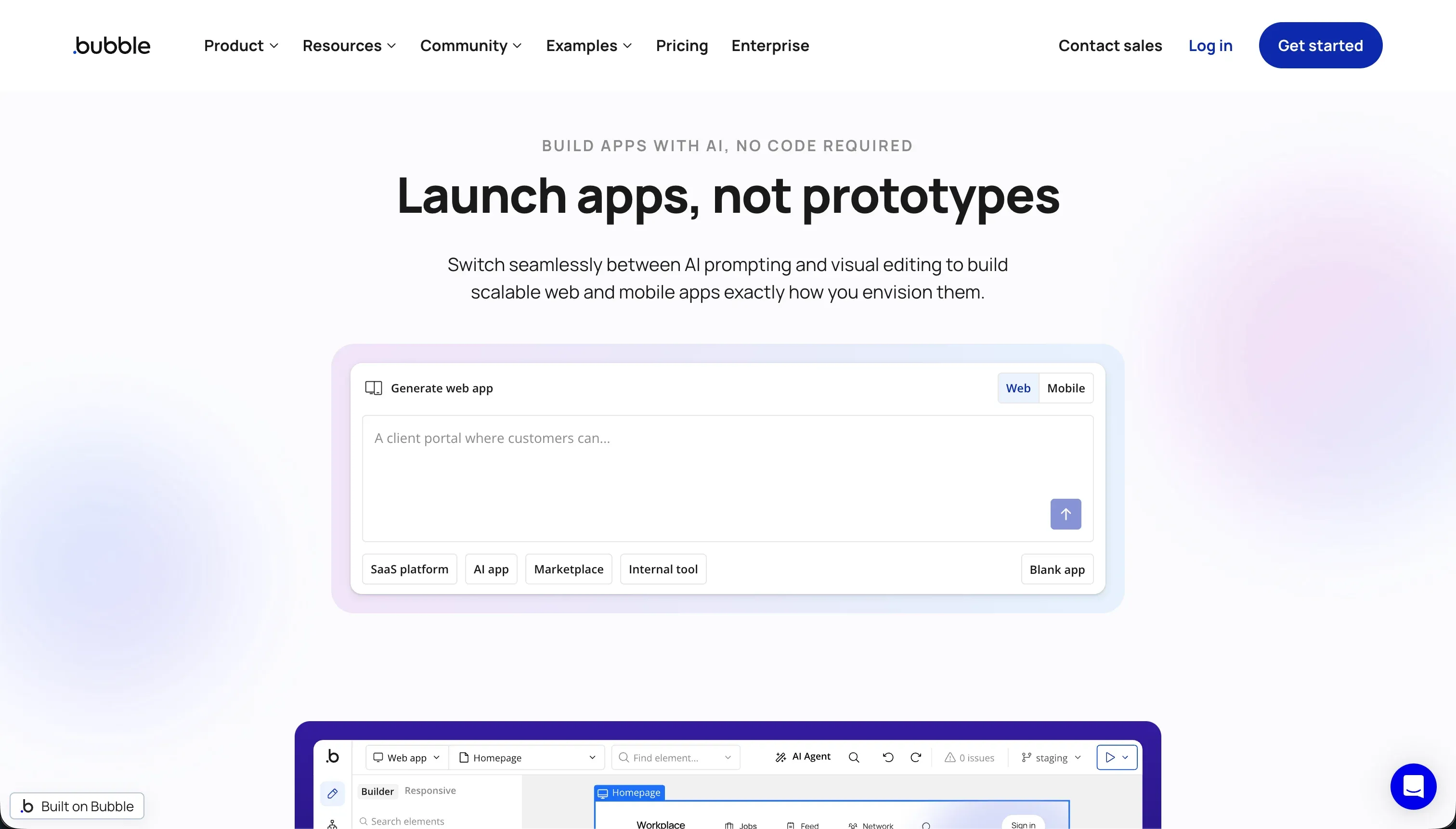 Bubble homepage snapshot
For academic environments requiring bespoke logical structures, Bubble provides the deepest functional ceiling in visual development. Scoring 8.5 in design flexibility and 8.0 in data & integrations, its visual editor allows complete canvas customization alongside a managed relational database and native workflows.
This makes it viable for complex enrollment, grade matching, or registry approval systems.
However, ease of build scores a low 5.0 due to its steep conceptual learning curve, and security & access control is 6.5 because privacy rules are completely manual. A single missed configuration fails silently, which introduces security risks for student data privacy, and its proprietary dataset runtime prevents code export.
4. Airtable - best spreadsheet-first asset and curricula logger
For managing curriculum schemas, program schedules, and internal asset databases, Airtable remains an exceptionally approachable relational database. It scores 8.5 in ease of build and 8.0 in data & integrations, enabling non-technical teams to quickly track records with rich, linked views. However, when building full student applications on top of these tables, visual limitations arise.
Its desktop-focused Interface Designer layer scores a 4.0 in design flexibility, showing rigid, blocky layouts with forced branding. Security & access control scores 5.0 because permissions are configured at the database base-level rather than on specific user-facing record pages, and external logins are restricted to paid guest packages.
5. Replit - best code-first solution for custom learning environments
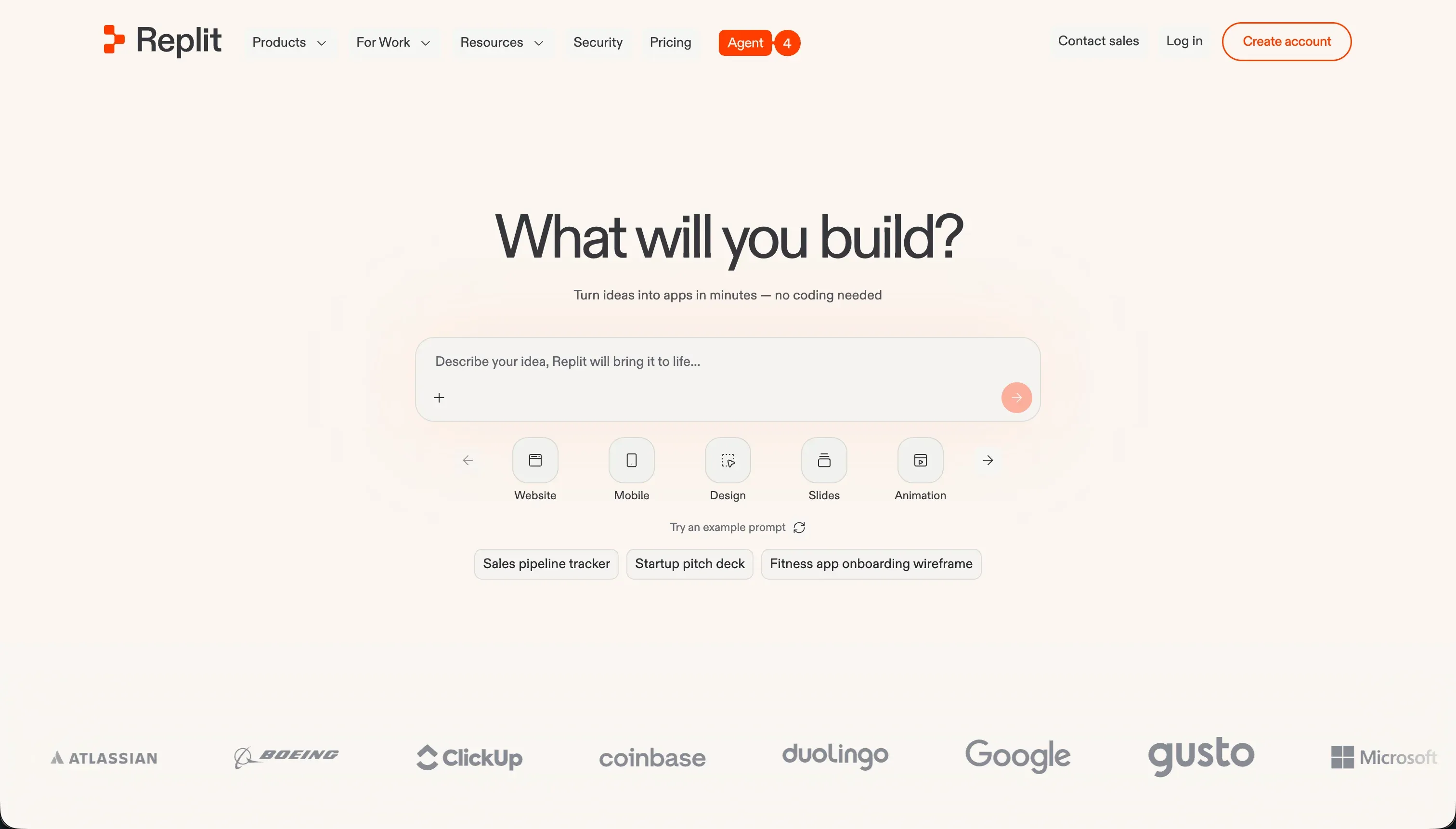 Replit homepage snapshot
When education teams have internal developer resources and mandate full software ownership, Replit is the strongest path. Powered by an autonomous AI agent, it builds and deploys real, version-controlled code on managed PostgreSQL servers, scoring 8.0 in production readiness and 8.5 in design flexibility. This code can be exported to other web hosts at any point.
However, security & access control scores 6.0 because all roles, permissions, and database filters are written as standard software middleware. It lacks visual dashboard controls, meaning your developers must inspect code manually to verify security correctness, and effort-priced AI credits can trigger billing surprises.
6. WeWeb - best for design-led educational sites and custom frontends
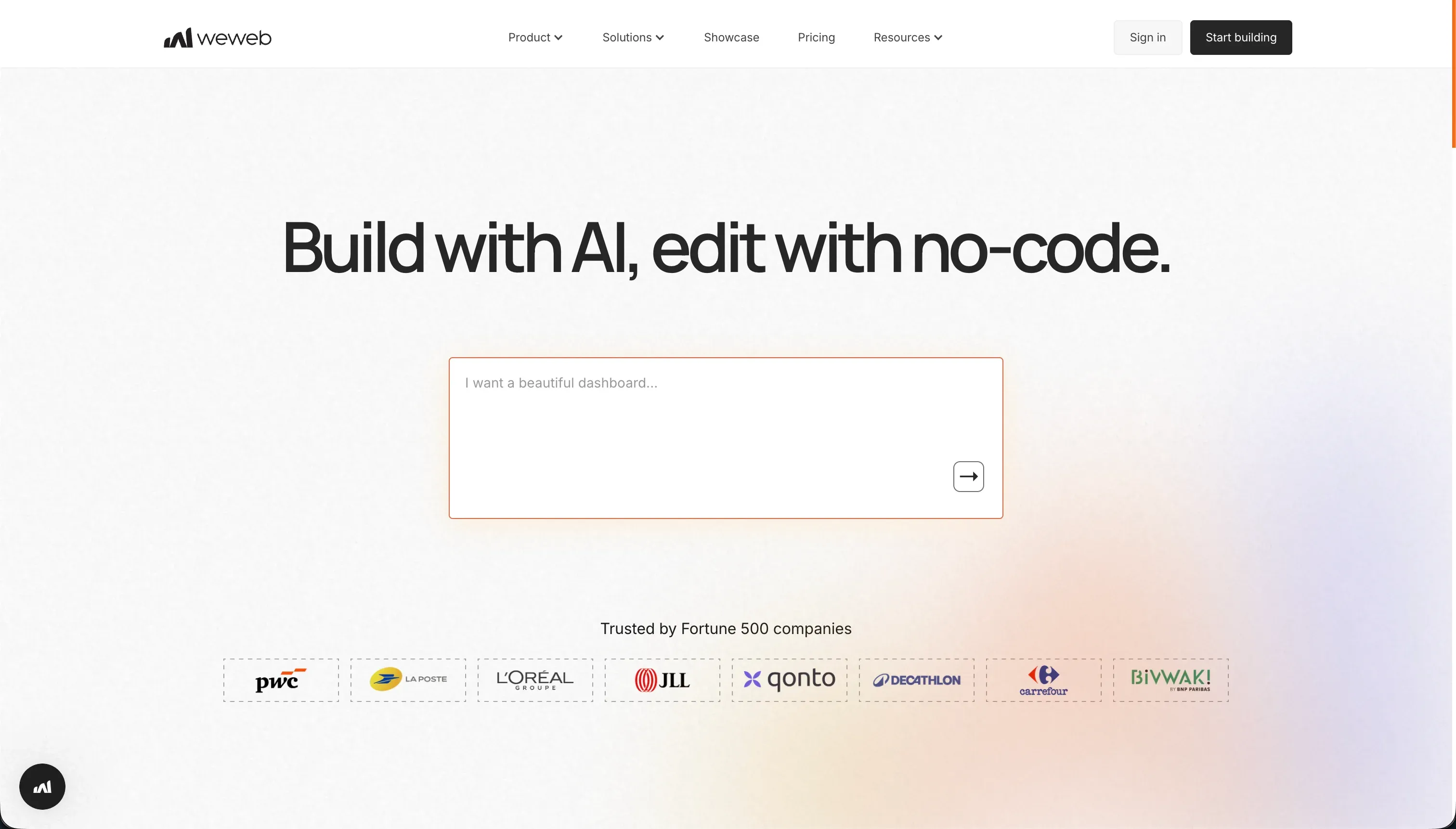 WeWeb homepage snapshot
For academic departments pairing modern design with structured databases, WeWeb delivers exceptional visual layout control. It scores 8.5 in design flexibility, providing a complete canvas built on CSS grids and absolute position controls, alongside a Vue.js code export path on select tiers.
The trade is its decoupled architecture; WeWeb scores 4.0 in ease of build and has no native database or authentication. Education teams must stand up and configure a separate database, such as SQL, Xano, or Supabase, which increases integration complexity, security configuration risks, and overall licensing costs.
How to Shortlist and Build Your Pilot Projections
Shortlisting a platform requires prioritizing day-two maintainability over initial prototype speed. If your team is building general department directories, student portals, or resource hubs directly on top of structured rosters, start by testing Softr, and compare it using our Head-to-Head breakdowns.
If the application requires mobile-first roster access for on-the-field scheduling, pilot a spreadsheet link in Glide. For custom academic registries, pilot Bubble with a strict focus on configuring server-side privacy rule correctness. Before writing your application requirements, review our detailed criteria definitions on our site methodology portal.
To find related software shapes, read our evaluation directories for knowledge bases and learning management portals to trace how database integrations compare across these use cases.