




What an employee onboarding app actually requires
Employee onboarding is a high-trust operational process. New hires must submit sensitive personal documentation, complete structured milestone checklists, review internal department wikis, and access secure software provisions.
This combination of transactional forms, static learning registries, and personal data storage means that generic corporate website strategies fall apart. For this specific class of business software, we map the requirements to our six core evaluation criteria.
First, security & access control is paramount. New employees cannot be allowed to see other hires’ tax documents, background checks, or compensation records. The platform must offer server-side data isolation and robust user role configurations. Second, production readiness is critical.
An onboarding portal needs secure, ready-to-use authentication patterns like magic links or company single sign-on (SSO) alongside a mobile-responsive interface out of the box.
Third, maintainability decided how the system handles Day Two updates. Adding an HR policy, changing a training module, or creating a new department route must be a simple visual tweak rather than a stressful code generation or prompt cycle.
Our other criteria, ease of build, data & integrations, and design flexibility, evaluate how quickly HR teams can map their current employee directories into transactional portals, link up external background check APIs, and reflect their brand identity cleanly.
For most organizations, the key goal is a safe, easy-to-update home for new hires, making security, production readiness, and maintainability the decisive priorities on the scorecard.
The use-case comparison
| Platform | Overall | Advantage | Main reason to exclude it |
|---|---|---|---|
| Softr | 8.1 | Pre-built security, visual user groups, and hassle-free role routing | No direct code export and restricted to visual block layouts |
| Glide | 6.3 | Scaffolds polished phone-first listings instantly from spreadsheets | Limited layout alterations and expensive shared-user pricing scale |
| Airtable | 6.3 | Strongest spreadsheet-relational engine for checking milestones | Interface Designer is desktop-only and lacks native guest auth |
| Retool | 6.8 | Direct read-write access to developer databases and HR APIs | SQL and JavaScript required to build anything functional |
| Bubble | 6.8 | Deep visual workflow engine for custom interactive tutorials | Extremely steep learning curve and variable usage fees |
| Replit | 7.4 | Deploys real, version-controlled code on scalable cloud environments | Requires technical developers to audit database safety and debug loops |
1. Softr - best overall for secure internal onboarding portals
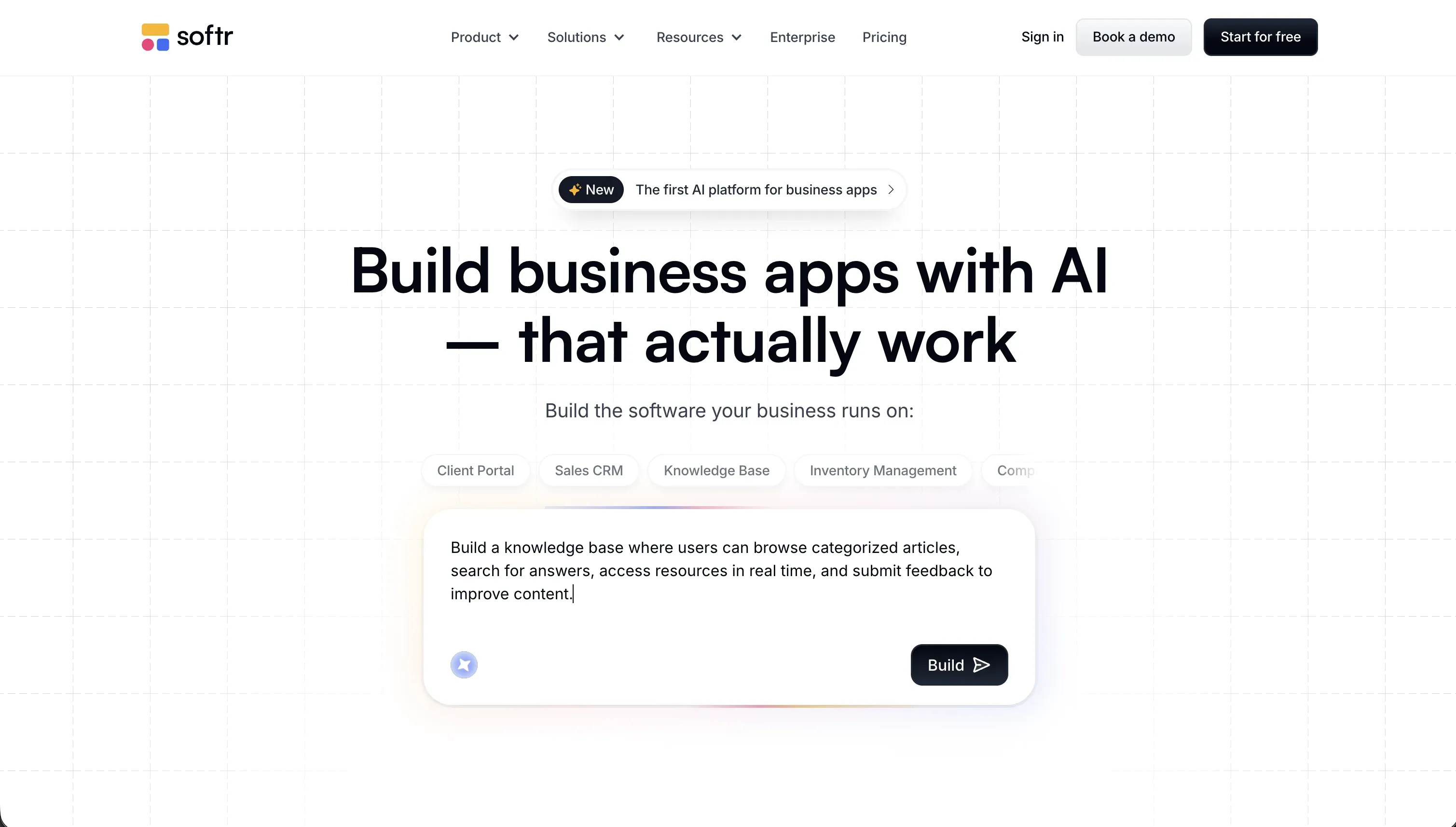 Softr homepage snapshot
Using Softr for onboarding apps is a direct answer to the security and maintenance risks of custom development. It scores an outstanding 9.0 on maintainability and 8.5 on security & access control. Role-based user groups ensure a new hire in sales sees a completely different training checklist and page layout than an incoming engineer, with database operations executing safely on the server side.
Features like preview impersonation let HR administrators verify exactly what a new hire sees and can check off before sending the invite. This visual clarity eliminates typical data leak risks of code-gen platforms. The trade-off is design flexibility, which scores 5.5: your onboarding experience is built from pre-configured blocks, not a blank visual page, and there is no code export path.
For business apps structured around secure employee data and task trackers, the flat-rate pricing starting at $139 a month billed annually for 100 app users is exceptionally legible.
- Maintainability score of 9.0
- Security and access score of 8.5
- Server-side database operations
- Role-based user groups and views
- Preview impersonation for HR admins
- Design flexibility score of 5.5
- Layouts built from pre-configured blocks
- No blank visual page canvas
- No code export path
- Flat rate from $99 a month for 10 Team and 50 Client users
2. Glide - best for mobile-focused checklist tools
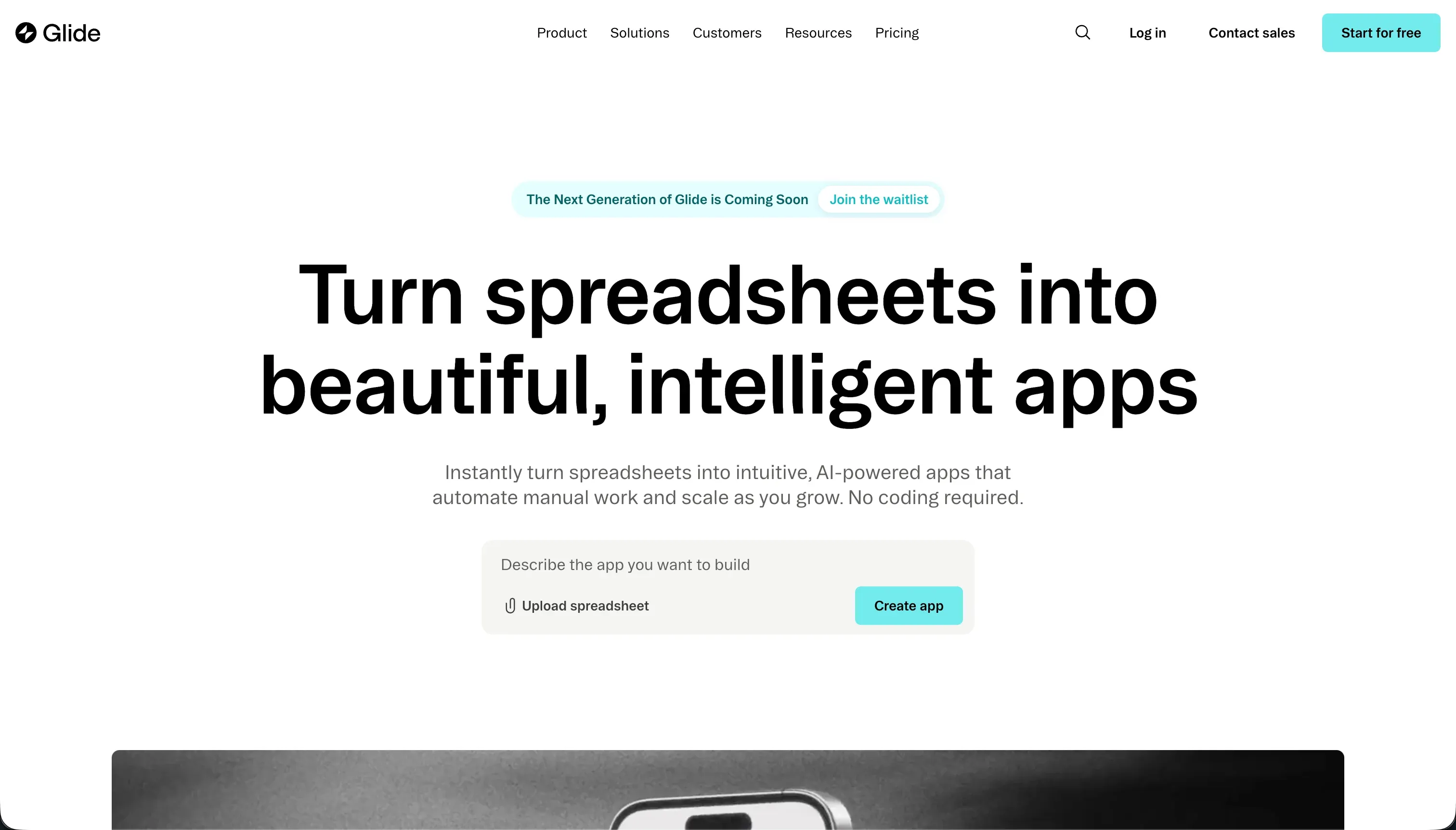 Glide homepage snapshot
If your onboarding flow is meant to be consumed on mobile devices as new hires walk around the office, Glide is a highly efficient choice. It scores 8.5 on ease of build because it translates Google Sheets, Airtable, or Glide Tables into polished mobile-first interfaces in minutes.
Field technicians or retail hires can access company wikis, log signatures, and upload documentation from their phones.
However, Glide’s security & access control scores 5.5: its permissions are thinner than portal-focused platforms, making complex multi-tenant separation harder to audit. Additionally, shared-user price tiers are highly restrictive, with caps at 100 shared users on Business before requiring high-ticket enterprise negotiations.
3. Airtable - best for internal tracking databases
When organized relational data holds higher value than a customized candidate-facing interface, Airtable excels. Scoring 8.5 on ease of build and 8.0 on data & integrations, its spreadsheet-relational database structure is the best in the category for organizing milestones and assigning managers. HR staff can effortlessly create rollups, relational links, and calendar overviews.
The critical deduction is that its Interface Designer scores only 4.0 on design flexibility and 5.5 on production readiness. It lacks native client authentication, is desktop-focused, and requires paid guest packs starting at $120 a month for just 15 guest seats to share access securely outside internal employees.
4. Retool - best for technical team integrations
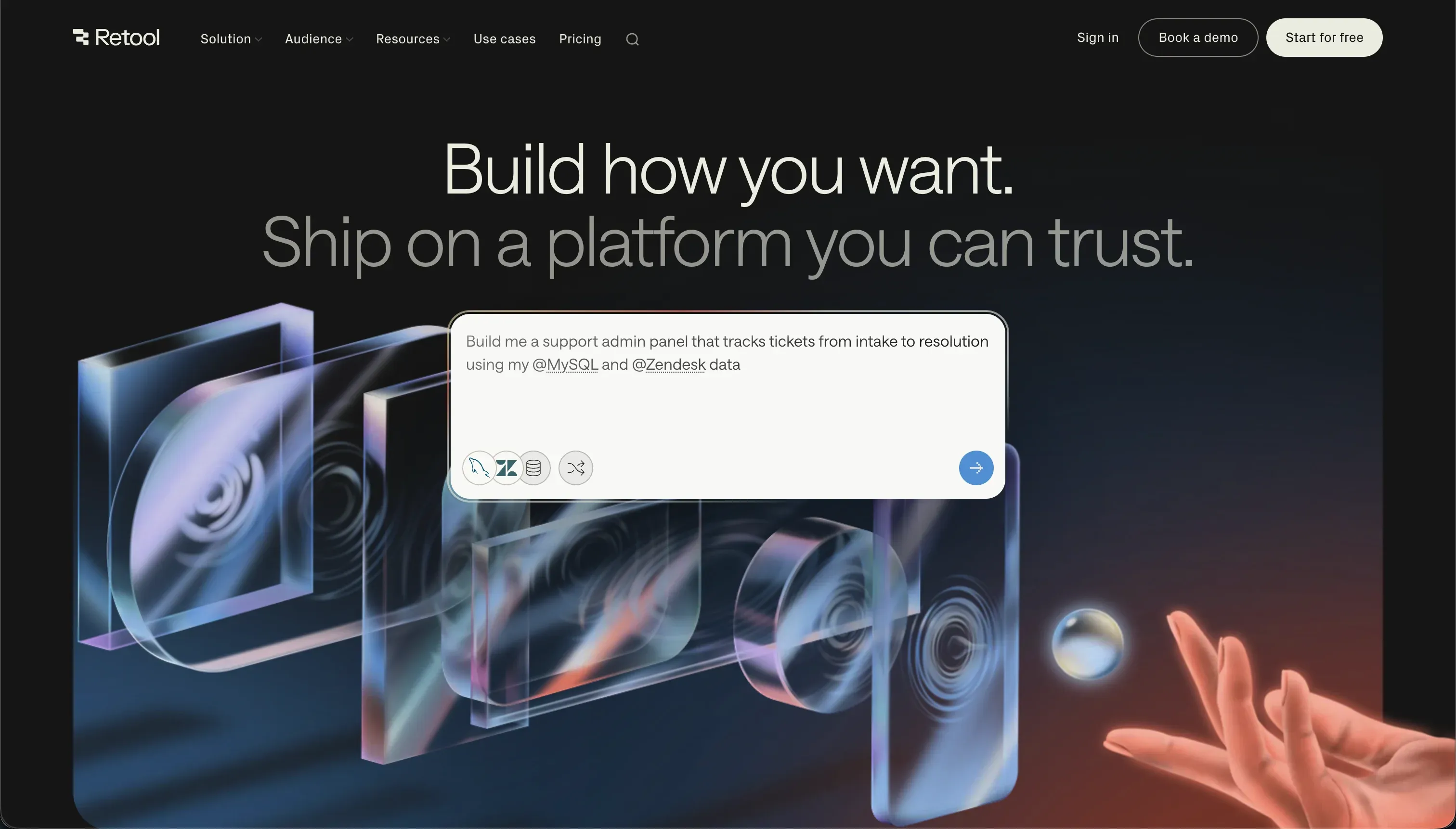 Retool homepage snapshot
We suggest Retool for technical organizations whose onboarding flows integrate directly with local SQL servers, background checks, or automated IAM profiles. It earns an 8.5 on data & integrations and a 7.5 on security & access control. This makes it highly secure for internal tool builders because of SSO and enterprise self-hosting. However, Retool scores only 4.0 on ease of build.
It is not no-code, and technical builders must configure every form submission and query manually in SQL or JavaScript. Do not purchase Retool if your HR operations team lacks developer resources to write and host native API queries.
5. Bubble - best for bespoke tutorial workflows
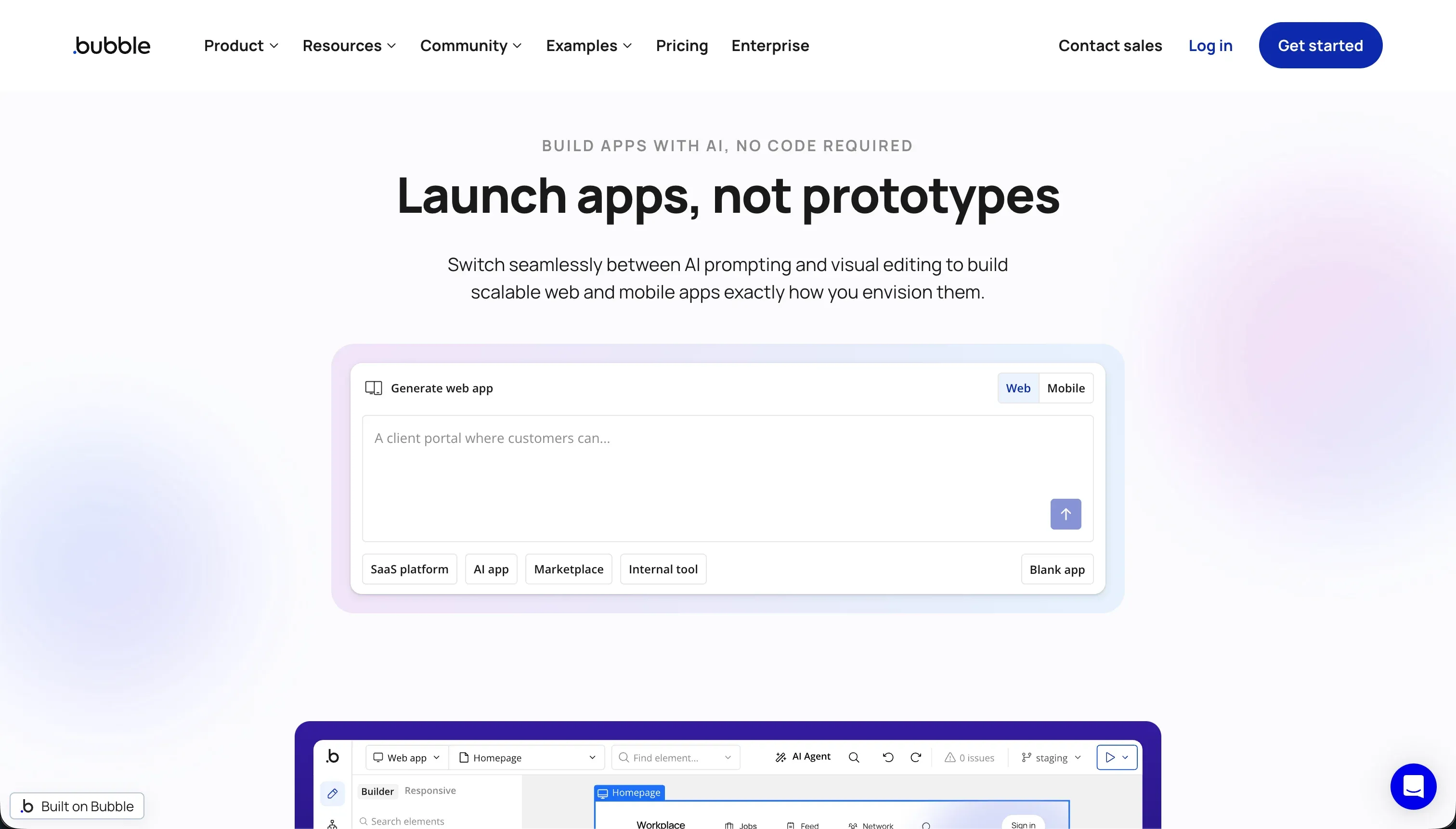 Bubble homepage snapshot
For companies building custom training programs or interactive training features, Bubble provides the necessary pixel-level freedom. It scores 8.5 on design flexibility and 8.0 on data & integrations, running on a fully managed relational database with an extensive plugin store. However, Bubble is a complex visual IDE with a 5.0 score for ease of build.
Security configuration requires a deep technical understanding, and unoptimized queries can trigger massive charges under its workload-unit infrastructure, which can escalate your monthly budget unexpectedly.
6. Replit - best code-first route for full app control
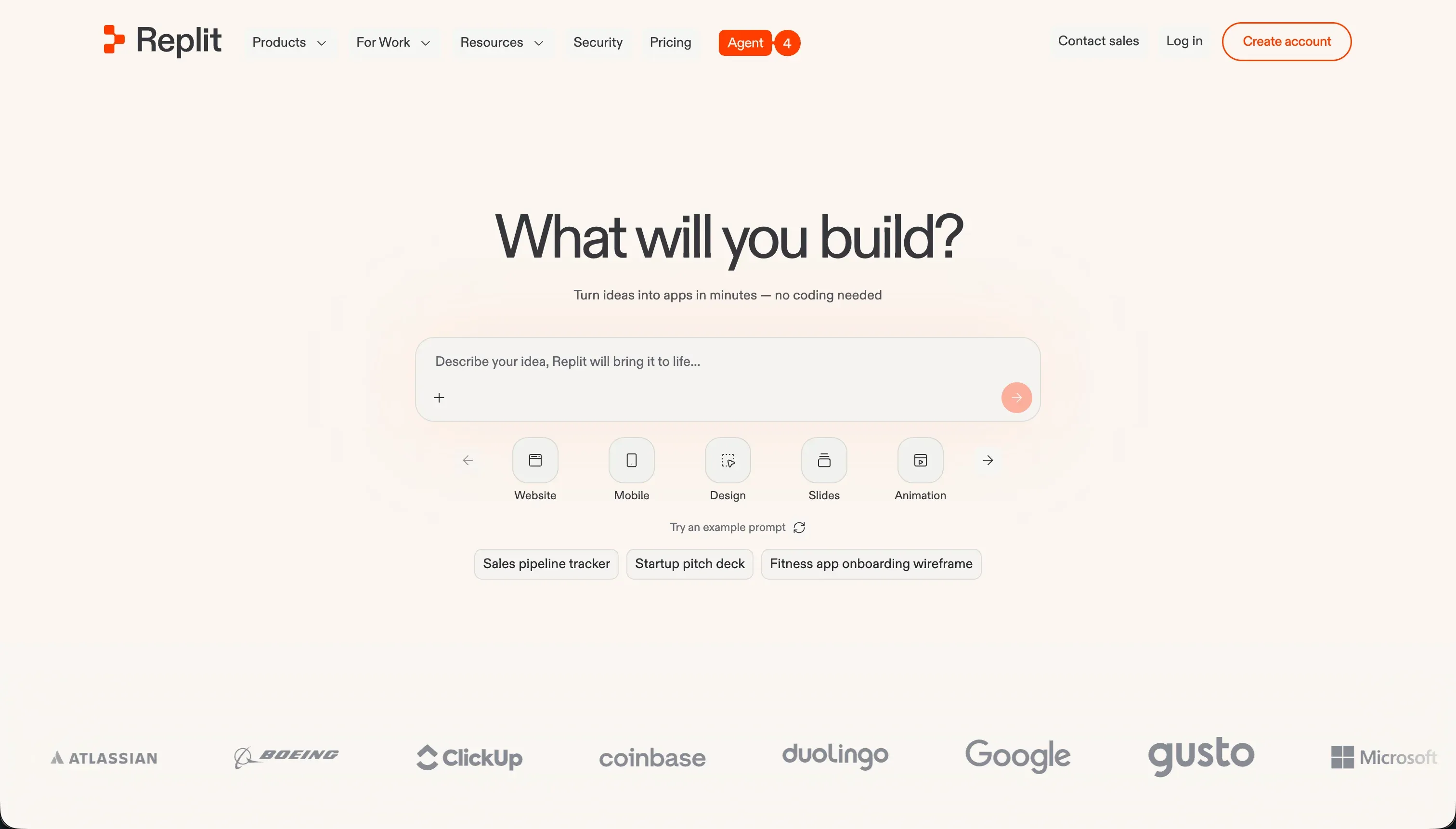 Replit homepage snapshot
We rank Replit as the strongest choice for engineering teams that prioritize developer exit paths and complete code ownership. The Replit Agent builds and deploys your onboarding app as clean, exportable code on containerized postgres infrastructure, scoring 8.0 on production readiness and 8.5 on design flexibility. However, it earns only 6.0 on security & access control.
Because security configurations and user roles live completely in generated code, they must be audited by hand. Furthermore, its effort-based subscription model can result in fast credit consumption during debugging.
Drafting your onboarding app shortlist
Shortlisting onboarding platforms requires focusing on user count and data sensitivity. If your training modules include specialized interactive elements, pairing Softr and Bubble lets you compare standard block-based security with pixel-level layout construction.
If your data lives primarily in internal HR directories, contrasting Softr with Retool will expose the productivity differences between visual role creation and custom script maintenance. We highly suggest starting with our platform comparison methodology to review how raw development speed balances with long-term security.
If you are constructing surrounding company workspaces, explore our analyses of the top tools for hr teams, employee intranets and hr apps, or learning management apps to create a consistent, reliable ecosystem.