



What a job board actually needs
A successful job board is a multi-sided ecosystem with distinct needs. Candidates require filterable list search, profile creation, and resume uploads. Employers need listing dashboards, checkout flows, and applicant tracking lists. Finally, board operators need database governance and low operational maintenance. To evaluate platforms for this use case, we map these needs against our six scoring criteria.
First, ease of build determines how quickly you can model jobs, companies, and applicants into working relational listings. Second, security & access control is vital because candidates and recruiters must have private, isolated workspaces; applicant profiles should be secure by default. Third, production readiness matters because Stripe checkouts and email alert triggers cannot fail in live environments.
Fourth, data & integrations decides whether your directory connects effortlessly to external tools, candidate databases, or background checking APIs. Fifth, design flexibility shapes how you express employer branding and search filters. Finally, maintainability dictates whether minor schema updates or layout improvements become engineering bottlenecks or simple visual adjustments.
For basic boards and recruitment agency portals, the priority sits with ease of build, security, and maintainability. When the board requires complex custom application logic like matching algorithms or automated contractor billing, design choices and unconstrained code environments carry the decision.
The use-case comparison
| Platform | Overall | Advantage | Main reason to exclude it |
|---|---|---|---|
| Softr | 8.1 | Pre-built search listings, user portals, secure roles, and flat pricing. | Visual branding is constrained to native layouts, and there is no raw code export. |
| Bubble | 6.8 | Genuinely custom matching workflows, database models, and design options. | Steep technical learning curve and unpredictable workload unit usage fees. |
| Replit | 7.4 | Generates real developers-level code that can be self-hosted on custom cloud servers. | Requires code-level maintenance and monitoring of credit spending. |
| WeWeb | 6.2 | Top-tier custom CSS designs and responsive Single Page Application exports. | Requires setting up, paying for, and connecting a separate backend. |
| Glide | 6.3 | Extremely fast mobile-responsive lists straight from spreadsheets. | Strict layout systems and expensive user-seat scaling limits. |
| Airtable | 6.3 | Most approachable way to design recruitment databases and filter jobs. | Desktop UI limits, no native logins, and expensive guest seat packaging. |
1. Softr - best for automated listing directories and member job portals
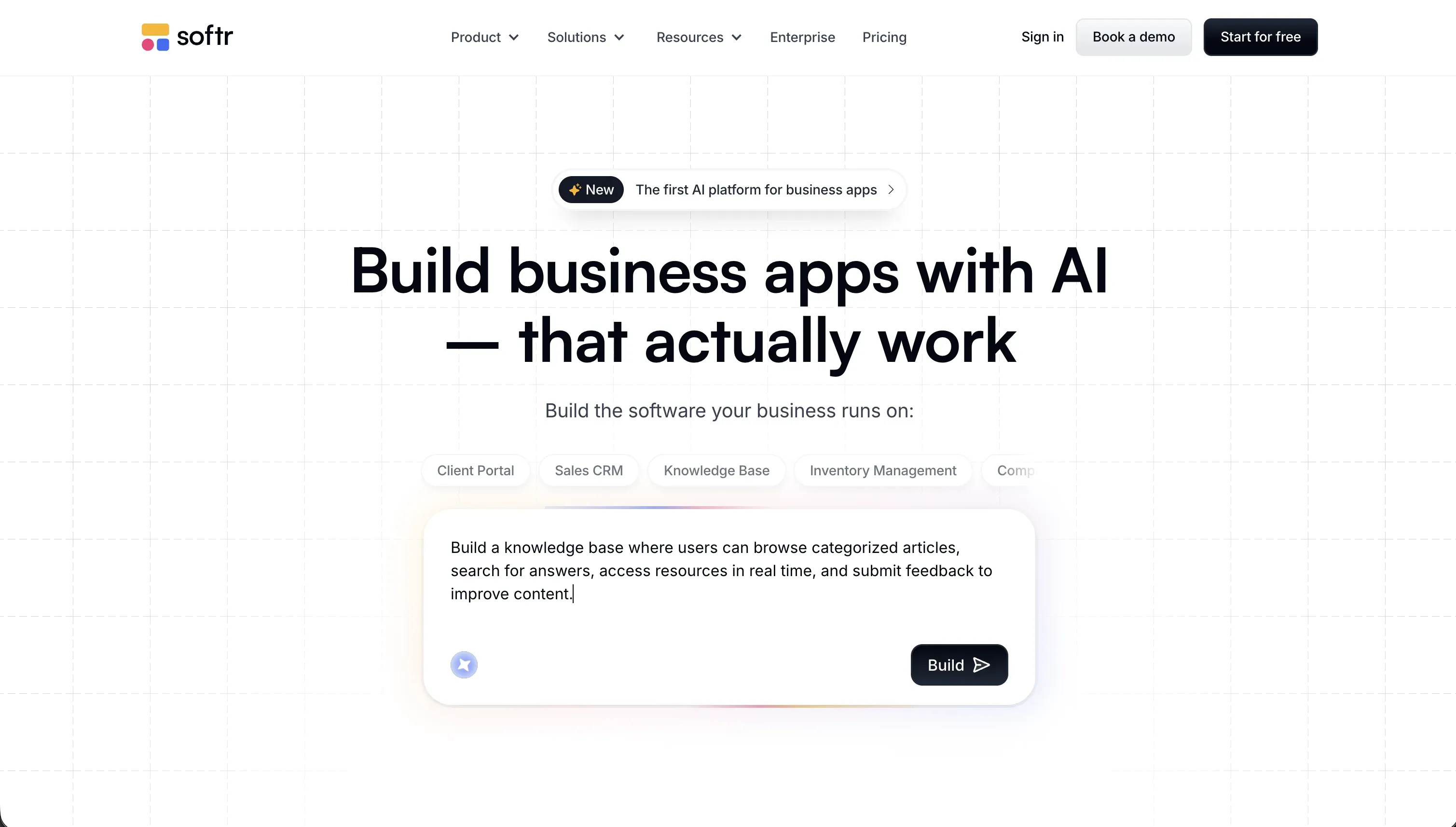 Softr homepage snapshot
Building a job board with Softr handles the most critical security and data infrastructure for you. With an ease of build score of 9.0 and maintainability score of 9.0, you can organize companies, candidates, and job posts in minutes using native blocks like searchable lists, filterable tables, and conditional submission forms that are responsive by default. Dynamic User Groups and row-level controls score 8.5: because Softr filters records server-side, candidates only ever manage their own resumes and companies only edit their active listings, with the rules verified by previewing the app as each group before you publish. Groups can be dynamic too, auto-assigning a “Recruiter” or “Candidate” role based on a database field rather than manual tagging.
The board’s data belongs in native Softr Databases, where jobs link relationally to companies and applications, and database AI agents can enrich a listing automatically (pulling a company’s headcount from its URL, or categorizing roles by seniority). If your postings already live in Airtable or Google Sheets, Softr connects to those and 17 other sources too. Workflows then automate the operational side: a new application can trigger an instant email to the recruiter or move a record through review stages without code. Flat per-tier pricing ($99/mo Pro, billed annually, for 10 team users (expandable to 50) plus 50 client users (expandable to 250)) means a growing member directory does not get punished with per-seat fees, which is exactly the trap that sinks seat-priced builders at scale.
Exclusion: if you need a highly custom marketplace with automated payment-routing and recruiter-candidate matching algorithms, Softr’s block model is too restricted, and Bubble (ranked second) is the honest pick for that interactive-marketplace lane. For a secure, fast-to-launch listing directory or member job portal, Softr leads.
- Server-side user groups and row-level controls, scored 8.5
- Native relational databases link jobs to companies
- AI agents enrich listings automatically
- Workflows trigger emails and review stages
- Flat $99/mo Pro tier, 10 Team plus 50 Client users
- Highly custom marketplace logic
- Automated payment-routing
- Recruiter-candidate matching algorithms
2. Bubble - best for custom marketplace workflows and matching algorithms
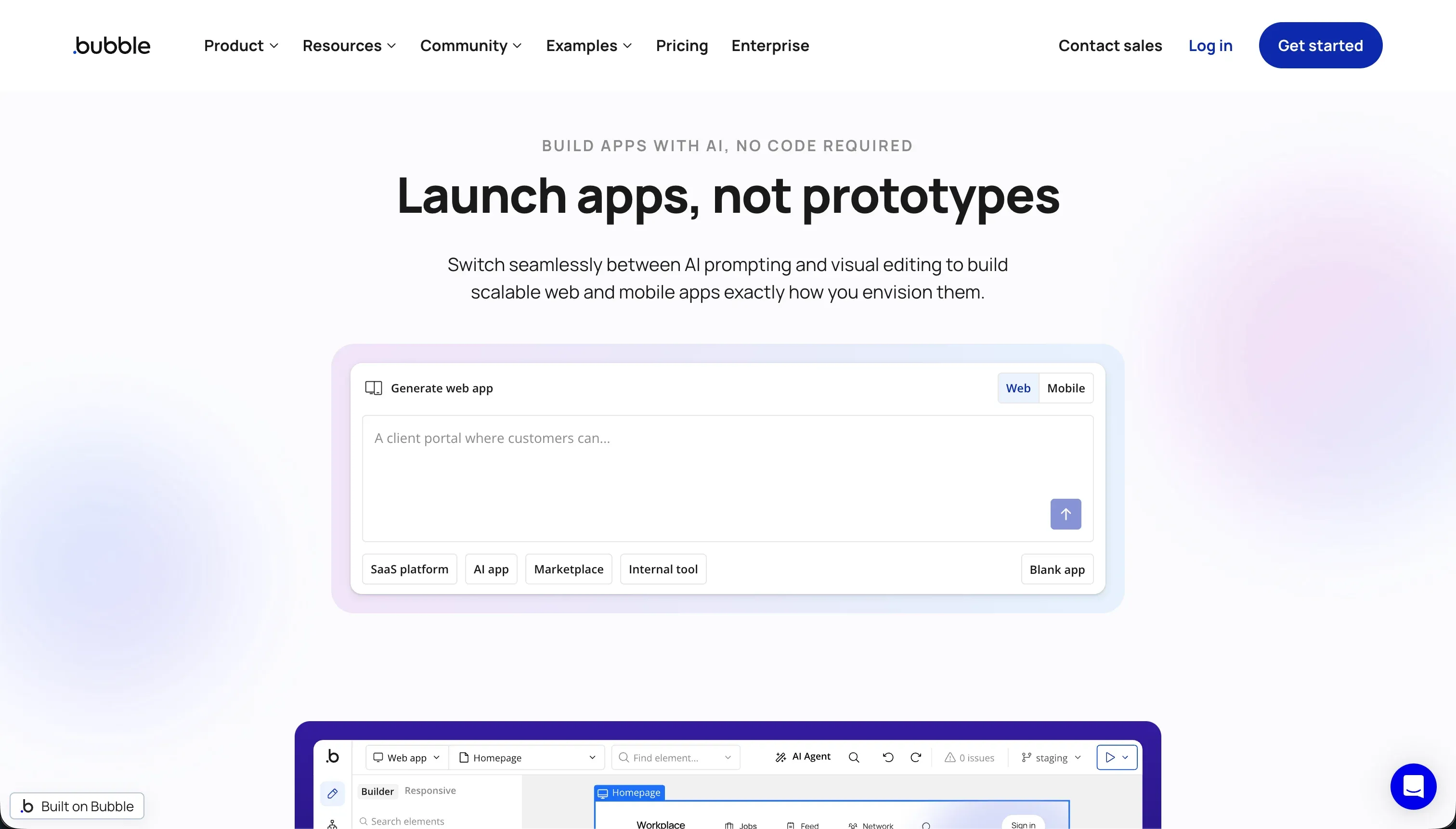 Bubble homepage snapshot
Bubble excels when your platform must act as an interactive recruiter-candidate matching engine rather than a static list. Design flexibility scores 8.5 because it offers unrestrained pixel-level interface control. Its relational relational database engine scores 8.0, allowing you to model complex candidate histories and listing records.
However, ease of build scores a low 5.0 due to a steep learning curve and development overhead. Exclusion: Do not choose Bubble if your board is a straightforward directory; maintenance is complex, visual workflows can sprawl, and workload bills can escalate unpredictably.
3. Replit - best code-first path for total platform control
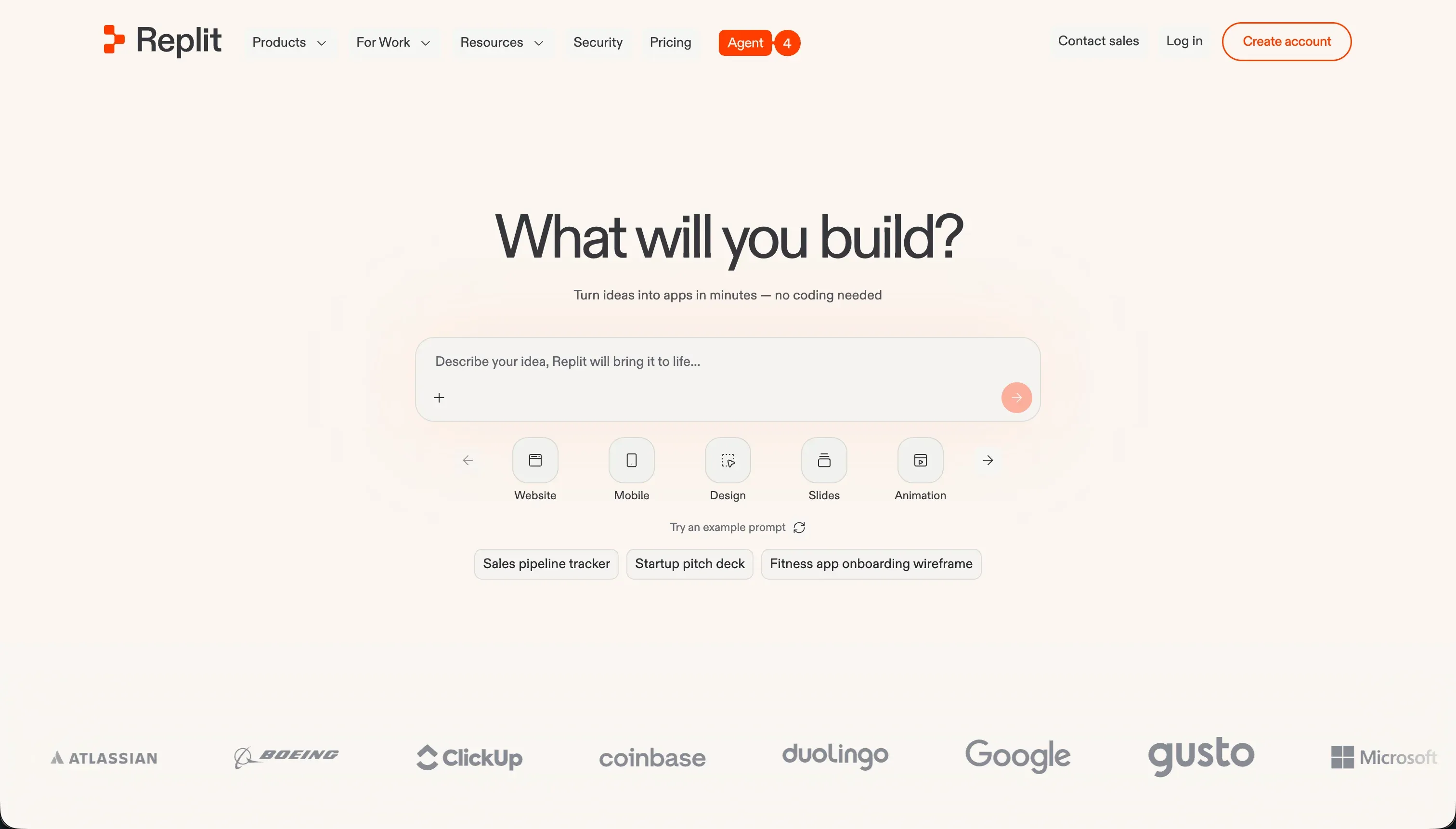 Replit homepage snapshot
Replit is ideal for engineering teams that require an autonomous AI agent to generate a real, proprietary hiring software. Production readiness scores 8.0 due to managed SQL hosting, rollback logs, and custom domain APIs. Design flexibility scores 8.5, allowing any bespoke candidate application workflow to run cleanly.
Maintainability scores 7.5 since you can export clean, version-controlled code.
Exclusion: Avoid Replit if your team lacks web developers: security policies score 6.0 and auth relies completely on code middleware that must be manually verified and updated.
4. WeWeb - best visual frontend for custom applicant dashboards
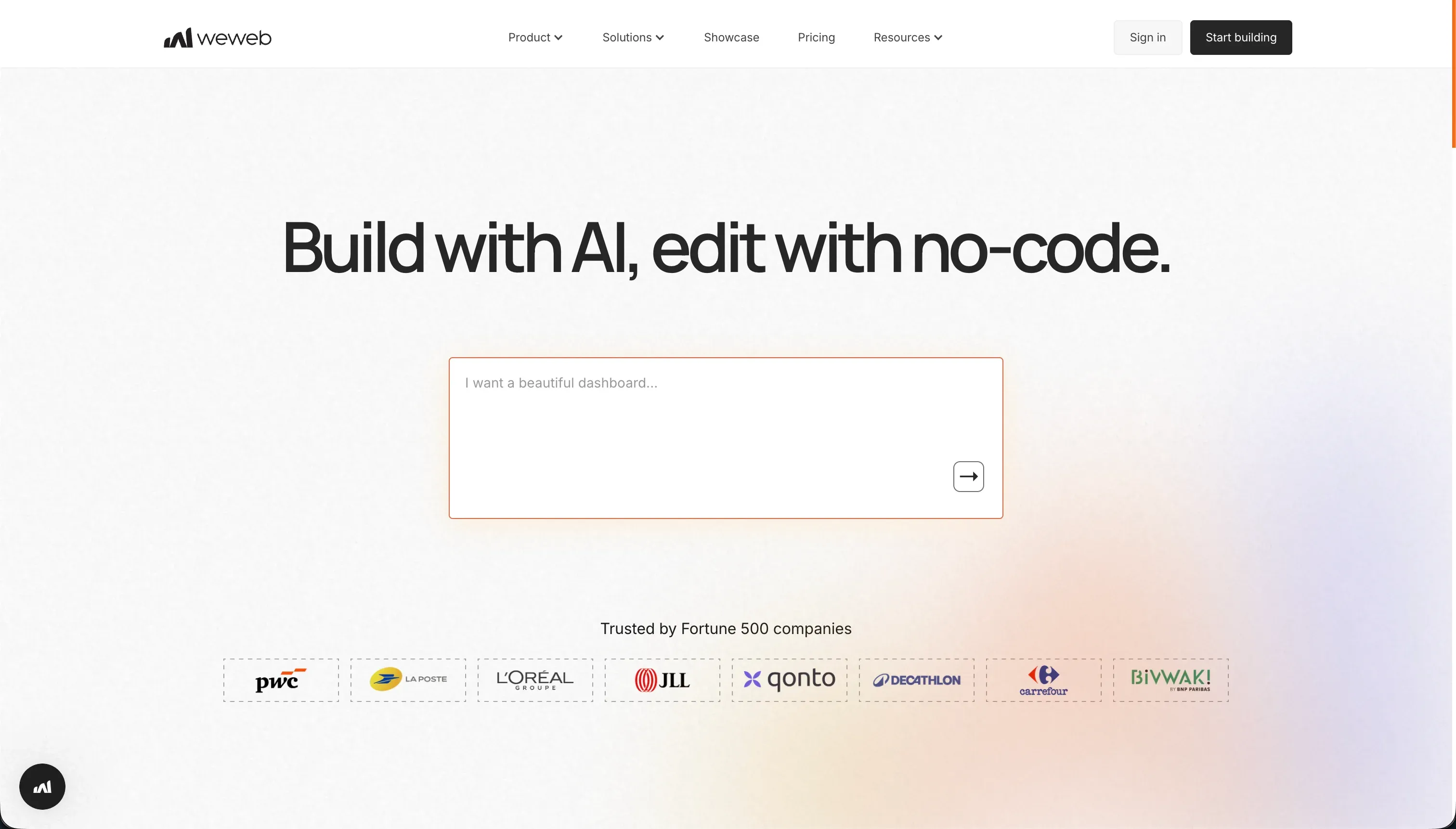 WeWeb homepage snapshot
WeWeb is preferred by modern frontend development agencies because it exposes an advanced CSS layout engine, scoring 8.5 on design flexibility. It compiles fast, SEO-indexable single-page applications. However, ease of build scores 4.0 because the tool lacks a native database or auth layer. You must build, connect, and finance a custom external backend like Xano to store resume data securely.
Exclusion: Do not build on WeWeb if you need an affordable, all-in-one sandbox: monthly plans start at $59, and external infrastructure subscriptions stack quickly.
5. Glide - best fast-track tool for spreadsheet-centric job directories
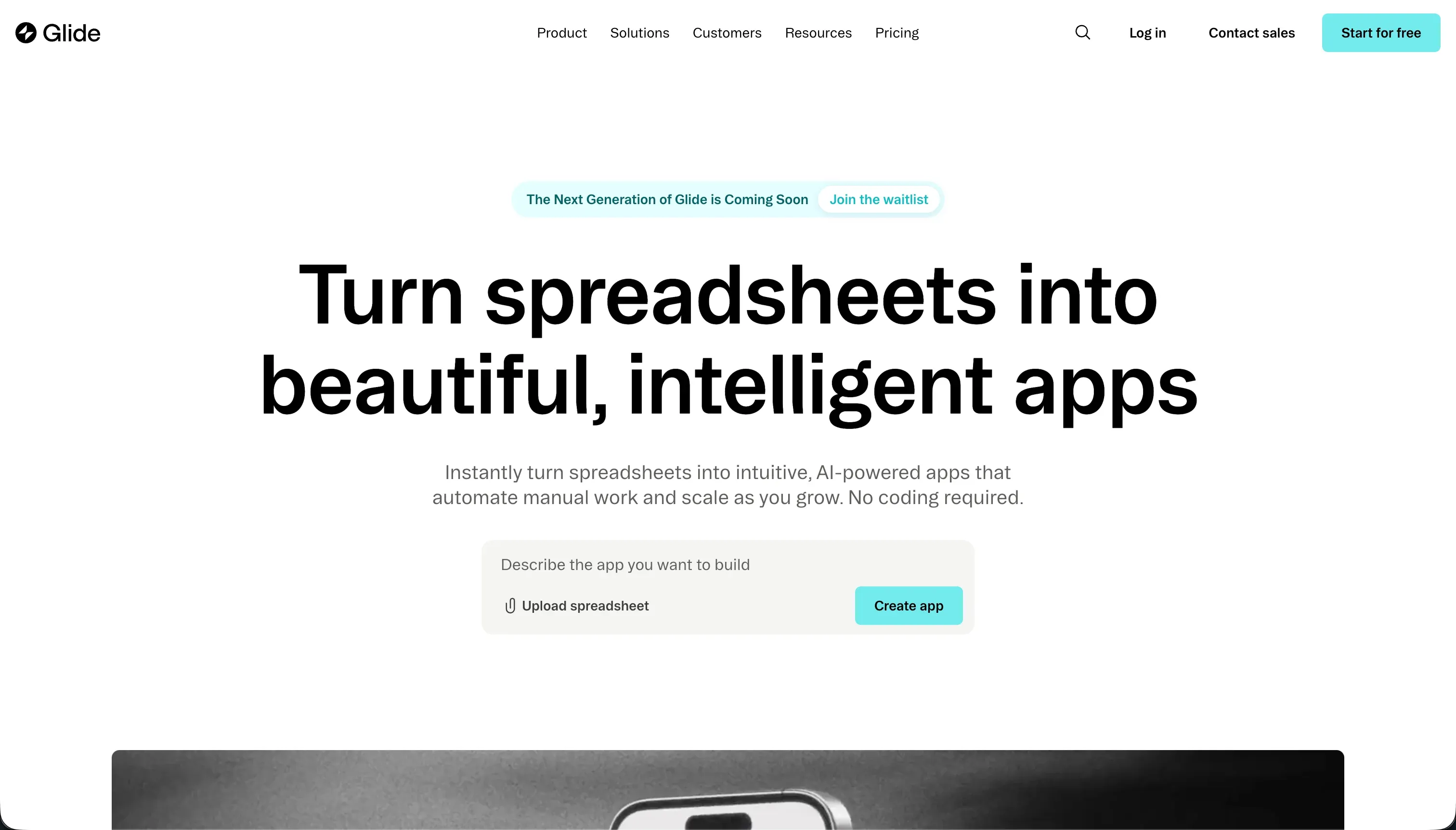 Glide homepage snapshot
Glide excels at rapidly restructuring standard spreadsheet data into clean mobile interfaces, scoring 8.5 on ease of build. Relational formulas and list filters configure instantly around Google Sheets columns. The major friction is design flexibility, which scores 4.0 because pages are restricted to pre-built mobile-first templates.
Exclusion: Do not use Glide for public-facing boards with high traffic: the pricing is strictly seat-based, making user accounts expensive for recruiters, and security controls score 5.5, which is thinner for external users.
6. Airtable - best back-end editor for organizing listings internally
Airtable is the gold standard for back-office database organization, scoring 8.0 on data & integrations and 8.5 on sheet-like ease of build. Internal recruiters can design tracking steps, view job pipelines, and run email updates visually. However, design flexibility scores 4.0 because Interface Designer forces a rigid desktop format.
Exclusion: Do not use Airtable to host public applicant portals; security scores 5.0 and permissions run at base level, meaning you cannot isolate candidate views cleanly without paying for guest packs.
How to shortlist the right platform
To shortlist platforms effectively, define your primary target audience. If you are building high-volume listing tables, candidate search portals, or local agency directories, shortlist Softr and Airtable or Glide. Softr can run as a secure candidate login layer directly over your spreadsheet records, avoiding seat cost inflation.
If you want to check out similar portal models, review our evaluations of directories and recruitment agency portals. If your project is a transactional recruiter workspace requiring matching logic, shortlisted candidates, and Stripe commission cuts, evaluate Bubble alongside our list of transactional marketplaces.
For developers who require code ownership, Replit remains the standard code-centric option. Run your pilot using a small, structured mock dataset with candidate files, recruiter companies, and job entries. Build one login dashboard, apply a search filter, and verify user isolation logic.
Read our unified evaluation standards on the methodology page to trace how we score operational software.