




What a Recruitment Agency Portal Actually Needs
Recruitment agency portals operate as three-sided workspaces where candidates submit resumes, hiring employers review pipeline lists, and internal recruiters orchestrate matches. Because these portals handle sensitive personal data, salary information, and contract details, simple web directories cannot sustain the workflow.
Reviewing these portals requires mapping agency requirements back to the six scoring criteria.
First, Ease of build determines how quickly you can launch dynamic job feeds and intake workflows without getting bogged down in platform architecture. Second, Production readiness is vital, especially when synchronizing resume uploads and high-frequency application statuses without system lags.
Third, Maintainability measures how easily an agency owner can edit standard forms, change candidate profile fields, or alter pipeline stages in year two without re-prompting an AI or relying on an external engineering team.
Fourth and most critical, Security & access control dictates whether Candidate A can securely log in to see only their matches, while Employer B reviews only candidates assigned to their open job listings. A leak here can ruin an agency’s industry reputation.
Fifth, Data & integrations matters because agencies must link high-capacity tables - such as job descriptions, applications, reference checks, and billing contracts - while connecting cleanly to existing Applicant Tracking Systems (ATS) or CRM platforms.
Finally, Design flexibility dictates how well you can display customized white-labeled portals, branded job boards, and fluid mobile layouts that candidates can easily browse on their phones. To see how these weights are calculated across core business functions, you can read our full methodology evaluation.
The use-case comparison
| Platform | Overall | Advantage | Main reason to exclude it |
|---|---|---|---|
| Softr | 8.1 | Pre-built multi-tenant security, visual user groups, and flat cost forecasting. | No direct code export and limited custom visual layout freedom. |
| Bubble | 6.8 | Deep visual workflows, relational data logic, and custom matching algorithms. | Predicting workload-unit prices and a steep developer-like learning curve. |
| Glide | 6.3 | Very fast assembly of mobile-responsive list components from spreadsheets. | Seat-based pricing model and thin per-client privacy governance. |
| Replit | 7.4 | Raw code generation, autoscale Postgres, and absolute interface flexibility. | Requires code-level maintenance and has unpredictable AI effort billing. |
| Airtable | 6.3 | Highly intuitive relational database for internal resume and company tracking. | Expensive per-seat external licensing and desktop-only responsive layout. |
| WeWeb | 6.2 | Bespoke design control with programmatic flexbox grids and clean code download. | No built-in storage engine with additional backend subscription costs. |
1. Softr - best overall for secure candidate and employer workspaces
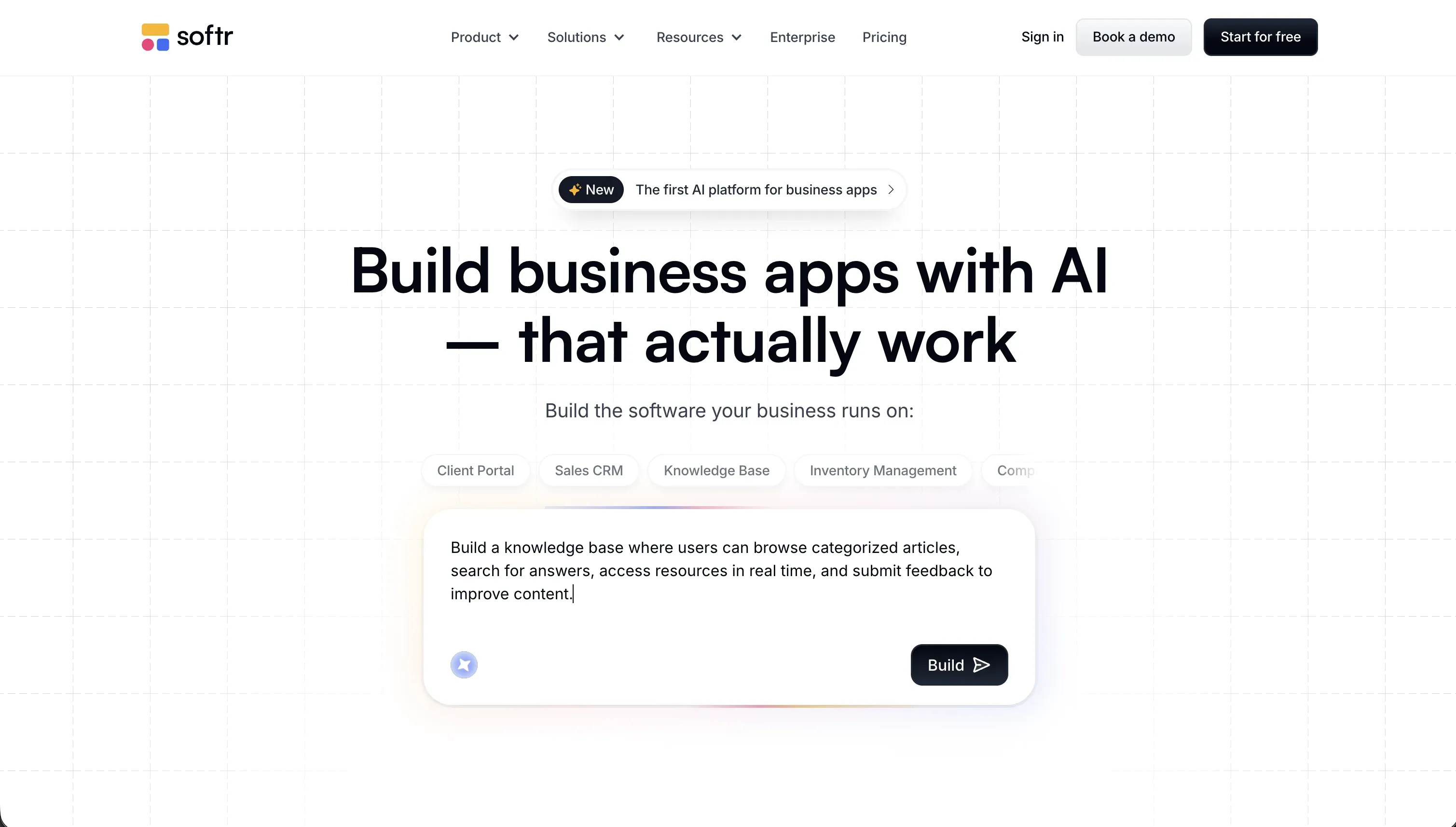 Softr homepage snapshot
For agencies running professional staffing operations, Softr ranks first because user management and access levels are built natively on the database layer. Its Security & access control score of 8.5 ensures that candidates, clients, and internal recruiters only see the job applications, contracts, and salary histories mapped to their specific user profiles.
Because maintainability scores 9.0, adding dynamic application steps or changing recruiter assignments is a simple, visual settings change. This is the exact tool to choose for building professional client-facing job boards, candidate workspaces, and recruiter task dashboards.
However, design flexibility scores 5.5, meaning agencies seeking a creative consumer brand identity will confront Softr’s structured block-style grid layout. For standard operational portals, you can easily host 10 Team and 50 Client authenticated app users for $99 a month billed annually.
2. Bubble - best for complex applicant matchmaking algorithms
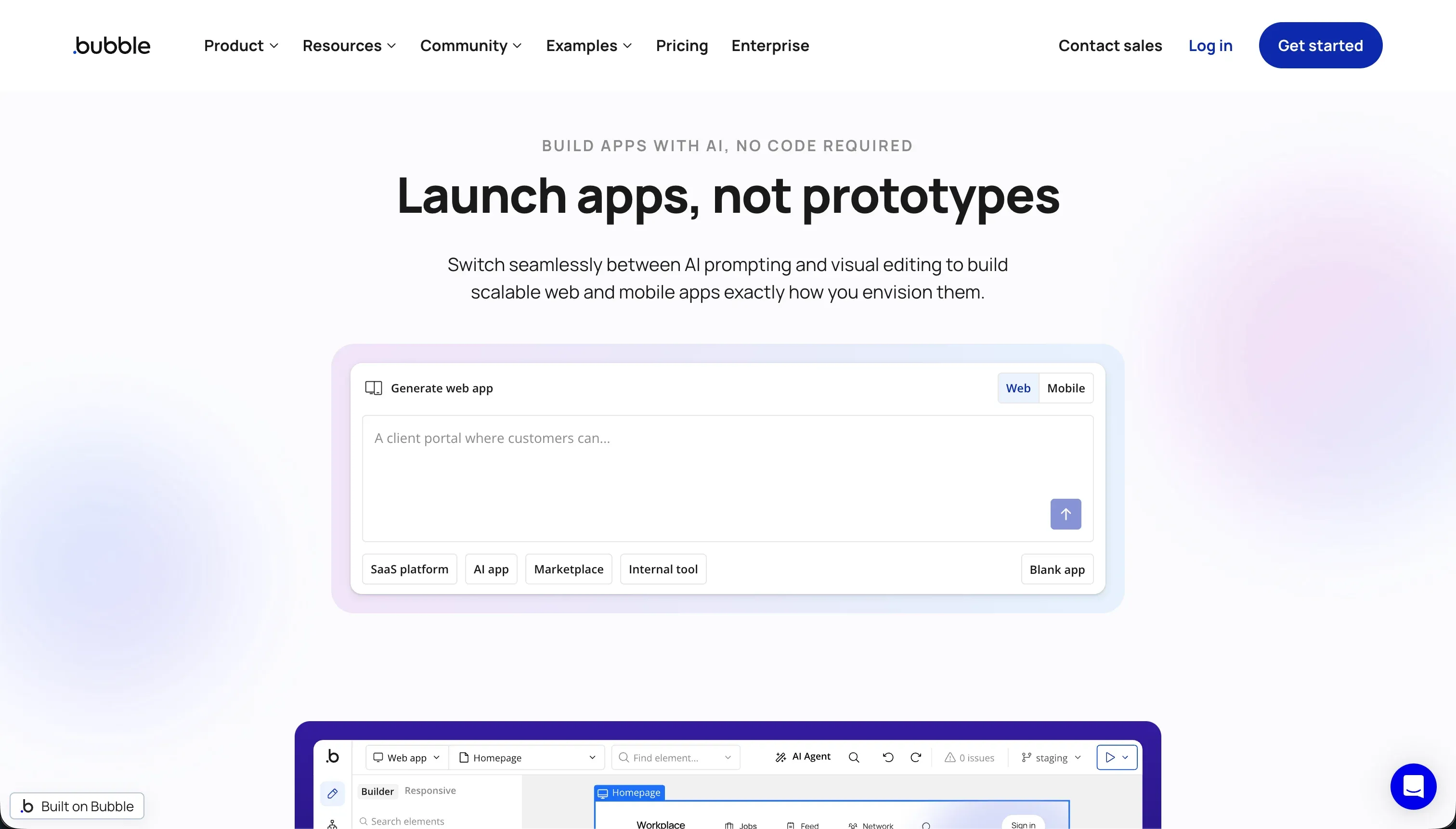 Bubble homepage snapshot
When a recruitment portal needs custom math to score and automatically match applicants to open positions, Bubble provides the logical depth required. Design flexibility scores 8.5 and data & integrations scores 8.0, allowing you to custom-design complex pipelines.
However, security & access control scores 6.5 because configure-by-hand privacy rules require significant developer expertise; a single omitted setup path can leave sensitive resumes visible to the public. If your agency simply requires standard document sharing, status tracking, and lists, Bubble introduces excessive configuration complexity.
Additionally, unpredictable workload-unit fees make monthly billing forecasting difficult.
3. Glide - best for rapid field-staffing or temp-agency portals
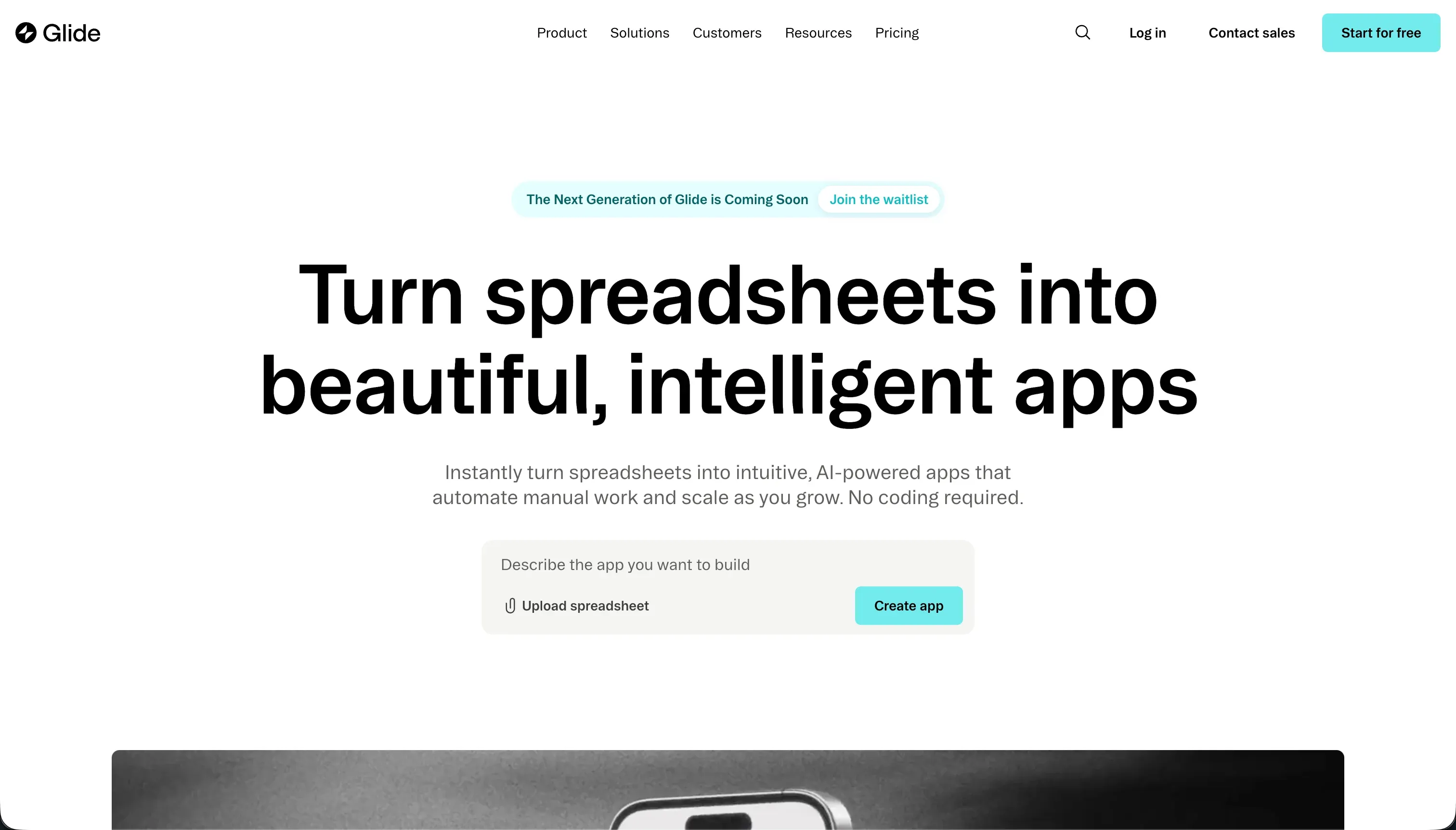 Glide homepage snapshot
If you are running a high-turnover temporary staffing or shift-work agency, Glide turns active spreadsheets into beautiful mobile-first apps instantly. Ease of build scores 8.5 because the platform maps Excel rows into pre-configured listings. However, security & access control scores 5.5, indicating a thinner permission layer compared to portals designed specifically for distinct client groups.
Furthermore, per-user pricing makes the platform expensive if your portal grows past 100 shared candidate users. Do not use Glide if your candidates need heavily branded, white-labeled client systems, as styling remains constrained by Glide’s standard templates.
4. Replit - best for agencies requiring native code ownership
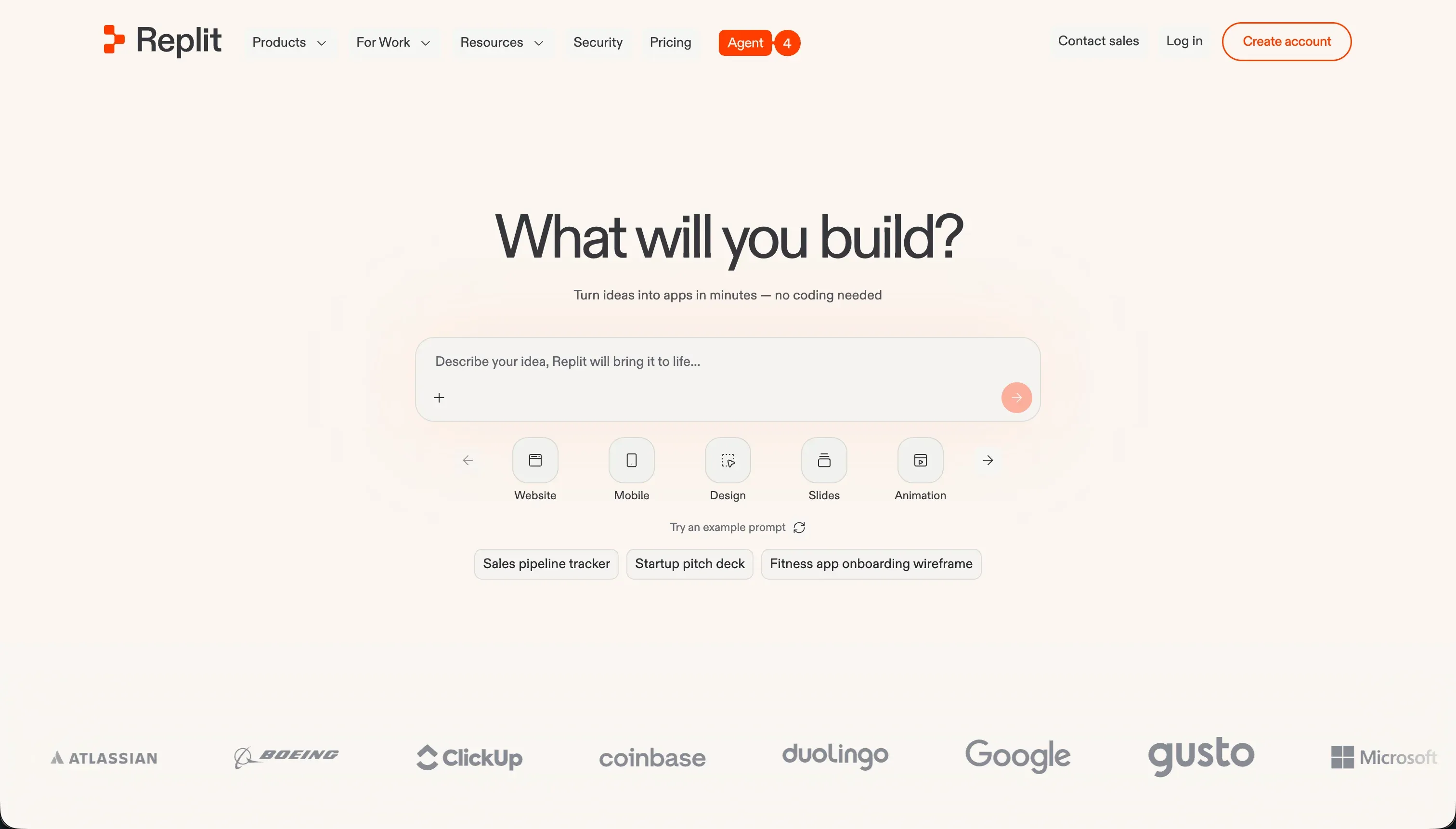 Replit homepage snapshot
If you are a technical team or developer-led agency demanding total code control, Replit is the premier option. It scores 8.0 for production readiness, leveraging autoscale databases and deploying real, version-controlled repository files. Its design flexibility of 8.5 guarantees you can code any advanced filter or calendar visualization from scratch.
This flexibility introduces major trade-offs: security & access control scores 6.0 because all database rules must be written by hand in code and audited manually. Do not buy Replit if your agency does not have internal software engineers; an autonomous agent can introduce complex code loops that crash and burn through credits rapidly during debugging cycles.
5. Airtable - best internal database for staffing recruiters
Airtable is a relational database with an approachable, spreadsheet-like interface. It scores 8.5 on ease of build and 8.0 on data & integrations, making it the premier option for internal recruiters who need to track applicant stages, resumes, and client pipelines in grid or kanban views. Despite its data depth, production readiness scores 5.5.
Its Interface Designer is rigid, is desktop-only, and lacks robust public onboarding. Gating candidate pages requires paid guest packs that scale poorly. For client-facing recruiter portals, agencies typically set up a custom frontend on top instead of sharing direct database seats.
6. WeWeb - best frontend for highly custom employer branding
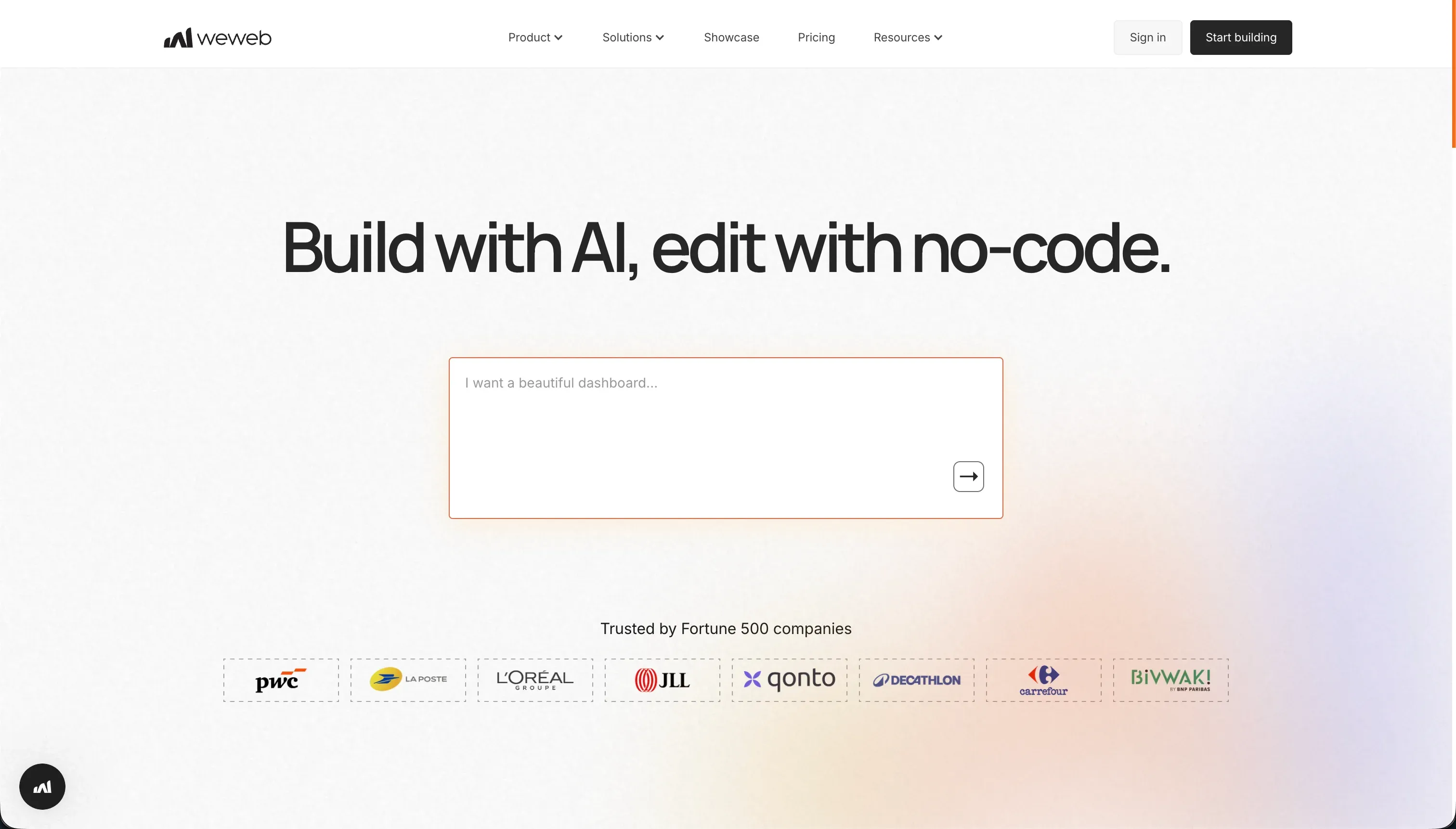 WeWeb homepage snapshot
Agencies that demand premium visual animations and pixel-perfect layouts for high-end executive search brandings run WeWeb. Design flexibility scores 8.5 due to programmatic flexbox and grid setups, and its ability to download standard clean Vue.js code on Scale tiers ensures a solid platform exit path.
This decoupled design is the primary challenge: ease of build scores 4.0 because WeWeb features no native database. You must configure and connect separate subscriptions such as Xano or Supabase to manage login databases. Implementing user accounts requires manually scripting token workflows, making WeWeb too complex for standard business tool configurations.
How to Shortlist and Pilot Recruitment Portals
When narrowing down your agency’s portal selection, match your technical resources directly to the platform’s maintainability patterns. For the majority of professional recruiters, we recommend piloting two platforms. First, test Softr paired with native databases or Airtable to determine if pre-built user groups can securely automate your submit-and-review pipeline at a flat tier.
Second, if your business requires proprietary matching algorithms or specialized math, evaluate Bubble to see if the custom development complexity pays off in daily efficiency.
To conduct a rigorous test, set up a mini-pilot with five active candidates, one recruiter, and one real client. Verify if candidates can upload resumes securely without exposing their accounts to other applicants, check if client companies can update open listings, and test how easily a non-technical manager can change form fields in month six without platform crashes.
This visual validation ensures you purchase systems that protect candidate records, maintain agency speed, and operate with predictable monthly bills. To understand the framework we utilize to assess business, security, and developer-readiness metrics, explore our official methodology guidelines.