



What a service request app actually needs
A service request application is defined by three overlapping user needs: a tenant, client, or employee submits a request via a dynamic form; a dispatcher reviews the queue and assigns it; and a field technician updates the ticket status. Because this software class must coordinate multiple parties safely under real-world constraints, the platform evaluation model diverges from typical website builder checklists.
First, the platform demands a specific access control & access control setup. A tenant must never see tickets submitted by a neighboring tenant, while an assigned contractor must only access their specific pipeline. Second, production readiness is critical.
Intake forms, status routing, and notifications must perform synchronously on mobile and desktop without lagging or exposing database credentials in the browser console.
Third, maintainability dictates whether the tool survives month six because changing fields, tweaking validation rules, or onboarding a new vendor group must be visual configurations rather than code-heavy debugging projects.
For service request systems, ease of build also matters for rapid operational deployment. However, it cannot come at the expense of data & integrations, since these apps live or die on relational links between users, properties, and tickets.
Design flexibility is the natural trade: while custom layouts are helpful for matching corporate guidelines, they are secondary to secure record isolation, live state filters, and predictable pricing. Here is how the leading platforms rank against our standardized evaluation criteria.
The use-case comparison
| Platform | Overall | Advantage | Main reason to exclude it |
|---|---|---|---|
| Softr | 8.1 | Natively handles secure login, dynamic forms, and per-user visibility out of the box. | Visual layouts are limited to predefined blocks rather than a freeform canvas. |
| Glide | 6.3 | Remarkably fast spreadsheet integration with polished mobile-first request lists. | Per-user seating constraints make wide client request submission highly expensive. |
| Retool | 6.8 | Direct read-write connections to raw SQL database sources and powerful datagrids. | Demands strong SQL/JS skills and lacks out-of-the-box customer signup flows. |
| Bubble | 6.8 | Infinite logical depth for complex multi-party dispatch routing and custom states. | No code export path, high visual learning curve, and variable workload pricing. |
| Replit | 7.4 | Generates a complete request system as standard, fully exportable code files. | Permission routing and security checks live in code rather than a visual admin panel. |
| Airtable | 6.3 | Intuitive relational schema building with robust native grid, board, and calendar views. | Desktop-centric design with no built-in, white-labeled client credential portals. |
1. Softr - best overall for intake, tracking, and visibility
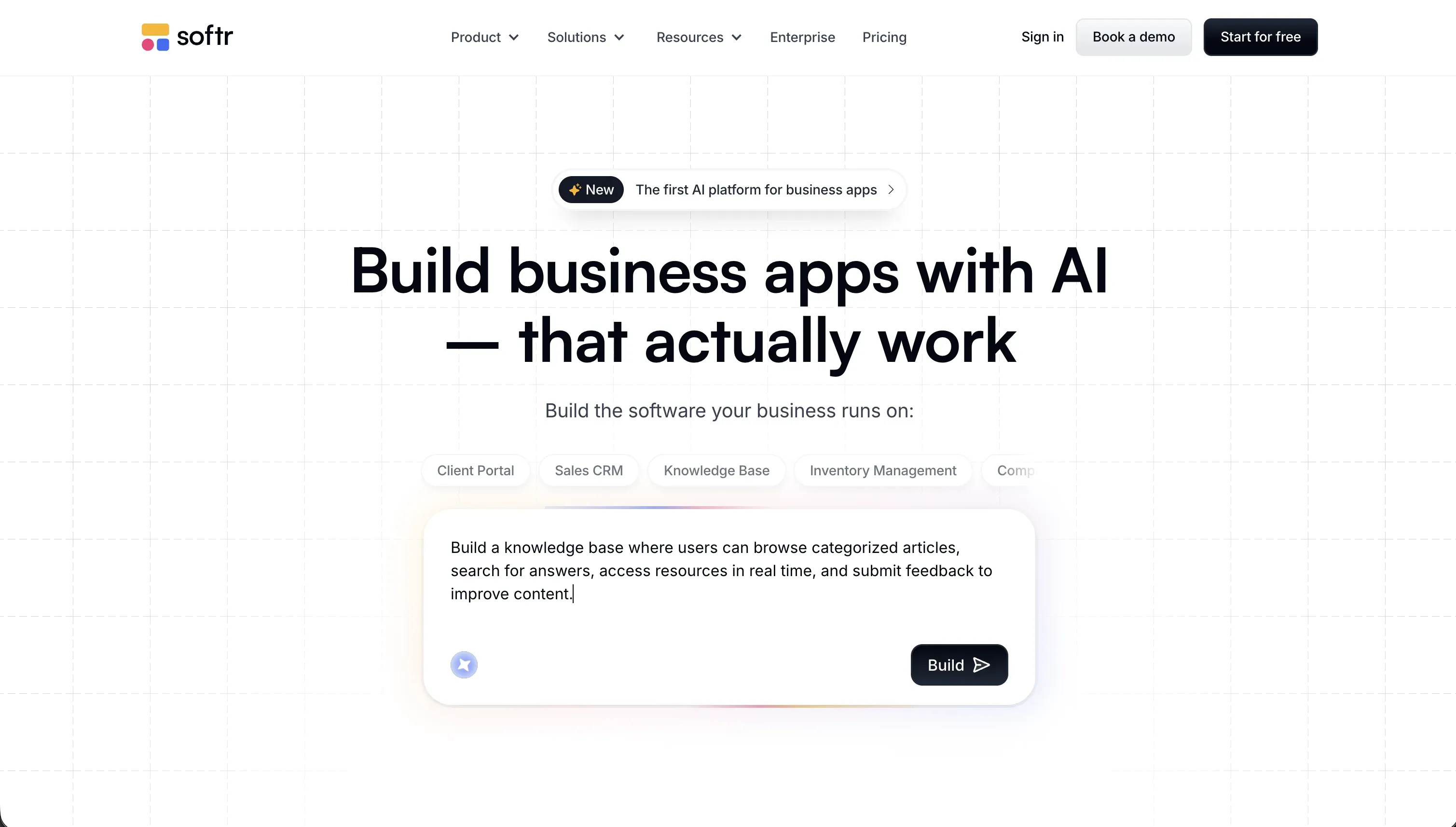 Softr homepage snapshot
Building a request portal on Softr succeeds because the platform was engineered exactly for authenticated data interactions. It scores 9.0 on ease of build and 9.0 on maintainability: authentication, static and dynamic user groups, and dynamic visibility rules are pre-configured in visual settings.
A tenant can access their login, submit requests, and watch their status update in real time, while a dispatcher can review the entire queue on a separate, secure page. Softr excels at record comment elements, allowing direct, thread-based collaboration between the requester and technician.
The Professional tier is flat-priced at $139 per month billed annually for up to 100 app users, which avoids the seat price creep that compromises other systems. The explicit restriction is design flexibility, which scores 5.5: interfaces are constructed from native, responsive blocks rather than a custom pixel grid.
2. Glide - best for mobile field technician request updates
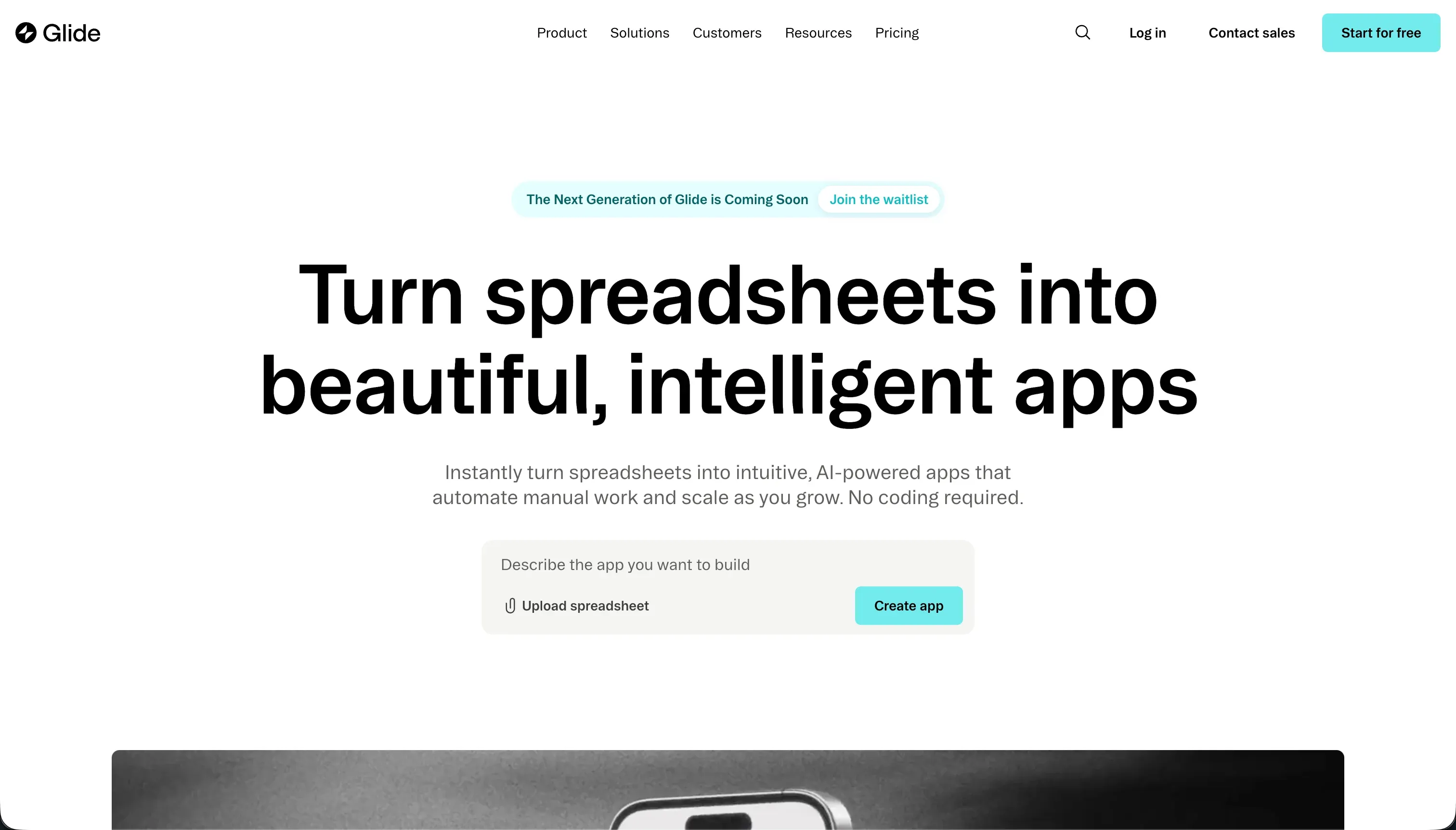 Glide homepage snapshot
Glide is the strongest choice when technicians must track and update assigned requests from their mobile phones. It scores 8.5 on ease of build by transforming existing spreadsheets or Glide Tables into polished, mobile-friendly lists and maps. It features built-in barcode scanners, file uploads, and GPS logging parameters, which makes it perfect for teams in the field.
However, Glide scores 5.5 on security & access control because its permission model is thinner than portal-focused options for complex, multi-tenant external audiences. The key exclusion centers on seat-based pricing: at $249 per month for Business, Glide caps external shared users at 100, which restricts your ability to scale request intake to hundreds of untracked end clients.
3. Retool - best for back-office dispatch and technical internal queues
 Retool homepage snapshot
When request fulfillment is managed by a centralized back-office dispatch crew, Retool is the dominant choice. It scores 8.5 on data & integrations, offering direct reads and writes to SQL databases, REST services, and GraphQL endpoints. Retool provides developers with over 100 pre-built, table-rich UI elements with robust filter states, simplifying bulk dispatch actions.
The deduction is that Retool is not a no-code tool, scoring a low 4.0 on ease of build. Every status filter or write query requires raw SQL and JavaScript knowledge. Do not buy Retool if you need a consumer-facing intake portal; building external signup and onboarding flows requires hand-coding custom API configurations.
4. Bubble - best for custom request algorithms and complex dispatch queues
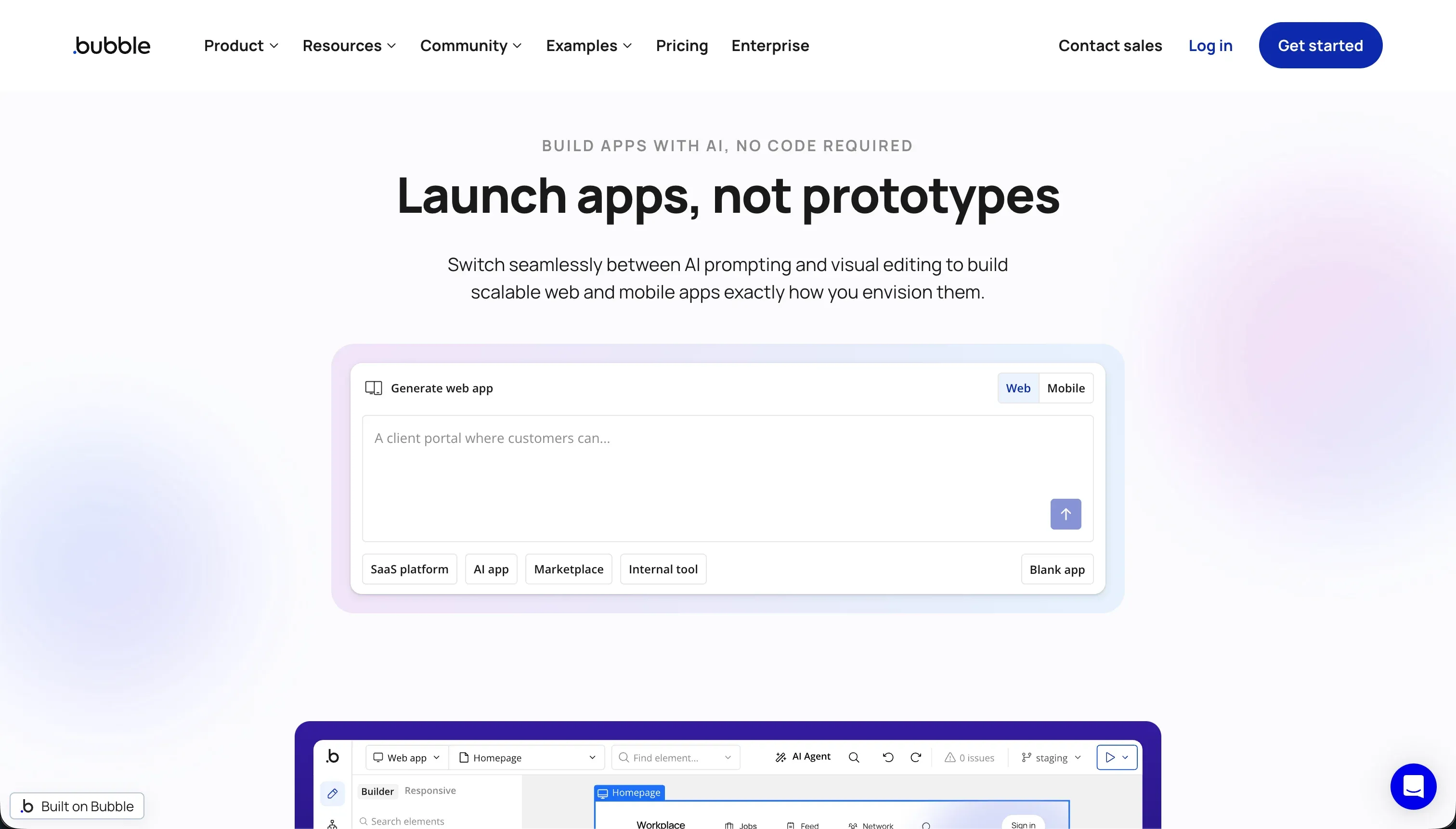 Bubble homepage snapshot
Bubble scores 8.5 on design flexibility and 8.0 on data & integrations, making it the strongest entry for highly custom dispatcher matchmaking workflows or multi-tier approval steps. It features visual backend workflows and a managed relationship database that allows you to configure custom states and data links.
The challenges are structural: ease of build scores 5.0, as database schemas, privacy rules, and API connections require developer-like execution. Security and access control scores 6.5 because a single missed server privacy rule will silently expose customer data. Do not buy Bubble if you need predictable software costs; its workload-unit limits can cause billing surprises if your query structures are unoptimized.
5. Replit - best for technical teams seeking complete developer code ownership
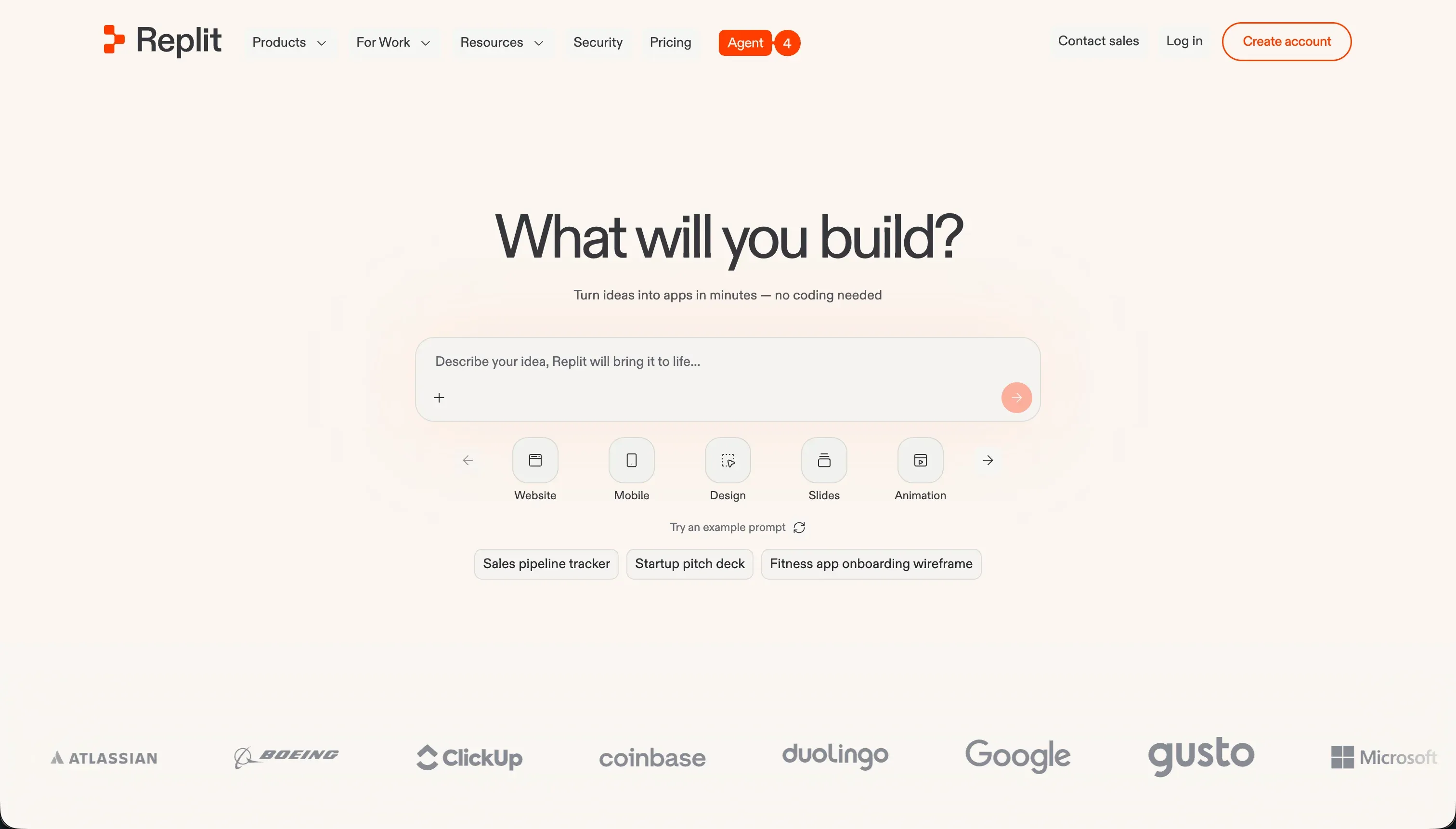 Replit homepage snapshot
Replit is an outstanding choice if your operational strategy necessitates owning and hosting the application on your own servers. The Replit Agent writes and deploys real code on managed autoscaling servers, scoring 8.0 on production readiness and 8.5 on design flexibility. Replit excels when the request app requires specialized integrations outside the scope of classic no-code builders.
The trade-off is maintenance and monitoring. Security & access control scores 6.0 because all roles, inputs, and permission rules are hand-written in code. If the agent generates environment or loop errors, your internal staff must step in to debug the code manually.
6. Airtable - best for organizing relational schemas and internal tracking
Airtable is the premium relational database for managing the scheduling details of service requests, scoring 8.0 on data & integrations and 8.5 on ease of build. Its spreadsheet-grid interface remains the easiest model for non-technical managers to link users and requests. However, Airtable scores a low 5.0 on security & access control and 4.0 on design flexibility.
Its Interface Designer is desktop-focused, is heavily branded, and operates exclusively on global base-level roles. Because you cannot easily restrict views down to the individual request field or page level for different logged-in stakeholders, do not use it to build external client portals directly.
How to select and pilot your platform
To shortlist effectively, divide your operational goals cleanly by user types. If you need tenant-facing forms and status logins, pair Softr with either a native Softr Database or Airtable to serve as your backend. See our detailed /best/help-desk-apps and /best/facility-management-apps pages to match these models to your specific logistics.
If the app is intended strictly for mobile-first handoffs to field technicians, test Glide on your active spreadsheets. Technical staff who want complete database schema governance should pilot Retool for backend operations, and reference our guide on /best/field-service-businesses.
When running your pilot program, always build a complete three-step validation flow: create a request to check user data isolation, assign the ticket to an operator to verify permission security, and update the status to test database sync speed.
Ensure you verify the 12-month projected software bills at 50, 100, and 500 external request submitters, as per-user platform pricing can escalate quickly. Consult our complete evaluation checklist on the /methodology page to learn how we compile these scores and metrics.