



What a facility management app actually needs to survive
Facility management apps are fundamentally distinct from basic software. They operate as multi-directional coordination centers where tenants submit tickets, technicians run inspections in the field, and operations managers coordinate preventative maintenance schedules.
High-performance apps in this space are characterized by zero-latency data reporting, clear asset registries, and robust role-based security configurations. To evaluate the category leaders honestly, we weight our six core criteria around real property management environments.
First, security & access control is paramount. A tenant submitting an HVAC issue should never have visibility into another company’s lease documents or background checks. The platform must offer visual, server-side row-level restrictions that survive client-side inspection. Second, production readiness dictates field reliability.
Inspections and audits often occur in basement mechanical rooms or sub-levels where unstable connectivity is expected; apps must load cleanly on mobile devices without crashing. Third, maintainability represents the long-term cost of software ownership.
If adding a new building, modifying an equipment field, or editing an inspect form requires complex code refactoring, the application fails to meet operational standards.
Fourth, data & integrations must hook reliably into external sensors, legacy inventory spreadsheets, or local databases. Finally, ease of build determines how fast a team can translate their manual clipboards into active digital workflows, while design flexibility ensures the front-end layout can accommodate busy technicians looking at dense data lists on small tablet screens.
For this specific operational class, platforms that offer pre-configured user permissions and flat pricing structures consistently bypass the financial and technical bottlenecks of code-heavy setups.
The use-case comparison
| Platform | Overall | Advantage | Main reason to exclude it |
|---|---|---|---|
| Softr | 8.1 | Pre-built client portals, visual user groups, secure tenant login | No source code export |
| Glide | 6.3 | Mobile-first inspection layouts scaffolded directly from spreadsheets | Seat-based user limits on public portals |
| Retool | 6.8 | Direct read-write SQL access and advanced developer environments | Requires visual SQL and JavaScript fluency |
| Bubble | 6.8 | Deeper relational triggers and exact visual pixel grids | Steep learning path, complex manual security |
| Replit | 7.4 | AI agent writes and deploys real, exportable codebases | Variable credit-burn rates, no visual settings |
| Airtable | 6.3 | Most approachable relational system for tracking complex properties | Base-level security, lacks native login portals |
1. Softr - best overall for tenant portals and multi-user facility management
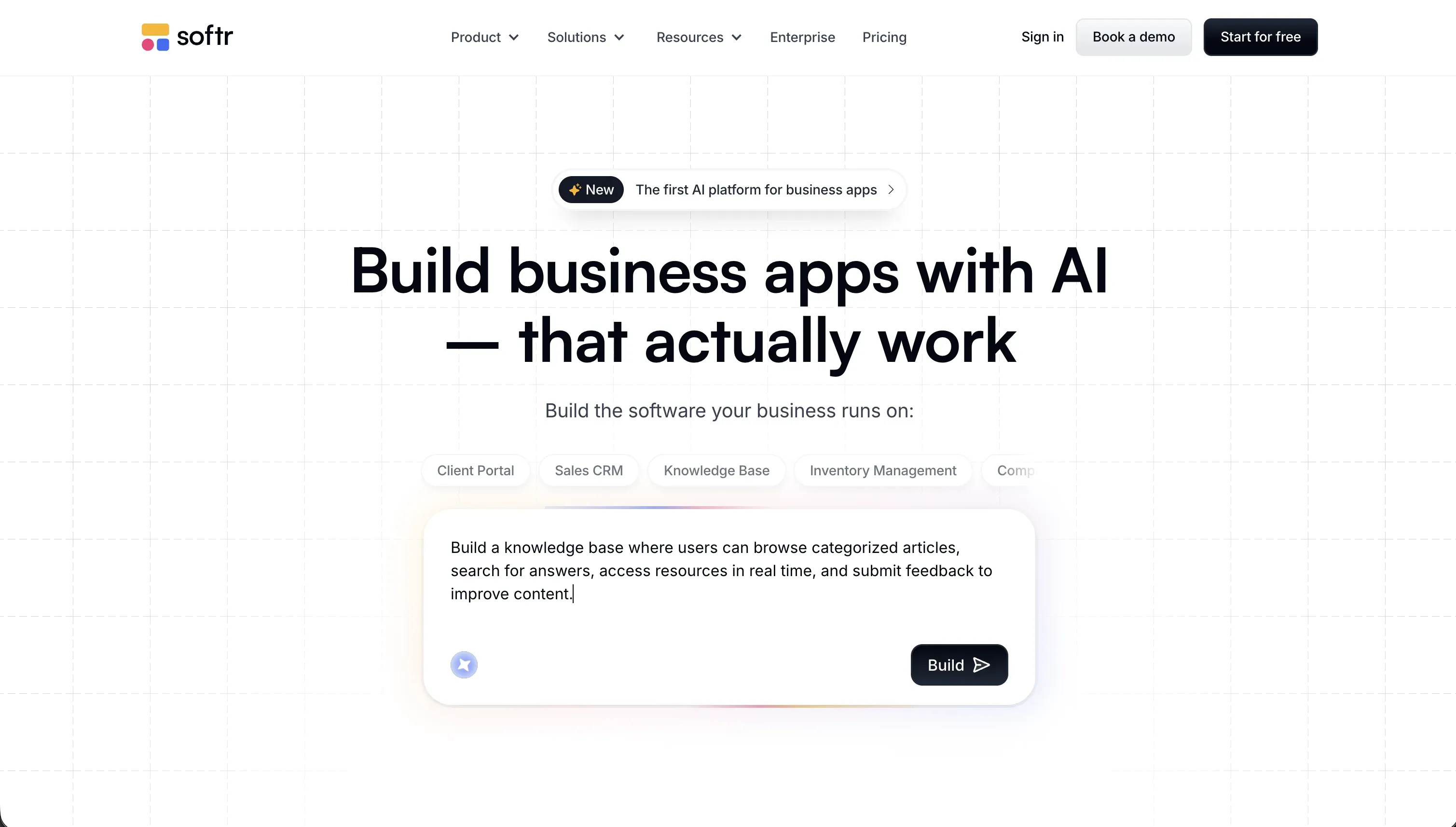 Softr homepage snapshot
We rank Softr as the top choice because it resolves the hardest part of building facility software: securing tenant, technician, and contractor workspaces at scale. Its security & access control scores 8.5 because access is enforced server-side through visual User Groups and Global Data Restrictions, so a contractor only ever receives the tickets assigned to them, a tenant sees only their own unit and requests, and an internal manager sees the whole property. There are no front-end filters to bypass and no row-level security policies to hand-write, and you verify each role by previewing the app as that user group before publishing. Groups can be dynamic, auto-assigning roles from a database field like “Building” or “Vendor” so access stays correct as people are added.
The operational data belongs in native Softr Databases, where assets, tickets, units, and vendors link relationally, with rollups that count open work orders or sum maintenance costs automatically. If your records already live in Airtable or Google Sheets, Softr connects to those and 17 other sources too. Native request forms, tables, calendars, and record commenting cover the standard facility workflows out of the box, while Workflows automate the rest: a new maintenance request can instantly notify the assigned technician, update a status, or escalate after a deadline, all configured visually.
Maintainability scores a leading 9.0 because there is no generated code repository, making daily updates simple and prompt-free, so the ledger you build in an afternoon does not become technical debt in month six. Flat per-tier pricing ($139/mo Professional, billed annually, for up to 100 logged-in users) keeps a growing tenant or contractor roster from turning into a runaway per-seat bill, and the model scales from a single property manager up to operations and IT teams deploying governed facility tools across sites.
Do not buy Softr if you need native app-store deployment or a custom pixel-grid layout. For a heavily bespoke system in exportable code, Replit is the honest pick in that code-first lane; for a secure tenant or technician portal live this week, Softr leads.
2. Glide - best for mobile-responsive field inspections and work orders
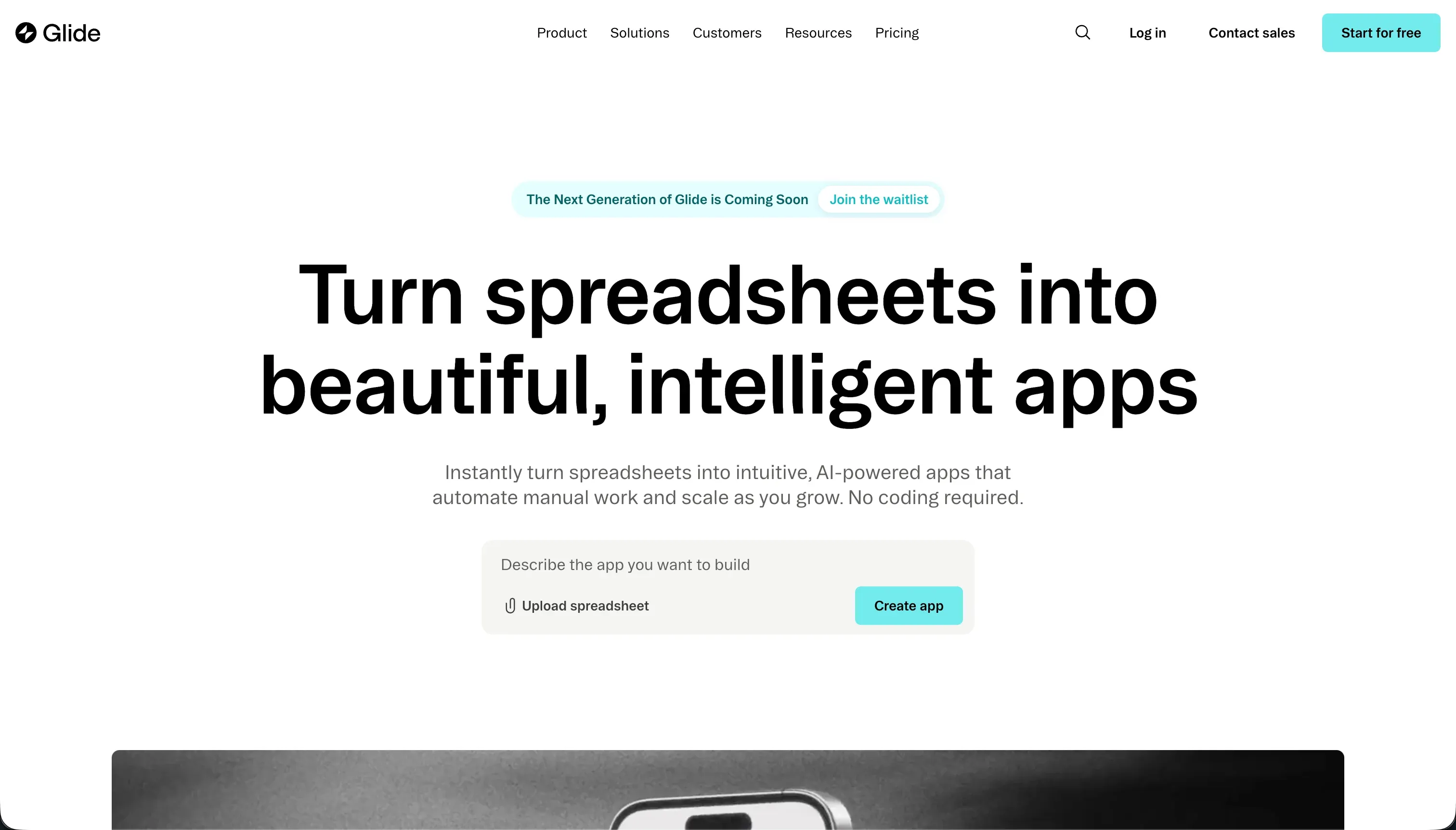 Glide homepage snapshot
For teams prioritizing grease-covered tablets in mechanical plants, Glide provides unmatched mobile agility. Scaffolding dynamic mobile interfaces directly from existing spreadsheets, its ease of build scores 8.5. Technicians can execute inspect checklists and log items via a clean phone-first UI. The primary drawback sits on its 5.5 security and access control score.
Granular tenant rules are thinner, and sharing portals with hundreds of building occupiers gets punishing under tight seat-only limits. Do not use Glide if your roadmap demands complex SQL-supported relational schemas or total visual white-labeling.
3. Retool - best for tech teams managing complex physical equipment databases
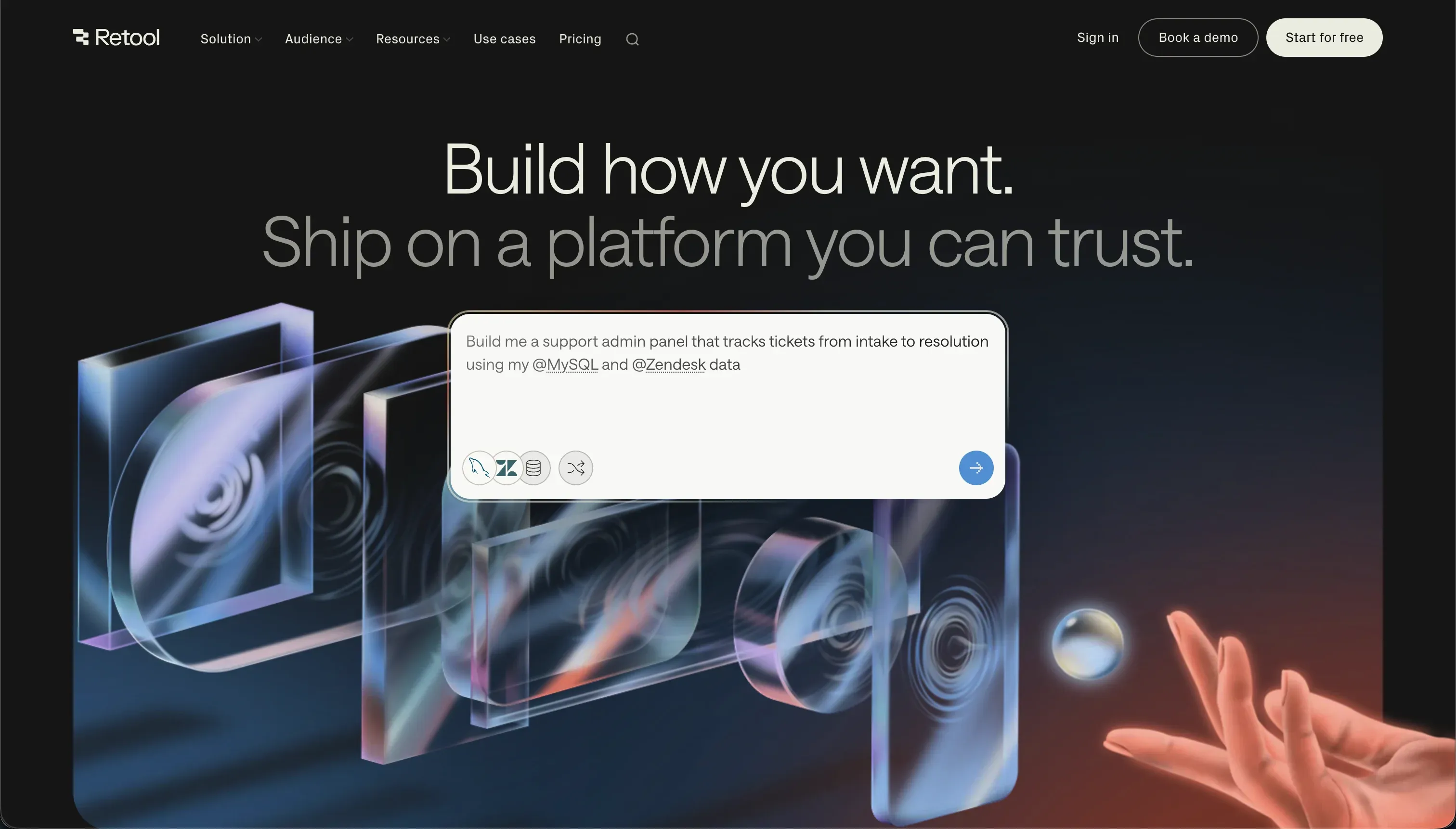 Retool homepage snapshot
If your facilities rely on massive SQL databases or IoT sensor streams, Retool is the industrial console you need. Scoring 8.5 on data & integrations, it acts as a direct database visual controller for SQL and API-driven telemetry. It provides enterprise-ready SSO and audit logs on higher tiers.
However, its ease of build scores 4.0; your property managers will struggle to use it because everything requires JavaScript or SQL queries. Crucially, Retool lacks native portal signup templates. Do not choose it for public work-request endpoints unless your staff can program custom authentication workflows by hand.
4. Bubble - best for managing bespoke scheduling and reservation logic
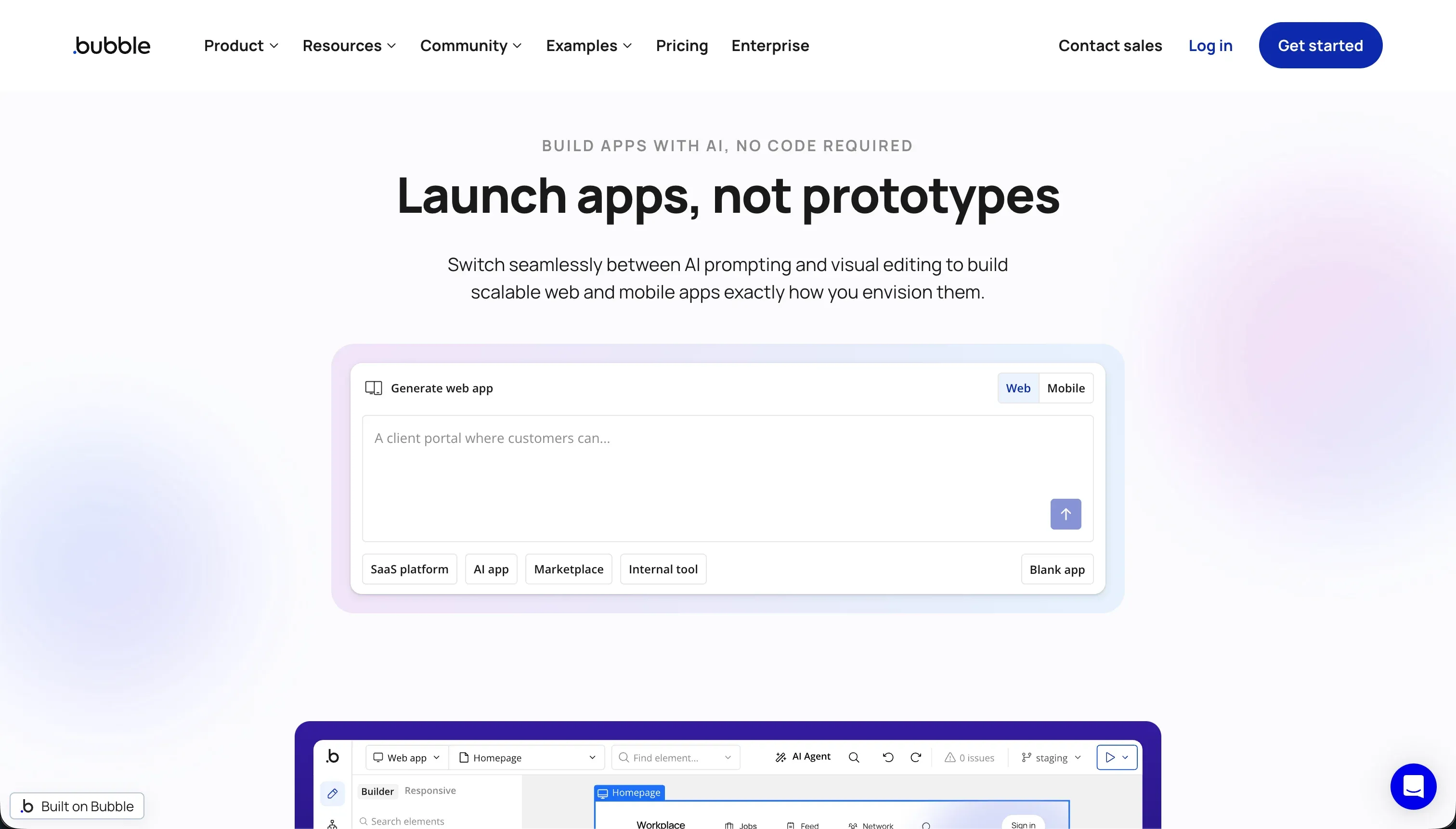 Bubble homepage snapshot
When a facility application requires sophisticated scheduling logic - such as complex room bookings or automated technician dispatched triggers - Bubble delivers. Its design flexibility scores 8.5, enabling pixel-perfect drag-and-drop adjustments. However, ease of build sits at 5.0. Relational fields, backend conditional cron jobs, and database visual rules demand developer-like mastery.
Furthermore, manual configuration is a major liability; a single missed privacy step can leak corporate lease data. Do not use Bubble if you need to run agile operations without dedicated technical staff to audit visual workflows.
5. Replit - best code-first route for full application control
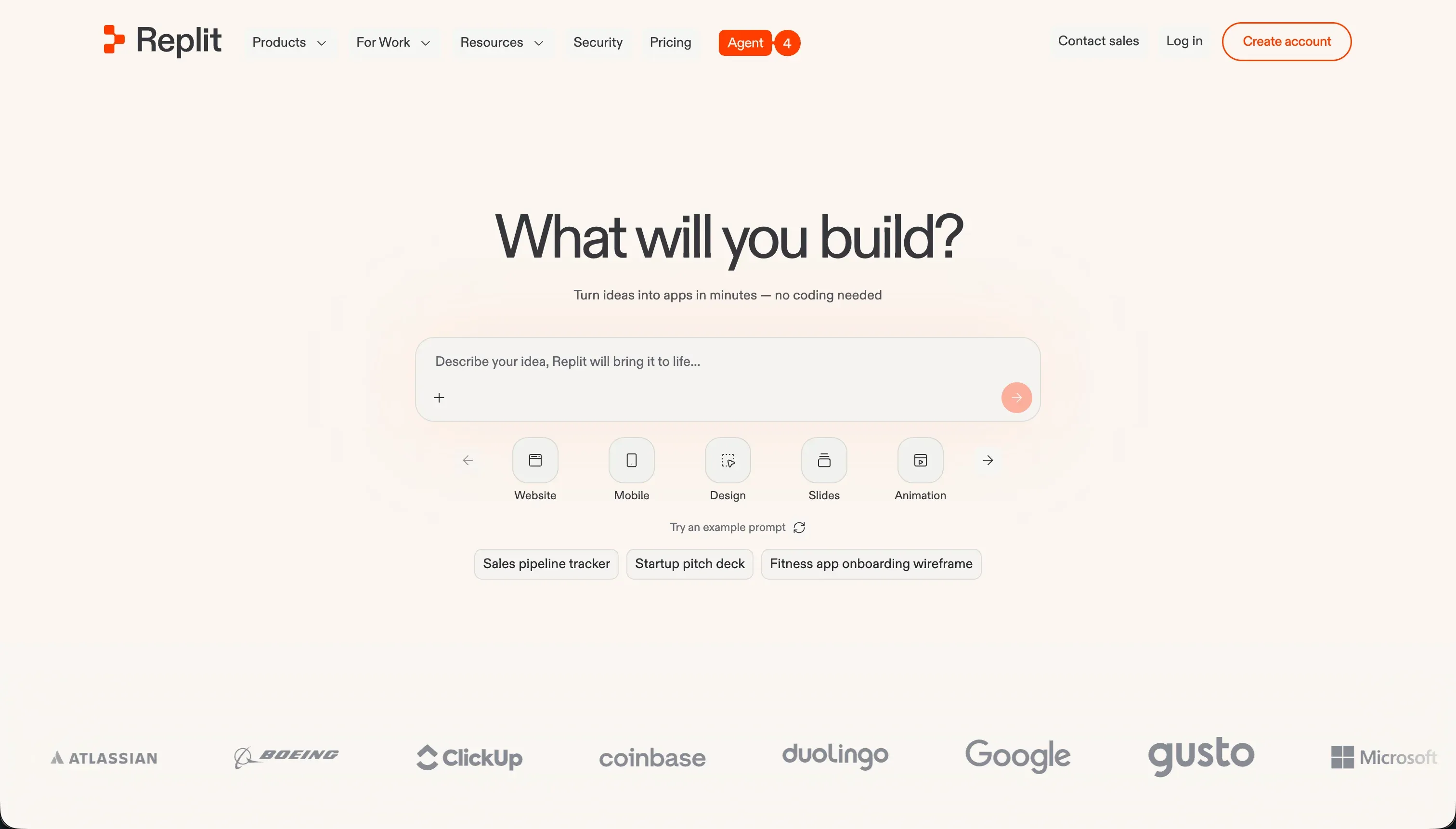 Replit homepage snapshot
If you require absolute code ownership and host-level control over your facility tooling, Replit is the proper choice. The Replit Agent writes and deploys real code on managed autoscaling infrastructure, achieving an 8.0 for production readiness. Design flexibility scores 8.5 since you are writing real React or Python.
The trade is operational; security & access control scores 6.0 because roles exist strictly in coded libraries. It requires manual code inspection rather than visual visual settings. Do not buy Replit if you want a fixed, predictable monthly billing schema without agent resource-overage spikes.
6. Airtable - best relational database for complex asset tracking
For initial asset registration and internal workflow scheduling, Airtable is the gold standard database. It scores 8.0 on data & integrations, and the intuitive spreadsheet layout makes it easy to relate properties, rooms, and HVAC devices. The structural limits emerge in visual rendering. Design flexibility scores 4.0 because the Interface Designer uses blocky, desk-focused components.
Security & access control scores 5.0; and because permissions only reach base level, external tenants cannot sign in safely. Do not buy Airtable for multi-tenant portals, unless you pair it with a dedicated frontend tool.
How to select and pilot your facility app platform
Choosing the wrong system for physical property operations carries real-world consequences, from missing critical machine checks to risking tenant privacy. You can find our complete weighting system on our methodology page, which explains how we score operational software without biases. To start your pilot safely, pick two distinct directions.
If your primary bottleneck is tenant intake, select Softr as your frontend portal. If your focus is offline technician work, pilot Glide. If you have deep SQL structures, evaluate Retool.
Weave these trials with related assets, such as our guides on operations teams, service request apps, and equipment tracking apps, to map your physical devices to clear database tables on day one.