



What a Help Desk System Actually Needs
An operational help desk application must manage a constant loop of ticket submission, assignment routing, queue prioritization, and status notification. When shopping for an application builder for this use case, the optimal platform is not selected based on visual layout freedom.
Instead, the utility is decided by backend security and access control, maintainability, and production readiness. Ticket intake requires safe external forms, while resolution workflows require internal staff to have segregated record access.
First, ease of build determines whether business teams can modify ticket categories or status rules without a developer block. Second, production readiness guarantees the platform handles basic utility flows, including password recovery, Google authentication, and responsive communication portals.
Third, maintainability represents the day-two question: changing a ticket workflow or adding an assignment rule must not break preexisting database schemas. Fourth, security & access control is paramount. Client operators must only view history for their own organization, while level-one support managers require field-level constraints.
Fifth, data & integrations define how tickets sync with existing relational systems like HubSpot, Slack, or SQL databases. Finally, design flexibility matters for formatting high-density queues, though it is ultimately subordinate to secure access. This analysis scores the top platforms directly against these criteria to help team procurement leaders make a low-risk choice.
The use-case comparison
| Platform | Overall | Advantage | Main reason to exclude it |
|---|---|---|---|
| Softr | 8.1 | Pre-built authentication, visual user groups, and row-level client restrictions. | No direct code export and limited pixel-perfect custom visual styling. |
| Retool | 6.8 | High-velocity SQL read-write connectivity and robust custom developer tools. | Requires continuous SQL and JavaScript skill and per-seat external pricing. |
| Glide | 6.3 | Scaffolds polished phone-first ticket tracking views instantly from spreadsheets. | Strict template visuals with high-user licensing costs at portal scale. |
| Bubble | 6.8 | Unconstrained custom visual programming and backend database logic workflows. | Steep technical learning curve and variable usage-based workload unit billing. |
| Replit | 7.4 | Compiles app as real, exportable visual code with managed PostgreSQL hosting. | Requires continuous software maintenance and risks unpredicted credit bills. |
| Airtable | 6.3 | Intuitively models relational support databases with drag-and-drop dashboards. | Access controls operate only on base-level, lacking record-level security. |
1. Softr - best for client intake and support portals
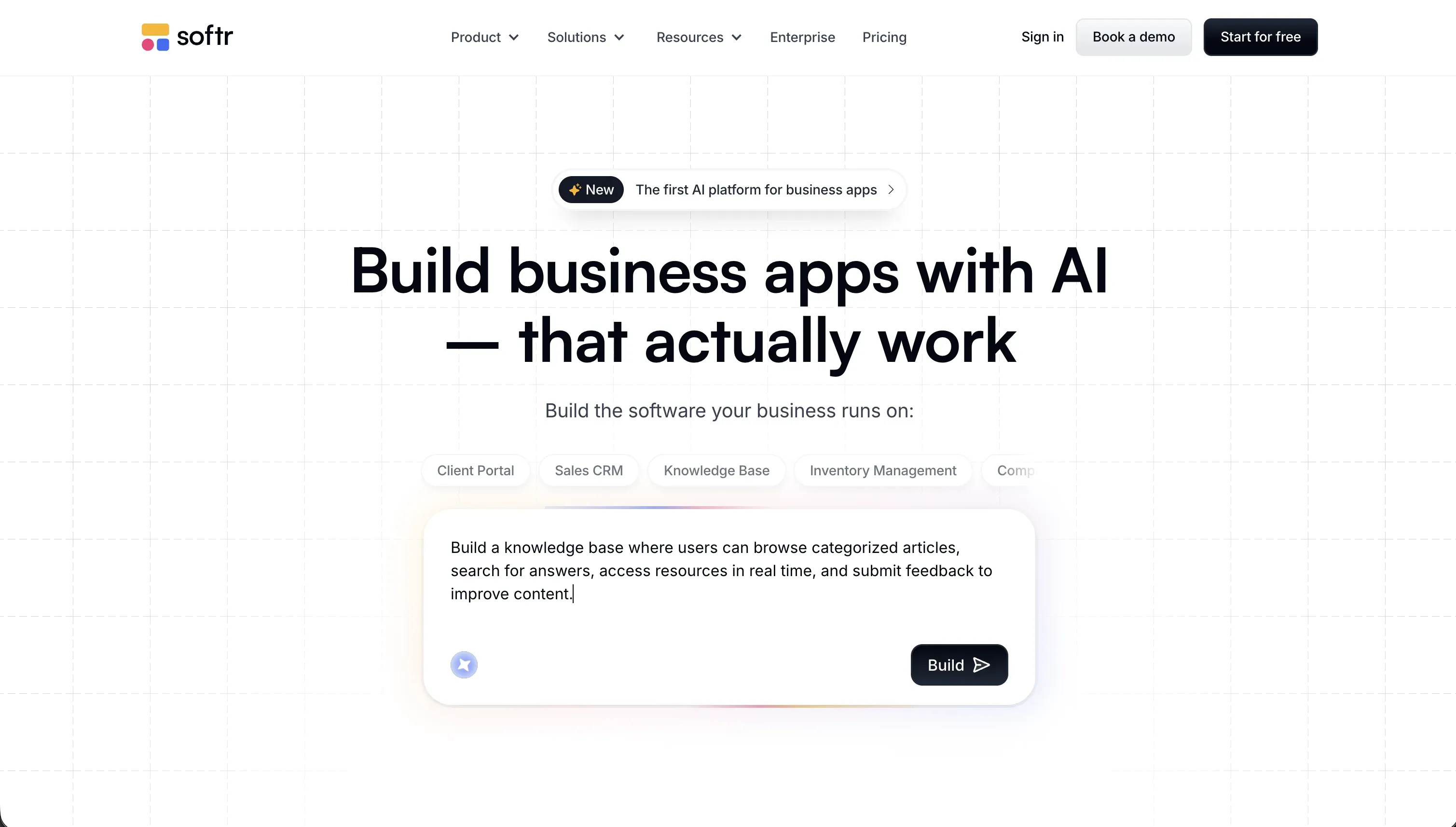 Softr homepage snapshot
Building a ticket portal on Softr handles the most critical security layers automatically. Authentication, password recovery, and secure login utility screens ship pre-built. The build model earns an ease of build score of 9.0 and a maintainability score of 9.0 because non-technical managers edit layouts through battle-tested visual blocks, totally removing code-dependency risk.
Security & access control scores 8.5 via graphic User Groups and server-side data isolation, ensuring Client A never logs in to see tickets filed by Client B. This structure makes Softr an outstanding choice for secure external support desks. Do not buy if your exit plan requires self-hosting an exported frontend codebase.
2. Retool - best for engineer-managed internal help desks
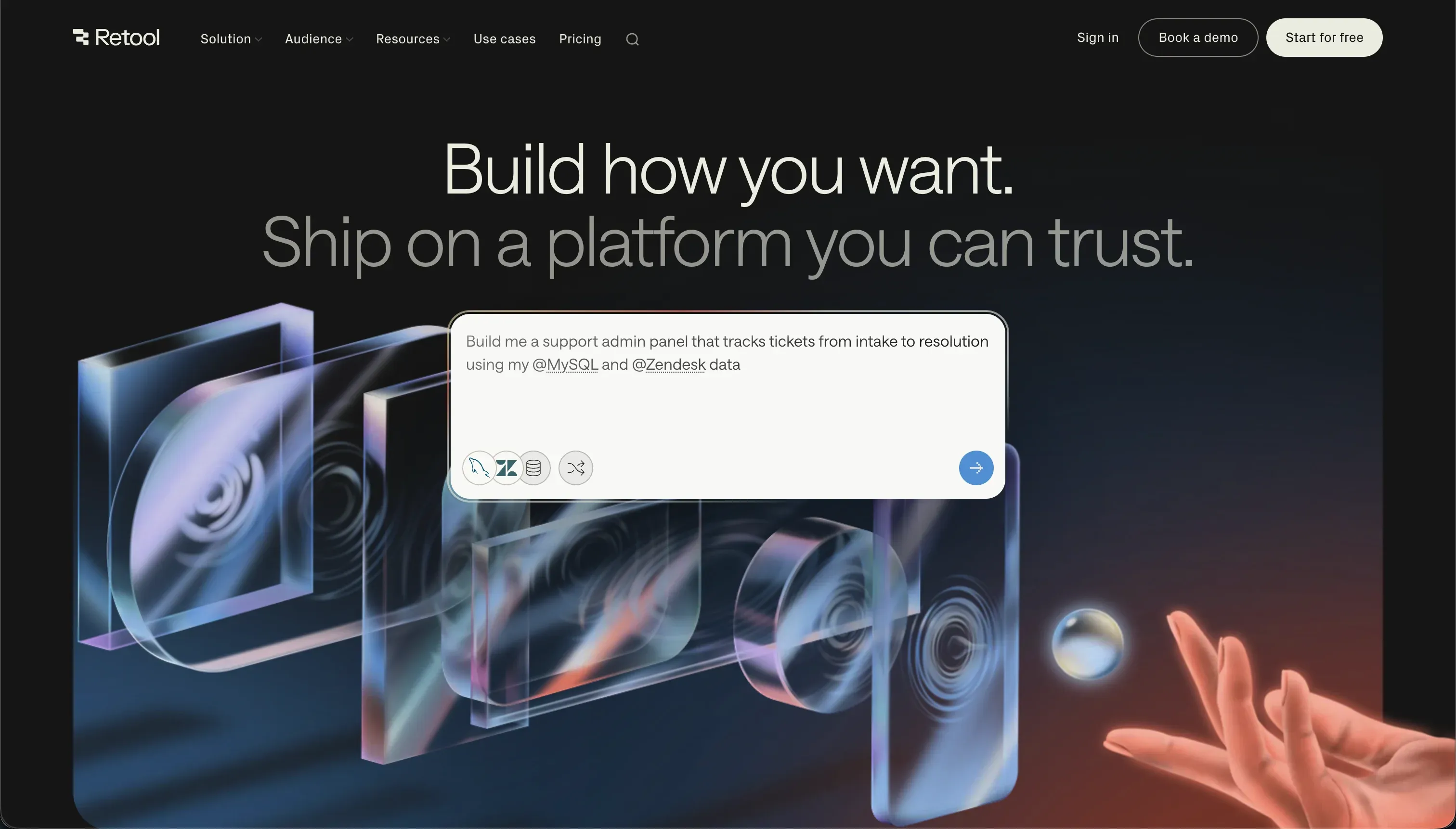 Retool homepage snapshot
Retool is the dominant option for engineering teams that need to construct back-office queues directly on databases. It scores a strong 8.5 in data & integrations because it natively reads, queries, and writes SQL databases, managed PostgreSQL, and customized developer APIs. You get version control and staging branches.
However, ease of build scores only 4.0 because Retool is not a no-code visual constructor. Every custom ticket routing action, form mapping, and data view demands scripting JavaScript and SQL queries. Do not buy if non-technical operations staff must maintain the desk without developer availability.
3. Glide - best for quick spreadsheet-powered tickets
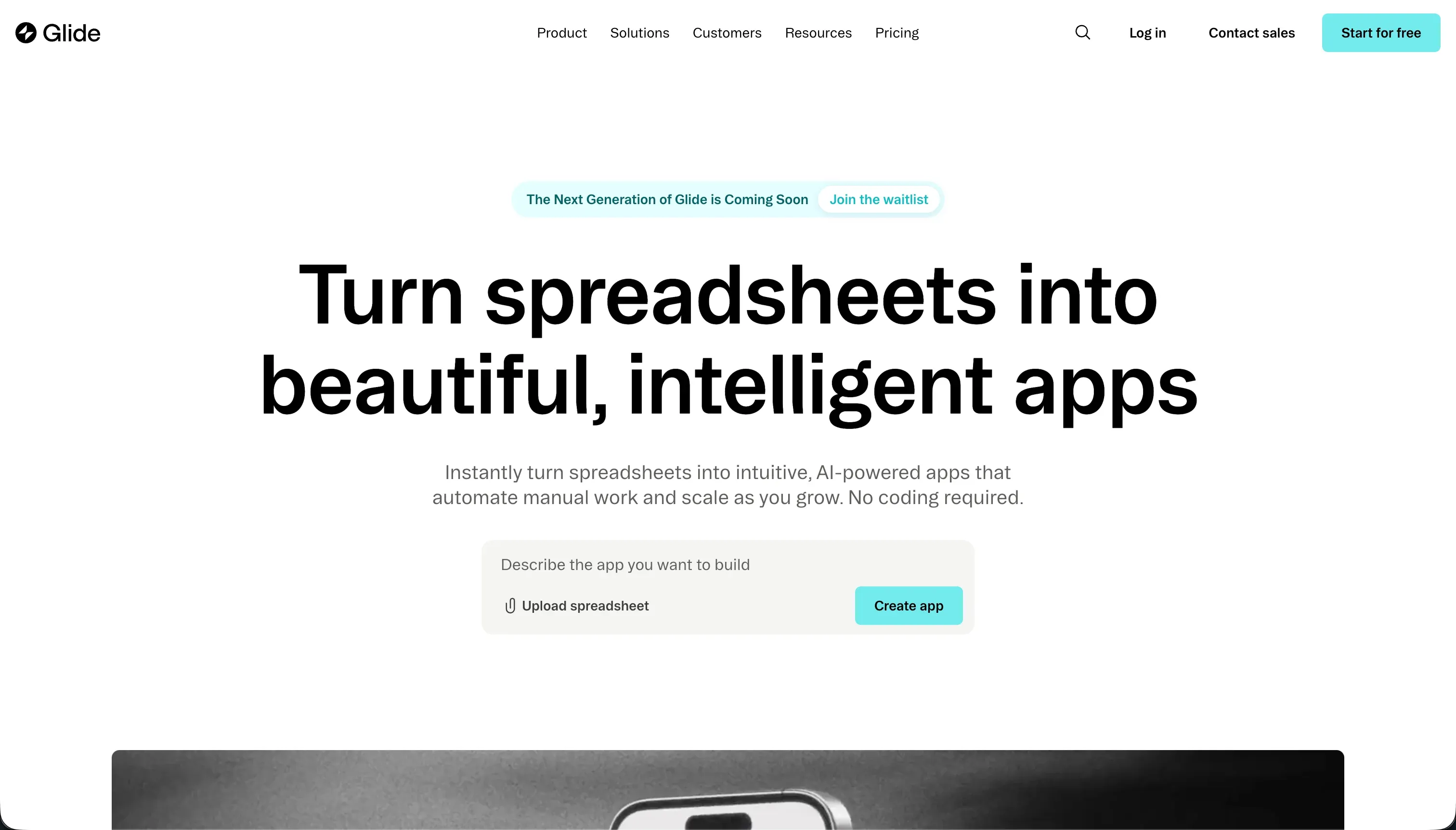 Glide homepage snapshot
Glide excels at converting simple spreadsheets into highly polished phone-responsive interfaces. It earns an ease of build score of 8.5, allowing teams to link Google Sheets or Airtable records and immediately generate a usable support grid. For field operators or mobile teams logging diagnostic tickets, the templates are fluid and easy.
Security & access control scores 5.5, which is sufficient for internal support agents but limits multi-tenant portal safety. Do not choose Glide if your help desk must scale beyond 100 external customers, as seat pricing quickly escalates.
4. Bubble - best for highly customized ticket routing
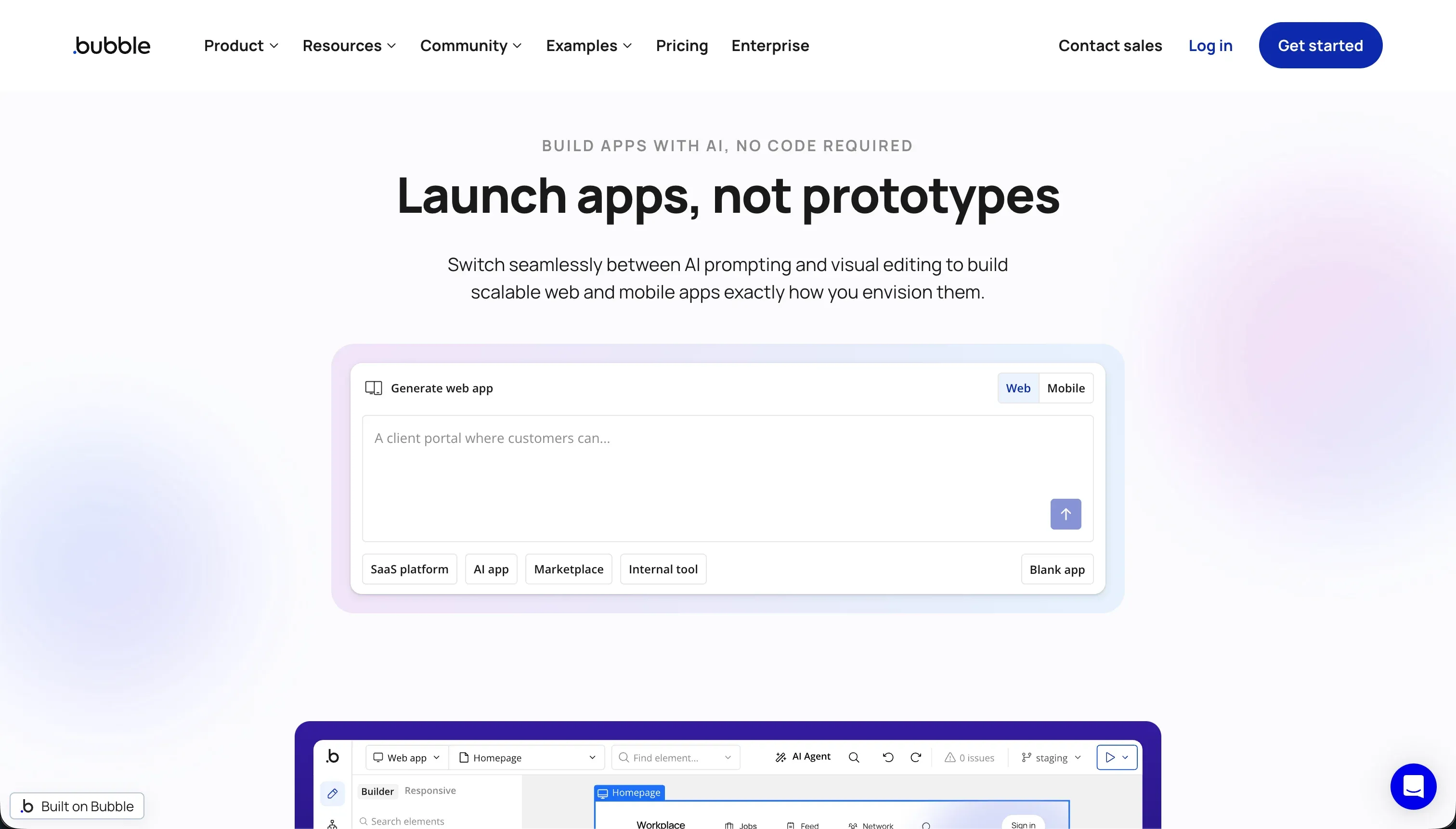 Bubble homepage snapshot
Bubble handles deeply complex software mechanics. By supporting pixel-level visual layout styling (design flexibility scores 8.5) and a visual relational backend, builders can configure custom multi-step task escalations, SLA warning clocks, and tailored notification alerts. However, ease of build scores 5.0 and security & access control scores 6.5.
You must engineer every login block, recovery link, and database privacy rule from scratch. Do not choose Bubble if your business wants to deploy an easy team workspace without managing technical setup and volatile usage-based billings.
5. Replit - best for custom code ownership
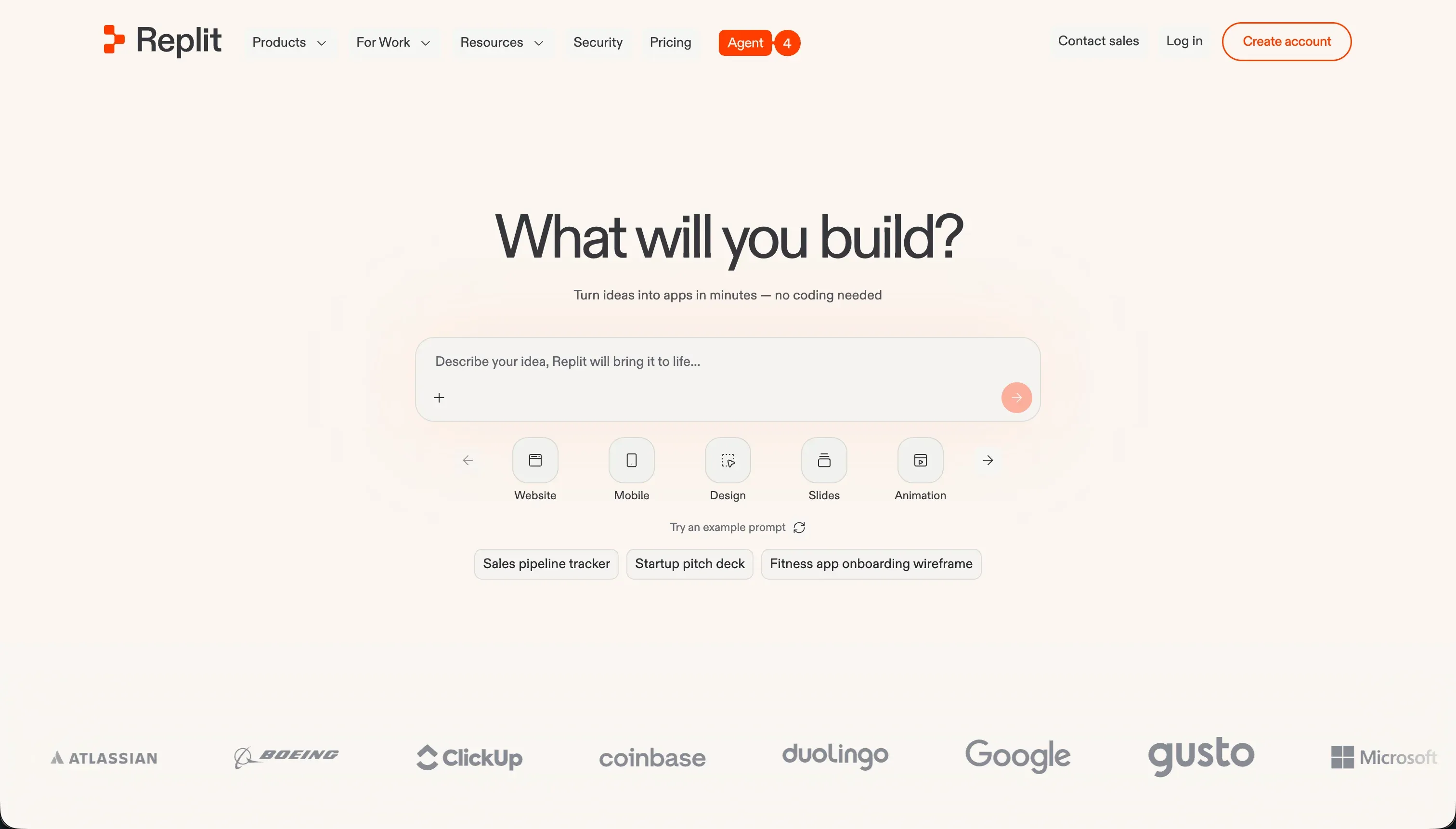 Replit homepage snapshot
Replit allows teams to construct help desk utilities using natural language prompts while retaining access to real, exportable code. Production readiness scores 8.0 with managed Postgres deployment and containerized hosting. Design flexibility scores 8.5, as code allows any visual interface.
However, security & access control scores 6.0 because permissions exist as raw server file syntax rather than a clean visual UI panel. Do not purchase Replit if your team has no software engineers on staff to maintain code-level dependencies or audit generative scripts.
6. Airtable - best for ticket logging on internal databases
Airtable is a powerful relational database with Interface Designer layered on top. Non-technical users can intuitively configure task schemas, views, and automations, yielding an ease of build score of 8.5. It works beautifully for logging internal hardware requests within a department.
The block drops to a security & access control score of 5.0 because it lacks granular, record-level permissions. You cannot safely put Airtable interfaces in front of external clients. Do not purchase as a customer-facing support desk.
How to Shortlist Platform Options
Choosing a help desk platform requires matching your team’s technical resources to their operational environment. Before initiating a build, you should define whether your users are internal operators, external clients, or both. For standard customer-facing portals with secure ticket intake and communication dashboards, you should shortlist Softr.
If your operations teams are fluent in SQL and need to link tickets directly with engineering databases, evaluate Retool. To review the exact standard used to grade these platforms, consult our methodology.
To view other relevant templates, browse our comparison of internal tools and our guide for customer support teams to focus your evaluation cycle.