




What Customer Support Software Actually Needs
Customer support teams live or die on response times, logical request routing, and data security. Building a custom support application - whether it is a client ticketing gateway, an internal help desk, or a customer-facing knowledge base - requires an app platform that prioritizes reliability over design animations. To find the right fit, we analyze candidate platforms across our six core criteria.
First, Ease of build determines how fast operations managers can configure ticket fields and request routing without waiting for IT engineering schedules. Second, Production readiness decides if user login portals, onboarding flows, and notification workflows function reliably from day one.
Third, Maintainability is key; a post-launch update - such as modifying ticket categories or shifting team roles - should not disrupt live client queues or lead to system regression loops. Fourth, Security & access control guarantees that Customer A can only see their own tickets, protecting sensitive client data at all costs.
Fifth, Data & integrations connects the system to existing customer databases, CRM tables, SMS services, or email pipelines. Finally, Design flexibility helps format clean, responsive ticketing forms on both desktop and mobile screens.
While design-heavy consumer layouts have their place, support systems prioritize operational security and data maintenance. Pre-configured authentication systems, row-level visual permissions, and reliable database structures decide which platforms succeed under real-world ticketing pressure.
The use-case comparison
| Platform | Overall | Advantage | Main reason to exclude it |
|---|---|---|---|
| Softr | 8.1 | Pre-built auth, user impersonation, visual row-level restrictions | No code export and visual styling limited to native block structures |
| Retool | 6.8 | Direct read-and-write database connections, prebuilt data UI blocks | Requires SQL and JS skills; expensive per-seat pricing for portals |
| Glide | 6.3 | Instantly turns spreadsheet lists into polished mobile support templates | Rigid layout controls, thinner page-level permissions, user count limits |
| Bubble | 6.8 | Extremely deep visual logic workflows and customizable interfaces | Long learning curve, lock-in on proprietary runtime, variable utility pricing |
| Airtable | 6.3 | Approachable relational schemas for quick internal ticket tracking | Base-only access limitations, lack of mobile layouts, expensive guest packs |
| Replit | 7.4 | Real exportable code with autonomous AI generation and deployment | No drag-and-drop builder; requires technical dev labor to maintain |
1. Softr - best overall for support portals and knowledge bases
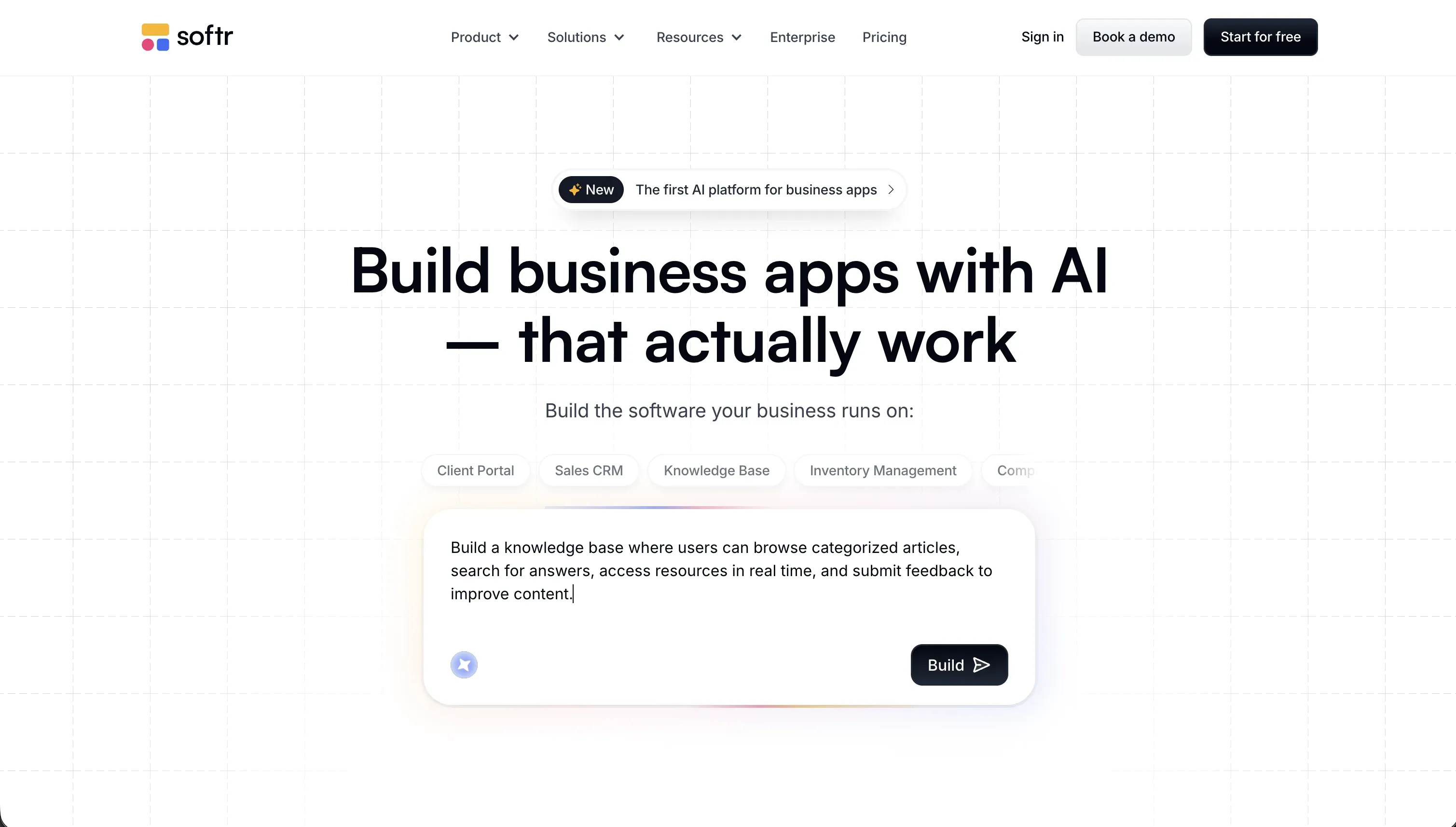 Softr homepage snapshot
For teams launching customer-facing tools, Softr ranks first because the baseline requirements of a support portal ship natively on the platform. It scores 8.5 for production readiness and 8.5 for security and access control because user login pages, magic link invites, and row-level visual user permissions are built as visual toggles rather than prompted code.
Teams can configure distinct views where customers manage active tickets, agents review queues, and managers track performance. Maintainability scores 9.0 since updating an assignment rule or ticket layout is a visual setting change rather than a code rebuild. Softr is particularly strong for hosting customer resources, as detailed in our guide on the best knowledge base apps.
The primary limit is design flexibility at 5.5, meaning you compose your portal from native, responsive block templates rather than freeform layout canvases.
- Login pages, magic link invites, row-level permissions built in
- Customer, agent and manager views from toggles
- Edits are visual settings, not code rebuilds
- 8.5 production readiness, 8.5 security and access
- Scored 5.5 for design flexibility
- Portal composed from native block templates
- No freeform layout canvas
2. Retool - best for engineering-led internal dashboards
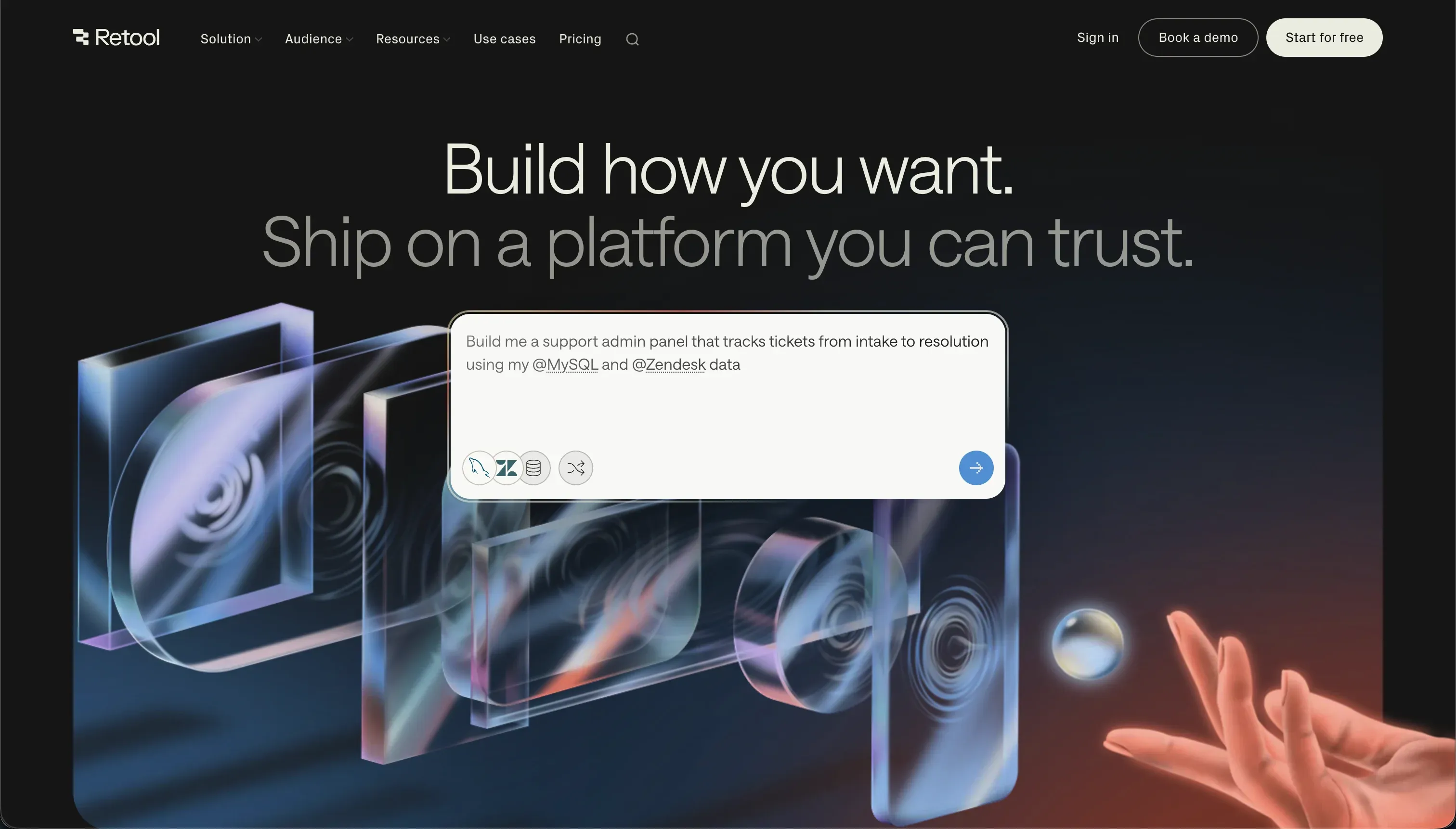 Retool homepage snapshot
Retool is the dominant choice for internal support engineering, but is a poor match for consumer-facing help desks. It scores a stellar 8.5 on data and integrations because it reads and writes directly to raw enterprise SQL databases and GraphQL APIs. This technical access makes it the ideal platform to build internal database tools and ticket control interfaces for technical support engineers.
However, its ease of build scores a low 4.0; there is no simple on-ramp for non-technical support managers since connecting fields and designing actions requires coding SQL scripts and JavaScript. Security and access control scores 7.5, reflecting SSO features on premium tiers, but setting up secure external client gates is not visually automated, and seat-based licensing gets expensive at portal scale.
3. Glide - best for spreadsheet-backed support utilities
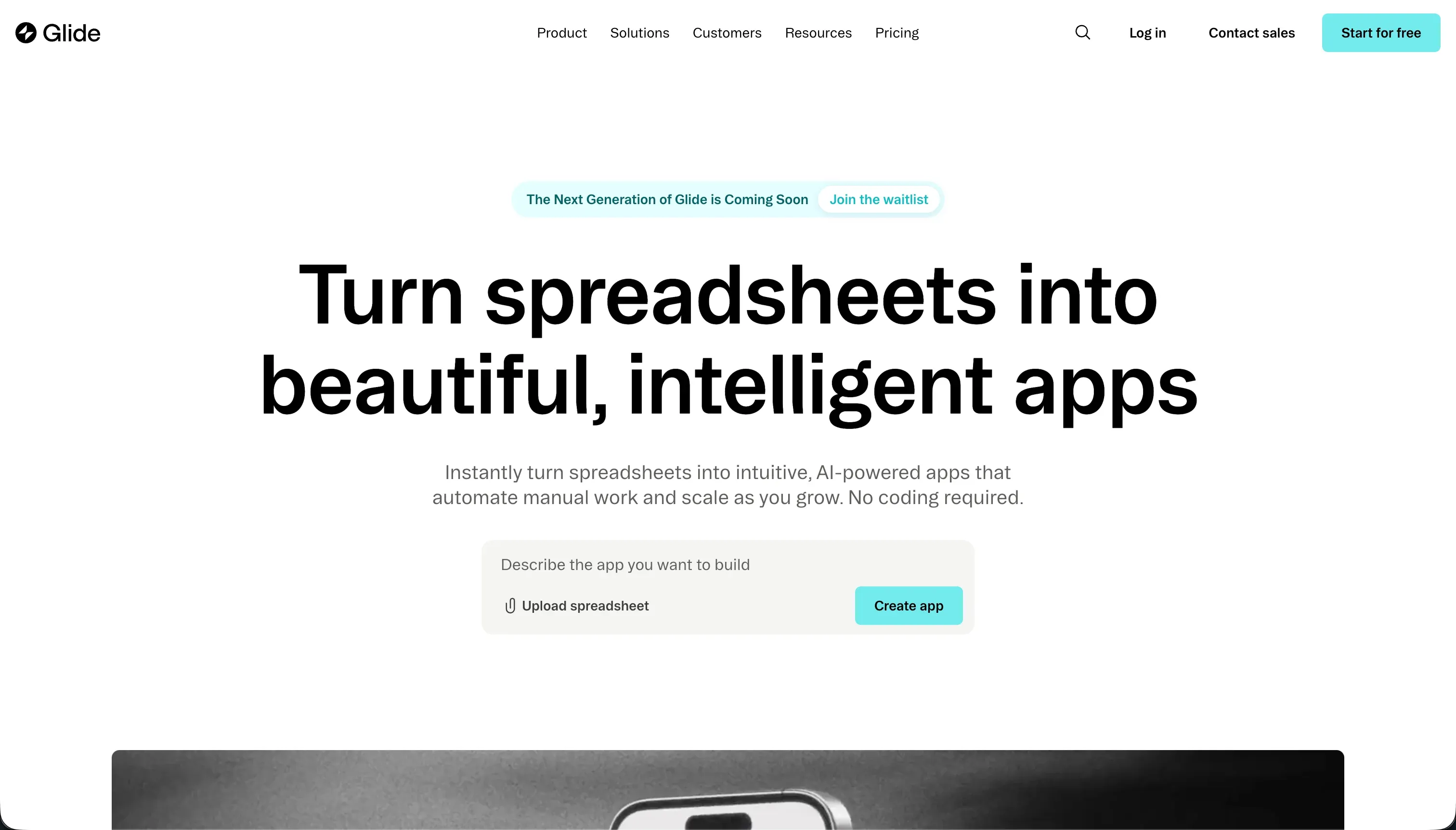 Glide homepage snapshot
If your team tracks operational support data in Google Sheets or Excel, Glide provides an incredibly fast path to a functional interface. Ease of build scores 8.5 because the platform instantly maps structural columns into mobile-first tables, lists, and forms. It is a fantastic tool for agents in the field resolving tickets on mobile devices.
However, design flexibility scores 4.0 because you are locked into the platform’s opinionated visual templates. Security and access control scores 5.5 because row-level portal configurations are thinner than on application-first platforms. Furthermore, per-user scale caps quickly, making Glide less viable once the portal must expand to serve hundreds of external clients.
4. Bubble - best for bespoke logic and complex ticking rules
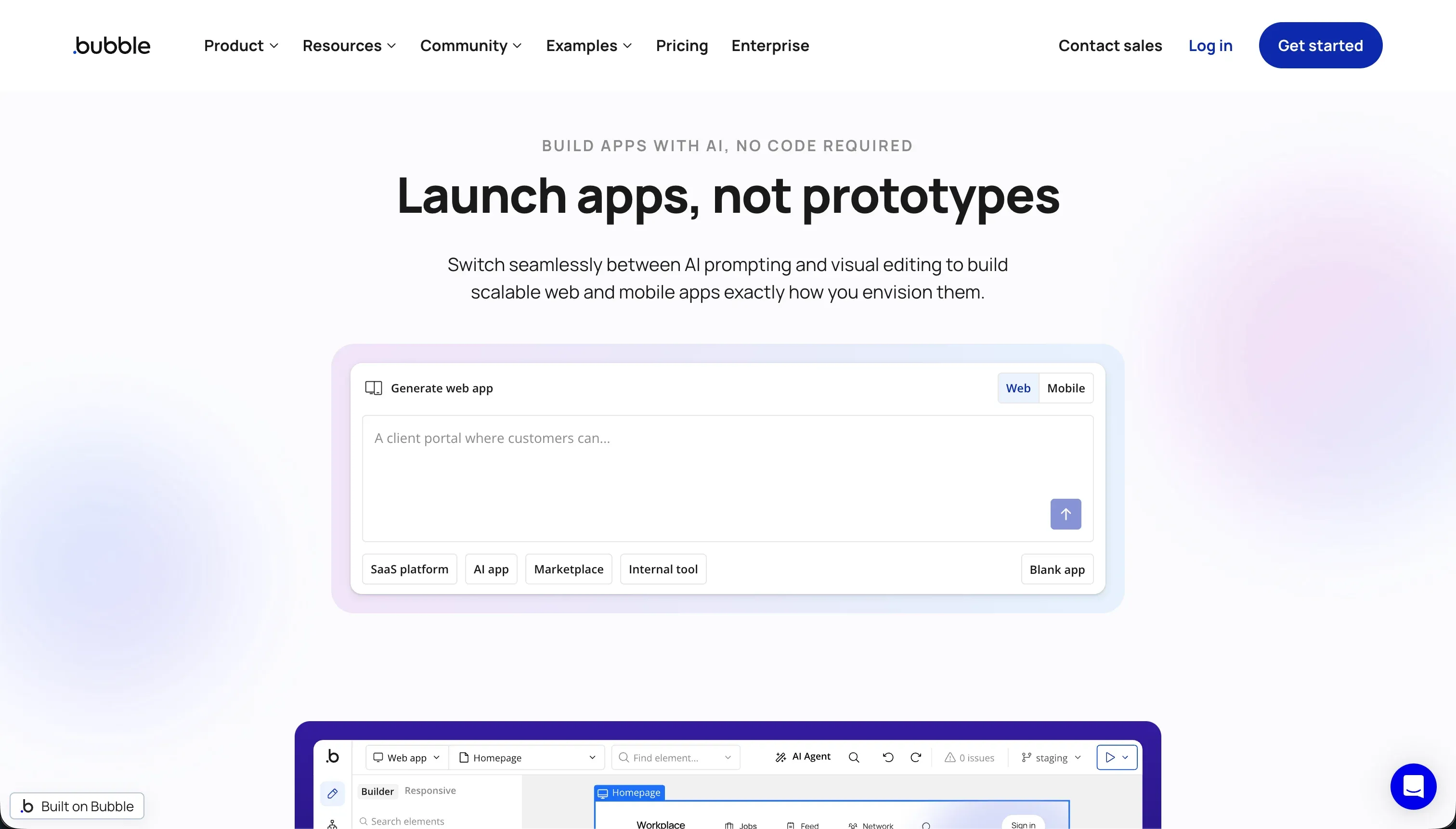 Bubble homepage snapshot
Bubble is highly capable if your support application requires complex logic loops, such as automated matching rules, SLA breach escalations, or custom conversational logic. Design flexibility scores 8.5 due to a pixel-level visual layout engine, and data and integrations scores 8.0 with a visual relational database and deep API connectors.
The tradeoff is complexity: ease of build scores 5.0, and security and access control scores 6.5 because configuring server-side database privacy rules is entirely manual and easy to misconfigure. Maintenance scores 6.0 as complex portals accumulate logic sprawl and run on volatile usage-based pricing models.
5. Airtable - best for internal back-office queue tracking
For back-office ticket tracking, Airtable offers an intuitive relational database environment with a spreadsheet feel. It scores 8.5 for ease of build and 8.0 for data and integrations, making schema structure changes simple for non-technical admins.
However, as an application layer, design flexibility scores 4.0 as its Interface Designer is rigid, desktop-centric, and always carries platform branding.
Production readiness scores a low 5.5 because it lacks native customer onboarding and login screens. For multi-tenant external support, it is best to pair Airtable’s database with a dedicated frontend layer like Softr, as covered on our page for the best client portals.
6. Replit - best for code-first teams seeking full ownership
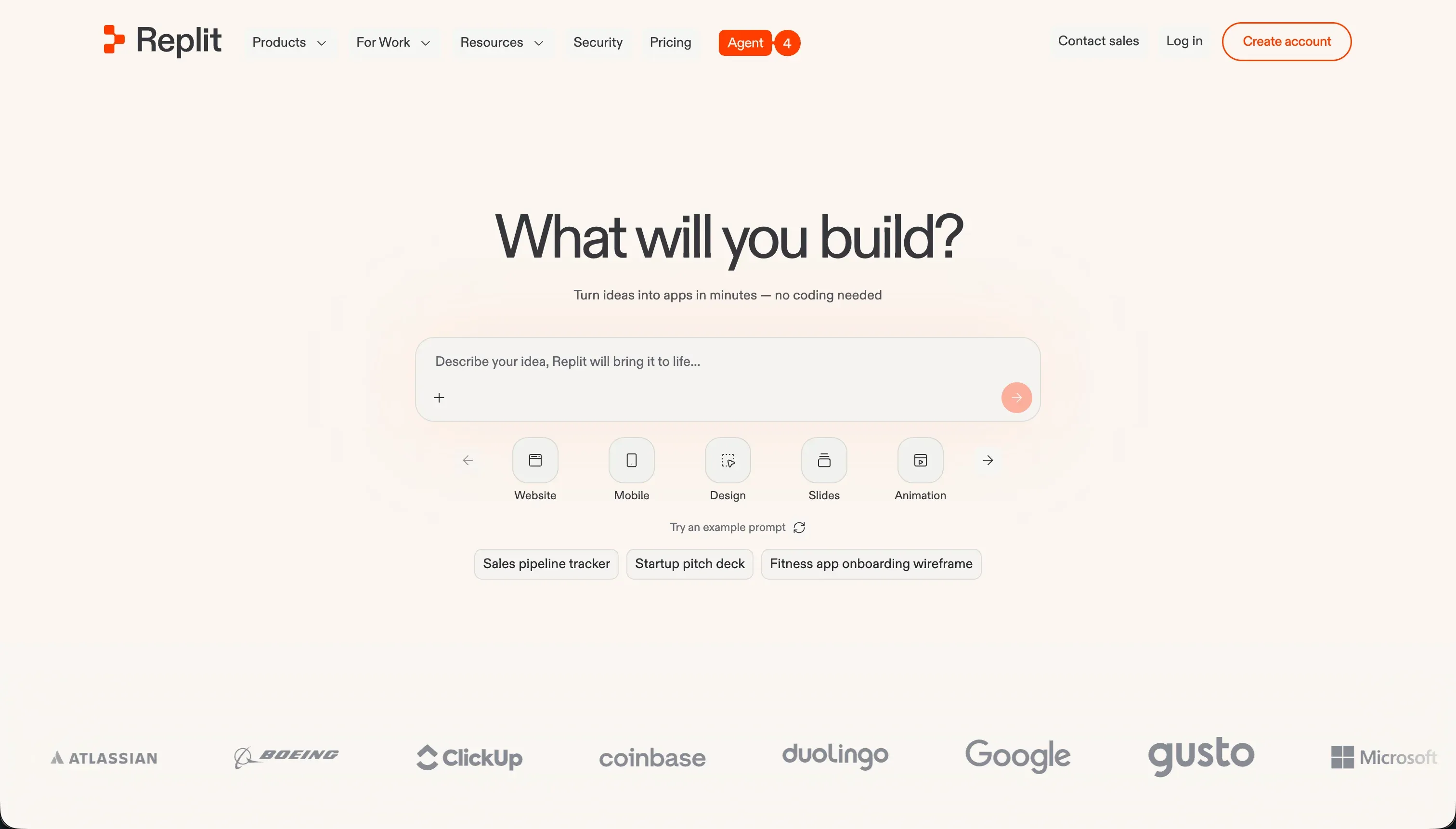 Replit homepage snapshot
If you have developer resources and require full code ownership, Replit is a strong code-first route. The Agent drafts real, version-controlled code on managed infrastructure, scoring 8.5 for design flexibility and 8.0 for production readiness. This lets you build custom interfaces and server workflows without visual constraints.
However, security and access control scores 6.0 and maintainability scores 7.5. Because permissions, routing middleware, and database schemas live in raw code rather than a visual console, verifying security rules requires code audits. Managing circular AI debugging loops can also cause credit costs to spike unpredictably.
How to Shortlist and Run the Support App Pilot
To build a successful customer support solution, choose two platforms to pilot. If you need a secure, brand-aligned hub where customers can log tickets and browse help articles, shortlist Softr as your primary visual option alongside Airtable as an internal queue manager.
For a detailed breakdown of support system components, read our analyses of the best help desk apps and how to map database structures. If your team is developer-focused and wants custom infrastructure, pair Replit with Retool. Pilot your selection by creating a test ticket dataset, setting up separate agent and client security roles, and processing a support submission.
To see the full breakdown of how we score these platforms, read our standard methodology.