



What a partner portal actually needs
A partner portal is a high-stakes operational touchpoint. Unlike internal business applications, external portals are client-facing software environments where partners register qualified sales leads, access marketing collateral, track shared pipelines, and download confidential agreements.
Success in this category requires prioritizing the visual administration of data isolation over generic design freedom. Our evaluations map partner portal success to our six core evaluation criteria.
First, security & access control is the absolute priority. A partner from Firm A must never see leads or client contracts belonging to Firm B. This requires secure, server-side permissions that run at the database level rather than simple visual filters in the browser.
Second, production readiness dictates that authentication, password recovery, Google sign-in, and onboarding workflows work immediately without requiring custom code configurations that could fail under load. Third, data & integrations limits decide how easily you can link the portal to your existing HubSpot CRM, sales databases, or documents.
Fourth, maintainability is the critical day-two question: changing a partner visibility rule or adding a custom form field should be a simple visual setting tweak, not a multi-week engineering project that breaks existing layouts.
While design flexibility matters for visual agency branding, and ease of build dictates how fast your team can launch an MVP, they are secondary to operational safety. For this reason, our scoring system heavily weights security rules, infrastructure stability, and scalable pricing that does not penalize you as you add guest users.
The use-case comparison
| Platform | Overall | Advantage | Main reason to exclude it |
|---|---|---|---|
| Softr | 8.1 | Pre-built roles, visual permission verification, instant safe deployments | No code export and restrictive block-based layout boundaries |
| Replit | 7.4 | Real version-controlled code, no template restrictions, direct API limits | Requires code-level maintenance and has variable agent billing |
| Bubble | 6.8 | Deep visual workflow conditional branches, flexible native database | Dense conceptual learning curve and unpredictable workload pricing |
| Glide | 6.3 | Scaffolds fast phone-first visual layouts from spreadsheets | Punishing seat-based pricing model at scale and thin permissions |
| WeWeb | 6.2 | Advanced CSS control and clean developer-focused code export | No built-in database or native authentication manager |
| Airtable | 6.3 | Easiest intuitive relational schema editor for operations teams | Restricted base permissions and expensive guest seat packages |
1. Softr - best governed partner portal builder
 Softr homepage snapshot
For teams launching external business portals, Softr ranks first because the operational checklist is native to the platform. Authentication, dynamic user groups, and row-level data security are packaged as platform infrastructure rather than generated code.
The platform scores an 8.5 on production readiness and a 9.0 on maintainability, allowing operations managers to configure lead intake workflows and collateral repositories without developer intervention. Designers can utilize a centralized global theme engine to deploy partner apps, while IT administrators use preview impersonation to verify exactly what Firm A or Firm B sees with a single click.
Do not buy if your exit plan requires self-hosting or code export: the layout CEILING is real, and apps are composed of pre-built blocks.
2. Replit - best agentic development environment
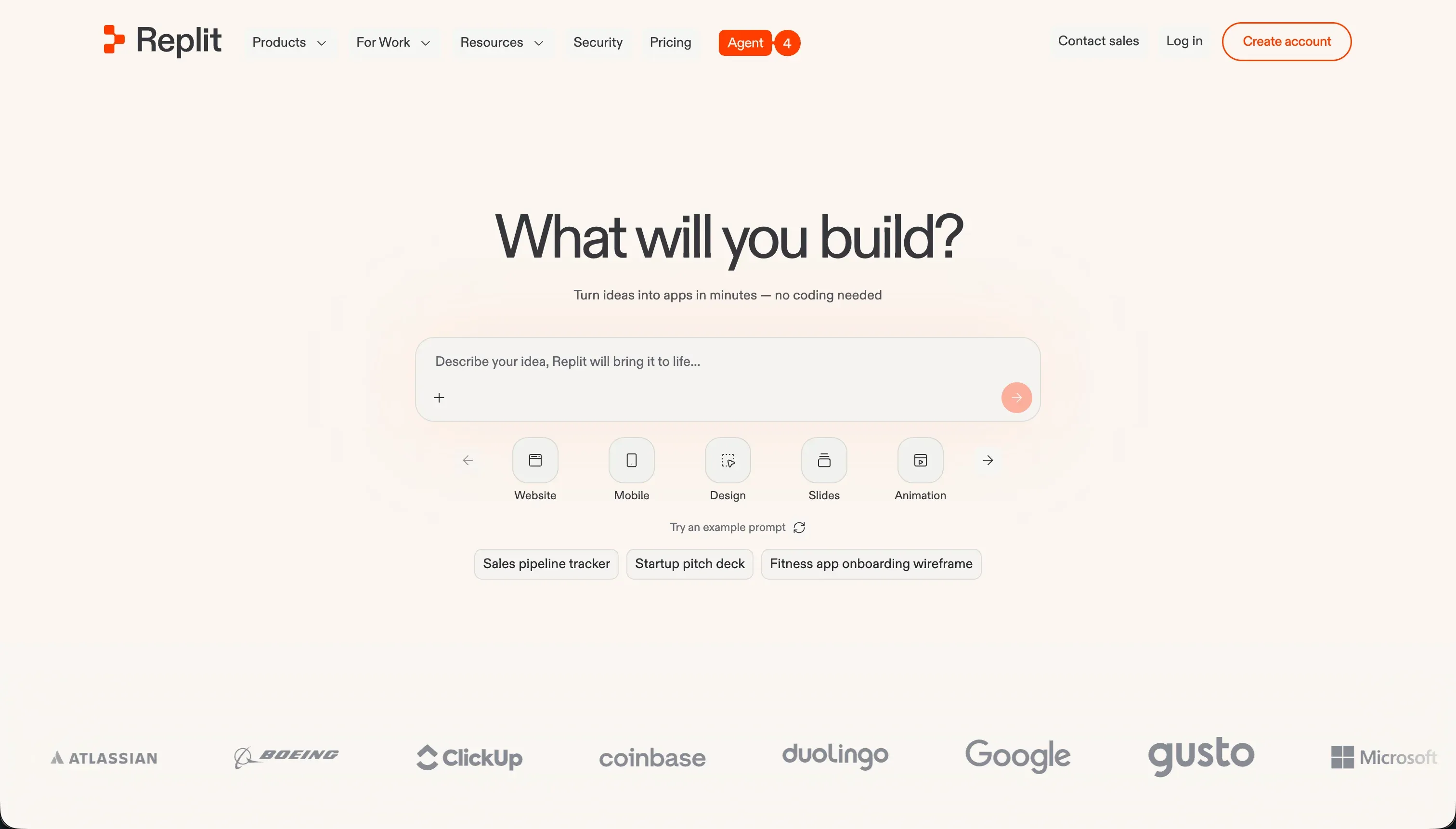 Replit homepage snapshot
Replit is the strongest option for software teams that refuse to accept platform lock-in. The Replit Agent builds and deploys partner portals as real, version-controlled repository code, earning an 8.5 for design flexibility and an 8.0 for production readiness. It supports managed SQL databases, secrets management, and custom domain hosting out of the box.
However, because security & access control scores 6.0, verifying that your lead registration and pipeline separation rules are secure requires engineers to perform code audits rather than toggling visual dashboards. Do not purchase this tool if your company lacks dedicated technical personnel to debug runtime alerts or manage unpredictable effort-priced billing loops.
3. Bubble - best for intricate conditional logic
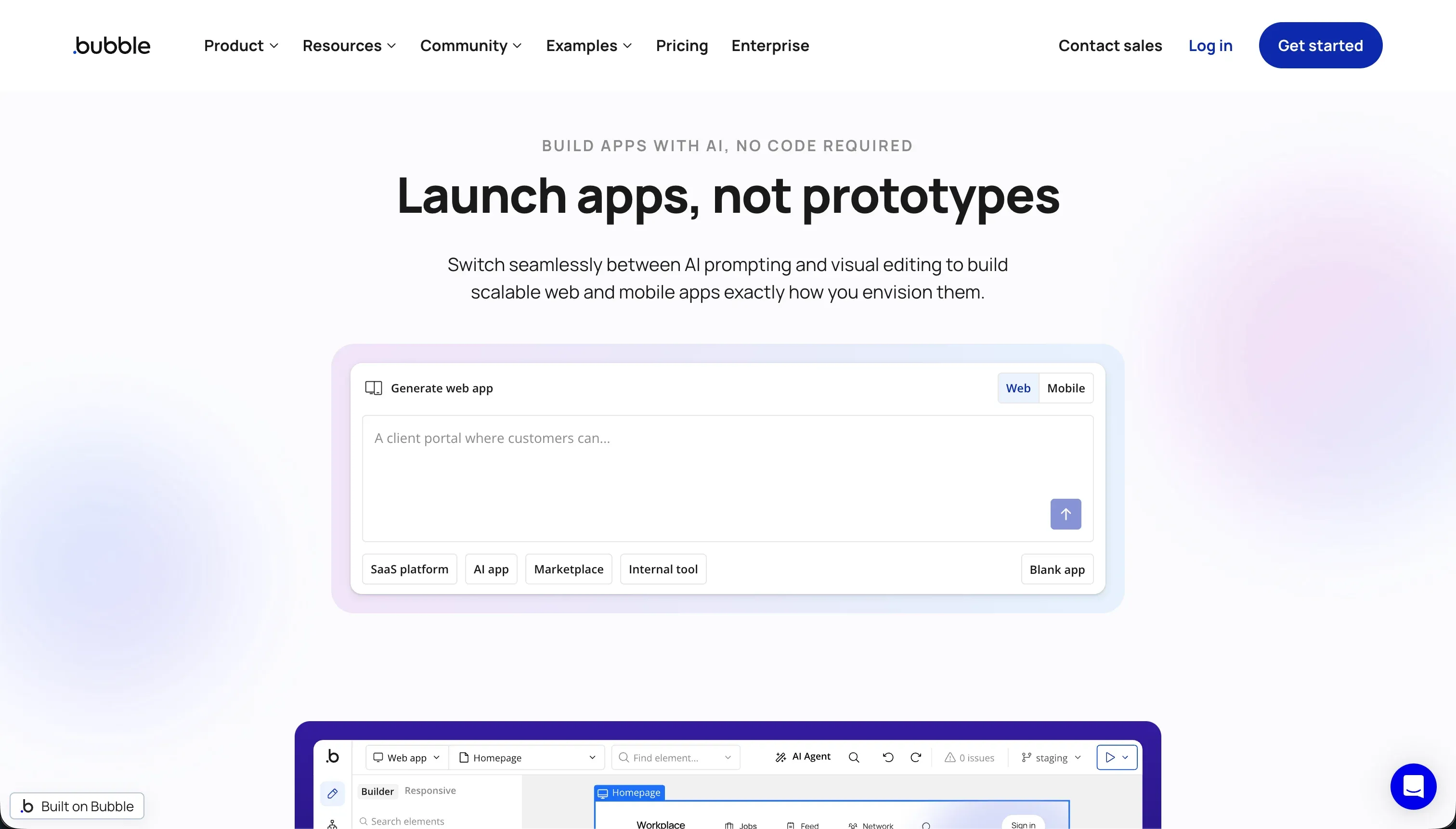 Bubble homepage snapshot
Bubble excels when your enablement portal requires deeply tailored transactional logical pathways. The tool scores an 8.5 on design flexibility and an 8.0 on database capability, giving visual developers pixel-perfect alignment grids, custom workflows, and scheduled backend events.
However, ease of build scores a 5.0, reflecting a steep technical barrier where server-side privacy rules require developer-like execution to prevent security leaks. This complexity extends to a maintainability score of 6.0, as large systems accumulate workflow sprawl and run on volatile workload unit rates. Do not select this platform if you want a fixed monthly operational cost or an exportable standalone codebase.
4. Glide - best for small mobile field sales
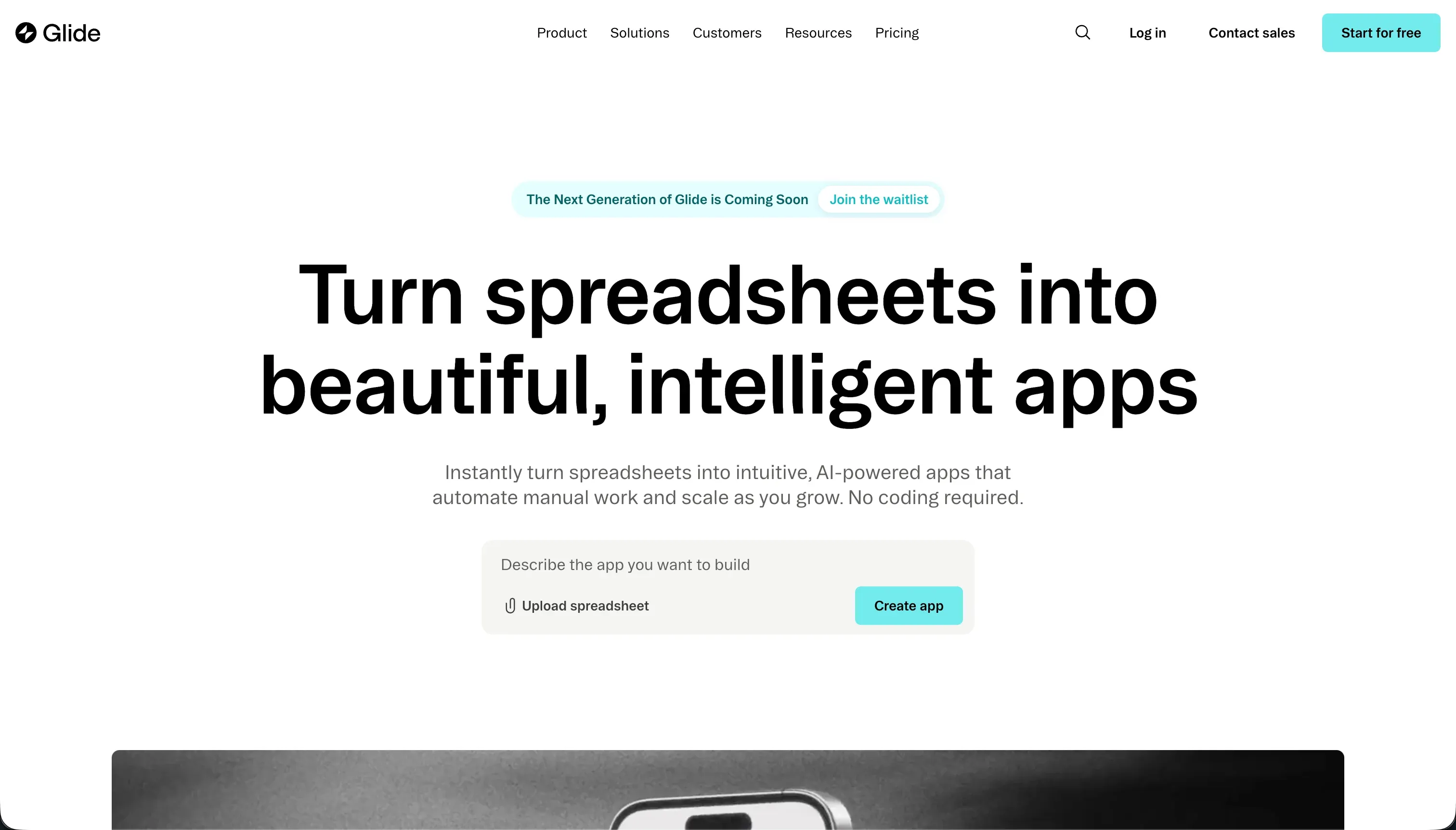 Glide homepage snapshot
Glide turns spreadsheet rows into clean, mobile-first business tools faster than almost any competitor. Scoring an 8.5 on ease of build, it maps Google Sheets or Excel tables directly into responsive dashboards, maps, and forms. This is ideal for field partners log-in to update inventory or submit distributor notes.
The tradeoff appears on security & access control, where it scores a thin 5.5, indicating a model less suited for complex partner segmentation. Design flexibility scores 4.0, forcing your builders to adopt Glyde’s brand template patterns. Do not choose Glide if your user base scale holds hundreds of external contacts, as the per-seat pricing becomes highly cost-prohibitive.
5. WeWeb - best visual frontend for custom databases
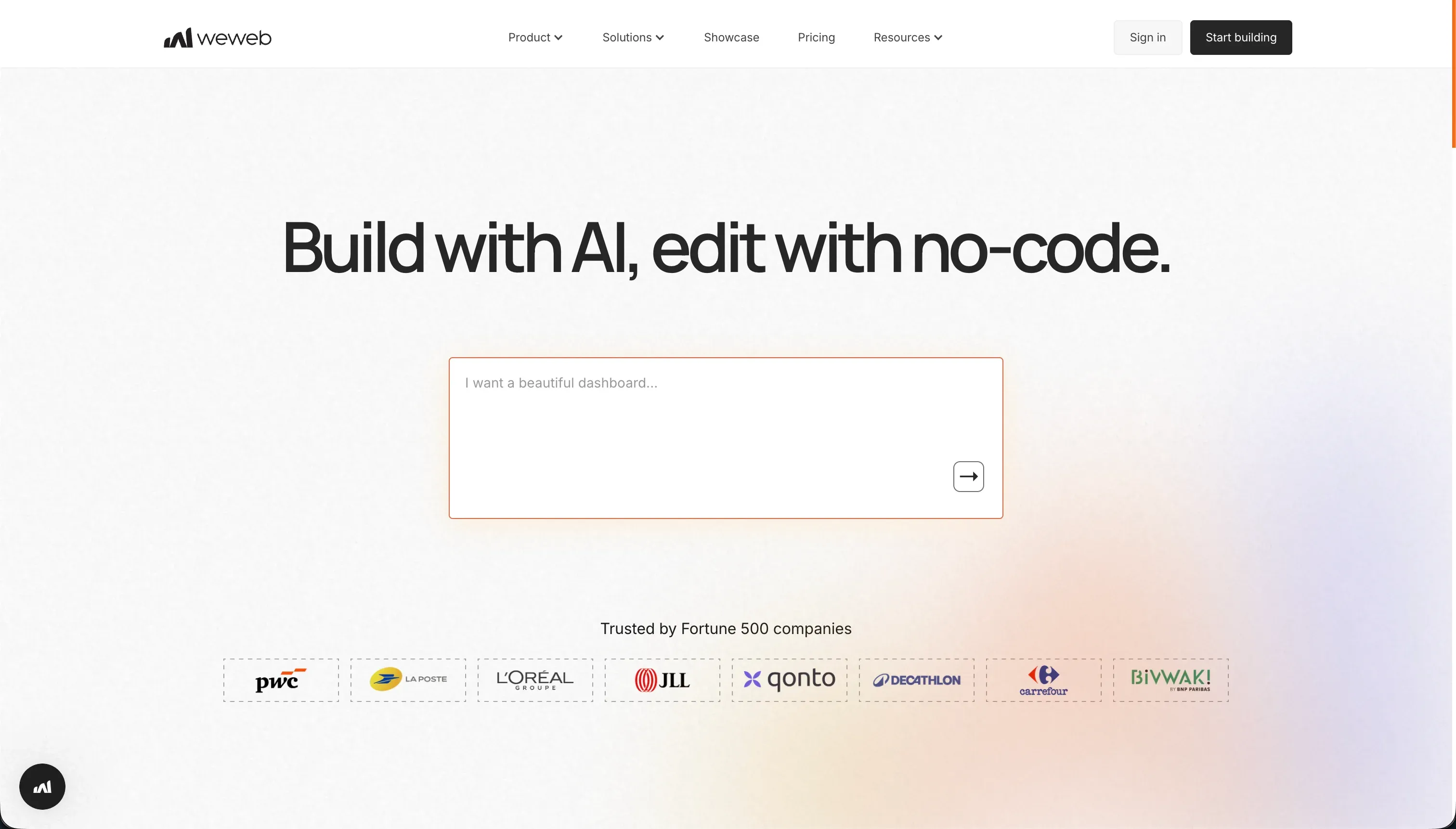 WeWeb homepage snapshot
WeWeb provides a visual layout engine with an outstanding 8.5 score for design flexibility, paired with standard CSS custom positioning controls. It is highly valued because it exports clean Vue.js files, offering an exit path from hosting platforms. However, WeWeb provides zero native data storage, meaning ease of build scores a 4.0.
Your builders must configure and fund a separate developer database like Supabase to run your application workflows. Because security & access control scores 5.5, validating that lead tables stay isolated requires managing API token validations manually. Do not purchase if your business wants a simple, unified, all-in-one portal creator.
6. Airtable - best relational database organizer
Airtable is the gold standard for operations departments mapping data relationships, scoring an 8.5 for ease of build and an 8.0 for data & integrations. The Interface Designer lets you build basic dashboards on top of live spreadsheet-like schemas. However, production readiness scores a low 5.5 for applications because the interface lacks client login flows and mobile-responsive scaling.
Security & access control scores 5.0, as permissions are set at the base level rather than the record level. Do not build an external distributor or reseller portal natively within Airtable: seat costs scale extremely fast, and secure row-level client segregation is difficult to manage visual controls on directly.
How to select your partner portal shortlist
Selecting the right portal builder depends heavily on your team’s access to developer resources. If your primary requirement is a secure, brand-aligned partner workspace that integrates with CRM data, we recommend starting your validation with Softr, as its visual user groups and server-side logic provide safety right out of the box.
For teams that prioritize absolute code ownership and have engineers capable of running script reviews, a code-first deployment tool like Replit remains the superior architectural route.
To see how these options scale across different operational requirements, you can read our comparison guide on directories or research vendor and partner portals.
We advise piloting each shortlisted solution by constructing a simple lead registration form and testing it with a single test account to trace how permissions restrict record visibility. Review our full scoring system on our primary methodology page.