



What a Membership and Community App Actually Demands
Building a custom directory or membership platform is fundamentally different from designing a standard website. Users must log in, search for peers, access conditionally gated resources, and update profiles, all on the same secure database. To evaluate the category, we map this use case to our six scoring criteria.
First, Ease of build determines how fast you can launch a functional community directory without getting bogged down in environment setup. Production readiness measures the reliability of the login flows, onboarding steps, and critical web utilities.
Maintainability is the decisive factor for day-two operations, deciding if updating a member profile schema or adding a new membership tier will break existing workflows or require resetting application code. Security & access control is the absolute baseline of any community platform, as it protects member email addresses, phone numbers, and gated content from unauthorized client-side access.
Data & integrations dictates how well the platform handles relationships between members, courses, events, and billing, while Design flexibility determines your ability to match precise brand styles or scale down to mobile screens. For this category, security, maintainability, and data complexity carry the purchase decision.
While design flexibility is excellent for creative brands, a community portal ultimately lives or dies on whether users can securely interact with private data.
The use-case comparison
| Platform | Overall | Advantage | Main reason to exclude it |
|---|---|---|---|
| Softr | 8.1 | Built-in user groups, passwordless logins, row-level data security, and flat-rate pricing tiers. | No source code export and UI is constrained to pre-built, template-based visual blocks. |
| Bubble | 6.8 | Highly flexible custom workflow logic, pixel-precise canvas design, and an extensive plugin store. | Volatile workload-unit billing and a steep visual engineering learning curve. |
| Glide | 6.3 | Beautiful, mobile-friendly interface components generated almost instantly from existing sheets. | Strict layout templates and aggressive pricing limits on sharing with external users. |
| WeWeb | 6.2 | Full CSS layouts with flexbox, staging environments, and exportable frontend view code. | No built-in storage database, requiring a separate back-end tool and API setup. |
| Replit | 7.4 | Managed PostgreSQL server, autonomous AI agent building, and absolute code ownership. | Requires technical developer expertise to inspect and test agent-written authentication code. |
| Airtable | 6.3 | Intuitive relative database, formula functions, and real-time structured data views. | Highly restricted visual design options and very expensive per-collaborator seat policies. |
1. Softr - best for gated resources and member directories
 Softr homepage snapshot
Developing a community with Softr feels incredibly efficient because the necessary portal infrastructure has already been written. It scores an outstanding 9.0 on maintainability and an 8.5 on security & access control because authentication methods, dynamic member directories, and row-level visual permissions ship as native toggles.
You do not have to prompt an AI to create a password reset page or configure complex database policies to hide sensitive contact details. Instead, you deploy role-based visibility down to individual pages, blocks, and forms, verifying what each membership tier sees using the preview impersonation utility.
Softr Databases handle relational members, payouts, and access logs securely with low latency because connections run server-side. However, the design flexibility score of 5.5 is a true visual limit; you cannot design custom freeform layouts or absolute-position interfaces.
Exclude Softr if your community demands heavily custom, pixel-perfect layouts, or if you must distribute native mobile applications in the Apple App Store.
- Auth and member directories as toggles
- Row-level visual permissions
- Role-based visibility on pages, blocks, forms
- Server-side relational Databases
- Preview impersonation per tier
- Design flexibility scores 5.5
- No custom freeform layouts
- No absolute-position interfaces
- No native mobile apps
2. Bubble - best for custom community logic and interactive platforms
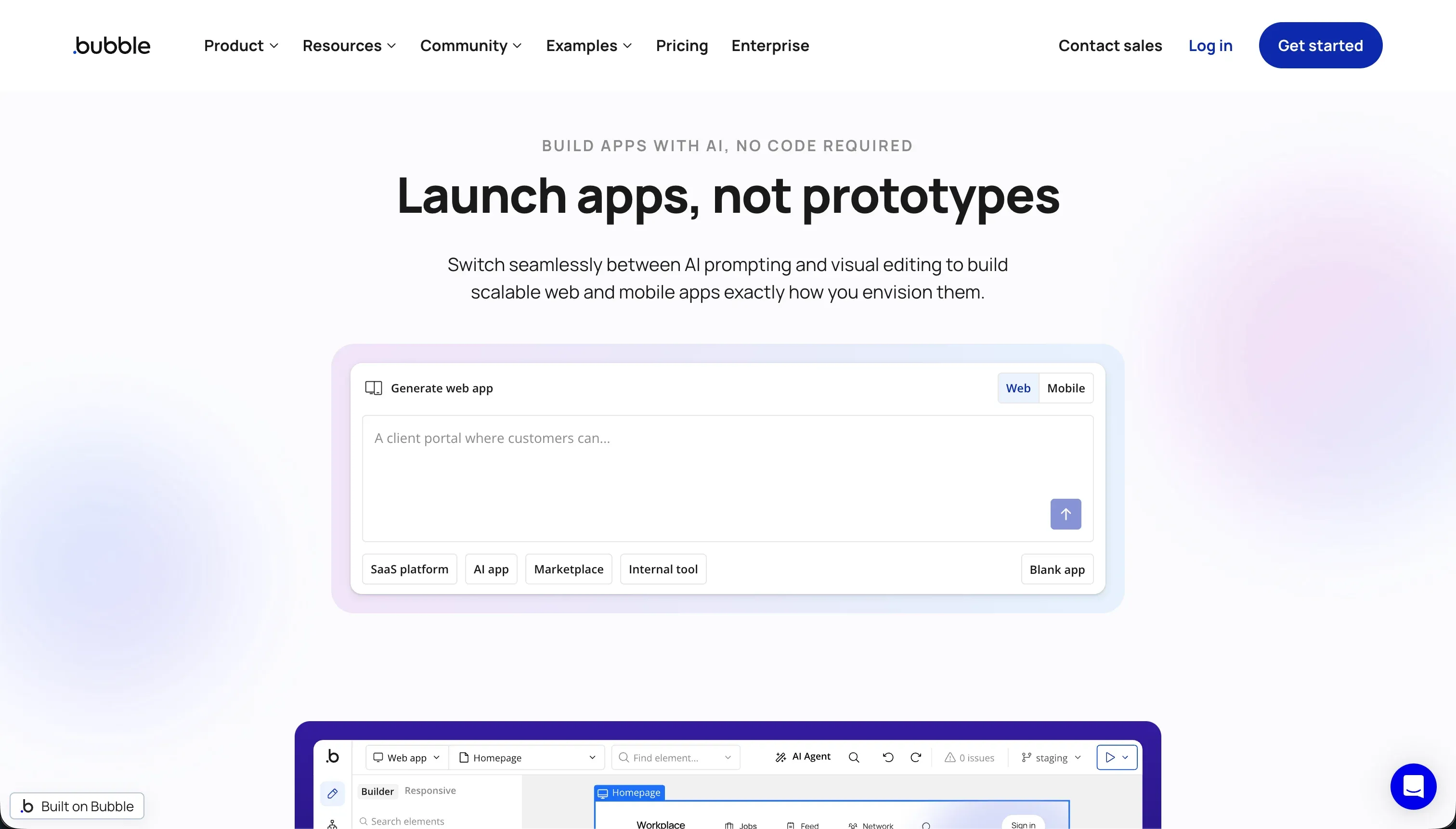 Bubble homepage snapshot
Selecting Bubble is the logical choice when your community platform requires bespoke visual structures or unusual user interactions. Its design flexibility scores an 8.5, granting builders pixel-level spatial layout control and responsive spacing setups.
The platform natively implements a relational database with custom data types, scoring an 8.0 on data & integrations, and features a visual workflow engine that handles complex scheduled events or custom checkout flows. Unfortunately, ease of build scores a 5.0 due to a steep learning curve; making a secure app requires developer-like conceptual understanding.
Security & access control scores a 6.5, meaning if you fail to configure database privacy rules manually, public users can access sensitive database fields. Exclude Bubble if you are working within a strict, predictable operating budget, as the workload-unit pricing model can cause sudden billing spikes from unoptimized queries.
3. Glide - best for small spreadsheet-backed membership spaces
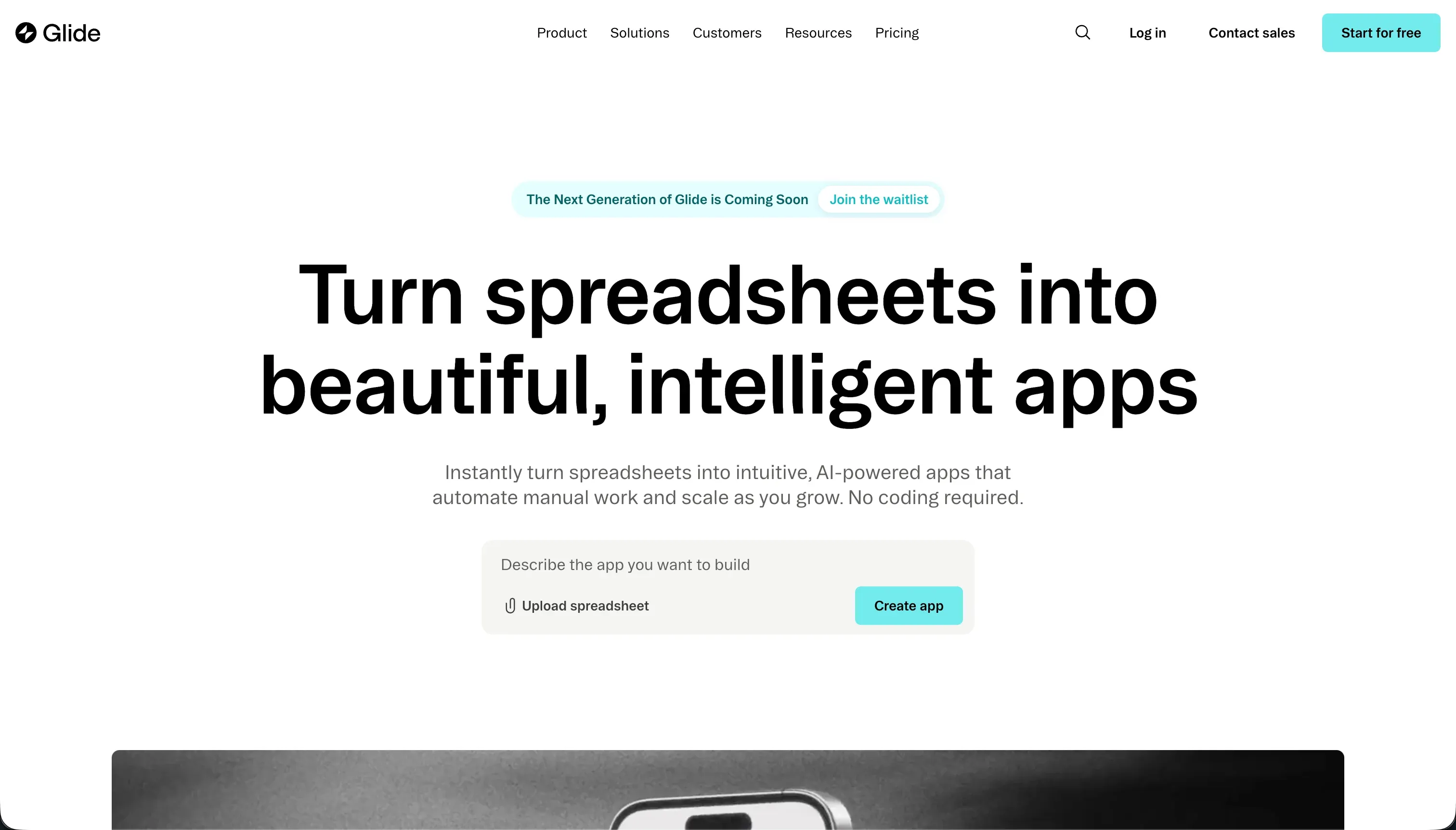 Glide homepage snapshot
When your member list already exists in a spreadsheet, Glide provides an incredibly fast path to launch. It scores an 8.5 on ease of build because it translates columns from Google Sheets, Airtable, or its own Glide Tables into highly polished, mobile-optimized cards and list components. The design is clean, accessible, and responsive by default.
However, design flexibility scores a 4.0 because you are confined to Glide’s pre-made layout templates. Security & access control scores a 5.5, indicating that detailed multitenant permissions or complex external security rules are difficult to build.
Exclude Glide if you anticipate scaling your community past 100 members; its per-user pricing structure scales terribly for external client-facing portals, forcing you onto expensive enterprise pricing contracts.
4. WeWeb - best for developer-led custom frontend layouts
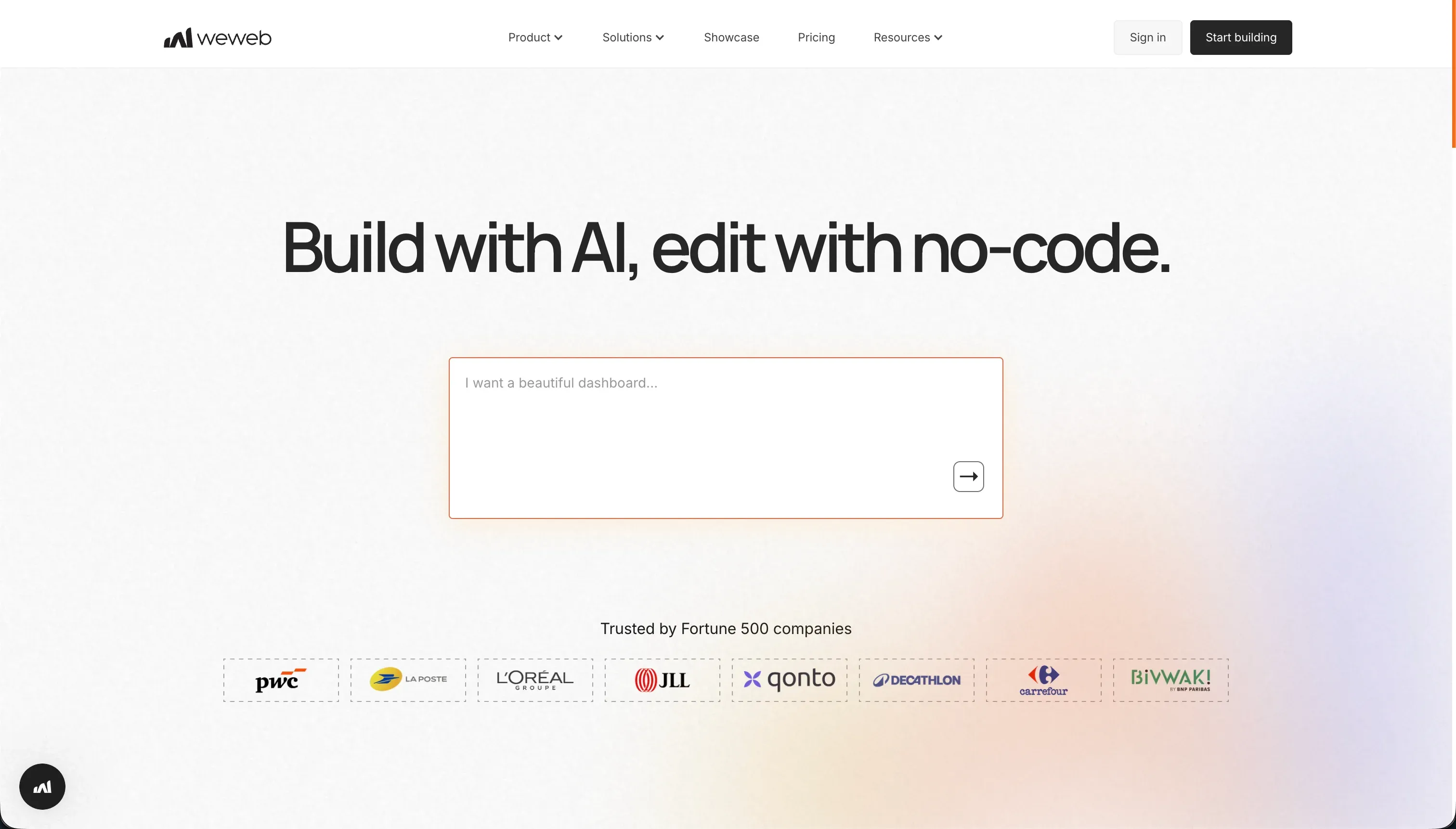 WeWeb homepage snapshot
For agencies or developers that require full interface freedom alongside a clean exit path, WeWeb delivers a top-tier visual frontend engine. It scores an 8.5 on design flexibility, introducing advanced CSS controls like flexbox and absolute positioning alongside a Vue.js code export. This ensures your membership platform is fast, responsive, and completely exportable if you choose to self-host.
However, ease of build scores a 4.0 because the tool lacks a native data layer. You must manually provision, pay for, and configure an external backend like Supabase, meaning your access control score is only as reliable as your API integrations. Exclude WeWeb if you are a non-technical builder who needs an all-in-one platform with pre-built database schemas and user sign-in flows.
5. Replit - best code-first path for technical team ownership
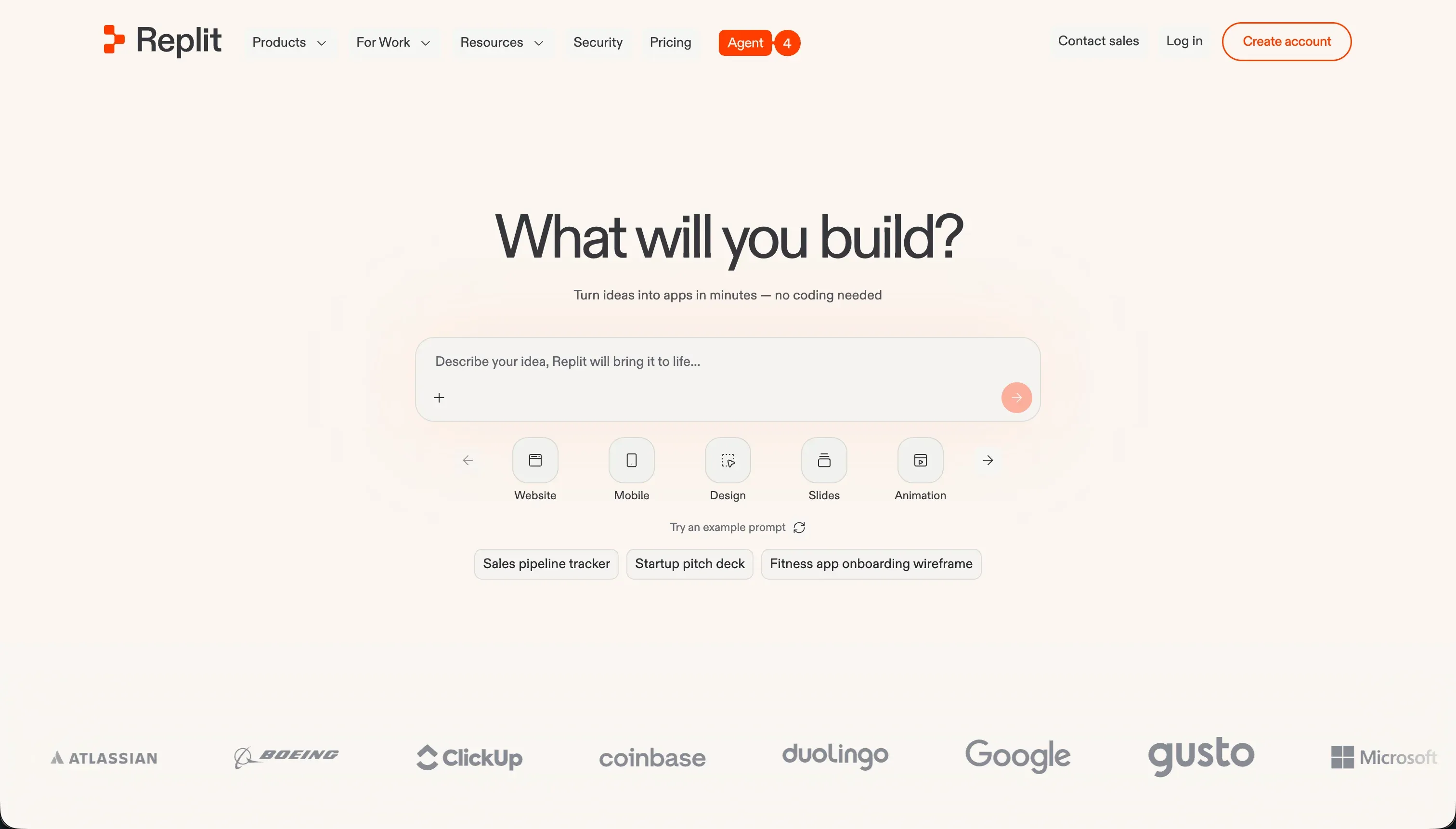 Replit homepage snapshot
Building a custom platform with Replit guarantees your company owns a real, clean codebase on autoscaling servers. It scores an 8.0 on production readiness with its managed PostgreSQL database and automatic custom-domain routing, while design flexibility scores an 8.5 because any design custom code can write, Replit can host.
However, security & access control scores 6.0 because all membership roles, authentication flows, and data protections are written in code; you must manually review files to audit permissions. Exclude Replit if you do not have technical developers on staff to maintain this generated code, or if you cannot tolerate usage-based billing variations that can spike during looping prompt debugging sessions.
6. Airtable - best intuitive relational database for master directories
Organizing complex relational community memberships is incredibly visual inside Airtable. It scores an 8.5 on ease of build and an 8.0 on data & integrations, providing rich spreadsheets with linked records, rollup fields, automatic triggers, and extensive API integration. Its visual Interface Designer allows quick creation of calendar grids, dashboards, and kanbans.
However, production readiness scores a 5.5 because interfaces are desktop-focused and completely lack client-facing utility pages like password reset. Security & access control scores a 5.0, as permissions apply only at the base level; you cannot restrict access down to specific fields or records securely.
Exclude Airtable if you plan to launch external portals directly from this layer without paying for expensive collaborator guest packages.
ショートリストと戦略の選定
Selecting the right tool for your database is a choice between speed and visual complexity. If your main objective is launching a membership catalog, a paid repository, or an association dashboard with secure external logins right away, shortlist Softr as your primary visual container.
It allows you to build safe user-facing portals over your databases without managing backend infrastructure or custom code vulnerability risks.
If you are building a custom marketplace, a highly animated community framework, or a mobile-first app, shortlist Bubble as the best visual logic builder.
To guide your platform evaluations further, trace our evaluation steps on the official /methodology page, and explore our specialized analyses on /best/client-portals, /best/directories, and /best/nonprofits-and-associations to make a secure long-term decision.