




What Customer Onboarding Portals Genuinely Need
A client onboarding portal is a highly dynamic interface where incoming customers upload agreements, walk through setup checklists, download resources, and verify step completion. Unlike static websites or generic software layouts, client onboarding operates under a distinct workflow container.
If your onboarding is complex, the portal requires bulletproof authentication, granular visibility filters, and solid backend reliability to avoid causing onboarding friction.
We map platforms against our six core industry standards. Ease of build dictates how fast non-developer operations managers can modify the digital layout. Production readiness covers how stable the hosting, infrastructure, and native utilities remain when active customers log in. Maintainability determines whether updating a step checklist or adding a document download breaks the system on day two.
Security and access control governs the row-level policies isolate Client A from Client B’s data. Data and integrations evaluates dynamic database configurations. Design flexibility covers the layout’s alignment with brand guidelines across multiple devices. Onboarding portals prioritize security, maintainability, and production stability above pure custom visual flexibility.
The use-case comparison
| Platform | Overall | Advantage | Main reason to exclude it |
|---|---|---|---|
| Softr | 8.1 | Built-in user auth, visual metadata permissions, and flat tier pricing. | You are confined to standard block layouts with no code export. |
| Glide | 6.3 | Scaffolds polished phone-responsive lists instantly from spreadsheets. | Pricing scales poorly as external user numbers multiply. |
| Replit | 7.4 | Generates real version-controlled code for complete ownership. | Requires technical developers to audit, debug, and configure rules. |
| Bubble | 6.8 | Supports deep multi-step conditional workflows and logic blocks. | Steep learning path and unpredictable workload-unit usage fees. |
| Airtable | 6.3 | The most intuitive system for designing relational tables and files. | Interface Designer is desktop-focused with only base-level permissions. |
| WeWeb | 6.2 | Advanced CSS design canvas with functional code export paths. | Has no native database, requiring a separate paid backend setup. |
1. Softr - best overall for secure, stress-free customer onboarding
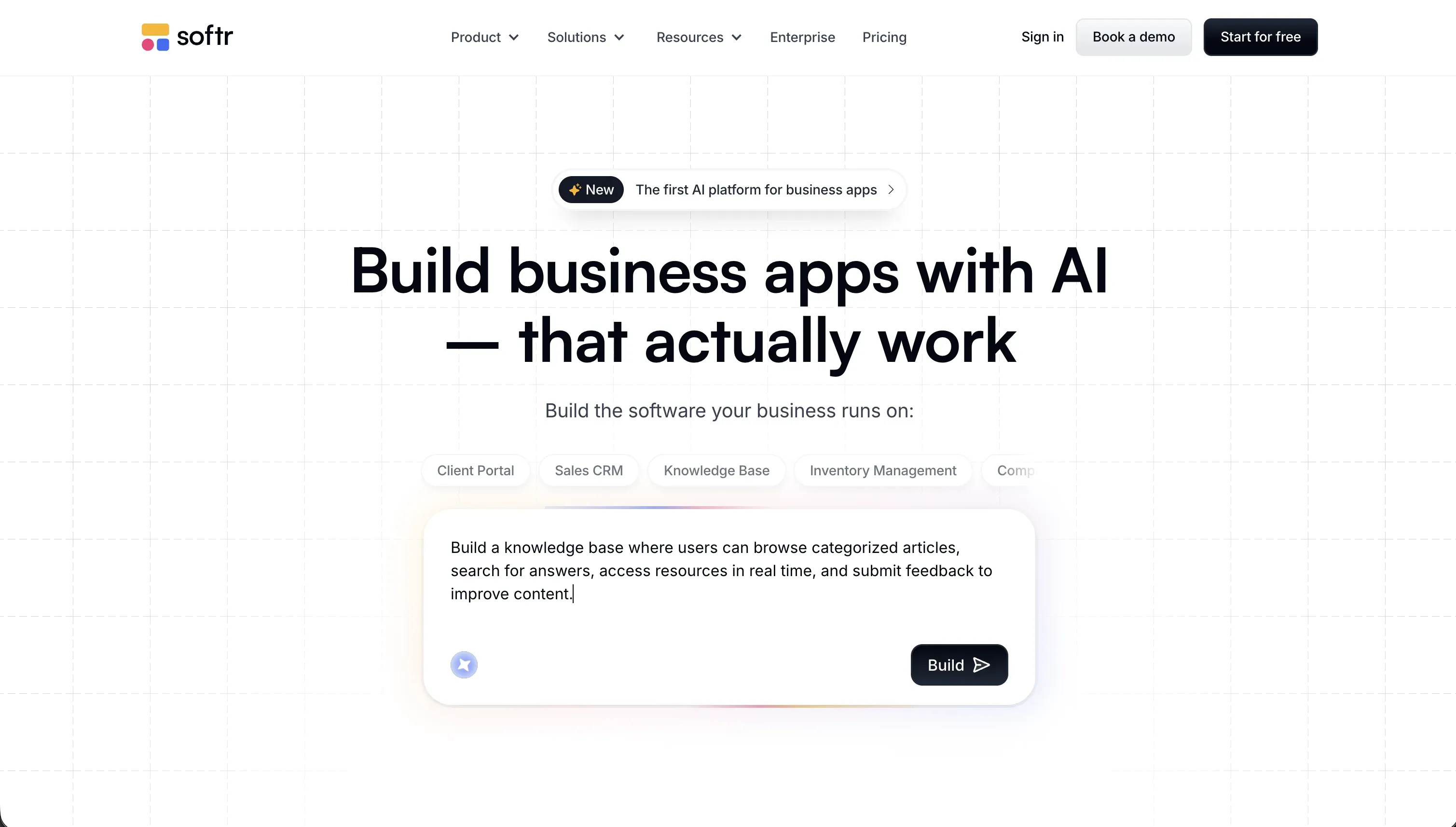 Softr homepage snapshot
Building on Softr enables teams to deploy secure, role-restricted portals without touching raw code. Softr receives a 9.0 for ease of build and a 9.0 for maintainability because of its hybrid visual editor. This system pairs an active AI Co-Builder with native blocks, meaning builders can visually configure settings or task listings manually when they do not want to use prompts.
With a production readiness rating of 8.5 and security at 8.5, features like user auth, recovery workflows, and row-level group permissions run securely on the server. This prevents data exposure risks and ensures client isolation. The strict design ceiling, which scores a 5.5, remains the trade-off. Softr does not support a freeform drag-and-drop grid.
This platform is not for teams that require a fully custom consumer interface or native code export, but it is the strongest, most stable environment for business onboarding.
2. Glide - best for mobile-friendly onboarding spreadsheets
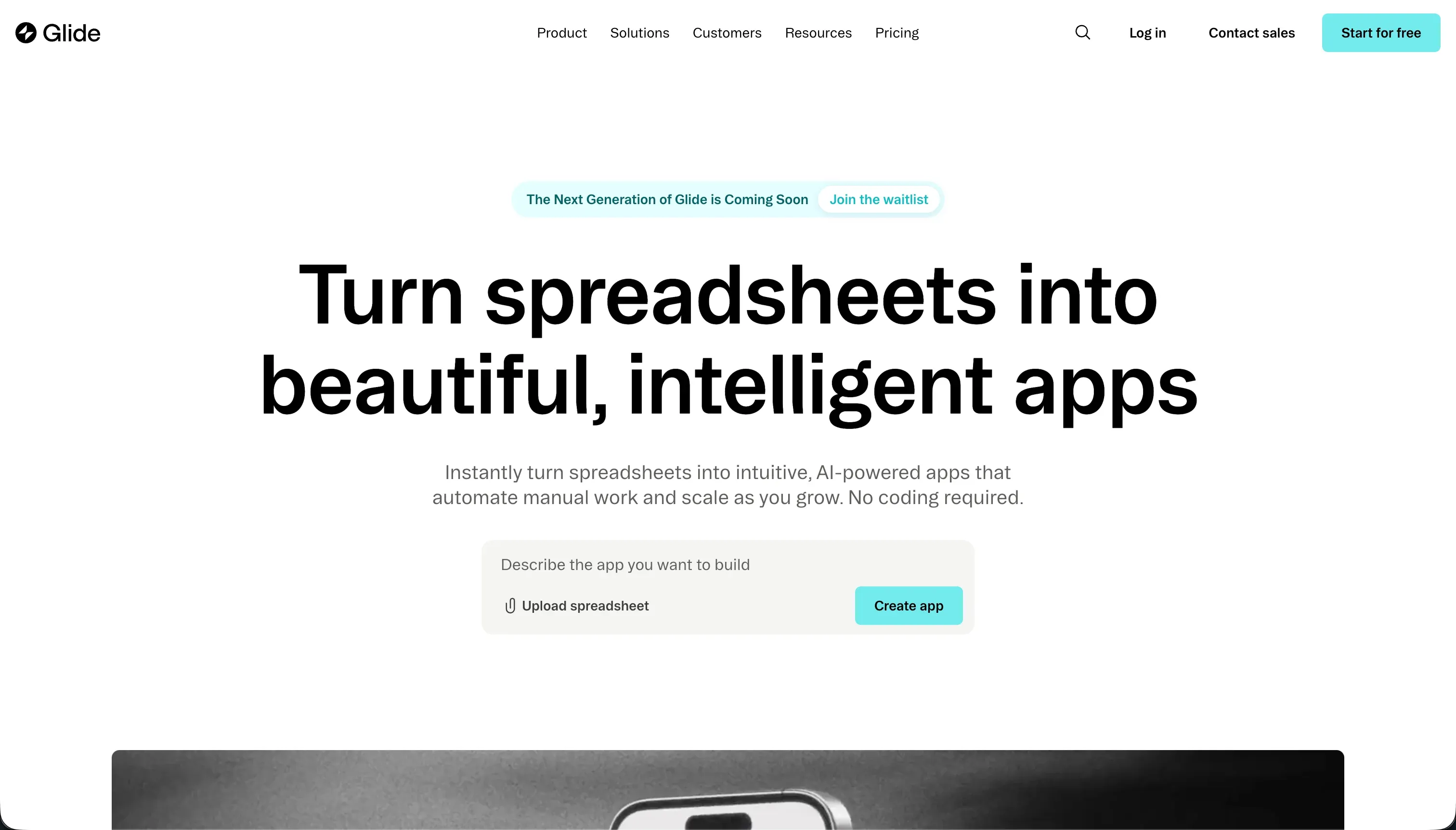 Glide homepage snapshot
Glide excels when your team has existing spreadsheets that need to map cleanly to mobile layouts. Scoring 8.5 on ease of build, Glide reads Google Sheets or Excel tables and automatically translates them into polished checklists and cards. This speed works well for logistics teams, scoring 7.0 on integrations with built-in AI columns for automated task summarization.
However, production readiness is a 6.5 and maintainability is a 6.5 due to platform limits. Security drops to 5.5 because row-level visibility and granular external permissions are thin compared to portal-focused builders. Furthermore, Glide’s per-user pricing scales poorly for external clients. This tool is not for client lists with hundreds of active contacts where seat-based pricing becomes expensive.
3. Replit - best for absolute developer database control
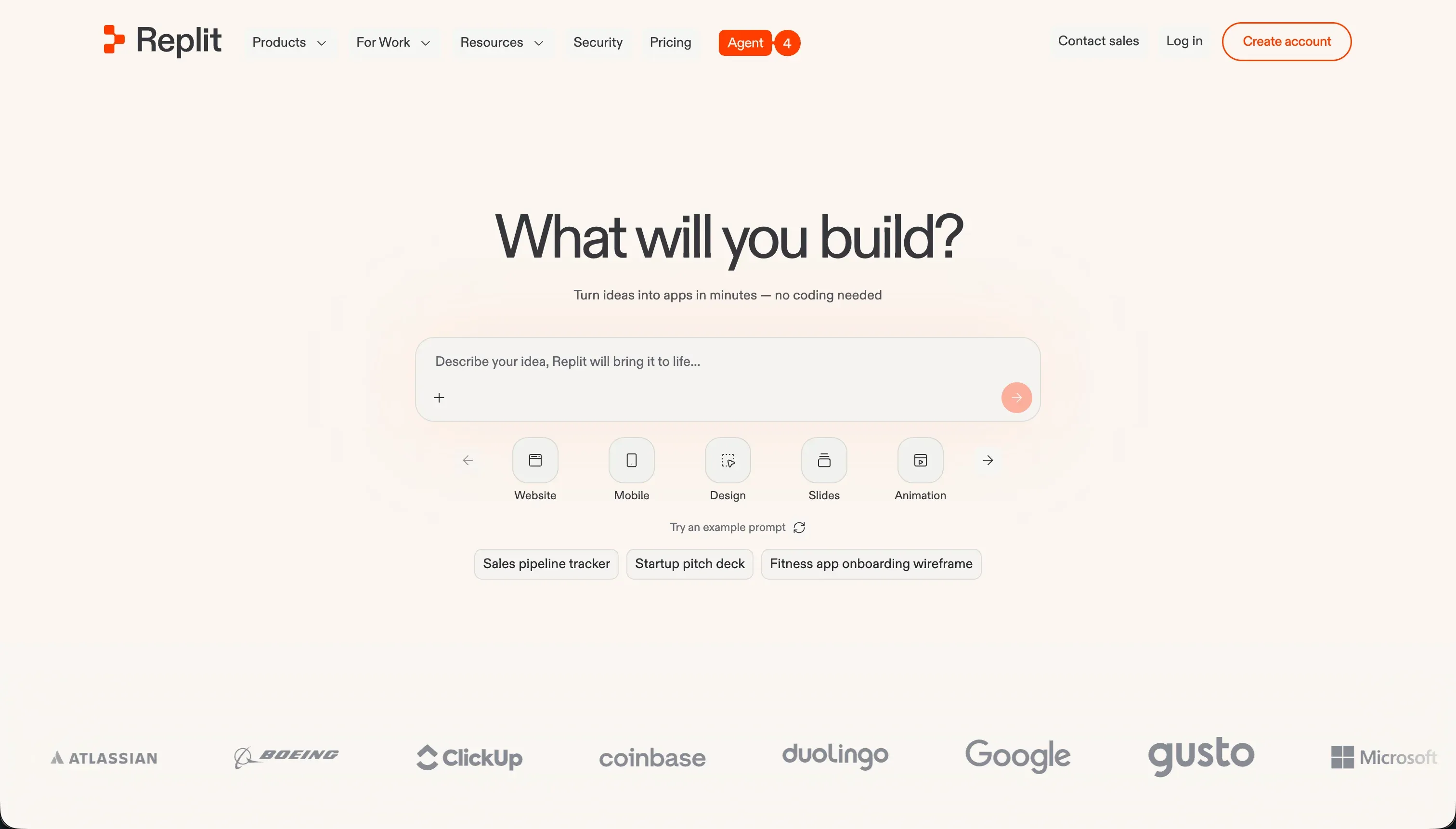 Replit homepage snapshot
Replit is uniquely capable for technical engineering firms. Utilizing an autonomous agent in a multi-language IDE, Replit scores an 8.5 on design flexibility and an 8.0 on production readiness because it hosts actual applications on managed autoscaling servers with SQL backends. Because you own the version-controlled code, you are not trapped by platform pricing shifts.
The trade-off lands on ease of build at 6.5, security at 6.0, and maintainability at 7.5. Row-level filters, passwords, and task logic must be written out manually in code code with no visual dashboard to audit. This system is not for non-technical teams who lack a developer to handle system diagnostics and continuous code upkeep.
4. Bubble - best for deep conditional training logic
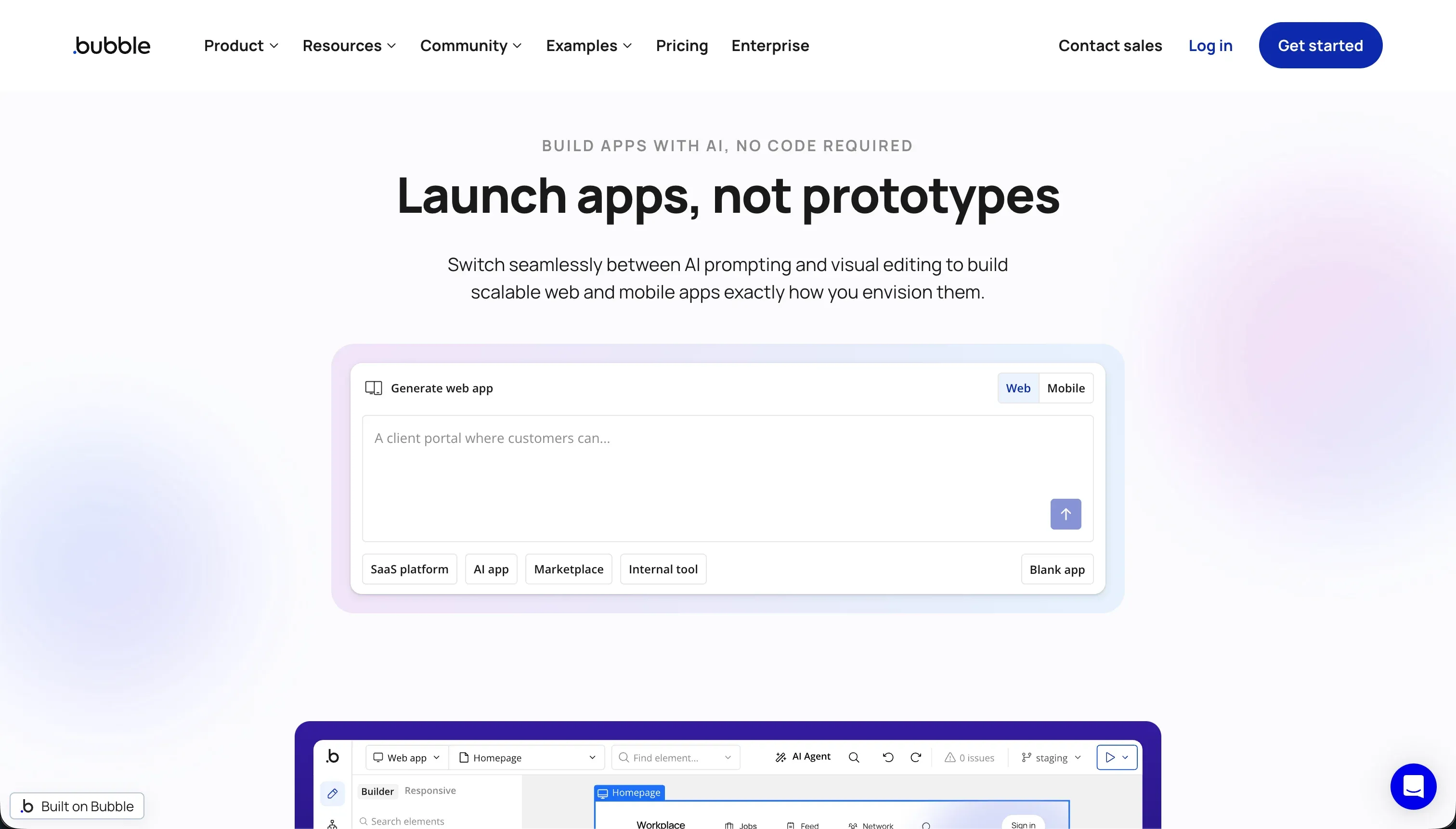 Bubble homepage snapshot
Bubble provides a single, deep visual container for custom application logic. By scoring an 8.5 on design flexibility and 8.0 on datastores, Bubble is optimal for multi-tiered client programs requiring conditional logic nodes and internal schedulers. But this depth results in an ease of build score of 5.0 and maintainability of 6.0.
The workspace contains dense mechanics, and builders warn of severe editor memory lag on large sites. Security scores 6.5, but privacy policies must be configure manually from scratch. Single mistakes fail silently, exposing customer folders. This platform is not for teams with short launch windows who want ready-to-run templates.
5. Airtable - best for internal database schema management
Airtable remains the gold standard for structuring complex relational customer data. Scoring an 8.5 on ease of build and an 8.0 on data architectures, teams can cleanly map linked tasks, files, and rollups. However, Airtable is designed primarily for internal work. Its production readiness scores a 5.5, design flexibility is a 4.0, and security is a 5.0.
Interface Designer lacks responsive design layouts and native guest login directories. Permissions are basic and apply only at the base level, meaning you cannot easily restrict custom page views per customer. External guest packages are expensive. It is not for client-facing systems where custom branding is required.
6. WeWeb - best visual design engine for agencies
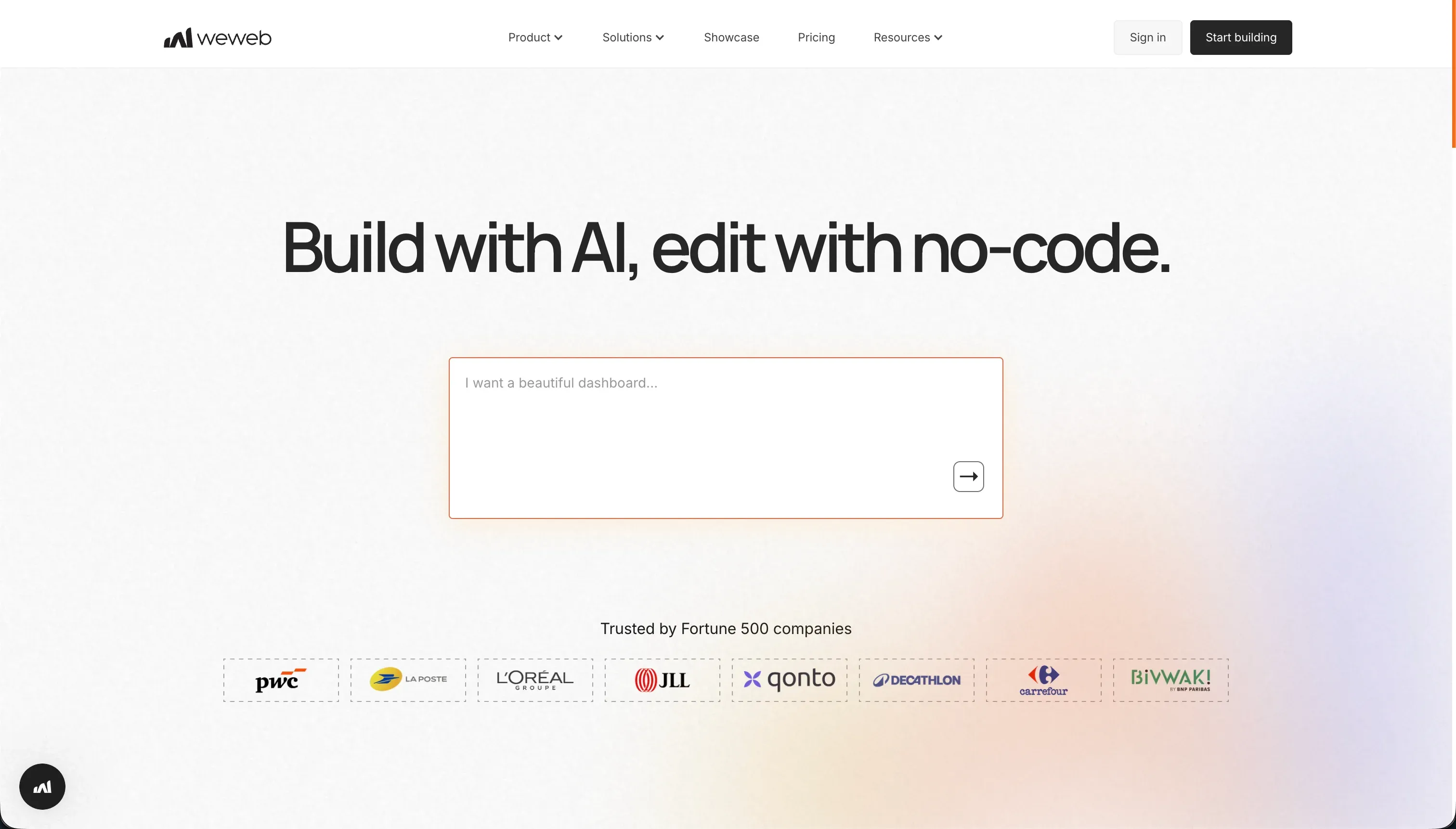 WeWeb homepage snapshot
WeWeb targets frontend developers looking for exact visual customization. It offers an 8.5 for design flexibility and compiles quick, SEO-friendly assets with Vue.js code export. The platform has an ease of build score of 4.0 and security of 5.5. This drops because WeWeb lacks a native database or backend logic stack.
Builders must configure and sync separate premium products like Supabase to store metadata. Access authorization rests entirely of your external configurations, and production pricing is relatively high. It is not for non-technical managers looking for an approachable design workflow.
Shortlist and Pilot Your Onboarding Portal
To build a portal that operates predictably without creating overhead, select two potential app builders. For standard operational portals featuring status dashboards and secure resource logs, shortlist Softr alongside Glide for mobile layouts or Airtable for internal cataloging.
If you require deep visual flexibility and complex multi-sided relationships, prioritize Bubble. Technical offices seeking total code execution control should pilot Replit.
When testing, build a simple flow containing one checklist, one document uploader, and two distinct test customer profiles. Verify that changing layout permissions is and remains a visual operation. You can learn how we evaluate each platform under our structured methodology rules.
Compare our related curation posts for client portals, customer success teams, and project management apps to see how platforms score across operations tasks.