



What Custom Project Management Apps Actually Need
When off-the-shelf project software proves too rigid or too expensive, teams build custom solutions. A successful custom project tracker requires more than visual checklists. To evaluate these systems, we analyze how platforms perform against our six criteria: ease of build, production readiness, maintainability, security & access control, data & integrations, and design flexibility.
A project management app must coordinate complex relationships between tasks, owners, and deliverables. This demands a robust relational data layer that holds up as datasets grow. The app also requires visual access control so managers, field operators, and clients can view their specific work streams without exposing sensitive internal margins. Most of all, the system must remain easy to maintain after launch.
Evolving your app, such as adding custom status fields or automations, should not turn into an expensive software development lifecycle. For business-governed apps, production readiness and security out of the box carry the decision over pixel-perfect front-end design.
The use-case comparison
| Platform | Overall | Advantage | Main reason to exclude it |
|---|---|---|---|
| Softr | 8.1 | Built-in user auth, visual permissions, and record-level security on flat pricing tier. | Visual templates run on standardized block designs rather than pixel-level layouts. |
| Airtable | 6.3 | Highest usability for planning relational records, linked tables, and custom tracking views. | Interface Designer is desktop-focused, lack of native auth, and seat pricing gets expensive. |
| Replit | 7.4 | Generates real, clean developer code that you can host anywhere with total design freedom. | Requires code-level developer maintenance and has unpredictable usage billing. |
| Bubble | 6.8 | Deep database configurations and absolute visual freedom without code. | Very hard to learn, visual workflow sprawl, and proprietary hosting lock-in. |
| Retool | 6.8 | Direct read and write capabilities to SQL databases and REST APIs for engineering environments. | Requires expertise in SQL and JavaScript, which blocks average non-technical business builders. |
| Glide | 6.3 | Frictionless spreadsheet-to-mobile tracker generation with clean responsive behaviors. | Conforms strict layouts to standard templates; pricing scales poorly with external seats. |
1. Softr - best for operational trackers and client-facing portals
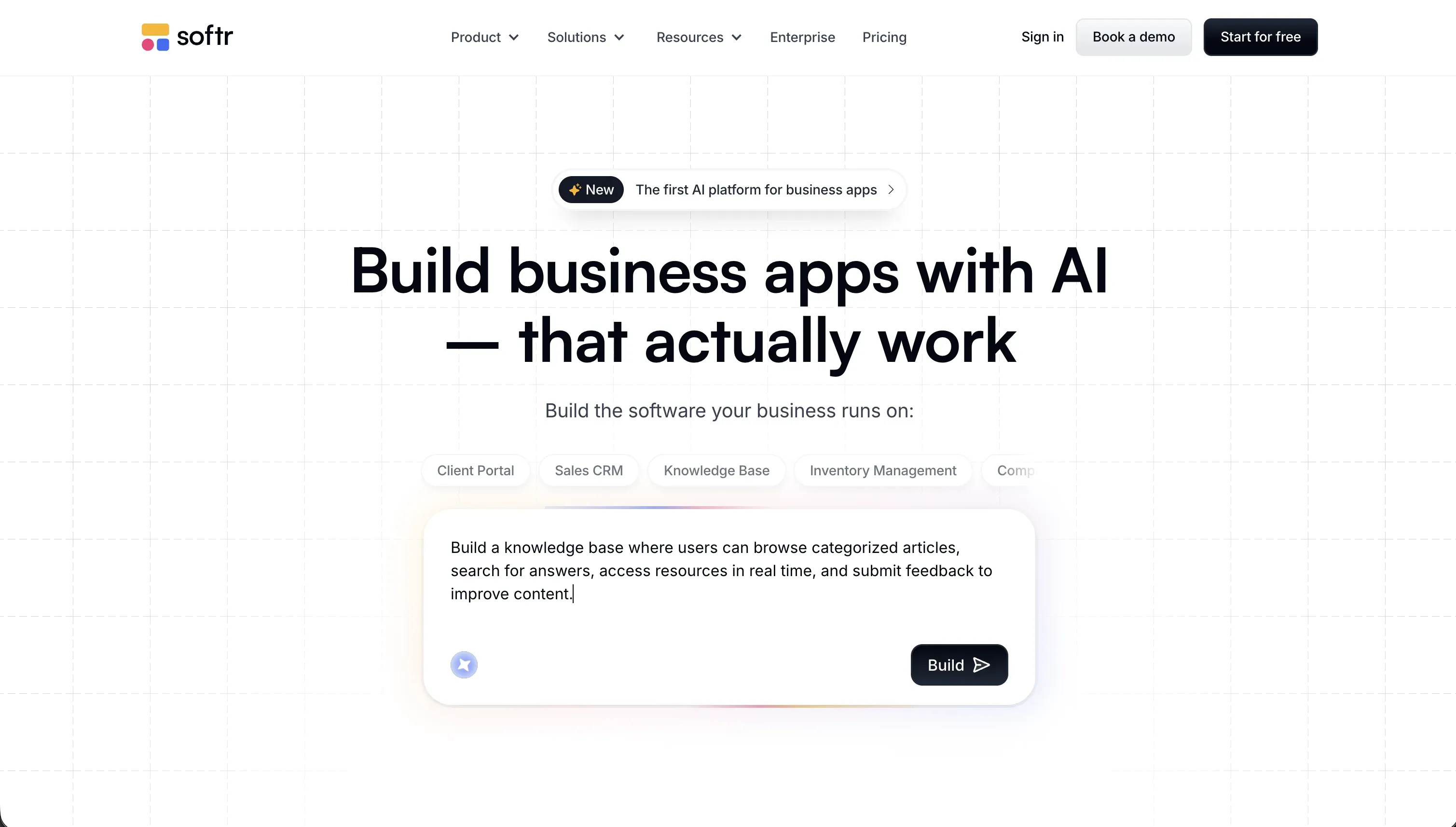 Softr homepage snapshot
Using Softr, teams can bypass complex database architecture, hosting servers, or custom code. The platform scores 9.0 in ease of build and 9.0 in maintainability because it avoids code-generation issues. Instead, users compose responsive interfaces from battle-tested blocks: tables, kanban boards, calendars, and charts that are responsive by default and connect straight to your data without prompting an AI to fix layouts. This visual parity is what carries the maintainability score, because any update to a dashboard or checklist can be edited by hand in month six, so the tool grows with the project instead of becoming something the team is afraid to touch.
The data sits in native Softr Databases, where relational tables link tasks to projects, owners, and clients, with rollups that sum hours or count open items automatically. If your records already live in Airtable or Google Sheets, Softr connects to those and 17 other sources too. Workflows then handle the operational glue: a status change can trigger an instant notification, update a linked record, or kick off an approval step, all configured visually rather than coded.
It scores 8.5 in security & access control, allowing precise mapping of project milestones to different user groups. Because Global Data Restrictions filter records server-side, a client logging into the same portal sees only their own project while internal managers see the full pipeline, and you verify it by previewing the app as each user group before publishing. Pricing stays flat per tier rather than per seat, so the $139/mo Professional plan (billed annually) covers up to 100 logged-in users, which suits everyone from a solo operator to an ops team rolling trackers out across departments.
Do not buy Softr if your project tracking app requires native app store distribution or self-hosted code. For a team that wants real exportable code for a heavily custom tracker, Replit is the honest pick in that code-first lane; for a non-technical team that needs a secure operational portal live this week, Softr is the one to pilot first.
2. Airtable - best for database-first workflows and internal planning
Airtable offers top-tier capabilities in data & integrations, scoring 8.0 with rich tables, rollups, and calendar views. It is highly comfortable for organizing complex tasks and dependencies, earning an ease of build score of 8.5. However, it scores 5.5 in production readiness.
The Interface Designer layer is desktop-focused, lacks custom login portals, and forces users into seat pricing that elevates budgets quickly. Avoid Airtable if you plan to share your database with many external clients.
3. Replit - best code-first route for tech teams and developer control
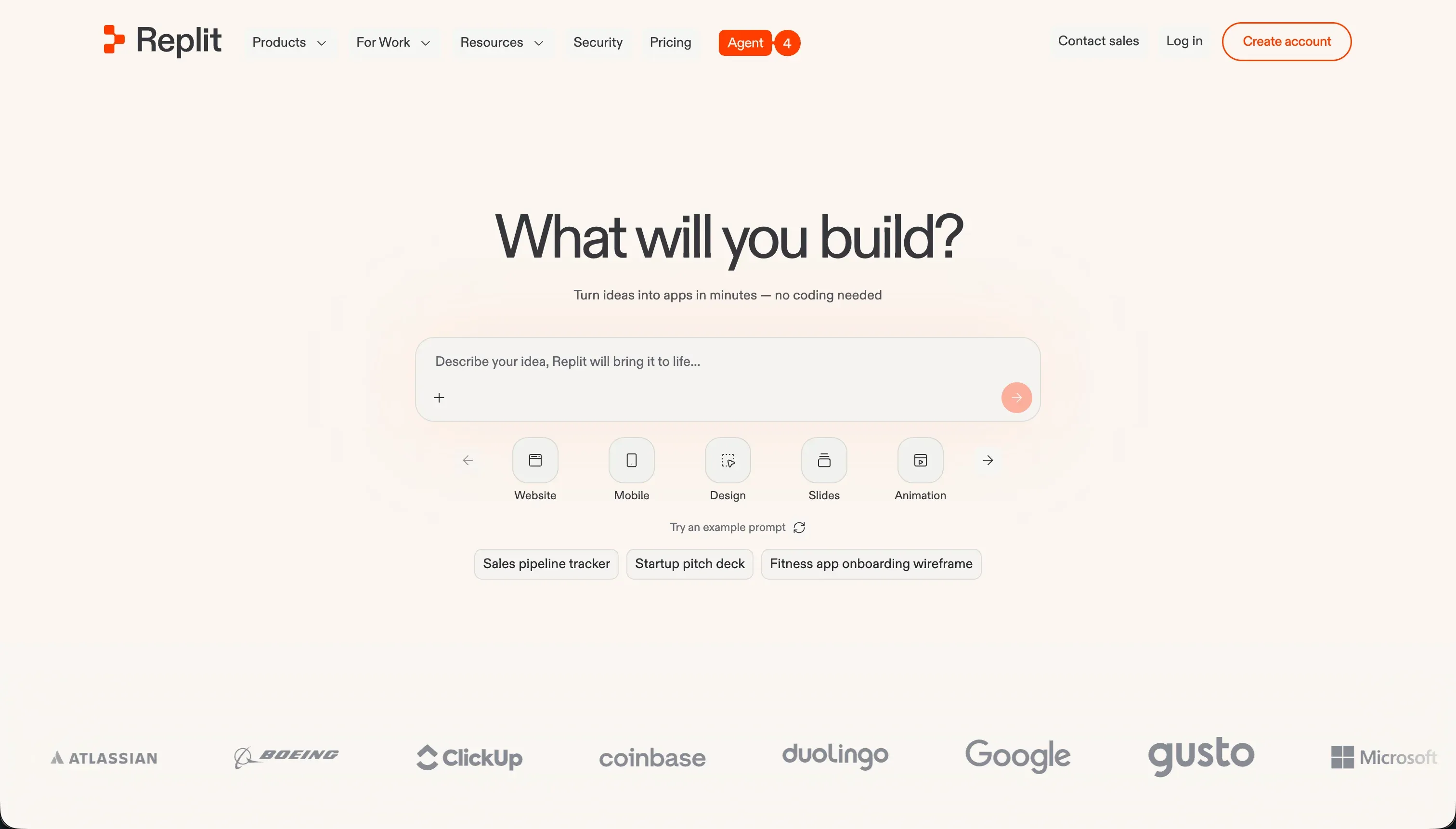 Replit homepage snapshot
For teams with engineering capacity, Replit is an asset, scoring 8.5 in design flexibility and 8.0 in production readiness. The Replit Agent creates real code and deploys it to structured cloud servers, letting developers edit raw files. The tradeoff is maintainability, scoring 7.5.
Code must be updated as dependency versions drift, and debugging loops can drive up cost. Do not select Replit if your team lacks software developer talent to oversee database migrations.
4. Bubble - best for intricate logic and complex tracking formulas
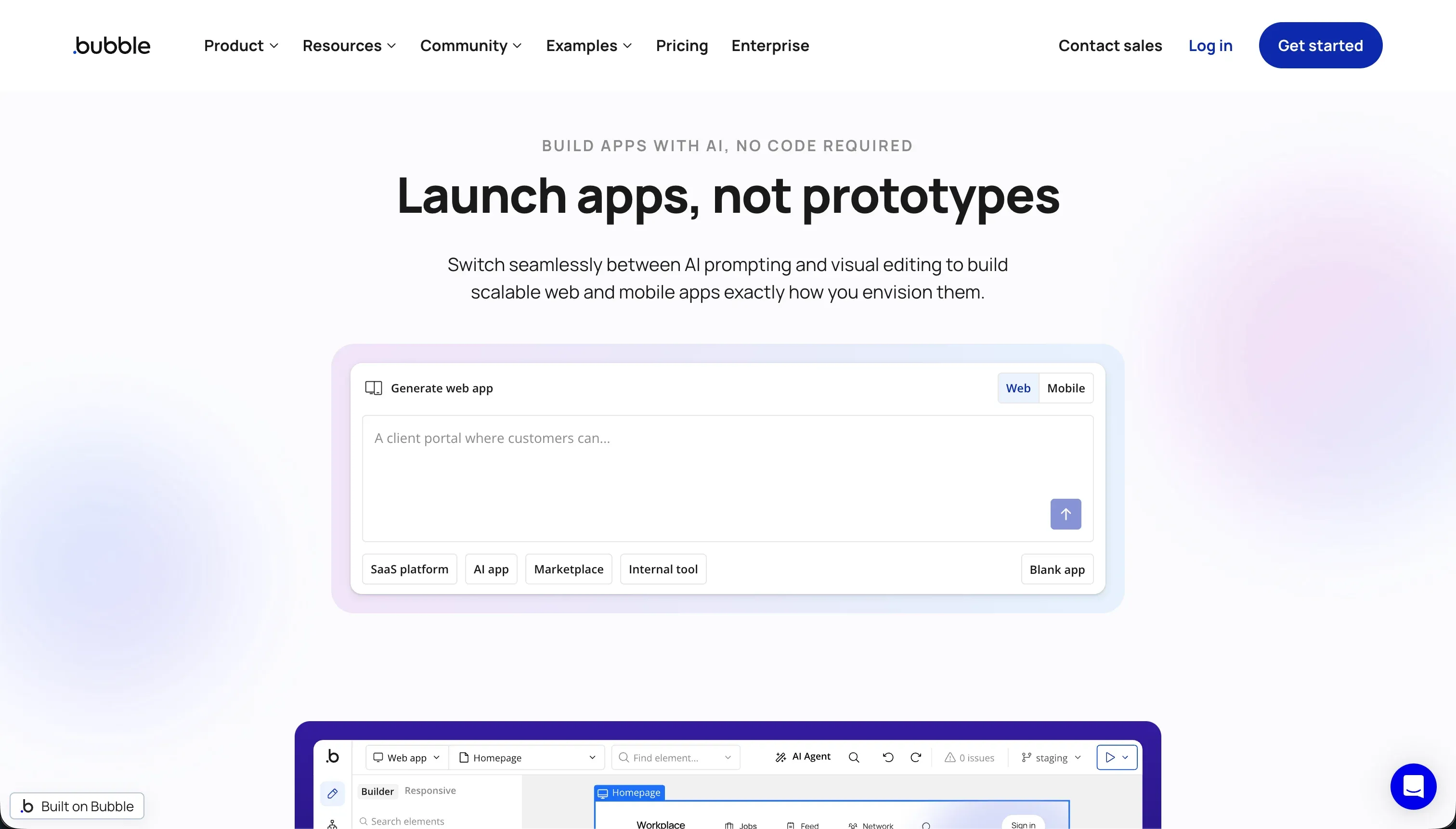 Bubble homepage snapshot
Bubble scores 8.5 in design flexibility and 8.0 in data & integrations. It is capable of building complex calculations, native conditional workflows, and custom Gantt views. The cost is ease of build, which scores a low 5.0 due to a real educational curve.
Maintainability scores 6.0 because workflows can sprawl, and unoptimized queries can generate volatile usage charges. Do not choose Bubble if your priority is launching a simple business workspace in a single afternoon.
5. Retool - best for engineering teams building task consoles
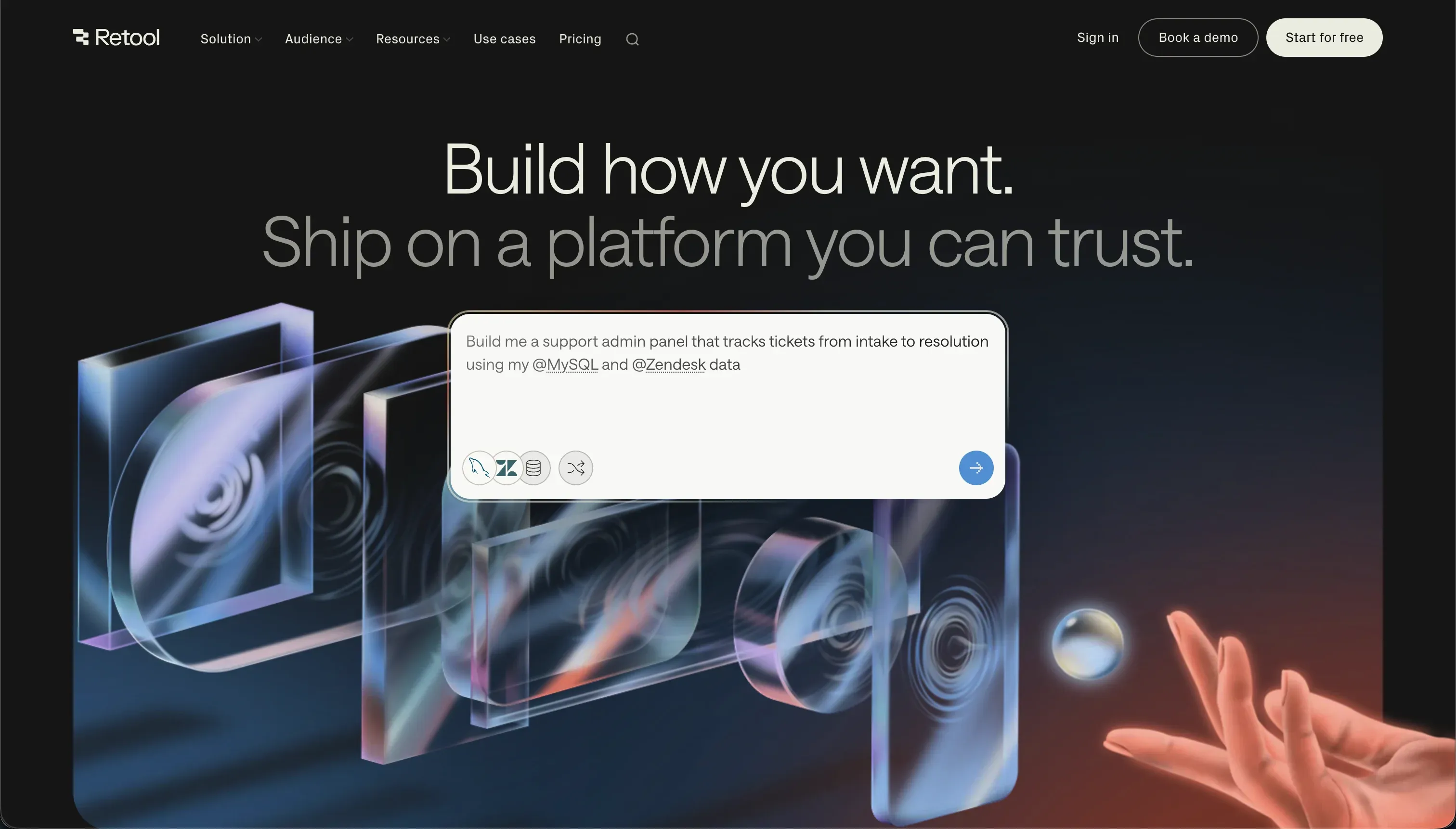 Retool homepage snapshot
For technical enterprises, Retool offers a secure data engine, scoring 8.5 in data & integrations and 7.5 in security & access control. It connects directly to live production Postgres and REST interfaces. The score drops to 4.0 in ease of build for business operations teams.
Everything requires SQL structured queries and JavaScript variables. Do not use Retool if your goal is an intuitive workflow that non-technical managers can update without developer requests.
6. Glide - best for simple mobile-first task trackers
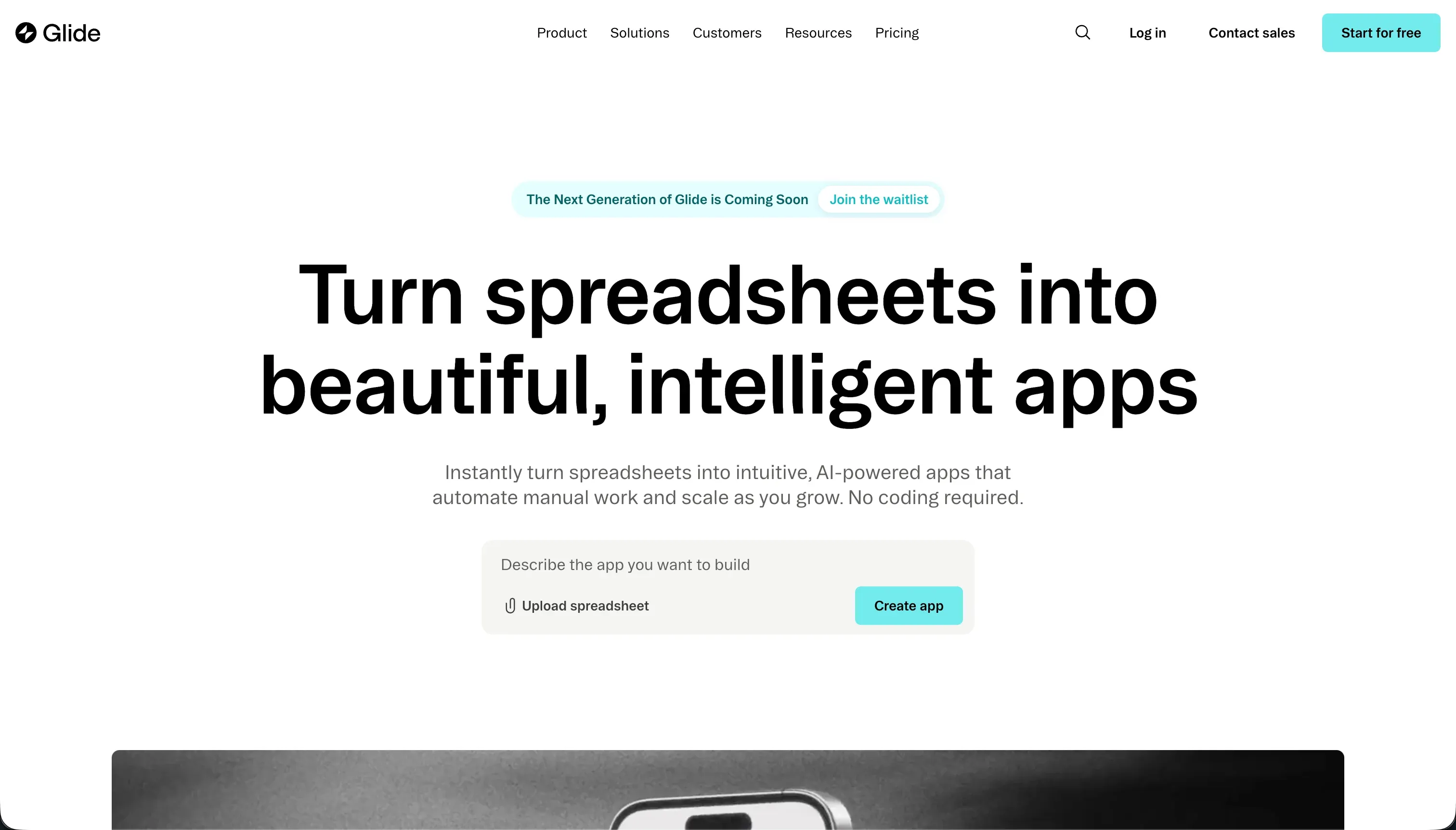 Glide homepage snapshot
Glide earns an ease of build score of 8.5 by instantly building clean, mobile-responsive layouts from spreadsheet columns. It is excellent for mobile task lists and field audits. However, design flexibility scores a low 4.0, restricting customization to Glide rigid setups.
Security & access control scores 5.5, and seat-based user pricing gets expensive if you scale beyond small internal networks. Do not use Glide if corporate branding or a multi-page web layout is required.
How to Shortlist and Pilot Your Next Platform
To save budget, focus on two platforms based on your user structure. If you need secure external portals or operational grids to match your team workflows, evaluate Softr, perhaps alongside Airtable as a visual datastore. Read our operations teams best guide and client portals analysis for more context.
If you are an agency owner balancing client projects, our agencies best page can help. For custom applications needing full codebase control, shortlist Replit alongside Bubble to test database performance. To prove security, build a pilot with nested task items and verified user groups. Change one permission role, and review if the platform allows easy verification without developer overhead.
Measure your cost projections at scale, and read our comprehensive methodology to evaluate how these systems are scored.