





What Real Estate Platforms Actually Require
Real estate software covers a wide functional territory: property portals, listing directories, tenant portals, and investor reporting dashboards. Despite this variety, successful real estate apps share a single technical requirement: they must connect different roles to highly specific slices of database rows.
A tenant must only see their own lease details, an agent must only edit their own listings, and an investor must only see their personal portfolio yield. Because of this structural focus, security & access control and data & integrations carry the decision for buyers.
To build a functional real estate application, ease of build determines how fast you can launch a database-backed directory of homes or lease records. However, production readiness and maintainability decide whether your team can run the portal next year without constant errors.
While design flexibility is helpful for attracting prospective buyers with beautiful property galleries, it remains secondary to data integrity.
A broken permission rule that leaks confidential financial data or tenancy contracts is far more damaging to a brokerage than an unaligned navigation column. A smart buyer will prioritize robust role division and straightforward database editing over infinite visual customization tools.
The use-case comparison
| Platform | Overall | Advantage | Main reason to exclude it |
|---|---|---|---|
| Softr | 8.1 | Pre-built visual user groups, secure login portals, and native database blocks. | Visual designs are restricted to native block components with no freeform canvas. |
| Bubble | 6.8 | Complete control over custom matching workflows and pixel-perfect layouts. | Steep technical learning curve and unpredictable workload-unit pricing metrics. |
| Glide | 6.3 | Fast setup of polished, mobile-responsive interfaces from spreadsheet tables. | Strict layout templates and high seat-based pricing costs for external clients. |
| Airtable | 6.3 | The most intuitive cloud relational database for tracking property inventory. | Rigid desktop interface layouts that lack granular, record-level client permissions. |
| Replit | 7.4 | Generates real, exportable application code on managed autoscaling servers. | Requires code-level maintenance and has consumption-based credit billing patterns. |
| WeWeb | 6.2 | Pixel-perfect CSS flexbox design control paired with Vue.js code export. | No native database layer, forcing you to wire up and pay for a separate backend. |
1. Softr - best for property portals, listing directories, and tenant workflows
 Softr homepage snapshot
For overall real estate management, Softr ranks first because its pre-built infrastructure matches the core needs of property portals and tenant directories. It scores 8.5 on production readiness and 8.5 on security & access control.
This scoring translates to functional security: you do not write database rules or configure complex authentication logic. You simply toggle email signups, one-time passcodes, or domain restrictions to secure your tenancy documents.
Its maintainability scores 9.0, meaning non-technical property managers can edit details visually without prompting or calling a developer. In real estate operations, you can easily deploy a portal connected straight to Airtable or native Softr Databases.
If you need a tenant portal, a directory of available units, or an investor tracking hub, Softr handles this out of the box. The limitation is design flexibility, which scores 5.5; do not buy Softr if you demand absolute freeform vector spacing for a consumer listing site.
2. Bubble - best for custom rental matchmaking and complex workflow logic
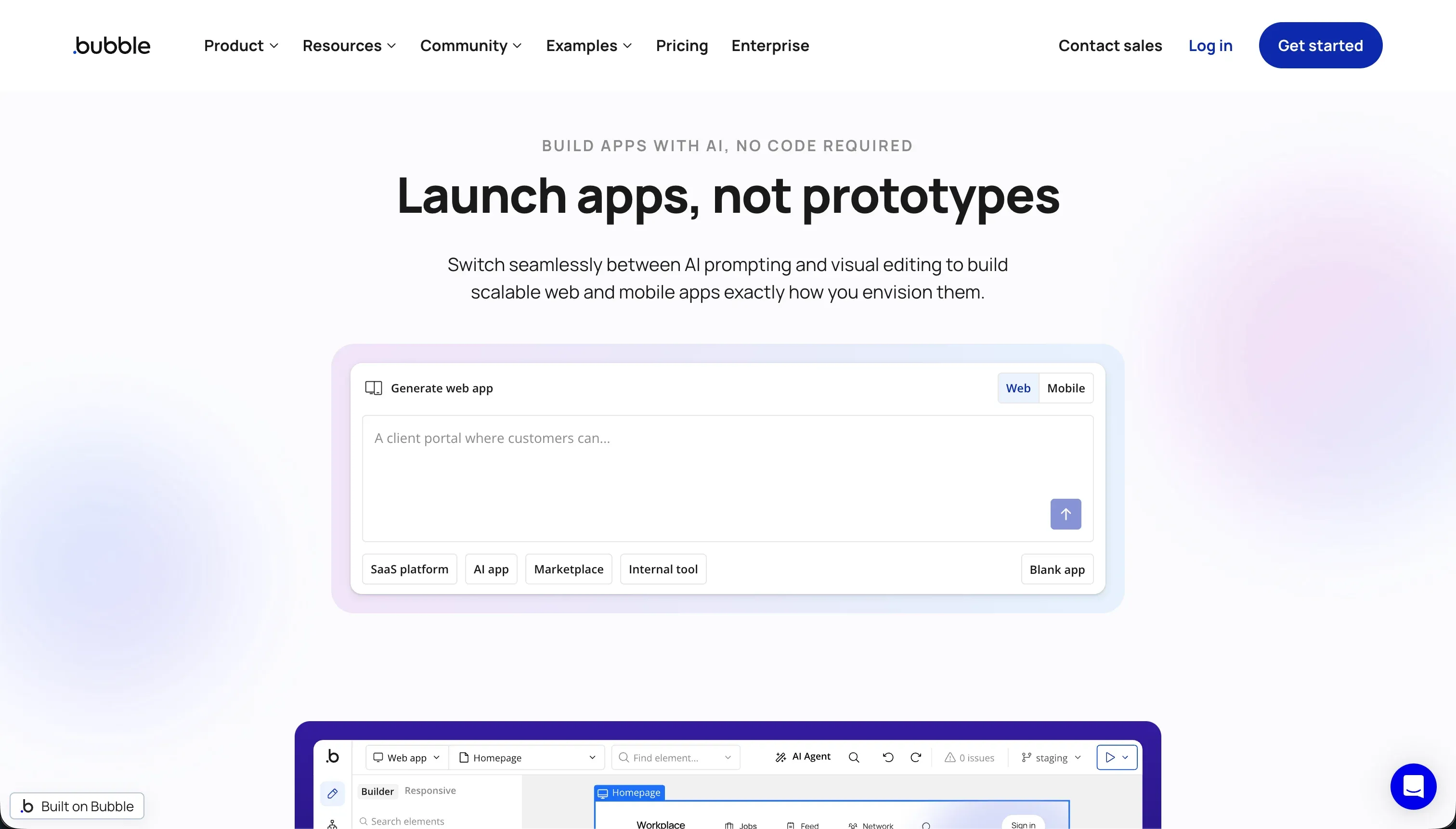 Bubble homepage snapshot
If you are engineering a multi-sided real estate platform with custom matches, Bubble is the undisputed visual runner-up. It scores 8.5 on design flexibility, letting you style custom property maps and filter options.
Data & integrations scores 8.0, and Bubble provides the visual automation to build unique conditional logic flows, such as matching buyers to properties based on granular preferences.
However, its ease of build scores 5.0, representing a severe learning curve: real estate operations teams will spend weeks studying permissions, APIs, and privacy rules to keep property records secure. Security & access control scores 6.5, but configuration is entirely on the builder; mistakes can fail silently.
If you need a standard portal rather than a complex SaaS CRM, the workload-unit costs and visual complexity are unnecessary operational overhead.
3. Glide - best for field agents logging property inspections
 Glide homepage snapshot
When your brokers are actively visiting locations and log transactions on their phones, Glide provides an unmatched spreadsheet-to-app deployment. It scores 8.5 on ease of build because it translates Google Sheets or Airtable records into mobile-responsive cards automatically.
If your operations rely on immediate field updates, inspection forms, or key tracking, Glide scaffolds these utilities in minutes.
Despite this front-end speed, production readiness scores 6.5 and security & access control scores 5.5. This difference exists because Glide lacks granular multi-tenant permission layers for external client groups, and its pricing is strictly seat-based. If you have 200 external property owners or prospective tenants, the billing math becomes expensive.
Reserve Glide for internal operations, and choose a flat-rate portal builder for client-facing tasks.
4. Airtable - best relational database for backend inventory tracking
Organizing real estate inventory requires a solid, collaborative database. Airtable remains the most intuitive relational system for tracking houses, tenants, agent leases, and maintenance issues, scoring 8.5 on ease of build and 8.0 on data & integrations. Its linked records and formulas are perfect for back-office tracking.
However, its front-end Interface Designer layer scores 4.0 on design flexibility. Interfaces are rigid, desktop-only layouts that carry Airtable branding. Production readiness scores 5.5 and security & access control scores 5.0.
This score drops because permissions reside solely at the base level; you cannot restrict specific clients to their individual lease rows natively without paying for expensive guest packs. For external access, pair Airtable with a dedicated portal layer rather than sharing raw databases.
5. Replit - best for custom-coded systems with total code ownership
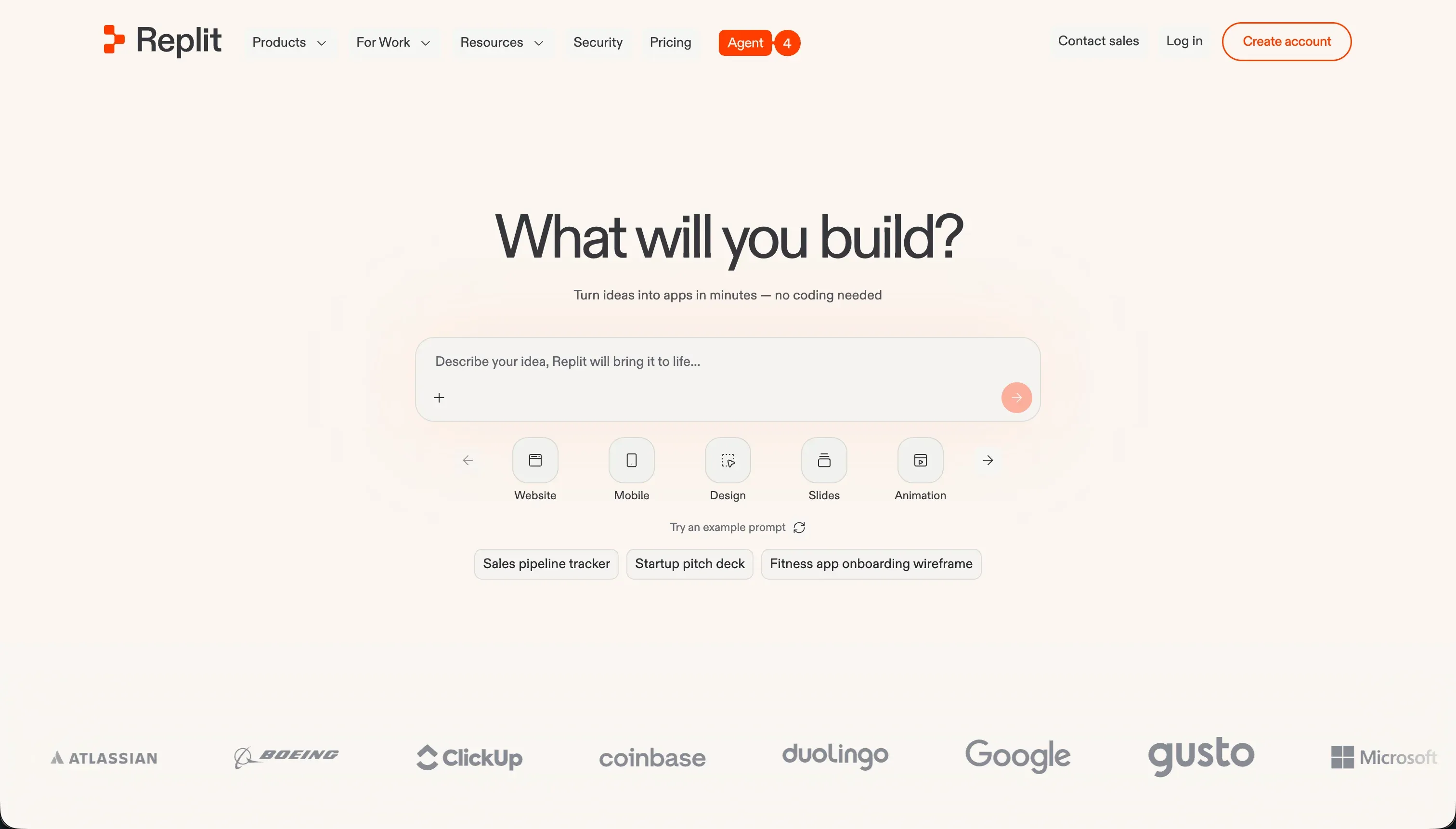 Replit homepage snapshot
If your agency has technical capacity and values code ownership, Replit is a strong code-first route. The platform scores 8.0 on production readiness and 8.5 on design flexibility. Replit Agent generates real, deployable code on containerized hosting backed by managed SQL databases, providing an exit path with zero platform template limitations.
The trade-off is high technical ownership. Security & access control scores 6.0 and ease of build scores 6.5 because your team must write, test, and audit database permissions directly in code. Furthermore, maintenance remains a technical responsibility, and agent debug loops can burn through credits quickly.
Do not buy Replit if your team has no software developers to inspect and maintain the generated code long term.
6. WeWeb - best designer frontend for external developer backends
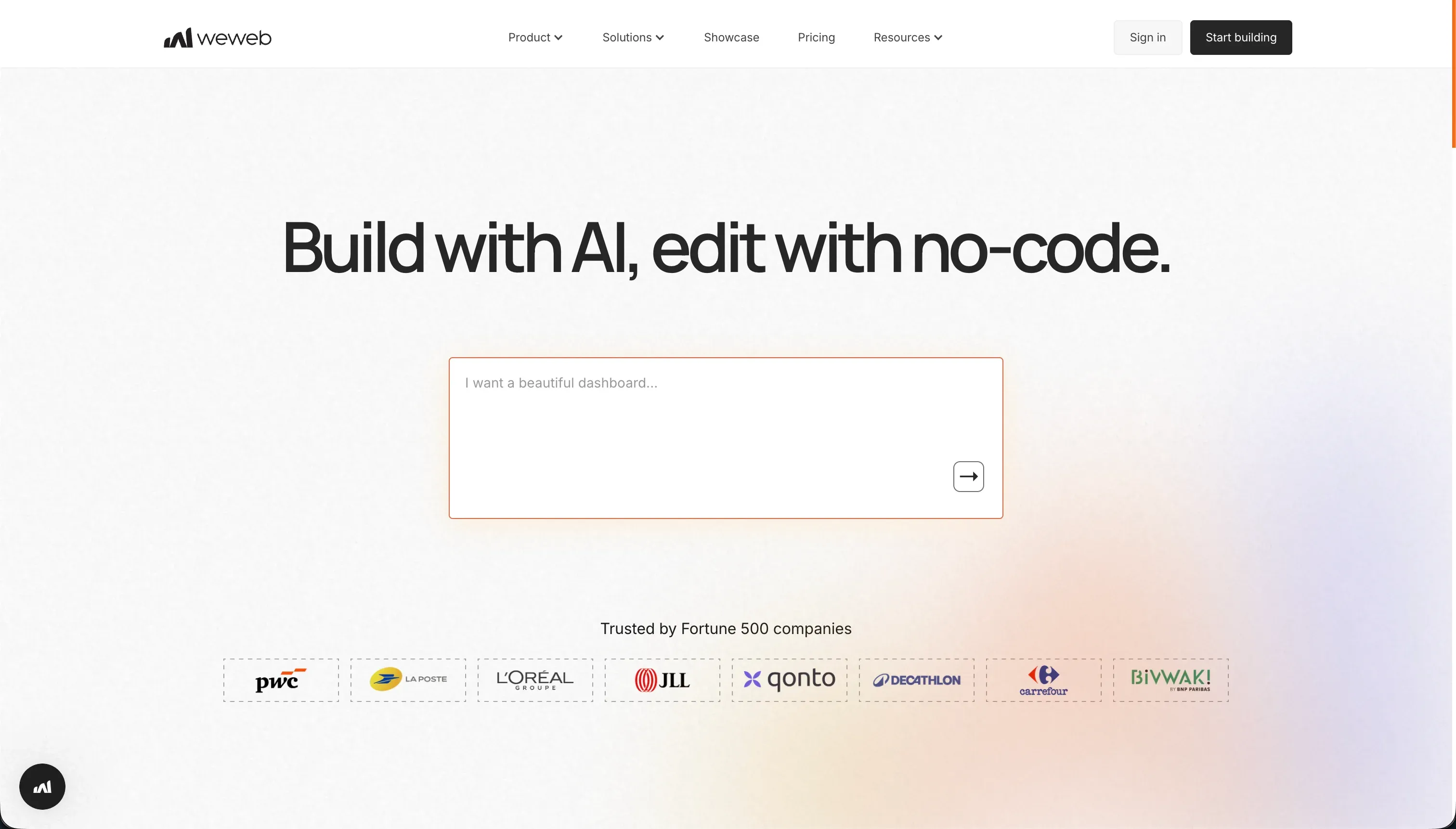 WeWeb homepage snapshot
For design-heavy real estate listing websites, WeWeb delivers exceptional layout control, scoring 8.5 on design flexibility. The platform implements absolute positioning, CSS grid, and custom state variables, compiling into single-page applications with clean Vue.js code export capabilities.
However, ease of build scores 4.0 because the platform has no native database. To display property data, the developer must manually set up and pay for a separate backend engine like Supabase or Xano. Security & access control scores 5.5, meaning secure data isolation relies entirely on third-party API configurations.
It represents a premium framework for visual agencies but is over-engineered for basic property portals and administrative directories.
How to Shortlist and Run a Pilot
Choosing a real estate software platform comes down to user access and administrative complexity. If you are building external client portals, listing directories, tenant workflows, or investor dashboards, Softr provides the most secure permissions and predictable billing without custom code.
If you require absolute visual freedom for a public consumer-facing directory, Bubble provides the design canvas, but requires a massive investment in builder training. If your team consists of on-the-ground field agents who only need to update spreadsheet records, Glide remains the fastest mobile-first option.
To see exactly how these platforms are scored on security, data integration, and design flexibility, read our detailed evaluation methodology.