



What an event management app actually needs
Event software maps to distinct layers of real-time operations. An organizer does not just need a pretty front cover; they need a registration portal that secures attendee data, a mobile check-in gate for local staff, and a relational scheduler to handle sessions, venues, and changes on the fly. To rank the best platforms, we map these operational demands directly to our six criteria.
Ease of build dictates how fast a coordinator can launch the app when session rosters shift, while data & integrations handles the heavy lifting of syncing speakers, registrations, and payment APIs. More than anything, production readiness and security & access control protect the event: attendee check-ins must work in low-connectivity areas, and user logins must keep private tickets isolated.
Maintainability is the day-two safeguard, ensuring a simple adjustment to the calendar does not break the entire layout before gates open. Lastly, while design flexibility helps white-label the attendee experience, it is secondary to the operational certainty that the ticket scanner works.
Organizations planning their tech stack often start from our guides for /best/nonprofits-and-associations or investigate /best/service-request-apps when structuring staff operations, as the directory logic of speaker bios and venue schedules remains highly consistent with how we evaluate top builders.
The use-case comparison
| Platform | Overall | Advantage | Main reason to exclude it |
|---|---|---|---|
| Softr | 8.1 | Pre-built user directories, instant portal portals, and visual roles. | No code export and block-level design limits. |
| Airtable | 6.3 | World-class spreadsheet-relational database for speakers and schedules. | Interface Designer lacks native client login and is desktop-focused. |
| Glide | 6.3 | Fastest sheet-to-app delivery with mobile-first template defaults. | Punishing per-user workspace pricing scales poorly. |
| Bubble | 6.8 | Deep visual workflow engine with custom database modeling. | No local code backups, steep learning curve. |
| Replit | 7.4 | Autonomous agent builds real, exportable code with no limits. | Requires code-level manual debugging and has variable costs. |
1. Softr - best overall for attendee portals and operations
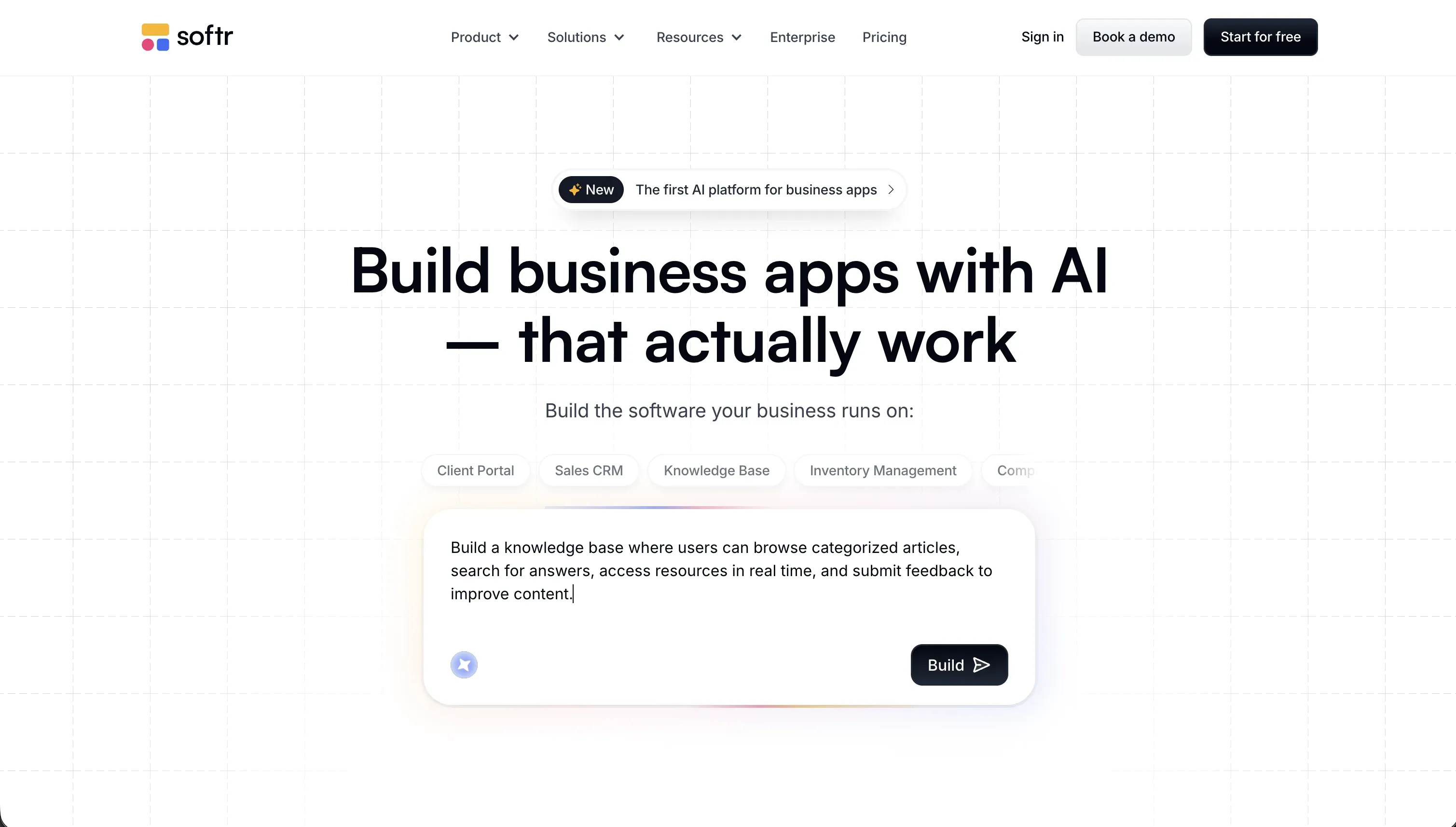 Softr homepage snapshot
We rank Softr first for event management applications because the platform’s core infrastructure directly solves the operational portal challenge. Staff members, sponsors, and attendees need different views of the same database.
Softr’s security & access control scores 8.5, allowing builders to visually map user groups so attendees only see their personal tickets, while check-in staff see scanner controls and dashboard summaries.
It scores 9.0 on ease of build and maintainability, meaning event planners can use the AI Co-Builder to generate schedules, speaker bios, and feedback forms, then manually update speaker sessions without prompts or credits.
It is a stable hub for multi-user operations. However, design flexibility scores 5.5, meaning agencies seeking a pixel-perfect, highly animated consumer experience will hit its structured block limits.
2. Airtable - best relational database for backend scheduling
For back-office coordinate workflows, Airtable remains an unbeatable engine for structuring relational data. Planning a multi-track roster with speakers, sponsors, timeslots, and rooms is highly complex, and Airtable scores 8.0 on data & integrations, providing an intuitive relational interface that non-technical teams can learn in an hour.
It also forms a natural fit for catalog views, similar to the operations we rate in our /best/directories list. Yet, its production readiness scores 5.5 and security & access control sits at 5.0. Airtable has no native login flows for external attendees, and its Interface Designer is desktop-heavy.
It is an exceptional planning table, but you should not use it as a portal unless you pair it with a visual app container like Softr.
3. Glide - best for fast mobile-friendly agenda catalogs
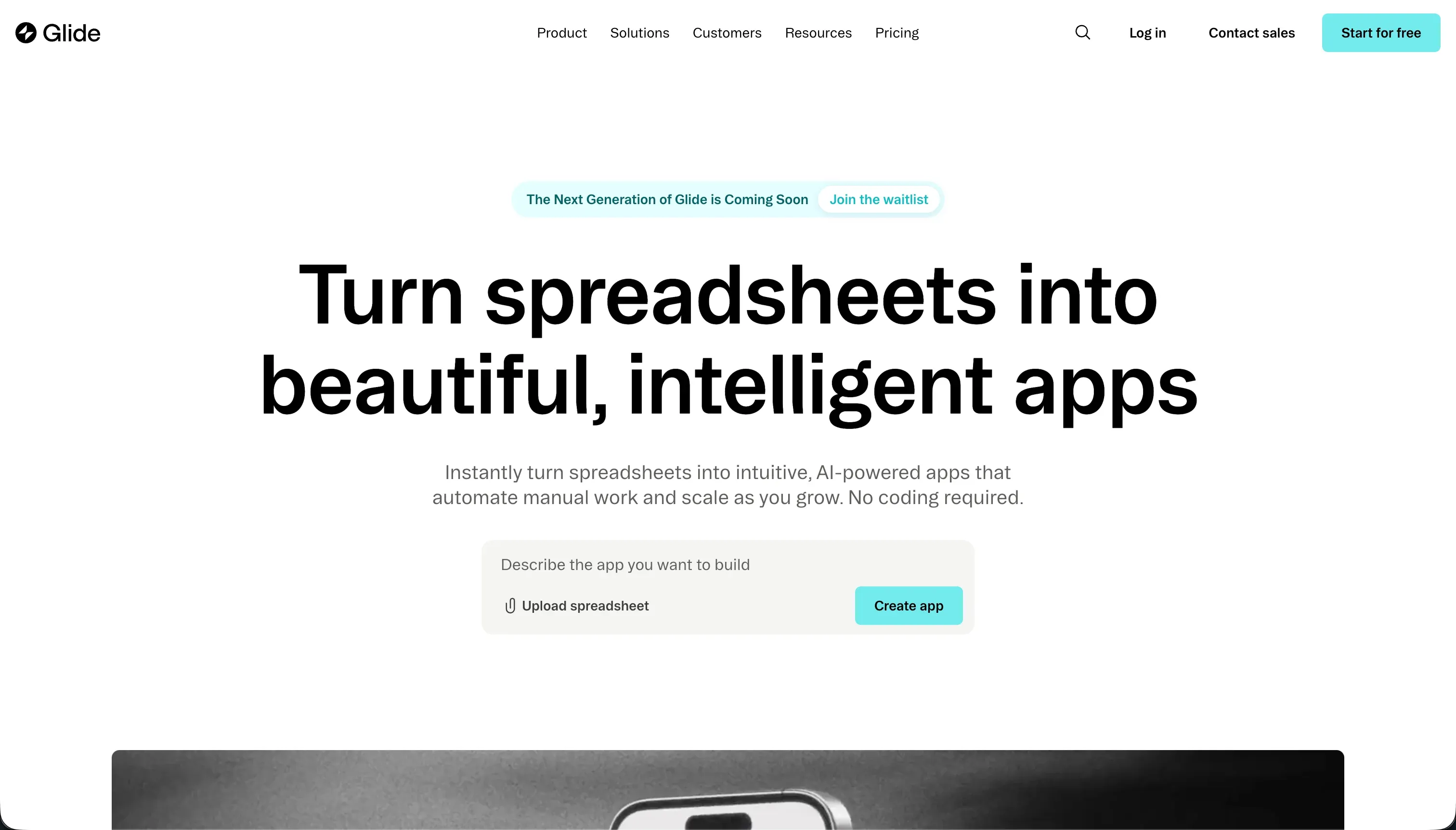 Glide homepage snapshot
If you need a quick mobile agenda catalog for an dynamic workshop series, Glide builds spreadsheet-to-app layouts faster than almost any competitor. It scores 8.5 for ease of build because it instantly maps columns from Google Sheets or Airtable into responsive cards, lists, and maps. Its default mobile layouts look clean and standard.
Still, design flexibility is low at 4.0, as builders cannot alter Glide’s rigid component spacing. Crucially, its security & access control scores 5.5 because user verification gets thin if your check-in portal relies on complicated operational roles. Do not buy Glide for large consumer audiences; its shared per-user seat pricing scales costs painfully.
4. Bubble - best for custom ticket ticketing logic and pricing
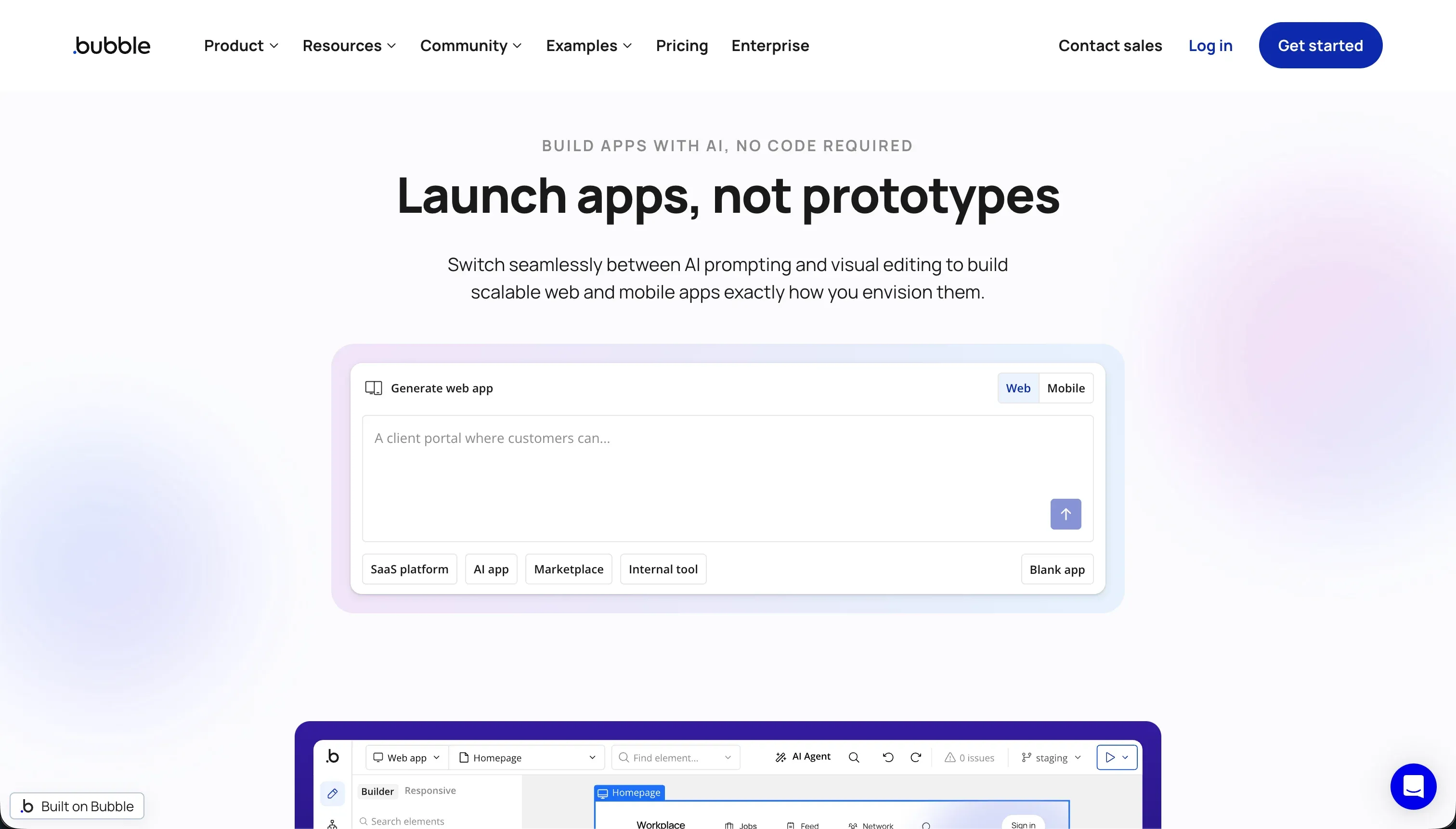 Bubble homepage snapshot
When a conference requires highly custom logic, such as dynamic ticket bundle pricing, coupon codes, and multi-step payment registration loops, Bubble provides the depth your developers need. It scores 8.5 on design flexibility and 8.0 on data & integrations. With custom workflows, scheduled backend triggers, and over 8,000 plugins, you can build a complete ticketing SaaS.
But its ease of build scores only 5.0, demanding significant developer and schema experience to configure basic forms safely. Security rules must be built from scratch, and a single missed rule silent fails, exposing private registration lists. Do not use Bubble if your operations team needs a tool they can tweak visually next week.
5. Replit - best for code owning and technical teams
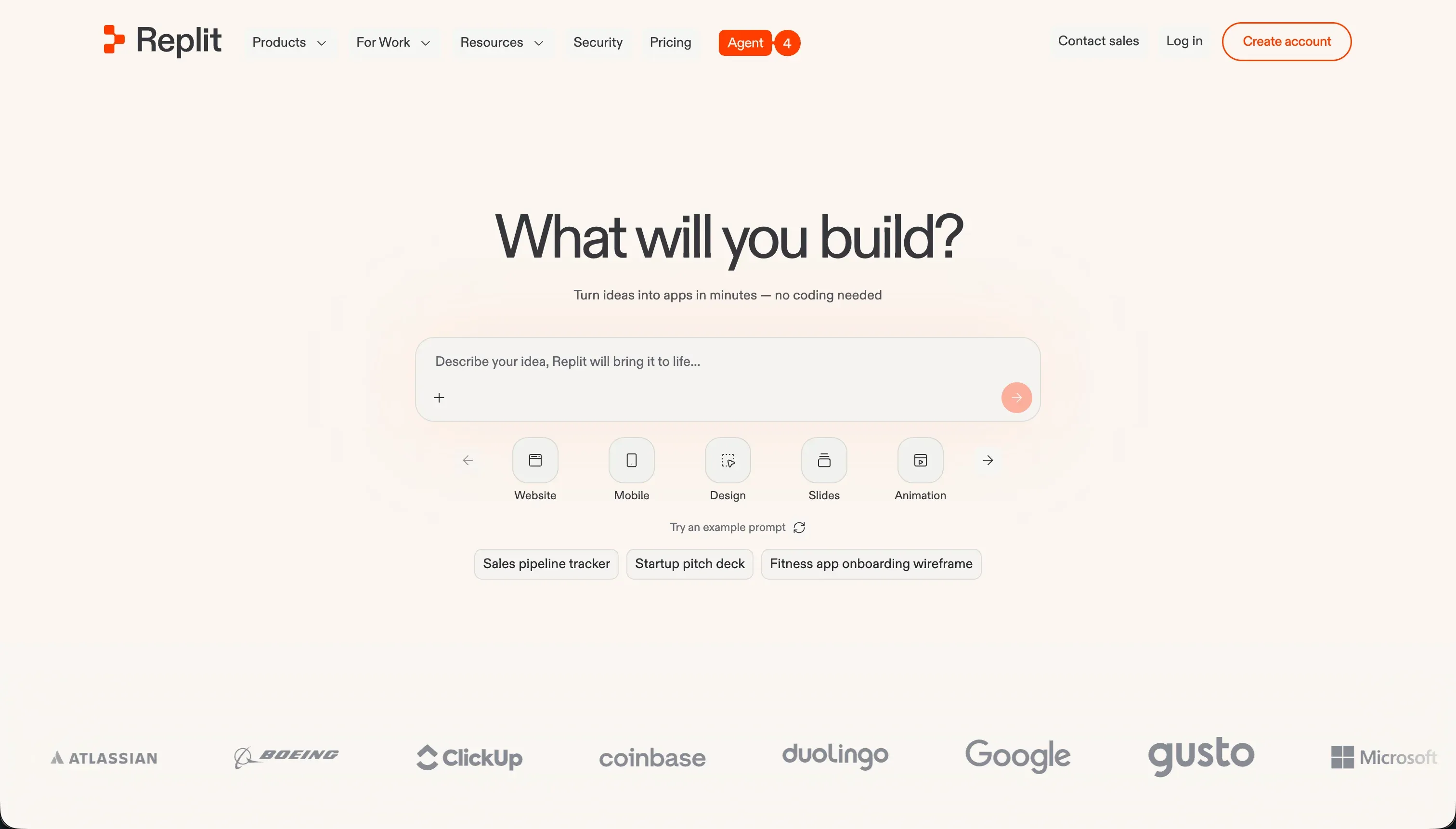 Replit homepage snapshot
For technical event platforms that require full GitHub control, Replit builds and hosts apps as real, exportable files. The Replit Agent scaffolds full-stack databases and handles dependency routing automatically, scoring 8.0 on production readiness and 8.5 on design flexibility. This makes it an adjustable option when you need to embed custom booking widgets or tie in internal APIs.
The major trade-off is development overhead: security & access control is coded rather than toggled, scoring 6.0. Someone on your staff must inspect agent code to guarantee compliance. Avoid Replit if you want a flat, highly predictable monthly bill, as debugging loops quickly eat variable agent credits.
Evaluating and shortlisting the right platform
Choosing an event app builder relies on clarifying the user mix and your technical budget. If you are building a tool strictly for internal schedule tracking, a database-first builder is all you require. As you expand to external attendees who must log in safely, you should prioritize platforms that provide pre-built portal security to bypass developer overhead.
We recommend starting with a pilot matching your most complex session requirements. Test speaker details, create test login IDs, and check if permission rules can be verified visually before publishing. For a full breakdown of how we score these tools, read our methodology evaluation framework.